
 As regular readers know, I read widely; topics I explore span (in addition to core themes of corporate governance and strategy) include philosophy, neuroscience, business, history, military strategy and more besides. I usually take notes, as an aide memoire for later reference. Some articles are memorable, others less so. This one recently-published article piqued my attention because it reminded me of a question I face most weeks: "What do you do?" Most enquirers expect to hear a job title or a profession, to enable them to 'position' me, which is fine if the 'job' is a well-known profession or vocation, such as a doctor, teacher, plumber or lawyer. But what about a director, or an advisor? Is offering a one-word response helpful? Might it enlighten or obfuscate? For those who understand the roles of director and advisor, one-word descriptors are adequate. But for others (the majority, even most?), the response is more likely to an awkward smile, as if to say, "I wonder what one of those is or does? Does he mean a company director, a movie director, an orchestra conductor, or something else?" or, "What is an advisor? It sounds like a fancy name for a consultant." What an unhelpful interaction! Clarity and simplicity are vital if we are to communicate effectively. And the effectiveness of what we utter—whether our message got through—is determined by the listener not the speaker. With this in mind, I try to read the person before answering. If they appear knowledgeable of business matters, I tend to say I work with boards, sometimes adding that I help them see around corners and govern with impact; an advisor. But if not, I say I'm a troubleshooter who works with business leaders, or something along those lines. One thing I never say: I'm a consultant—they are people who make decisions and implement things for others. I don't. Rather, I ask questions to gain insight and make suggestions. Whether the client takes up the advice or not is their decision. So, returning to the headline question. The words we utter: do they matter? Yes, they surely do, if we are to communicate well.
0 Comments
 Recently, I announced the findings of empirical research conducted over an eight year period. The aim of that research was to discover how many boards are fully aligned in relation to corporate purpose. The findings were staggering: five per cent of the participating boards—yes, one in twenty—were completely aligned in relation to corporate purpose. When asked, every director and executive had an answer, but only five boards (out of one hundred and three, to date) had one answer. How can any board do its job (make informed decisions, and provide effective steerage and guidance) if it has not first agreed on an objective (purpose) to work towards? Compare this situation with that of a plant. The example in the picture—echium vulgare, or, more commonly, viper's bugloss or blueweed—is as good as any. Echium vulgare, a native of Europe, is an introduced species in parts of north-eastern North America, south-eastern South America, and New Zealand. The plant is toxic to horses and cattle, but the bright blue flowers are very attractive to bees. And, despite the toxins in the plant, honey produced from the nectar is very tasty indeed! "So what?" you might ask. To compare a board and a plant seems a little odd. Yes, maybe, but please allow me to explain. E. vulgare, like all other plants, has a single purpose, which is to grow and reproduce. All the plant's energies are dedicated to this single goal, using the resources available to it. Nothing more, and nothing less. In contrast, many companies operate without an overarching and enduring goal, as the research mentioned above shows (save to make a profit). And that begs another question: how can any organisation realise its full potential without first establishing a clearly defined and achievable goal? 'Purpose' has become a hot topic in board, shareholder and stakeholder circles. Some have interpreted purpose to mean mission and vision: an overarching goal the company intends to achieve. Others have a different understanding—one that positions the company as a servant of society, as the question below illustrates: How can a company not be in the business of improving human health and making the world a better place? This question, posed by a US-based leadership consultant, positions purpose as a catalyst to influence or resolve an external societal or environmental situation. In effect, the underlying expectation is that the company prioritises something external and, most probably, well beyond the company's means and ability to influence, much less achieve. The difference between the two understandings is stark, as are the implications. Readers will, probably, gravitate towards one or other, and some may hold such strong views as to be offended by 'the other one'. And that is okay; shareholders and the board can strive to achieve whatever they want—such is their prerogative. What matters is that every board takes responsibility for answering the question, of why the company it is charged with governing exists. Essentially, "For what purpose?" Without this, the company will lack a North Star, and efforts to create a meaningful strategy, let alone allocate resources well and achieve high levels of performance, will be fraught. But, if purpose is clearly stated, and agreed and understood by every director and all key staff, the company will not only attain membership of a most desirable club—the Five Percent Club—the board will have established a robust foundation upon which a coherent strategy can be developed, resources allocated, decisions made, and the full potential of the company pursued. And that, I think, is a good thing.
 A few weeks ago, while facilitating a board masterclass at Naivasha, Kenya, I had the good fortune to see some local wildlife at close range. Some people consider walking in close proximity to wild animals to be dangerous, for it may portend harm or injury, but others embrace the activity with open arms. Thinking, that well-spring from which ideas and insights emerge, innovations are birthed, and humanity progresses and flourishes, is similarly polarising. One of the things I have been thinking about recently is quite selfish: What direction should I take my writing in 2024? Musings is nearly twelve years old (first entry was in March 2012, which coincided with my doctoral research efforts, and sharing of conference papers and articles). While the longevity makes it a rarity, my motivation has not changed. It has been to share thoughts on corporate governance, strategy and boardcraft; our place in the world; and other topics that catch my attention. Apart from the introduction of 'boardcraft', a word I coined in 2020, this overarching goal has remained consistent since day one. From humble beginnings, when entries garnered just a few readers, the blog is now widely read. Over the years, many readers have been graciously engaged in a discussion about a topical matter, or asked for help to realise potential. And that has been wonderful, thank you. And, as you might expect, some entries have garnered high attention; others less so. Readers seem to prefer pragmatic guidance over provocations or calls to think more deeply about something. Recent examples of the former include writings on questions, chairmanship, and storytelling. Now, as we stand on the cusp of 2024, my hope is that Musings remains relevant and useful into the future. And with that, may I ask a favour? (Actually, provide an opportunity, to crowdsource Musings!) What topics and style would ensure Musings remains relevant and useful as it moves into its teenage years? Do respond in the comments block below, or send me an email. And, thank you in advance.
 The end of 2023 is nigh; consequently, minds have turned to end-of-year celebrations, various secular and religious festivals, and, inevitably, reflections. Twenty twenty-three has been a standout year for me for several reasons, not the least of which have been many expressions of encouragement, support and endorsement as I have sought to help boards govern with impact. That I have had the opportunity to contribute is a delight. But more than this, the seemingly simple fact that directors, boards, shareholders, institutions and others invite me to advise, assess, educate, speak and otherwise provide counsel, is a great honour. Thank you to everyone who has sought me during the year and entrusted your situations to me. These are cherished interactions. As I sit back, in these final hours of the 'business' year, I have found myself pondering 'reach'. This, a response to a question from a friend who, knowing of my recent trip to Kenya, wanted to know how many countries I had visited in 2023. When I checked back, this is what I discovered:
Superficially, this sounds like a busy year. And it has been. But, I hasten to add these data are neither targets nor badges of honour. They are, simply, footprints: evidence of my travels as I have sought to help boards govern with impact over the past year. Looking to 2024, my intent is to continue to serve—subject to boards and directors wanting guidance, of course! For now though, my objective is more selfish: it is relax, read and recharge, in readiness for what lies ahead. Best wishes as you close out 2023, and turn the page to reveal 2024.
 The prospect of looking back on the year past at this juncture seems a little odd, even presumptuous, given five weeks remain in 2023. And yet, with the onset of the holiday season (Christmas, Hanukkah, Diwali, as relevant in your cultural setting), I have noticed minds are starting to turn; casual comments in my hearing indicate some people are starting to reflect on the year soon-to-be-gone; others upon what the future might hold. As someone called on to think broadly about organisational challenges and opportunities, and to share insights that might be helpful to helping boards govern with impact or realise organisational potential, I too, take time to ponder. To think about what has passed, what lies ahead, and how one can help is not only smart, it is vital—if one is to learn, make adjustments to stay on track and achieve goals and, over time, become a better person. Turn now to the person you see in the mirror. What did you set out to achieve in 2023? Did you set specific goals? If so, have you checked progress? Are you still on track? Have you taken into account changes in the environment around you and made adjustments, or have you pressed on in spite of changing circumstances? As a leader, you owe it to yourself—and all those you interact with—to check progress periodically and make adjustments if you have veered off track or lost sight of the goal. For the record, my goal for 2023 was audacious; to ensure every director and board I had the privilege of serving, globally, derived some benefit from the interaction. The goal was audacious because 'every' set a high bar; essentially, it left no room for slippage! Thankfully, feedback to date suggests I'm doing OK. Hopefully, the feedback still to come is consistent with that received through the year. If it is, I'll wrap up the year contented; tired but contented.
 Twice this week, I have been asked about my reading and thinking habits. One enquirer wanted to know much time I spend reading and pondering insights garnered from various authors; the other whether I schedule [slow] thinking time. Although neither asked explicitly, both enquirers seemed to assume that quiet time and the notion of reading widely are important to me. And, indeed they are. But, why? The practice of reading serves, I think, two inherent objectives: to maintain currency with trends and developments, and to become a better person. The objective is not to become a technical expert capable of regurgitating data and ideas (ChatGPT can do that), but a more holistic thinker—one who discerns problems and opportunities, considers them from different perspectives, asks appropriate questions and draws relevant conclusions. More succinctly, someone who leads a reflective life. May I propose something? To philosophise is to breathe. In my experience, and that of others who I have been fortunate to interact with, the ideas that emerge from the practice of philosophising provide a solid foundation for that which follows. And yet many business leaders and board directors claim to be too busy to take time to ponder (think about) possibilities that might lie below the surface or around the corner. Quite why such a (seemingly) bedrock activity is neglected is a curiosity to me; high quality thinking is an antecedent of effective leadership and governance, n'cest ce-pas? When people I interact with, especially friends and clients, say they see a better me (someone who is on top of his game, is nice to be around and who offers relevant and considered advice), such observations tend to coincide with a period of reading literature (or other so-called 'brainy' books) and thinking deeply about the questions posed by the authors. While comments like this are gratifying, they serve a higher purpose: to remind me to make time, regardless of what else is going on around me. (And, in case you are wondering, my answers to the enquirers were, "About 12–15 hours each week" and, "Yes.")
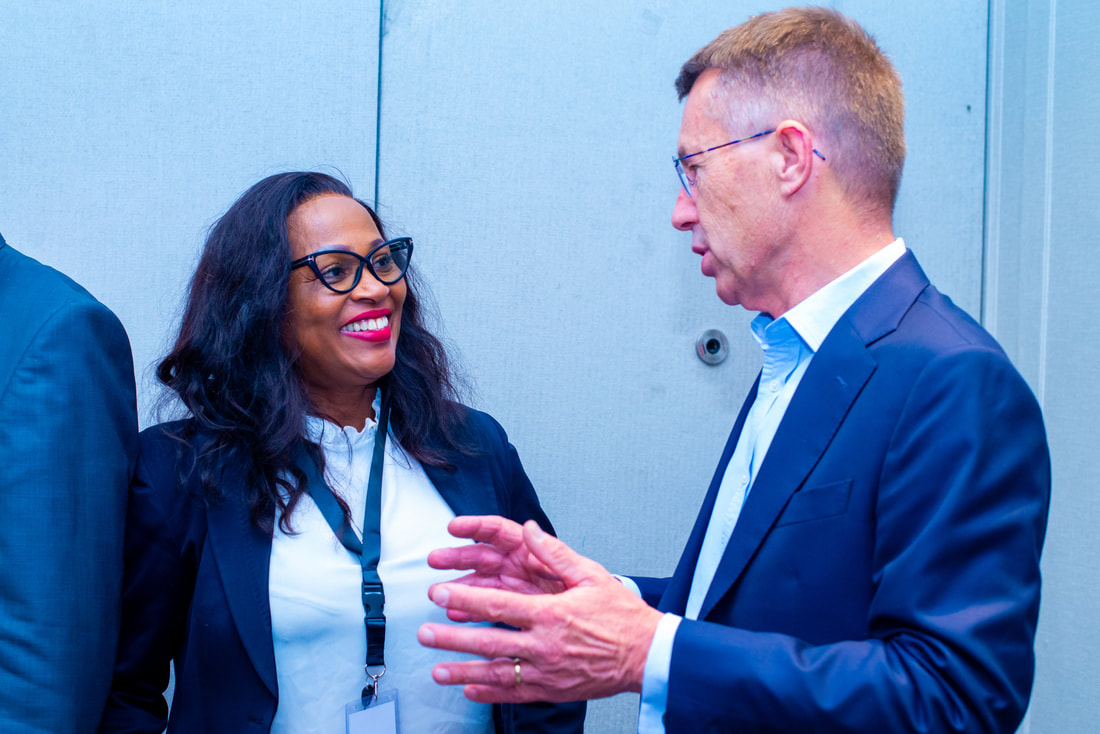
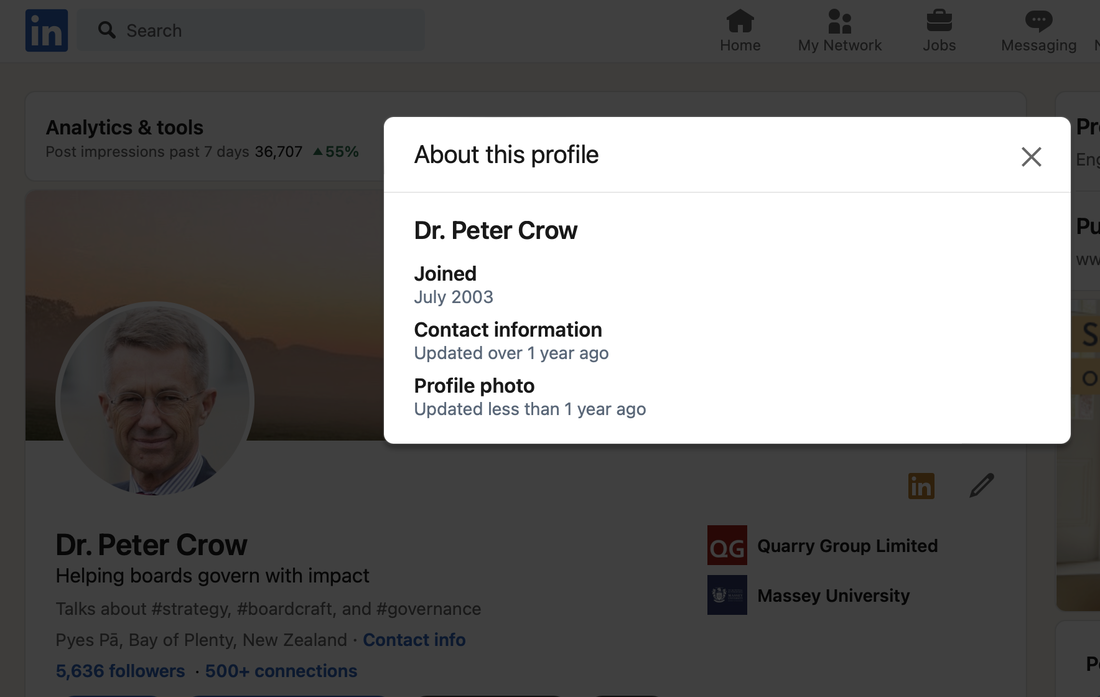 When I was a boy, milk was free (I was raised on a dairy farm), but you could buy it in a glass bottle with a silver foil top (pasteurised but not homogenised) for four cents a pint at the general store. Television (once we got one, in 1969, to see the Apollo 11 moonshot) was a grainy, black-and-white experience, with a single channel available. You got to watch whatever the broadcaster chose to deliver across the airwaves. Now, milk costs several dollars a litre, but it comes in many different styles (blue, light blue, skim, lo-fat, full-cream, calcium fortified, lo-lactose and UHT—as well as products called milk that contain no milk at all, such as oat milk and almond milk, in a wide variety of packaging options). Television has changed too: from a take it or leave linear broadcast experience via rabbit-ear antennae, to a plethora of video-on-demand (streaming) options via the internet. These are but two of thousands of examples that illustrate the onwards match of technology. Oh how life has changed, even in my lifetime. The onward march has also affected the way we communicate, not only personally with family and friends, but also with clients, suppliers and the general public as well. The notion of using a fountain pen to handwrite a letter, or making a toll call, seems quaint now—but some of us still value these moments. The emergence of social media has extended our reach in ways not thought possible twenty years ago. Sharing business cards, once commonplace, is now rare. If people want to contact me or learn about me, they tend check my LinkedIn profile (notice the assumption, that I have one), even before mentioning Google or asking about a website or blog. And that brings me to the point of this muse, which is to share one aspect of a conversation with an esteemed company director, in the hope it might encourage others committed to serving the director community. Yesterday, I was asked about the role of social media in my business life, what channels I use and how long had I been using these. The first two questions were readily answered; the third took a little longer—because I needed to find the menu option!
Thank you for permitting me to share my experience. I hope anyone considering using social media or a blog as a channel might be encouraged—not only to do so, but to stick at it over the longer term. My journey to date has been fulfilling; I have met thousands of people from many walks of life and, I hope, they have valued the interaction as much as I have.
 Diversity of thought has been widely promoted in recent times, as a mechanism to supposedly increase decision quality in boardrooms. Superficially, the idea of thinking differently is a positive evolutionary development from earlier efforts (think: women on boards) to break what is often described as the Old Boys' Club. That the discourse and intent has begun to move beyond appointing directors on the basis of physical attributes is helpful. And yet, the idea of 'diversity of thought' has long troubled me. How does anyone know what I am thinking, or anyone else in the boardroom for that matter? And what is diversity in this context anyway—me having different thoughts, or several of us thinking differently? Crucially, what of any link to the board's work and purpose, which is to provide steerage and guidance to achieve a strategic goal? Researchers have published correlations based on specific datasets, but the general case (a reliable linkage between demographic diversity and organisational performance) remains elusive. The somewhat amorphous 'diversity of thought' is similarly afflicted. Recently, cognitive diversity (that is, different ways of processing information and approaching problems) has been suggested as a more reliable mechanism to achieve higher quality decisions and, by implication, outcomes. This sounds positive, but reliable explanations are yet to emerge. Why is this so hard? Could the paucity of reliable explanations (of the relationship between board work and company performance) be due to researchers, directors' institutions and others trying to explain board work and develop 'best practice' models looking in the wrong place or using inappropriate tools? What if hypothetico-deductive techniques (in search of a deterministic best practice approach to some aspect of board work) are laid to one side and methods more common in social science used (critical realism or contingency theory, for example)? Should researchers embrace the idea that boards are social organisms, and that governance is a mechanism activated by the board? For the record, I employed critical realism, long-term observational techniques and contingency theory when researching boards a decade ago, as part of my doctoral research. The study was ground-breaking for it revealed new insights about board work including an explanatory framework. If you want to learn more about this study, check my thesis (academic-speak) or this article (plain-speak). In the past few weeks, I have picked up the question again (thanks to a wandering mind on long haul flights!), and have begun to wonder if fractals and chaos theory might offer a viable pathway to developing a theory of board work. Whether this might be a fruitful search or a blind alley remains unclear. Regardless, my mission is to help boards govern with impact, so the least I can do is dig further. And dig I shall. One request: If you know about fractals, or know of anyone who possess such expertise—especially in relation to social phenomena—could we schedule a call please? I'm starting from a pretty low base!
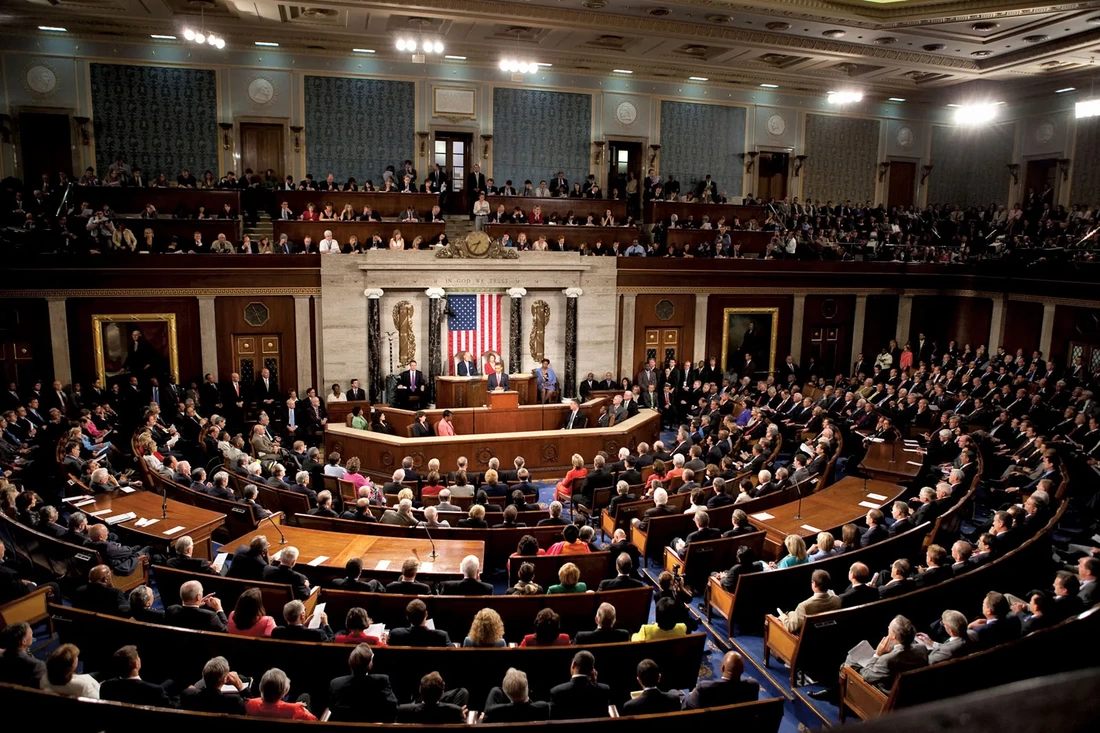 News has emerged in recent days that the United States House of Representatives is moribund—all for the lack of a Speaker. The Speaker is the person who presides over the House; they are, in effect, the administrative head. But for several weeks now, the House has been without a Speaker—since Kevin McCarthy was removed on 3 October by a motion to vacate. The move, which was unprecedented, has left the House in a precarious position. While several replacements have been considered, none have been appointed. And, without a Speaker, the business of the House cannot proceed. This includes appropriations, to cover expenditure on 'projects' such as the Hamas–Israeli conflict and the Ukraine war. The situation highlights a stark weakness in the system, whereby the US Government system has a single point of failure baked in. Imagine the outcry if a company's decision-making processes stalled, for the lack of a board chair or an unexpected vacancy in the CEO role. Staff, customers, suppliers and shareholders would be upset, and rightly so. The potential for reputational damage would be high as well. Smart companies anticipate such problems by thinking ahead; they appoint deputies and establish succession plans and delegation frameworks to be activated in the event the chair, CEO or key leader is unavailable or unable to serve. And so to the core question: Does your company have appropriate succession and delegations in place, to ensure decision-making continuity when a key leader cannot contribute? If so, that is great. But if not, now might be a good time to put things in order.
 And there you have it: before many of us realised, the solar equinox has passed once more—that moment when the sun passes the celestial equator and winter (or, for those in the global south, summer) beckons. The equinox also signals the recommencement of on-the-ground contributions in the Northern Hemisphere. To wit, I shall be in the United Kingdom and Switzerland soon—from 2nd through 13th October, in fact. My programme sees me in London, Leeds, Cambridge, Zurich and St. Gallen, for a variety of contributions:
I am looking forward to hearing the heartbeat of company directors, advisors and others, to understand recent developments and emerging trends, and to discern changes since I visited earlier this year. I have intentionally held space available for a few informal meetings. So, if you want to meet up while I am in your neighbourhood—be it to discuss the work and impact of boards, corporate governance, or some other topic of interest—do get in touch. I would be delighted to hear from you.
|
SearchMusingsThoughts on corporate governance, strategy and boardcraft; our place in the world; and other topics that catch my attention. 
Categories
All
Archives
February 2024
|
|
Dr. Peter Crow, CMInstD
|
© Copyright 2001-2024 | Terms of use & privacy
|