
|
The 13th edition of the Corporate Governance Workshop convened by the European Institute of Advanced Studies in Management (EIASM) was hosted by SDA Bocconi in Milano, Italy. Approximately 50 leading thinkers and researchers from over 20 countries gathered to explore emerging trends in the fields of board practice and corporate governance. Nearly 50 presentations were accepted onto the two-day programme. Highlights from three of the papers presented on the first day are summarised here (highlights from the second day are posted in a separate summary):
In sum, the day revealed a mix of interesting insights and concerns. In particular, one long-held concern (that many researchers continue to conduct research based on the analysis of publicly-available quantitative data) was upheld. Why researchers continue to investigate boards and corporate governance from a distance (outside the boardroom) is a mystery to me. If we are to truly understand what boards do, how decisions are made and influence is exerted by boards from and beyond the boardroom, then researchers need to adopt the recommendations of others: that direct observations are crucial to the gaining of reliable insights.
0 Comments
 You must give newly appointed Wells Fargo Chief Executive Officer Tim Sloan credit. No sooner had disgraced former CEO John Stumpf left the building, Sloan delivered a speech to all employees to apologise for the scandal that had beset the company. That Sloan delivered an apology is a good first step on the path towards redemption (the company boasts a long and proud history), even though "we're sorry for the pain" appears to be an apology for the angst employees faced rather than the fake accounts action itself. Two things are especially notable in this case:
That Stumpf's (and now Sloan's) boss has both remained silent and appointed from within is very telling. (Note to the Wells Fargo board: If you want to talk further, in total confidence, here are my contacts details.)
 South Africa's flag carrier, South African Airways, has hit turbulence. Severe turbulence. The airline, which is in financial trouble as a result, most probably, of some poor decisions in the past, has been negotiating a debt refinancing package. However, the package reportedly contains some unusual characteristics (read: extremely high fees). Now, a staff member has blown the whistle; the board has been called out; and, the matter is being investigated. Even a cursory inspection suggests that something is amiss, and badly so. Problems that seem to stem from poor decision-making at the top of the organisation appear to be endemic. Whether the underlying driver is greed, hubris, corruption, ineptitude or something else remains to be seen. Regardless, South African Airways is in trouble. The board appears to be missing in action and the 'corruption' word has been mentioned making situation very messy, to say the least. Sadly, SAA is not an isolated case. Recently, Sir Philip Green fell from grace; and, it was not that long ago that FIFA, Toshiba and Volkswagen suffered 'setbacks'. It's little wonder that hard working people have any time for boards of directors. The sources of governance failure are well-storied. However, the natural response—hard law—has done little to improve things (because people who want to generally find their way around things that inhibit them). Different measures are required, perhaps starting with culture, values and purpose. Board appointment processes also need to change. Unless and until 'bad eggs' are exorcised from boardrooms and held to account, the actions of a few will, no doubt, continue to make life hard for the rest of the director community.
 It had to happen. Someone just asked one of 'those' questions. Should boards of directors communicate with shareholders? Great question Lex Suvanto! You can read his blog post here. Amongst his comments, Suvanto makes two quite startling observations: Many directors are passionately against the idea of engaging directly with shareholders. Directors also correctly point out that the board should not say anything out of step with management anyway, so they question the value of this effort, especially given limited available time that directors can devote. These observations, and others in the article raise important supplementary questions about how boards conceive their role and the mindset of directors—including these:
Ultimately, appropriate responses to these questions are straightforward if boards understand the statutory framework and directors have a clear understanding of both why boards exist and what boards (should) do (i.e., corporate governance). Directors are appointed by shareholders to ensure the effective operation of the company, in accordance with shareholder wishes (whatever they might be). If the senior-most decision-maker in the company is the board, is it not reasonable to expect the board to both understand what the shareholders want from their investment and subsequently provide an account to those that put them there? I think so. Suvanto's article contains some helpful suggestions to get started. I'm available if you want to chat further.
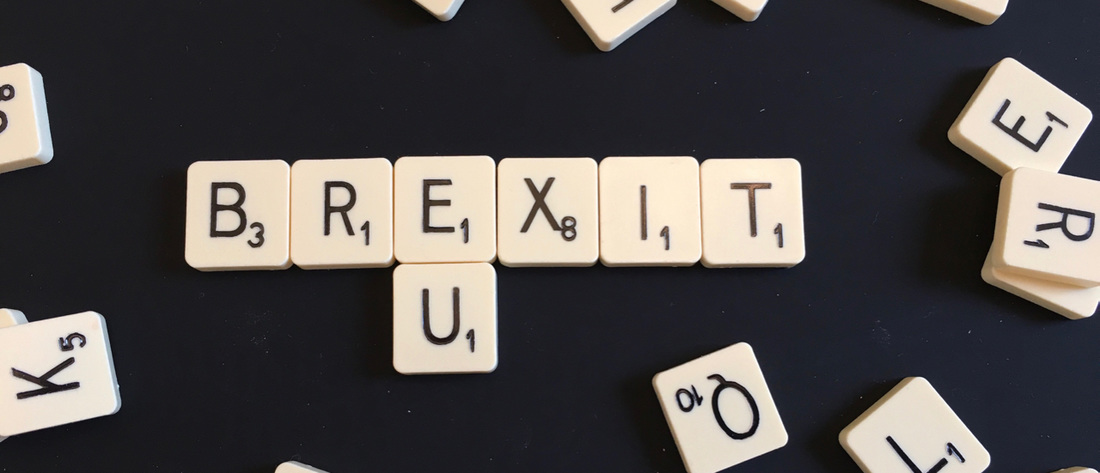 News emerged today that many FTSE 250 company boards had made no contingency plans for a possible #Brexit decision. As Alice Korngold notes in her article, this highlights serious deficiencies in relation to risk management, board process and board composition. Korngold is right to challenge boards on this exposure. But does Korngold go far enough? Most of the concerns expressed are framed in the context of a traditional understanding of boards and corporate governance: monitoring the executive and managing various risks. Directors carry important duties, to the company and shareholders. In addition to acting in the company's best interests, directors have an important responsibility to deliver value to shareholders (in whatever form might be agreed). This means that monitoring the executive and managing risks is insufficient. More is required. Boards also need to make important decisions to set the company on a path towards a desired future state. An increasing percentage of directors say they are involved in strategy (read the surveys), suggesting boards do take their responsibilities seriously. However, observations of boards in session (i.e., board meetings) suggests that a gap exists between claimed and actual behaviour. Korngold's commentary adds to those concerns. That some boards are not performing the 'basics' of monitoring performance and managing risk adequately—let alone driving future performance—is problematic. What confidence can shareholders have that boards are considering strategic options and determining an appropriate strategy to achieve the company's purpose? The bluff and bravado that has permeated the discourse needs to be replaced with an authentic commitment to drive business performance. Is this too much to ask? Looking to the future, if the result of the British plebiscite does little more than motivate boards to take the future performance of the company more seriously, then it will have been a worthwhile exercise. Until then, Barton and Wiseman's observations are likely to remain—sadly—resoundingly accurate.
One of the biggest shake-ups to confront the Western World (since the collapse of communism and the fall of the Berlin Wall anyway) occurred in the United Kingdom last week. The result of a much anticipated plebiscite was a decision by the British people to leave the EU. In the weeks leading up to the referendum, the flow of information became a cacophony as politicians, scaremongers and other 'experts' promoted various positions, in an effort to influence to voting public. Finally, the day arrived and the people voted. Soon, the results were published. The people had spoken. Some cheered while others mourned. Curiously, some reacted by rueing their decision, wondering whether they had voted wisely. Really? With a straightforward question to answer and a plethora of information to hand, how could anyone make the 'wrong' choice (unless they didn't vote, of course)? Is this reaction an outpouring of buyer's remorse on a national scale, or is something else going on—an indication that some did not take the decision seriously or that a dose of hubris clouded the better judgement of some voters perhaps?  The British plebiscite highlights a behavioural weakness that besets many people. From an early age, we spend our lives learning as much as we can, aspiring to become experts in whatever field interests us. Most of us want to excel; to realise our potential. In our haste to make decisions and get ahead, we tend to embrace new ideas and disregard 'old' ones. If we can secure an advantage, we'll take it—thank you very much. But when it comes to big decisions, we may not be as smart as we think we are. Decisions that are based on politically-motivated or emotion-filled pleas, or knee-jerk responses seldom deliver the 'best' outcome. Often, the best decisions are those made after we have paused and looked back, for guidance about how best to move forward. Whether we are cast as leaders or followers, we could do far worse than to seek out people like Bill and Augusto, sit with them and, having asked them a question, listen intently to what they have to say. Our challenge, having sat and listened, is to act on the wisdom passed to us.
 News has emerged from Volkswagen this week that the board has proposed that shareholders formally approve the work of the company's top management team. Wow, I'm amazed. Isn't that the board's job? The board exists as a decision-making proxy for absent shareholders and, in so doing, the board should provide oversight of management including of its work. Regular board meetings and other board–management interactions provide the appropriate forum for this reporting, verification and monitoring to occur. In contrast, annual meetings provide a forum for the board and management to provide an account of the resultant company performance to the shareholders. That the Volkswagen board of directors is recommending that the work of management is approved by the shareholders creates the impression that the board is not doing its job of overseeing management adequately. While this could be an obfuscation (following the trouble the board and management found itself in over the emissions scandal), if the board is attempting to shift responsibility (for oversight of management away from the board) it needs to be called out. The shareholders then need to determine whether the current board is delivering value or simply defending a position—it's own.
 Fonterra has been doing it tough lately. That the company's board and management is under pressure is patently obvious. Fonterra needs to respond, but how? Is Fonterra simply a victim of a perfect storm, or could the current problems have been avoided (or at least their effect minimised)? Some background. Fonterra is New Zealand's largest company, responsible for 25% of the country's GDP. The company, a co-operative, sells milk products around the world. It sells, largely, commodity products and, therefore, is exposed to commodity pricing fluctuations. The prices Fonterra is receiving for its milk products has fallen significantly in recent times, down to US$2176 per tonne (whole milk powder) at the latest GlobalDairyTrade auction on 3 May 2016—less than half what it was two to three years ago (the price averaged US$5000 per tonne in 2013). As a consequence, the price Fonterra pays to its farmer-suppliers has tumbled, from highs of over $8.00 per kilo of milk solids to now $3.90 per kilo. During the good times, farmers were actively encouraged to convert land from other types of farming to dairy farms. Many did so, funded by debt. Banks supported these conversions, given the high milk prices. However, few realised that milk prices follow oil prices very closely (the correlation value is something like 0.95 and the lag is measured in weeks). As oil prices dropped, milk commodities followed, and predictably so. Now, many farmers are running up huge losses, and yet Fonterra continues to encourage more supply which, inevitably, will make the problem worse not better. If the company stopped investing in monolithic bulk plants, it would free up hundreds of millions of dollars immediately. That money could be used to support suppliers with better prices, or to make some serious moves further up the value chain, as Tatua and others have already proved is realistically achievable. So, where to from here? From the outside looking in, Fonterra has several options worthy of investigation. Here's a few suggestions to get things underway:
If the Fonterra board is serious to driving company performance, for the good of all shareholders and the economy more generally, it needs to gather off-site with management urgently for several days. Sleeves need to be rolled up and egos left outside the room, to sort out why Fonterra exists (purpose); formulate a high-level strategy; and, develop a realistic recovery plan. Strong external facilitation will be required (probably a couple of capable independent facilitators with dairy sector, strategy and governance backgrounds) to work through some fairly tough issues. If this can be achieved, the company (and, therefore, the shareholders and suppliers) and the country will be better for the effort.
 MediaWorks, a broadcasting company that owns several radio, television and internet brands is doing it tough, this week especially, to the extent that the wheels appear to be falling off. Consider these recent events:
None of this augers well for a company that is struggling to maintain mindshare and marketshare against the national broadcaster, Television New Zealand. A blind man can see something is wrong, badly wrong. My sense is that the spotlight needs to be shone on the board. After all, it is the board that holds the ultimate responsibility for overall company performance and the various contributory pieces including culture; values; strategy; and, the performance of the chief executive. That the company has been struggling for a couple of years or more, and seems to have been (blindly?) experimenting with programming options suggests that the board doesn't have a good grasp on things. Sadly, MediaWorks is not the first company to trip in this way, and it won't be the last. Several years ago, I studied another company with a successful track record that, unexpectedly, began to fail. Though operating in a different sector of the economy, that case (sorry, I can't disclose the details) had similar characteristics to the MediaWorks situation. The board had hired a sanguine chief executive to craft and implement a new growth-based strategy. The board gave the chief executive plenty space to operate, to such an extent that it did not scrutinise the chief executive or company performance adequately. Ultimately, the strategy was flawed and the board only worked that out when a staff member blew the whistle. The board had been gamed—it had been asleep at the wheel. To its credit, the board's response was strong: it released the chief executive and many directors resigned as well. Shareholders were briefed, and they were invited to recruit a new board and 'start again'. Within six months, the company had a new board and chief executive; its 'reason for being' (core purpose) was revisited; a new strategy was developed to achieve the purpose; and, resources were adjusted to suit. The company got back on track and it continues to perform well to this day. Perhaps it's time for the MediaWorks board to also respond to the signals, by looking in the mirror; reigning in the culture of hubris and excess that seems to have pervaded the company; and, making some much needed adjustments. The fish rots from the head, after all.
 After several years of paying high milk prices to its farmer-suppliers, Fonterra has hit hard times. International demand for milk products has slumped. On the supply side, prices paid to farmer-suppliers have tumbled. Some have said the problem is primarily related to changing demand especially in China, whereas others have suggested that Fonterra is complicit having stimulated supply to 'feed' its massive processing plants. To make matters worse, Fonterra has started losing farmer-suppliers to its competitors and it seems to be exercising "considerable discretion" with payment terms as well. The latest commentary, an interview on Paul Henry's breakfast show today, lay out some of the challenges in plain English. Click here to watch the video clip. (disclosure: James Lockhart is my doctoral supervisor, but had no prior knowledge of this interview.) The situation, which has been brewing for a several years, is messy to say the least. Other companies including Tatua and Open Country Dairy seem to coping much better. This begs several questions including whether the Fonterra board and management are actually in control; whether the corporate strategy is sound or not; and, whether the company has the financial and managerial resources to respond effectively. While I'm nowhere near close enough answer these questions, the old saying "where there's smoke there's fire" seems to apply.
|
SearchMusingsThoughts on corporate governance, strategy and boardcraft; our place in the world; and other topics that catch my attention. 
Categories
All
Archives
February 2024
|
|
Dr. Peter Crow, CMInstD
|
© Copyright 2001-2024 | Terms of use & privacy
|