
 During June, I spent most of my discretionary time reviewing articles about corporate scandals and failures, as reported in the mainstream media and academic press, and discussed on social media. They made fascinating reading, not only for the summaries, but also the amount of finger-pointing and defensiveness—an indication that accountability was missing in action in most cases. Consider the Carillion, Wirecard and Petrobas cases, all mentioned in a recent Financial Times feature article (paywall, sorry). The discussion concentrated on the accounting and audit professions; the questions being whether they should have detected the problems, and whether ethics should be a consideration. These are good questions, but they sound a little like positioning an ambulance at the bottom of the cliff. Disclosures, in the form of annual reports, audit statements, and various ESG-related reports, are necessary. But they are just that; disclosure reports. And the more complex the reporting and disclosure requirements, the more time management and the board needs to spend preparing and checking reports, to meet expectations. And with greater focus on reporting and compliance, the greater the likelihood that accountability will become discretionary. Accountability is one of four foundational elements of corporate governance. There are two aspects, namely, boards are charged with holding management to account, and they need to provide an account to legitimate stakeholders. (The others are the formulation and approval of corporate purpose and strategy; policymaking; and, monitoring and supervising management, to ensure the company is operated and strategy achieved within prevailing statutory and regulatory boundaries. Together, these four elements comprise the Learning Board Framework, a proposal described in The fish rots from the head, a book written by Bob Garratt, a doyen of corporate governance and board work, circa 1996. The LBF is the single-best approach to board activity that I have come across in my twenty-five years of board and governance practice and research, bar none.) As in life, enduring success in business (meaning, achieving and sustaining high levels of organisational performance) can be attributed to many things. These include, inter alia, a great idea, a clear and coherent strategy, excellent execution, capable and highly-motivated people, forces of nature, timing, effective leadership, luck (yes, luck), and more besides. Yes, success has many sources, even to the point of being idiosyncratic. Failure is different. Even a cursory study of corporate failures reveals several common themes, most of which can be readily traced back to the boardroom:
Almost all of these themes emerge from poor behaviour and a leakage of accountability. Knowing what to do is one thing, knowing how to behave (and behaving) is quite another. Fortunately, help is at hand. Insights from research suggest five underlying behaviours are necessary if boards are to contribute well. These include strategic competence, a sense of purpose, active engagement, collective efficacy and constructive control. If any one of these is absent, the likelihood of the board exerting any meaningful influence or adding any value drops to nought. (If you want more information on this, please get in touch.) One final comment: The role of director is founded on trust—the fiduciary responsibility. And from this flows accountability—in role and in relationship. If boards place a low value on accountability, by not holding management to account for the achievement of operational and strategic goals; rubber-stamping advice from suppliers such as lawyers, accountants and auditors; or, not providing a candid account of performance to shareholders, regulators and other stakeholders, they deserve what comes their way.
2 Comments
 The transition to electric vehicles looms large for many. Most of the major manufacturers are scrambling to offer new and exciting models to entice both corporate and private buyers. Enticements are being offered by some governments to encourage adoption. Regulators are active too, especially in Europe and California, with announced intentions to ban new vehicles powered by petrol or diesel. The opportunity to embrace a transport technology that is cleaner, quieter and considerably cheaper to operate (than petrol or diesel alternatives) is attractive—once the initial purchase price hurdle leapt. The purported benefits seem to be significant, but does the reality match the rhetoric? As with any proposal to embrace system-level change, the costs of moving from one technology to another are far from trivial. If an assessment is to be complete, the total lifetime costs (TLCs) need to be considered; that is, the sum total of all costs incurred over a product/system’s lifetime (includes manufacture, operation, disposal). In the case of electric vehicles, what of the economic, environmental and social costs of extracting metals for battery ingredients; logistics and manufacturing; replacement of batteries when they are spent; battery disposal; and, of upgrading the power generation and distribution network to provide adequate electrical power to recharge batteries? Many of these are being quietly ignored, it seems. Not my problem, some argue, as if out of sight is out of mind. This short article argues that when the TLCs are factored in, the benefits associated with a seemingly compelling technology (in this case the adoption of electric powered vehicles and other devices with battery power packs) may not be as great as what has been claimed. And so to the purpose of this muse, which is not to argue the benefits or otherwise of adopting electrically powered vehicles. Rather, it is to table an issue often overlooked by board of directors considering so-called strategic projects: total lifetime costs. When faced with a strategically-significant proposal, boards first need to check for alignment, by testing whether the proposal is contributory to the corporate strategy (spoiler alert: often linkages are tenuous). Assuming it is, directors should satisfy themselves that total lifetime costs have been included. Only then can the question of whether the recommendation should be embraced or rejected be debated. Why might this be important? Directors are duty-bound to act in the best interests of the company. That means taking all relevant information into account. If boards ignore externalities, or abuse the social, environmental and economic capitals consumed in the operation of the company, the governed company is unlikely to endure over the longer term. And in so doing, directors may be exposing themselves, unwittingly, to legal challenge as well.
 Much has been made in recent weeks of the invasion of Ukraine by Russia. Social and mainstream media has been awash with commentary, both about the situation on the ground, and of various moral and ethical issues arising, not to mention significant geopolitical and balance of power impacts. The Western world has rallied in support of Ukraine. Governmental–, corporate– and community–level responses have been announced and taken including accepting refugees, providing humanitarian support, and organising fund-raising and community support. Governments have imposed economic and trade sanctions as well. Many companies have decided to withdraw from the market. Others have chosen to remain, for a variety of reasons. Some, who initially held the line, have subsequently changed their mind after feeling the effects of a backlash. Directors have resigned from boards too, signalling they have no interest in continuing to serve on the boards of Russian companies. To say the situation is fluid and outlook is uncertain is an understatement. In cynefin–speak, the appropriate descriptor is 'chaotic', meaning rapid response is appropriate: searching for the 'right' answers is futile. Despite the ambiguity and uncertainty, directors must continue to make decisions, to govern. In a crisis, most boards, rightly, focus on the here and now. Strategy and strategic initiatives are put to one side, and accountability may languish too. All available resources are applied to understanding and stabilising the situation. But after the heat has subsided and the situation is brought under control, boards need to take stock. They owe a duty of care (to themselves but also shareholders and legitimate stakeholders), for both their actions and those of management. Were the decisions made and actions taken during the crisis appropriate given the information to hand and prevailing situation at the time? The review may find the board operated within statutory and regulatory boundaries, and that decisions taken in averting the crisis were reasonable. But what if decisions and actions are found to have crossed moral or ethical boundaries? Where should accountability lie? The question of moral accountability cuts across personal and professional reputation, organisational culture, and market confidence. And to the future, where should the board's moral compass point, what conduct is appropriate, and how should the board's actions be assessed?
 In 1960, Jane Goodall, a trailblazer in the field of primatology, visited the Gombe Stream National Park in Tanzania to study chimpanzees. And so began a 60-year study of chimpanzee social interaction. The study was groundbreaking; revealing new insights about chimpanzee behaviour and interaction. Goodall observed directly, for the first time, human-like behaviours in chimpanzees. These included toolmaking (albeit rudimentary) and armed conflict between competing individuals and groups. Consequently, humanity's understanding, of both chimpanzees and itself, changed. Some centuries earlier, Copernicus produced insights about the transit of planets; specifically, that the planets have the Sun as a fixed point around which they orbit. This observation undid conventional wisdom, which held that the Earth was the hub around which other bodies orbited. Later, Kepler explained the observations. These examples illuminate the value of long-term direct observations of dynamic entities, especially groups of entities, to achieve more accurate understandings of not only the entities, but their actions and interactions. The principle holds in contemporary society. Sociologists and anthropologists, for example, have long seen the importance of observing social groups first hand (long-term ethnographic studies, sometimes involving full participation) to gain insights that might lead to more complete understandings and explanations of group dynamics, and the impacts and consequences of group action and interaction. Moving now to consider a subject of great personal interest: boards and governance. How do boards work, and what are the characteristics of an effective board of directors? Can, and if so how, boards influence company performance? And how might one go about finding out? To date, the predominant approach to tackling these questions has been to apply scientific principles, in search of linkages between attributes of boards and company performance. But this enquiry has raised yet more questions. For example, can a comprehensive understanding of the function, interaction and impact of boards be gained by studying isolated attributes of boards, such as the number of directors, independence, 'diversity', or other static attributes, all from outside the boardroom? Or by applying statistical methods to search for regularities (or differences) in publicly available data? Or by interviewing or surveying directors and/or managers about their perceptions about the conduct or behaviours of directors during board meetings? Enquiries utilising these approaches have produced thousands of research papers and published articles. They have been helpful in so far as they have provided clues about what may or may not be material to identifying the characteristics of high performing boards and the impact of boards on company performance. But the basis of these studies is not as it first seems. These are not studies of boards in action, they are studies based on representations of specific attributes associated with boards, not actual data about the board going about its work—just as the headline picture looks like a pair of giraffes but they are representations, not giraffes. A small but burgeoning group of researchers have taken a different approach. Invoking Goodall, they have completed long-term observation studies of boards of directors going about their work (i.e., the researcher in the board room, silently observing the board in session, over an extended period to move beyond the behaviour modification that naturally occurs when someone or something arrives in the environment). To date, fewer than a dozen studies have been published. These studies have produced insights that are somewhat different from those produced by remote studies of isolated attributes of directors and boards. In particular, the importance of certain director capabilities, board activities (tasks) and director behaviours is highlighted. Static attributes, such as board structure and composition, seem to be far less relevant. So, two different approaches, and two different sets of conclusions. That is perhaps not unexpected. But it does leave a rather awkward question—the same as that faced by Kepler, Copernicus and Goodall, and others who have reached observation-based conclusions that have differed from conventional wisdom. Might the small group be on to something? And, if so, might the majority (in this case, business school academics, regulators, institutions, governance consultants) be prepared to set conventional wisdom aside, to pursue a different understanding of how boards can influence the performance of the companies they are charged with governing?
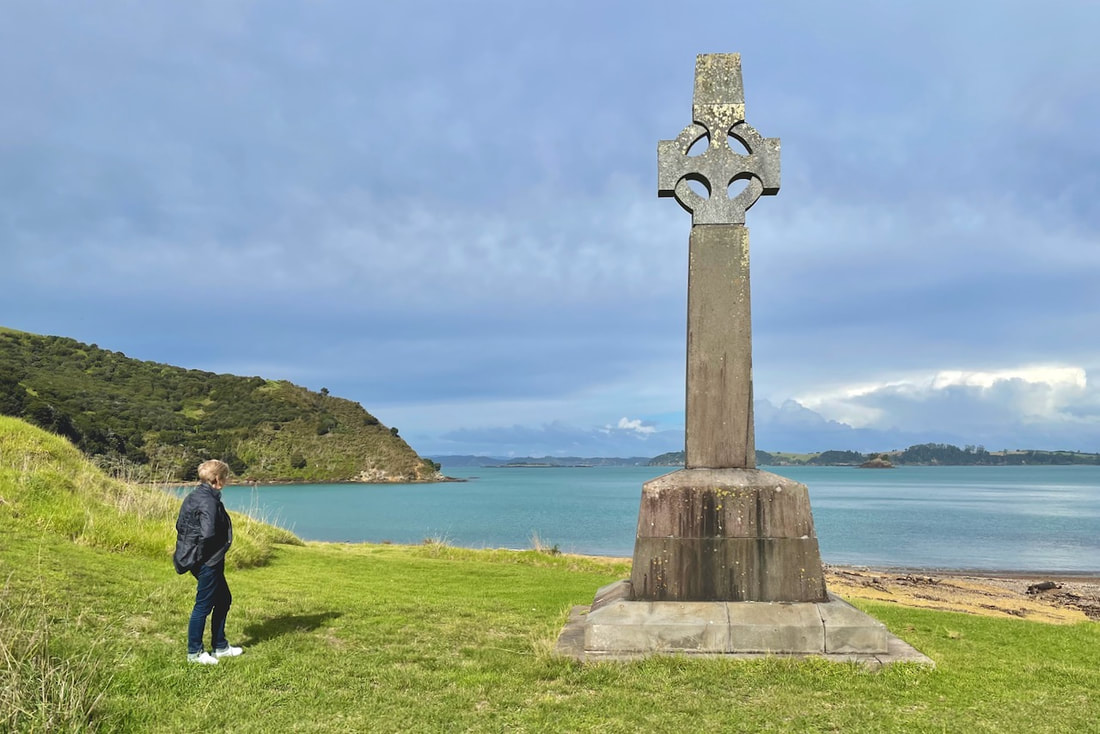 December is a significant month for many peoples around the world. It is the month in which two of the three great Abrahamic faiths have a major festival (Jews, Hannukah; Christians, Christmas), and the Japanese observe Omisoka. For others not professing a faith, December is significant to the extent that it marks the end of the Julian calendar. Each of these observances is distinctive, but a common thread runs through them: celebration and dedication. Yes, December is a time to reflect on the year gone and give thanks, and to ponder what lies ahead. Through this muse, I too wish to give thanks, to the many board directors, business leaders and students that I have had the good fortune to work with during 2021—both in person in New Zealand, and via video link in the United Kingdom, the European Union, the Caucasus region, North America and the Caribbean, India, several African and Middle Eastern countries, and closer to home in Australia. I have learnt a lot, and hope others have derived value from the interactions. Thank you. Peering into 2022, the prospect of travelling internationally to work in person with boards and students is enticing. Once the coronavirus situation stabilises, border restrictions are relaxed and travel becomes viable again, I will accept bookings. But in the meantime, I have decided to take on a new project. For over two decades now, I’ve had the privilege of working with aspiring and established directors on five continents, helping them wrestle with problems, consider opportunities, make decisions and learn what it means to be an effective director. Over the same period, two friends have encouraged—even nagged—me to consolidate my ideas, experiences and insights into a book. And each time it has been mentioned, I have pushed the idea away, citing lack of head space. But circumstances have changed in 2021 and the time now seems right to reconsider the prospect of writing 50,000 words about governance and the craft of board work. So, that is what I will attempt in 2022. (*) The image shows the Marsden Cross, which marks the location of the first Christian mission settlement in New Zealand, and the spot Samuel Marsden preached the first Christian service, on 25 December, 1814.
 Every year, at about this time, sages and futurists of various stripes peer out from their sanctuaries to offer opinions of what the future holds. Many speak or write deterministically, as if they have been blessed with special powers to know or postulate the future with great accuracy. Pronouncements are read with great anticipation by many, and embraced as if categorical. But some commentators are more circumspect; their contingent expressions reveal great maturity and wisdom. “Forecasting is always a hazardous business. … no one can claim that the future is entirely inscrutable.” One does not need to look far to see examples of the difficulties faced by those charged with forecasting and strategising. Over the last two years, for example, undertones of fear and stasis have been prominent. People and companies have frozen in response to pronouncements and dictates from national leaders. Economic and social priorities have been set to one side; the main—nay, only—focus has been on the pesky virus known as Covid19. First, borders were closed and populations were locked down, in an effort to flatten the curve. Some even tried to eliminate the virus. Then, recognising their folly, leaders embraced vaccination to reduce the effects of the virus. Most recently, mandates have seen populations divided into two classes, the vaccinated and the un-vaxxed. Naysayers have jumped in, but many of their predictions have proven to be wrong as well. Meanwhile, economies have struggled and the social fabric has frayed. Amidst this backdrop, boards remain responsible for the performance of the companies they govern. Of those who recognise this (and not all do), some boards wait, perplexed by the unknowns, and others strike out, believing they can control the future, despite a plethora of externalities. Neither response is particularly wise. High performing boards and leadership teams recognise that things change, often unexpectedly. They remain vigilant, watching for weak signals that might portend the emergence of something significant. They hold options open for as long as possible. Then, when it is time, they act, decisively. The types of questions high performing boards ask (and keep asking) include:
While some of these questions may be difficult to answer, boards must persevere. Even partial answers are likely to indicate a more reliable way forward than the lazy option of blindly pursuing the supposedly categorical predictions of mediums, sages and futurists.
 As summer gives way to autumn in the Northern Hemisphere—and soon winter—so various externalities that frame the work of boards and enduring performance of companies continue to press in. Topical externalities include climatic change; shifting geo-political forces; technological disruptions; diversity, equity and inclusion demands; ever-increasing levels of regulation; the emergence of ESG; and, stakeholder capitalism. The challenge for all directors and boards, whether they acknowledge it or not (or even notice or care!), is to respond well in the face of what is patently a dynamic environment—to ensure the fiduciary duty they accepted when agreeing to serve as a director is fulfilled. Steerage and guidance—the essence of corporate governance—requires every director, and the board collectively, to be alert, to both set a course and to respond well in the face of externalities. The mind’s eye needs to be looking ahead, to ensure the reason for the journey remains clear, and that decisions are made in the context of advancing towards the objective. Quite how that should be achieved is the underlying question that has driven my life’s work. Following an extended break from writing—a consequence of dealing with the passing of our patriarch—I have ‘arrived’ back at my desk to think and write again, about organisational performance, governance, strategy and the craft of board work. If you have a question, or would like to learn more about a particular aspect of board work or the impact boards can have on organisational performance, please let me know! If we are to journey far, we need to explore relevant topics and learn together.
 To suggest that the COVID-19 pandemic is the news story of the year is, as they say, a bit of an understatement. And it is easy to understand why. The personal, community and economic impact has been dramatic. Many thousands of people have died; untold millions have lost their jobs or soon will; community life has been put on hold; and economic activity has, largely, ground to a halt. As of today (14 April), nearly 2,000,000 people are known to have been infected by the SARS-CoV-2 virus. The actual number is unknown, but it will be far greater, without doubt. About 120,000 deaths have been linked to the virus as well—although most were due to co-morbidities. Only a small portion of the reported fatalities were directly due to COVID-19 (data from Italy suggests 12 per cent). Understandably, most of the reportage has concentrated on the headline numbers, decisions by politicians, and the public health response. But personal stories have featured too. As you would expect, partisan biases are also on display: Trump has been slammed and Ardern lauded. Despite the seemingly strong alignment apparent across the reportage, the picture being painted is far from complete (the situation is still developing, after all), and it may not be accurate either. Underlying data may be misunderstood, misinterpreted or missing. Yet decisions need to be made, and decisions have consequences, just as sticks have two ends. The challenge for politicians is no different from that boards of directors face all the time. The best and most effective boards are those who seek counsel from a diverse range of perspectives (including competing options) before they make a decision. This article, positioned prominently on the front page of the Dominion Post today, highlights the emerging situation in New Zealand and the challenge for political decision-makers. It is well worth reading, as much for the language used as the story itself. The first sentence in the print edition read, "A group of public health experts has broken ranks on the Government's lockdown strategy ...". (The online edition was subsequently edited, at 8.28am, to read, "A group of public health experts has challenged the Government's public health strategy ...".) The cited experts argue that, with the border secure, various restrictions in place can (should) be relaxed, to enable people to return to a level of normalcy. This view is at odds with the advice the government seems to be relying on, but it remains valid as an option nonetheless and, therefore, merits consideration. Whether the government decides to balance the best interests of the economy and society, or to hold tightly to the current course, should become clear soon. Regardless, its decisions will have consequences, just as every stick has two ends. Politicians, as boards of directors, ignore this truism at their peril.
 Like many people, I've been reading reports of the spread of COVID-19, and the impact it is clearly having on both the health and well-being of communities, and the economy. The number of confirmed cases is growing. Daily reports in New Zealand show confirmed and probable cases (April 3: 772 cases, 96 probable). Globally, the number of deaths attributed to COVID-19 also continues to climb, even though the vast majority of the deceased had comorbidities. Stepping beyond the human elements for a moment (anxiety, cabin-fever, ambivalence, physical distancing), aspects of the reportage have confused me (and others as well, I know), to the point I wonder about the underlying motivations of some of the reporters. Consider the case count: How many people have or have had COVID-19 in New Zealand? The following data lifted from the Ministry of Health website:
The New Zealand media is reporting the total (797, 868) as the number of cases of COVID-19 in New Zealand. But, when the Ministry of Health's criteria is applied (definition of a probable case, here), the actual number of cases is the lower number (723, 772). The WHO, too, is reporting these same official numbers. The question that emerges from this analysis is straightforward: Why does the media persist in overstating the case count? Is it ineptitude, bias, or something more sinister? Fatalities: Official reports from around the world have been clear: many (most, but perhaps not all) of the patients who have died had comorbidities at the time of death. Was COVID-19 actually the cause of all the reported deaths (as the media has implied), or was it a contributory factor alongside other factors? In and of themselves, these misrepresentations by the media are probably of little consequence—until you consider that they may be indicative of a bigger problem that does merit attention. If New Zealand is to climb out of the hole it is now in, some bold decisions are needed. Decision-makers need to think strategically, not tactically. There is widespread agreement that the social and economic costs of the measures currently being taken in New Zealand in response to the COVID-19 outbreak are going to be very high. The effects of the community lockdown, widespread economic destabilisation and imposition of high levels of sovereign debt will probably linger for a long time. They may be generational. The decision to stop was easy; it has been made (although questions remain over whether the border is actually closed). The looming decisions concern when and how to restart. Ultimately, the quality of these decisions will be, to a large extent, dependent on the quality of evidence presented. If the government is to expedite the economic recovery, it needs to set ideology and worst-case models aside, and enlist seasoned, non-partisan critical thinkers to analyse the raw data, draw rational conclusions and present pragmatic recommendations. Without this, the real cost will continue to climb; a winter of discontent indeed.
 The global onset of the COVID-19 virus has precipitated a wide range of reactions in the community, from ambivalence to anxiety. Many governments have stepped in to support their citizens. Some have imposed community-wide lockdowns and social distancing protocols in an effort to break the spread of the contagion; others have implemented rigorous testing and quarantine regimes to identify and isolate those affected. Business leaders have been considering their options too. Working from home has become a 'thing', as has the use of video conferencing and other online tools. Amongst the many responses, one in particular caught my eye this week: proposals by the directors' institutes of several countries—notably Australia, New Zealand and Britain, and Germany and others as well—to temporarily suspend director liability in the case of insolvency. Superficially, this sounds like a reasonable idea. When a force majeure event strikes, the impact on sales, working capital and jobs may be very significant. The effect may be immediate, especially if the company is prevented from trading due to a lockdown. If the affected company cannot restructure its cost base, draw on financial reserves or secure finance quickly, business continuity will be at risk. Insolvency may follow, and all jobs will be lost. Thus goes the argument. But on the flip side (there always is one), the suspension of director liability and allowance to trade whilst insolvent may open the door for abuse, despite the honourable intention of keeping the economy functioning. Insolvency has always been a red line for boards and companies. This proposal makes it porous, by absolving directors of responsibility for trading while insolvent. Some questions worth considering as lawmakers assess the proposal:
While a force majeure event can catch even the most well-run companies out, those with strong balance sheets and highly-engaged boards are better placed to respond well. They probably do not need the protection of the proposed provision, because they are more likely to have a robust risk assessment and mitigation framework in place, and strategic risks will have been assessed at most board meetings. But those companies being run close to the wire, or with inadequately engaged boards or weaker systems, may be caught flat footed. And if they are, what then? Should directors be protected, or be held to account? Lawmakers need to tackle these types of questions, and resolve ambiguities thoroughly. If they don't, expect scurrilous directors to exploit the inevitable loopholes—to defend against other, board-induced, problems such as ineptitude, incompetence, negligence or malfeasance, for example. Enquiry is appropriate, regardless of the catalyst, because sunlight, as they say, is a great disinfectant.
|
SearchMusingsThoughts on corporate governance, strategy and boardcraft; our place in the world; and other topics that catch my attention. 
Categories
All
Archives
February 2024
|
|
Dr. Peter Crow, CMInstD
|
© Copyright 2001-2024 | Terms of use & privacy
|