One of the joys of my 'work' is that I get to journey with boards and executive managers as they wrestle with some pretty challenging questions. Whether the journey involves briefings, phone discussions, meetings over coffee, professional development sessions or facilitated workshops, the goal is generally consistent: to gain understanding, in pursuit of increased effectiveness and, ultimately, better business performance.
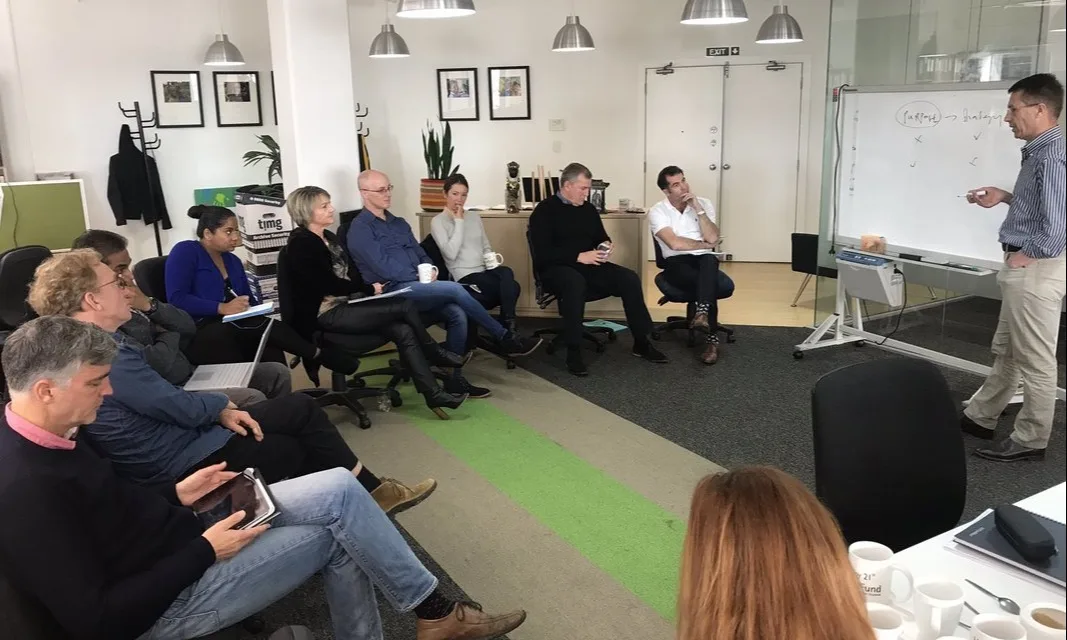
By way of example, I was recently invited to work assist ChildFund New Zealand (*), a social enterprise committed to the ideal of eradicating child poverty. The board and senior managers gathered in a modest setting—the administration office—to strip back the layers and, in so doing, re-discover the organisation's reason for being (purpose) and develop strategy to achieve the identified purpose. The intention was to reach agreement in principle on the core elements by the end of the day, so management could form up a coherent strategy document for discussion with the board and subsequent approval.
We got underway at 9.00am, as planned. Some 116 man-hours of focussed and, at times, intense effort later, it was 5.00pm. I won't mention what was discussed or decided, other than to say agreement was reached on most of the big questions. Once the strategy elements are drafted up into a suitable document and approved (there will be a couple of iterations between management and the board to tidy up loose ends, no doubt), attention will move to implementation. The ChildFund board intends to use the approved strategy as a frame, to both resource management and hold it to account (which will include monitoring strategy implementation and verifying that the expected outcomes and benefits are actually being achieved).
Tips for effective purpose and strategy workshops:
- Comfort zone: Purpose and strategy workshops can be draining, because they 'force' people to think about the future, often beyond the square. If possible, book an external venue to minimise disruptions (not possible for ChildFund).
- Preparation: Workshops can be incredibly fulfilling, leading to a real sense of achievement, but only if participants have prepared well beforehand.
- Structure: A straightforward agenda and a proven framework (not to mention good food and coffee!) let participants know what's coming up.
- Mindset: High levels of engagement and critical thinking are needed if the group is to explore, discover, listen and debate effectively; maintaining an open mind in search of shared understanding.
- Facilitation: The use of an external facilitator (who is committed to the goal but neutral on the result) enables the entire group to concentrate on the goal or task at hand.
- Scope: The importance of resolving purpose and strategy cannot be understated. Purpose without strategy is, simply, an aspirational vision; and, strategy without purpose leads to busyness and wasted resources.
(*) It is not my usual practice to name clients! However, when one of the ChildFund NZ directors posted a picture on social media of the board and managers gathered around a whiteboard, the occurrence of the workshop and my involvement became public. Regardless, the details of the discussion remain confidential.