• Published on

    Reading, to refuel the heart and soul

    Picture
    The end of 2025 is nigh, which means that time of the year when many folk take stock and ponder the future is upon us. Some people use the time to scrutinise the year past closely and make resolutions, some pause and ponder, and others hardly blink. While the idea of New Year resolutions leaves me cold, I do think about my quest to become a better person. And, with it, I usually select a few books to read during the year ahead. For me, reading—typically, long-form books (hard copy, not on-screen)—is a valuable means of relaxing, reflecting, refuelling, and exercising my cognition. If the insights gained are useful in my work-life as well, that is a bonus. 
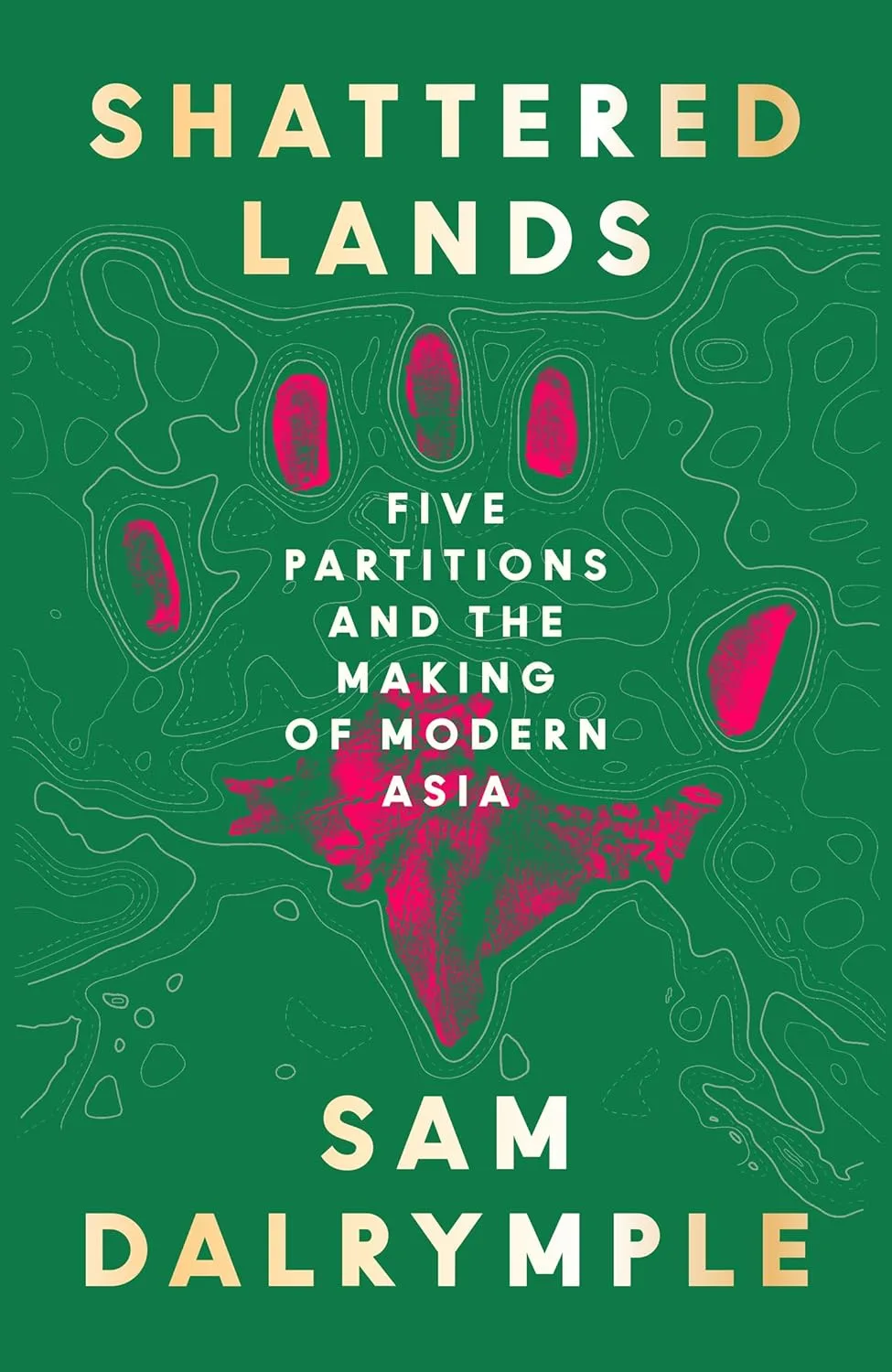
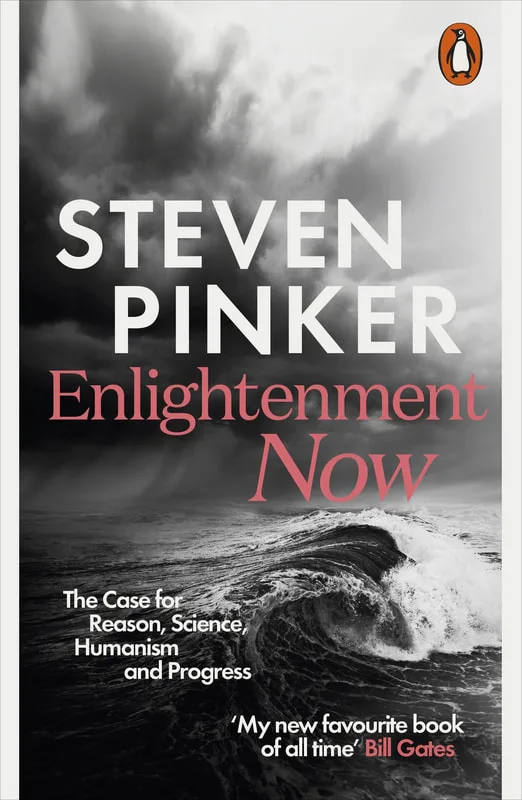
    This year, I have selected six books from my shelf, to tackle alongside a slow-reading project:

    Picture
    Picture
    Picture
    Picture
    Picture
    Picture
    My slow-reading project? Tolstoy's War and Peace. I intend to read one chapter a day, for 366 days.
    If you read, would you mind sharing what you have ahead of you, to inform my future choices?

  • Published on

    Are we prepared to govern AI?

    Picture
    Guest blog: Dr. Cletus Kadzirange (GBS Oxford University, United Kingdom)
    By now, almost everyone has heard that artificial intelligence is revolutionising the commercial world. In addition to creating customer insights and automating procedures, it offers advice on hiring, pricing, and medical diagnosis. Around board tables, the atmosphere is frequently positive—AI is quick, intelligent, and full of potential. 
    While boards are positive about possibilities, are they prepared to govern AI?
    This is a governance question, not a technological one. The most progressive boards are starting to realise that monitoring AI requires far more than a digital strategy, because AI has the potential to affect reputation, social license, compliance, ethics, brand, and more besides. Questions boards should consider centre on accountability, transparency and long-term risk management:
    • Who is at fault when AI fails? This is a question of accountability. Apple's credit card algorithm made headlines in 2021, when it was revealed it gave women much lower credit limits than men with comparable financial backgrounds. Apple blamed its banking partner, Goldman Sachs. Regardless of who is at fault, boards cannot afford to wash their hands. Instead, they need to lean in, consider who is responsible for the performance and outputs of the AI systems and satisfy themselves everything is OK. Before systems behave in unpredicted ways (and they will), boards should check escalation processes and remedial procedures. Accountability is not about assigning blame, but about having foresight, to not only minimise the possibility of unintended outcomes but also respond well. The best companies embed clear accountability lines and practices during the design and implementation of AI systems, to facilitate good governance responses downstream.
    • Is it possible to see inside the black box? This is a question of transparency. Understanding AI's conclusions can be a challenge, even for the people who designed and trained the system! However, businesses that cannot explain the workings of their AI systems are coming under great pressure from consumers and authorities who want greater openness. Consider COMPAS, the system used by US courts to determine recidivism risk when sentencing criminals. Investigative journals discovered the system was skewed against black defendants. When challenged, the corporation that built the system refused to reveal the inner workings, citing trade secrets. Predictably, public disapproval and general suspicion rose sharply. The lesson here is that transparency is a reputational issue as much as a technological one. Boards should ensure management understands how AI systems work, and that credible non-technical explanations are available if required.
    • Are we ready for the new wave of regulation? This is a question of long-term risk. Regulation of AI is advancing rapidly. The Artificial Intelligence Act, which was ratified by the EU in March 2024, established stringent requirements for high-risk systems. A Presidential Executive Order signed in October 2023 moved the US in a similar direction. Provisions such as these expose businesses that cannot exhibit moral AI practices to the risk of fines, legal action and, even, system usage prohibitions. Boards can get ahead of the regulatory curve by regularly reviewing their AI policies against current and proposed regulations, and by calling for reports to confirm that systems are fair in use. 
    AI is no longer a back-office technology. Already, it has emerged as an important enabler, influencing operational, strategic and reputational performance. Consequently, boards that ignore AI as someone else's problem may be blindsided. Boards need to ask questions to ensure AI literacy is adequate, risks have been well-assessed and that governance practices are fit-for-purpose. This is not a matter of dreading the unknown: it is about providing effective steerage and guidance.
    Has your board discussed AI governance in a genuine, systematic way yet? It not, it might be time to get started.
    About Dr. Cletus Kadzirange:
    Cletus is a pracademic in corporate governance and company law who consults, trains and writes on various aspects of corporate law, directors' duties and governance. His specific expertise lies in implementing forward-thinking governance frameworks and sustainable practices that foster long-term value and ethical stewardship.

  • Published on

    The [high] value of white space

    Picture
    When was the last time you stopped and thought about your work, your contribution and the value you offer others? Are you adding value, or simply occupying space? 
    Most leaders say taking time for self-reflection and to think is important, if high performance is to be sustained. But many do not follow through. Instead, they remain 'on': making lists, completing tasks, checking emails, and responding to social media feeds—all in the name of getting things done. Some even speak, proudly, of workaholism and busyness. Such behaviour is lauded in many modern societies. But is 'always on' and busyness conducive to high performance? Or is it a delusion? What of personal and professional relationships; of curiosity; of gaining new insights; of becoming a better person?
    Allocating uninterrupted time—white space—for reflection, thinking and dreaming is critical if organisational leaders (especially board directors!) are to have any hope of contributing well. 
    The idea of dedicated white space was an anathema for me through the first half of my career. But as I got underway with my doctoral research (circa 2012), something changed. Gradually, the guilt I felt when stepping away from my desk when I was stuck subsided: the act of changing neural activity (from sitting staring at a problem, to going for a walk or riding my bike) often had the effect of helping clear the mental block I had been struggling with!
    Since completing my doctoral research in 2016, I continued to prioritise white space, as follows:
    • Early morning (0530–0700, six days per week), to read inspirational texts, news feeds and topical articles.
    • Daily walks, to activate my cardiovascular and musculoskeletal systems.
    • Evening (a 60-minute block before retiring for the night, at least five nights per week), to read what a close friend calls 'brainy books'—books on philosophy, psychology, neuroscience, human nature, history and trekking, but also the 'great books'. 
    • Long-haul flights have become precious white spaces too, because I am left alone to do what you want. I keep a pencil and paper to hand, and record my thoughts (often my best ideas!)
    None of this makes me good, or any better than anyone else. However, my dedication to allocating white spaces and holding them sacrosanct has seen me become more curious. My mind seems to have become more malleable too. Hopefully, my contributions have become more valuable as a result—but this is best assessed by others, not me. 
    Does the idea of white space resonate for you? If so, would you mind sharing your experiences, so others can benefit from them?
  • Published on

    Exploring boards and board work, thrice more

    Picture
    One of the most satisfying aspects of my work involves sharing insights gained from 'live' experiences, in the hope they might be of some value to others. Whether it be facilitating a boardroom discussion, advising a chair, delivering a keynote, leading a capability building workshop, or chatting with a colleague, the call to share my knowledge and experience is strong. So, when Mark Banicevich, Founder of Governance Bitescontacted me for a chat, I was agreeable, more so as we had previously explored various aspects of board work (the recordings are available: herehere and here). The topics Mark wanted to explore included boards in crisis situations; ethical dilemmas in governance; and, governance in developing nations. A date was agreed, and the 'record' button was pressed.
    Now, all three of the fireside chats have been published. You can watch them here ⬇️. If you have any questions having watched them, or want to check something out, please feel free to contact me directly.
    Boards in crisis situations:
    Ethical dilemmas in governance:
    ​Governance in developing nations:
  • Published on

    Space to wait: will it help you be a better contributor?

    Picture
    I was fascinated last evening, at a variety of behaviours on display following news that UA787, a flight from Houston to Chicago-O’Hare was delayed due to a technical problem. The captain provided updates, initially announcing the delay and reason. A little later, he came on the PA again, to apologise. Then he added, “that the engineers were working on it, and were confident of resolving the issue soon.”
    Some, likely the elderly gentleman I was seated beside, were a little anxious.  He was being met by a family member and did not want to put the family member out at all. His response was to ask the flight attendant for an ETA, so he could make a telephone call to the party meeting him. Others, such as the business woman seated across the aisle, became agitated, as if the delay was the flight attendants’ fault; the impression being that she was busy and important and, therefore, the problem needed to be fixed “now”. Her response was direct: as soon as she had the opportunity, she collected her things and hurried off the flight. Others got off too, without fanfare. Yet others, sat quietly and waited, knowing there was little they could do.
    The situation provided an impromptu study of human behaviour and, in particular, how some people seem to have lost (or rejected) the art of waiting.
    I wanted to get to Chicago as much as any other passenger, especially having already flown in the care of Air New Zealand from home to Houston. And, a younger me may well have become frustrated at the situation, as the woman who left abruptly. But, I have learned to leave those things we cannot control to others.
    As I reflect on the experience, my mind is drawn to board work. The role of director is one of service. Have I allocated sufficient time to not only read papers, but consider them and read further? How patient am I when arrangements do not flow as planned, especially logistical arrangements? Is my schedule crammed, or does it provide space, not only as contingency but also for critical thinking?
    The very best directors arrive at meetings prepared, calm, and ready to go, having allocated space before the meeting, to read, think, and prepare questions. The rest, who tend to look harried and unprepared, need to reflect on their situation. Why are they not ready to contribute well? Are they poorly organised? Are they overboarded? Ultimately, are they fit to serve as directors, given the duties they owe?
    PS: UA787 departed 57 minutes late, and arrived approximately 24 minutes behind schedule. The Captain apologised once more. Flight attendants were polite. Passengers were looked after. The world didn’t end.
  • Published on

    Wither accountability?

    During June, I spent most of my discretionary time reviewing articles about corporate scandals and failures, as reported in the mainstream media and academic press, and discussed on social media. They made fascinating reading, not only for the summaries, but also the amount of finger-pointing and defensiveness—an indication that accountability was missing in action in most cases.
    Consider the Carillion, Wirecard and Petrobas cases, all mentioned in a recent Financial Times feature article (paywall, sorry). The discussion concentrated on the accounting and audit professions; the questions being whether they should have detected the problems, and whether ethics should be a consideration. These are good questions, but they sound a little like positioning an ambulance at the bottom of the cliff. Disclosures, in the form of annual reports, audit statements, and various ESG-related reports, are necessary. But they are just that; disclosure reports. And the more complex the reporting and disclosure requirements, the more time management and the board needs to spend preparing and checking reports, to meet expectations. And with greater focus on reporting and compliance, the greater the likelihood that accountability will become discretionary.
    Accountability is one of four foundational elements of corporate governance. There are two aspects, namely, boards are charged with holding management to account, and they need to provide an account to legitimate stakeholders. (The others are the formulation and approval of corporate purpose and strategy; policymaking; and, monitoring and supervising management, to ensure the company is operated and strategy achieved within prevailing statutory and regulatory boundaries. Together, these four elements comprise the Learning Board Framework, a proposal described in The fish rots from the head, a book written by Bob Garratt, a doyen of corporate governance and board work, circa 1996. The LBF is the single-best approach to board activity that I have come across in my twenty-five years of board and governance practice and research, bar none.)
    As in life, enduring success in business (meaning, achieving and sustaining high levels of organisational performance) can be attributed to many things. These include, inter alia, a great idea, a clear and coherent strategy, excellent execution, capable and highly-motivated people, forces of nature, timing, effective leadership, luck (yes, luck), and more besides. Yes, success has many sources, even to the point of being idiosyncratic. 
    Failure is different. Even a cursory study of corporate failures reveals several common themes, most of which can be readily traced back to the boardroom:
    • hubris
    • ineptitude
    • malfeasance
    • incompetence
    • questionable ethics
    • corporate governance misunderstood
    • wrong expertise mix
    • weak engagement
    • lack of time
    Almost all of these themes emerge from poor behaviour and a leakage of accountability. Knowing what to do is one thing, knowing how to behave (and behaving) is quite another. Fortunately, help is at hand. Insights from research suggest five underlying behaviours are necessary if boards are to contribute well. These include strategic competence, a sense of purpose, active engagement, collective efficacy and constructive control. If any one of these is absent, the likelihood of the board exerting any meaningful influence or adding any value drops to nought. (If you want more information on this, please get in touch.)
    One final comment: The role of director is founded on trust—the fiduciary responsibility. And from this flows accountability—in role and in relationship. If boards place a low value on accountability, by not holding management to account for the achievement of operational and strategic goals; rubber-stamping advice from suppliers such as lawyers, accountants and auditors; or, not providing a candid account of performance to shareholders, regulators and other stakeholders, they deserve ​what comes their way.