• Published on

    Holiday reading plans

    The task of exposing the twelfth and last page of my desk calendar, in a couple of days' time, signals the arrival of the Christmas season in our household. As happens each year, my mind moves to the prospect of spending time with family and friends; to BBQs; to warm weather (as happens when one lives in the Southern Hemisphere); and, to the books that I'd like to read over the holiday period. This year, there are just three titles on my list. Hopefully one or more of them finds their way under the Christmas tree later in the month!
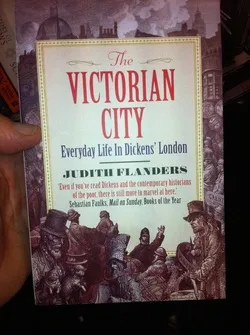
    Image description
    The Victorian City, by Judith Flanders.

    Flanders has written several books about Victorian London, none of which I've read. This particular title caught my eye when I was browsing in a local book store, perhaps as a result of my heightened awareness of the great city following my recent visit there.
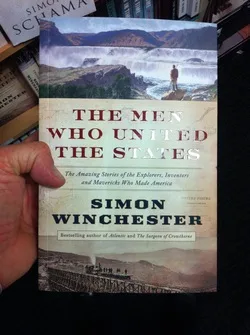
    Image description
    The Men who United the States, by Simon Winchester.

    Winchester ranks amongst my favourite story-telling authors. I've enjoyed The Surgeon of Crowthorne, A Crack in the Edge of the World, and The River at the Centre of the World in the past. If this new title is comparable, then I suspect that I'm in for a treat.
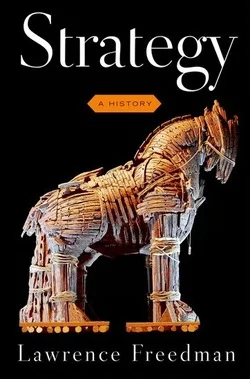
    Image description
    Strategy: A History, by Lawrence Freedman. 

    This newly published title has received critical acclaim from several well-regarded reviewers. It offers an expansive view of strategy and strategic thinking, from ancient military strategists (Achilles, Sun Tzu, Machiavelli) to modern business strategists (Drucker, Sloan). At 768 pages, I may take a while to get through this one!
  • Published on

    ANZAM Conference: Observations and insights

    I will be attending the 27th Australian and New Zealand Academy of Management (ANZAM) Conference, in Hobart, Australia, next week. The three-day gathering, from Wed 4 to Fri 6 December, is the premier conference for management scholars and practitioners in this part of the world, with over 340 research papers and several keynote presentations on the programme! Papers have been grouped into 15 topic areas, with up to eight streams of papers being presented at any one time. Consequently, delegates have the challenging task of deciding what papers they want to hear—a not insignificant logistics exercise for sure.

    While I will not be presenting a paper this year, I will be sharing observations and insights during the conference, as I have done with other conferences. Please check back here later next week if you like to hear about the latest developments in the management field.
  • Published on

    US trip: March 2014

    I will be visiting the USA in March, to present a paper at the International Conference on Management Leadership and Governance, at Babson College, Mass., on 20–21 March. Currently, I have up to three days available (Fri 14, Mon 17, Tue 18) for meetings in or near San Francisco or Boston (my travel route) to provide assistance with, or speak into, any corporate strategy or governance matter that may be of interest to you or your organisation.

    If you would like to take advantage of this, to have me speak, consult or provide some other contribution, please contact me to let me know how I can help.
  • Published on

    Angel investments: Philanthropy, guile or gambling?

    Angel investors are an interesting lot. They typically invest in start-up or early-stage companies, but such investments can be risky. Folklore suggests that, for every ten investments that an Angel makes, four will fail to provide any return, three will return the original investment, two will do reasonably well (2–5 times return), and one will do very well (5–10 times return). Sometimes this approach works (in terms of providing a positive overall return over a five to ten year period), and sometimes it doesn't.

    Without wishing to sound cynical in any way, what motivates an angel? Generally speaking, they are wealthy individuals who have worked hard to build a capital base. Why would they risk eroding their base by making risky investments? I suspect many Angels are adrenalin junkies—gamblers even—where the possibility (and thrill) of high returns are simply too great to ignore. However this is not the case for all Angels. Some see their investments as philanthropic donations, to assist the next generation of entrepreneurs. Others are well-informed, astute and shrewd. Regardless of their motivation, Angels provide a much-needed source of capital for entrepreneurs—to test their ideas and try to get them off the ground. Bill Gates, Rod Drury and Sam Morgan are all beneficiaries, and look at them now!
  • Published on

    ECMLG'13: reflections from day 2

    The ECMLG conference is over again for another year. The second day saw another twenty papers (approximately) delivered, by some very capable scholars. As happened on the first day, most of the presentations on day 2 were well received, with some very good questions and discussions during question time.

    The following bullet points are my summary reflections, having just returned to my hotel room after an end-of-conference dinner with six other delegates:
    • The ACPI people ran a good conference. They do 18–20 conferences per year, so it would be relatively easy to just go through the motions. Not ACPI. They seem to genuinely care about delivering a great conference package.
    • The highlight of the whole conference—for me at least—was Vlado Dimovski's keynote on the second morning. 
    • Some presenters (including some who had written simply outstanding papers) suffered the indignity of addressing very small audiences. It would appear that a group of the delegates chose to bypass sessions in favour of tourist activities. While one can't compel delegates to attend, the organisers may want to look at ways to stimulate "fringe" delegates to remain engaged throughout.
    • The majority of the papers were delivered by European scholars, which is perhaps not surprising given the regional orientation of the conference. However, the topics of management leadership and governance have global reach and import, so it would have been nice to see more papers from North American and Asian scholars. I think it would have enriched the discussion.
    • As with other similar conferences, I met some amazing people, and was welcomed into the community of leadership and governance scholars with open arms. This included opportunities to test ideas and get some feedback to inform the next stages of my own research, which I deeply appreciated.

    Looking ahead to next year, the 10th European Conference on Management Leadership and Governance will be held in Zagreb, Croatia, in October 2014. I have already pencilled the conference in my diary, with a view to presenting my final thesis findings to the world.
  • Published on

    ECMLG'13: Don't forget the stakeholders' interests

    Marina Lovrincevic (University of Split, Croatia) presented a very interesting paper on the relationship between supervisory board efficiency and stakeholder orientation. In so doing, Lovrincevic exposed a chasm between the Euro-centric view of the sustainable purpose of the company (based on stakeholder theory) and the Anglo-American view (agency theory). 

    Lovrincevic's analysis, of empirical data from a sample of Croatian non-financial listed companies, asserted that supervisory boards are helpful to protecting the interests of the wider set of stakeholders. An interesting debate ensued, essentially comparing and contrasting the Friedman view (value maximisation for the shareholder) and the stakeholder view (value distribution). The audience seemed to agree that the paper provided an interesting platform for future research, particularly research to explore whether a modified view of stakeholder theory might provide a more complete basis for effective governance.