• Published on

    Wynyard Group: What went wrong?

    Former sharemarket darling, Wynyard Group, was put into voluntary administration this week. The announcement was made via a notification to the share market and notice on the company website.
    The company was highly-valued, well-funded and governed by seemingly capable directors. Its products, software systems to assist in crime fighting, were seemingly in demand—evidenced by strong revenue growth since an IPO in 2013. Milford Asset Management, a shareholder, valued the company at nearly $120M at the time of the IPO. But Wynyard failed to make money, then or since. The result was inevitable: the company became caught in an ever-deepening hole that, in the end, was too deep to climb out from. When last traded, the notional value of the company had fallen to less than $40M. Now that the liquidator is involved, the residual share value is (close to) zero.
    What went wrong?
    Whereas some failures reported this year appear to have been grounded on hubris or fraudulent behaviour, such motivations do not appear to have been significant at Wynyard Group. The failure appears to have been more straightforward. Indicators have been visible for some time as well. Ultimately, the actions (or inaction?) of the board of directors need to be placed under scrutiny.
    The company's business model was characterised by infrequent high-value sales (read: a lumpy revenue profile). The company also employed lots of highly-capable software engineers and other technical specialists. Effective cash management is crucial in such companies. Superficially, the company appears to have been carrying too much cost, suggesting that it took on expense too far ahead of the revenue curve. The company does not appear to have had a backup plan to be activated if revenue expectations were not realised (in either the expected timeframe or manner). 
    The market seemed to know there was a problem (track the share price over the last 18–24 months), yet the situation was allowed to continue seemingly without any major corrective action being taken. The company burned through over $140 million of shareholder funds. It's little wonder that the investors became bitter.
    Why were the problems not addressed by the board much earlier? Was the board (which included several high-profile directors, three of whom resigned in May and June 2016) not in control as it should have been? Though present, were directors asleep at the wheel rather, in effect adopting a passive style of oversight—in contrast to that conceptualised by Eells, Cadbury, Garratt and others?  Was the board captured by an optimistic outlook and charismatic management? More pointedly, who was actually in control? The early indications suggest that the company was being controlled by management—ineffectively so, as is now patently clear—usurping the board's statutory role.
    What can we learn?
    That Wynyard Group has now joined (unwittingly) a rather long list of companies of interest to governance researchers and MBA classes (adding case example of what not to do) is clear. This case will also, no doubt, be played out in the business media and by 'experts' in the days to come. In the meantime and regardless of whether Wynyard is wound up or continues to trade in some form, the case provides salutary lessons for boards elsewhere:
    • First, directors should realise they have a duty to act in the best interests of the company, not the shareholders, employees, managers, suppliers or any other party. This includes not allowing the company to trade recklessly and, importantly, making tough decisions if required. If the viability of the company is at risk, the board is duty-bound to act.
    • Second, directors need to make appropriate enquiries and ask probing questions, to ensure they clearly understand the business of the business (a weak point of many directors). Active engagement and adequate knowledge are crucial foundations not only to the formulation and approval of strategy (a responsibility of the board) but also effective decision-making including strategic decisions.
    • Thirdly, to what extent is the conformance–performance dilemma in hand? Is the board spending adequate time on forward-facing performance-related matters (especially strategy), or (as is more common than many directors admit when surveyed) is most of the board's time being spent on compliance and conformance matters?
    • Other considerations include whether the directors are strategically competent, actively engaged and operating with a sense of purpose. Also, does the board possess the collective efficacy thought to be necessary to work together and exert control constructively? 
    Boards should discuss these and related matters periodically, to ensure they are appropriately focussed on (and adequately equipped to pursue) the value creation mandate. A formal, externally-facilitated board and governance assessment (providing an outside perspective) should offer useful insights as well, so long as any recommendations arising are acting on.
  • Published on

    On board reports: How long, and what to say?

    One of the humbling privileges of working with boards and directors is the opportunity to participate in discussions and provide guidance on themes as varied as corporate purposestrategycorporate governance and board effectiveness. The overarching aim is straightforward: to help boards become more effective in the important role of steering and guiding the organisation they govern towards its intended purpose. 
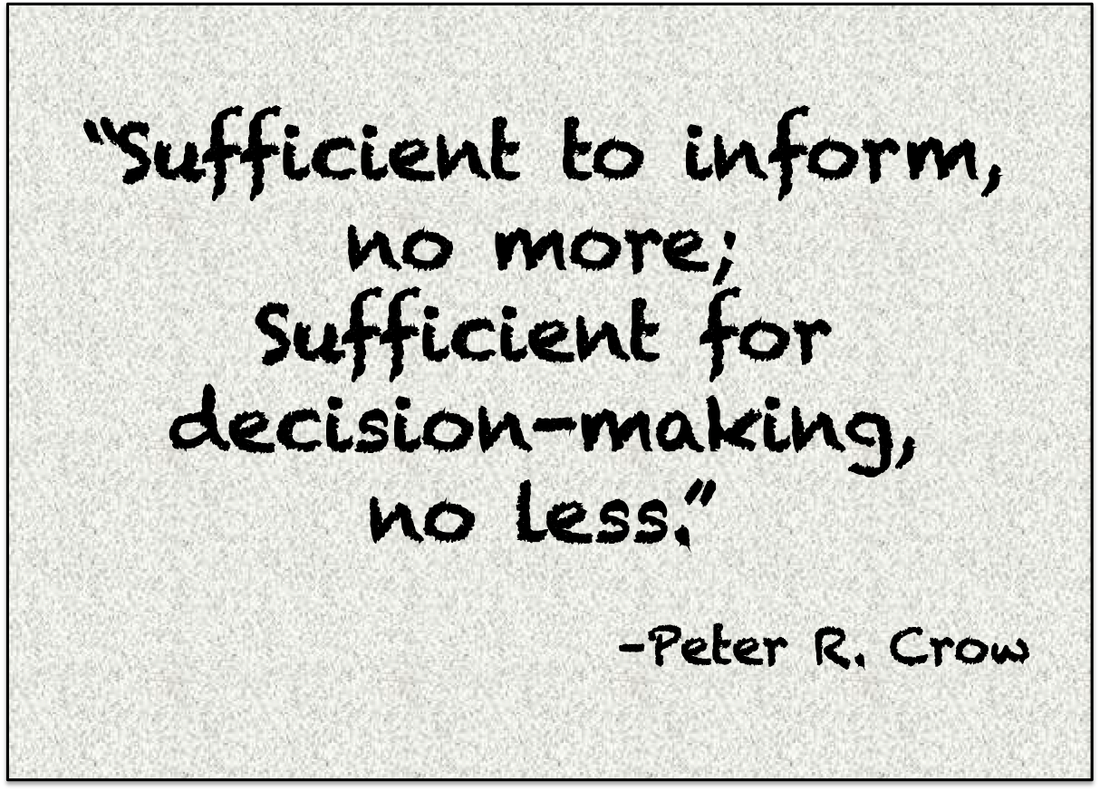
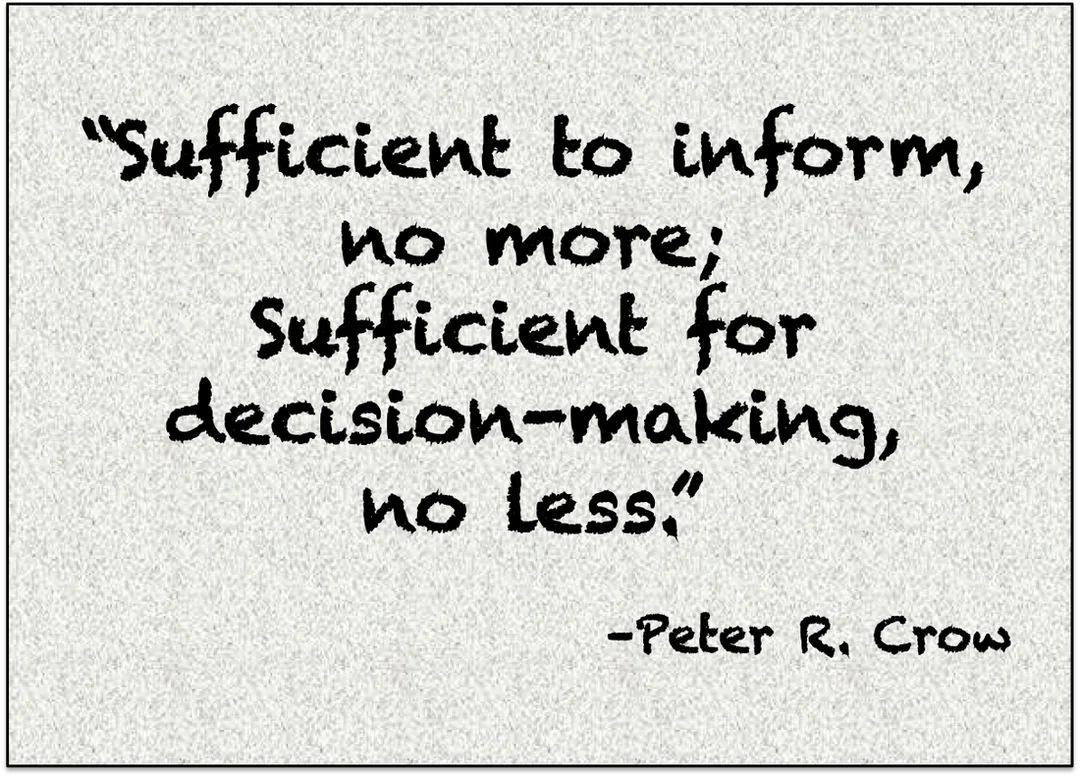
    Recently, the topic of reporting seems to have been front of mind for many directors. I've been asked who should determine the structure and content of the board pack (the board), and what the appropriate amount of detail to include in the board pack is ("sufficient"—see the maxim below). 
    In responding to these questions, the first consideration is that the board report is no different from any other communications channel between two parties: the purpose of the report is to transport information to both inform the receiver and enable decisions to be made. Like other communications channels, the effectiveness of the exchange between management and the board is determined by the receiver, alone. Did the board understand the contents of the material in the board report?
    If the board is to have any hope of doing its job well, it needs to ensure the chief executive understands what information it requires for effective decision-making. Otherwise, what hope has the chief executive got of knowing or, worse, of the board of making high-quality decisions? If the chief executive has to second-guess the board, the likelihood (from bitter experience) is that the board pack will be structured in a form that suits the chief executive and the information may not be readily usable. 
    ​The remedy to ensure the board pack meets the board's needs is straightforward: a 'board pack review' item should be included in the annual work plan. While one review per annum is appropriate, a brief review should be undertaken whenever a new director joins the board. The board should discuss the contents and structure of the board pack to ensure directors understand the information and can readily navigate their way around the pack as presented. If there are any concerns, changes should be recommended for the chief executive to act upon. This simple task should ensure the board gets what it needs to do its job properly and the chief executive knows what to prepare.
    The second question (detail) is similarly straightforward. On this question, the following maxim applies:
    Picture
    If you would like some more information, including examples of how to structure the chief executive's report and financial report, please get in touch.
  • Published on

    Essential qualities of a director?

    Recently, an article was posted on the ICSA: The Governance Institute website, describing 5 essential qualities of a non-executive director. The author lists the following five 'core qualities' and suggests these need to form the basis of evaluations when companies are appointing non-executive directors:
    • Big picture thinker
    • Governance knowledge
    • Independent mindset
    • Ambassador potential
    • Energy and commitment
    This is a good list and several of the items are intuitively appealing. However, having read the article a few times now and compared these suggestions with the findings from my own research and others elsewhere, I am not sure all of these qualities are actually 'essential'. This set me thinking, leading to some supplementary questions:
    • Why have these five qualities been singled out?
    • The fourth quality, 'ambassador potential', stands out as being somewhat different from the others. While some level of ambassadorial capability is desirable in the chairman (because they are usually the spokesman), I struggle to understand why it might be crucial in directors who do not speak for the company. The quality may be more usefully categorised as a desirable item.
    • The title of the article suggests these are essential qualities of non-executive directors. But what of executive directors? Do they possess different qualities? The law makes no distinction between executive and non-executive directors. If a board is to be effective, big picture thinking; knowledge of board practices (i.e., governance knowledge); an independent mindset; and, energy and commitment are more likely to be essential qualities for all directors.
    • What of other qualities that have been suggested as being highly important including competence (to understand the business of the business and complex information); the ability to deal with ambiguity and change; vigorous debate; and, teamwork and trust, for example?
    • Though not stated explicitly, the use of 'essential' implies these qualities are universally applicable. Given the complex and socially dynamic nature of corporate governance, companies and markets, is this reasonable?
    • How might possession of these qualities translate into a beneficial impact on business performance?
    Though progress has been made in recent years, these questions demonstrate our knowledge abut boards is far from complete. We still have much to learn about how boards actually work; how they should work; and, crucially, whether boards can influence company performance through the decisions made in the boardroom (or not). If answers to these very difficult questions can be found, they will probably have significant implications including perhaps to a new understanding of corporate governance and updated guidance for board practices, director recruitment and on-going director development. While some directors may struggle to come to terms with such implications, the flow-on effects for sustainable business performance, economic growth and societal well-being are likely to be significant.
  • Published on

    On the cusp of something big?

    The last five years of my life have been dominated by research—the goal being to begin to understand how boards influence firm performance through their contributions in the boardroom. It's been a tough journey at times, but the end is now in sight—and thank goodness because a groundswell of interest in how my research might be applied to real situations is starting to become apparent. People in Australia; the UK; Europe; USA; South-east Asia; the Middle East; and, New Zealand have been in touch with questions and requests.
    While the research is yet to be published, enquiries are arriving from many quarters including invitations to write an editorial for a leading magazine; speak at the Governance Institute of Australia National Conference; participate in a multi-city (Europe and Asia) speaking tour in 2017; prepare a webcast; and, write a book for practicing directors. These are on top of confirmation from the prestigious Leadership and Organization Development Journal that an article of mine will be published soon (Vol 37, Issue 8), and earlier commitments to deliver a webinar to a world-wide audience; tailor a governance development programme for members of an industry association; and, facilitate several workshops to help companies refine their corporate purpose, strategy and governance frameworks. 
    That so many people have begun to question 'conventional' corporate governance thinking (that the board and management must be kept separate; that particular board structural configurations lead to better firm performance; and, that the term 'governance' can be widely applied including beyond the boardroom) has caught me somewhat by surprise. However, my commitment to serve boards and directors who are intent on exerting influence from the boardroom in pursuit of an agreed corporate purpose is a matter of public record. So respond I shall (and happily so).
    If you want to ask a question or toss around some ideas, please get in touch. I look forward to the discussion.
  • Published on

    Making an impact on performance, from the top

    One of the great challenges all business leaders face is the question of how to make an impact on the overall performance of the firm they lead. Boards are no exception. Effective boards are comprised of capable people who assess situations, make strategic decisions, and oversee management to ensure goals are achieved.
    The challenge of leading well and making an impact on business performance is very real, especially in today's environment of fluid work patterns and declining levels of employee loyalty. Boards are responsible for company performance, yet they do not run companies directly (that is the job of the chief executive). How might boards respond to ensure firm performance goals are actually achieved?
    Here are some considerations:
    • Boards need to accept that responsibility for overall business performance lies with them, not the chief executive.
    • The overall purpose of the business (i.e., its reason for being) must be both clearly defined (board responsibility) and well communicated (chief executive responsbility).
    • A carefully crafted strategy (to achieve the purpose) needs to be developed (ideally, by the board and management, together) and implemented.
    • Business systems and processes need to be optimised to expedite effective collaboration; teamwork; and, ensure the information that people need to do their job effectively is available when they need it. 
    The importance of this last consideration should not be underestimated: if employees cannot collaborate effectively because crucial information is missing or hard to access, overall performance will suffer—period. The impact on employee morale, productivity and the bottom line is likely to be very significant.
    The board needs to know how the business is performing relative to the agreed strategy, and the whether expected outcomes and associated benefits are being achieved (or not). Financial reports only tell part of the story. Employee engagement is an important though often overlooked indicator. If your board isn't sure whether employees are fully engaged, it needs ask the chief executive some probing questions; request a staff engagement survey; seek regular updates from senior managers (in addition to the chief executive); or, pursue some combination of these and other options (*). If employee engagement is low or any inconsistencies are discovered, weak information flows or ineffective collaboration within the company and/or with customers are likely to be contributing factors—a starting point for further investigation and subsequent decision-making.
    (*) Boards that lack direct expertise to actively pursue these suggestions themselves should seek independent advice from a seasoned expert, to help them understand what might be possible, establish benchmarks and inform future board decisions. A long-time colleague of mine, Michael Sampson, is one such person. He is an expert in the fields of workforce collaboration, teamwork and new approaches to work. Michael also speaks at conferences around the world and has written several books​I commend him to you.
  • Published on

    Corporate governance in the UK: What is the real problem?

    Picture
    When Theresa May went on record recently, the key message for boards was that they needed to pull their socks up lest additional structural measures including employee directors become a requirement for UK companies. Much of the commentary was aimed at the boards of publicly-listed companies, in an attempt to curb (perceived and real) corporate excess in the form of excessive remuneration; hubris; and, a flagrant disregard of some stakeholders. 
    Today, ICSA: The Governance Institute announced that it had written to the Prime Minister calling for the boards of privately-held companies to be held to the same levels of accountability and disclosure as publicly-listed firms. This request seems perfectly reasonable, especially as the UK Companies Act 2006 applies to all companies.
    The UK statute is clear: directors (actually, boards because it is boards that make decisions) are required to  consider the long-term consequences of their decisions and the impact on employees and the community. Good practice suggests that boards should, amongst the things, keep shareholders informed (through the board's annual report to shareholders) of its activities.
    ICSA is right to raise the issue, but will enforced compliance with codes of practice fix the problem?
    If boards act within the law and in accordance with codes of practice as they pursue business objectives, then letters such as the one written by ICSA should not be necessary. But they don't. Some directors and boards take liberties. Enough examples have come to light in recent years (e.g., HSBC, FIFA, Volkswagen, Fonterra, Solid Energy, Toshiba and, most recently, BHS) to suggest that some boards knowingly run close to or beyond boundaries defined in law. But where does the real problem lie? Is it with the law, the principles-based codes of practice; the directors themselves; or, something else entirely?
    Consider this: The road toll has not declined as a direct result of increased enforcement measures but rather a change of behaviour—drivers choosing to driver safer vehicles more carefully. Are boards any different? If boards are analogous to drivers, probably not. Unless and until boards make a conscious decision to embrace company performance as an important priority, and to do so in accordance with both established law and published codes of practice, I suspect the media will continue to be gainfully employed.
    Finally, shareholders have an important and oft overlooked contribution to make. Recent experience suggests that greater care is needed in the appointment process, to ensure only suitably capable directors who are intent on acting in the best interests of the company are appointed to boards. In addition, shareholders should not overlook their right to hold directors to account including dismissing those who fail to discharge their legal duties or exercise requisite care and attention.