• Published on

    Skin in the game: A boardroom perspective

    Ten days ago, I was in Vienna to attend the Global Peter Drucker Forum, as an observer and participant. However, at the last minute—actually, three days before the Forum—the organisers asked me to 'jump in' to cover for a panelist who was a withdrawal. The session, which was recorded, was entitled "Managing like you have skin in the game". I was asked to provide a boardroom perspective. My comments start at 41m 35s:
  • Published on

    Global Peter Drucker Forum: Day 2 highlights

    Picture
    The 2018 edition of the Global Peter Drucker Forum was convened in Vienna, Austria this week. This post summarises insights from the second day (click here for insights from Day 1). I didn't take as many notes on the second day, preferring instead to sit, listen and dwell on what was said. (I also missed a couple of sessions, one to finalise my own preparations to speak; another to spend time privately with a two inspirational thinkers.) However, there were, for me, two speakers that really stamped their mark on the day, as follows:
    Hermann Hauser,​ director of Amadeus Capital Partners and chair of the European Innovation Council, delivered a strong message, arguing that humanity is on the cusp of an inflection point (moving beyond evolution to design thinking) that has the potential to 'change everything' in the reasonably near future. He identified four significant disrupters:
    • Artificial intelligence and machine learning: Allows for smart processes and removal of menial work
    • Block chain and smart contracts: Enables automated [process] execution to be designed into systems
    • Synthetic biology: Enables biological patterns of life to be modified, at the will of man
    • Quantum computing: Nascent technology with the potential to render security systems useless
    The implications of these disrupters are, frankly, rather daunting. Synthetic biology offers the prospect of defeating disease, but at what cost? Quantum computing has the potential to render electronic security systems useless. One doesn't have to be a rocket scientist to realise the massive implications for commerce, banking and warfare. Researchers and technologists are committed to bringing these capabilities to market. But at what cost to humanity? The ethical implications are not insignificant. Recognising this, Hauser suggested that the state has an important role to play, to ensure appropriate regulatory boundaries and safeguards are established. But it must act quickly, before the genie gets out. 
    Martin Wolf, chief economics editor of the Financial Times, spoke passionately about the role of the state; in his view, the single-most important institution in human history. I first heard Wolf speak a few years ago. He left a strong impression on me then, and did so again as he spoke. Addressing the question of how states can 'work better', Wolf named several important roles that the state 'must' fulfil par excellence:
    • To ensure society is both collective and inclusive (no one left behind)
    • To provide a fair and effective judicial system
    • To underpin the monetary system
    • To regulate and control sovereign borders
    • To finance innovation (in effect R&D, not product development)
    • To regulate and guide economic activity
    • To protect the commons
    • To collaborate with other states, to ensure stability of 'global' governance
    • To establish the laws, roles, purposes and legitimate operations of all business
    Such roles need to be implemented with aplomb. Failure to do so will inevitably lead to anarchy, in Wolf's view.
  • Published on

    Global Peter Drucker Forum: Day 1 observations

    Picture
    The 2018 edition of the Global Peter Drucker Forum, the tenth annual gathering of leaders, philosophers and students of management was convened in Vienna, Austria this week, at the Hofburg, the Imperial Palace. The location was a wonderful, historical backdrop for two full days of discussions and debates on topical issues directly relevant to managers and leaders around the world.
    Overall, the purpose of the Forum is to share expertise and build capability in line with Peter Drucker's philosophies. This year, the theme was management . the human dimension. It was the second time I have attended the Forum. The decision to do so was relatively straightforward; made soon after I had the opportunity to stand amongst giants in November 2017. As was the case then, the programme followed a reasonably conventional format dominated by panel-based discussions and plenaries. One major difference from last year though was the scale of the event. Some 500 people attended in 2017. The tenth anniversary edition took a step up, to enable 1000 people to join the conversation. This led to some quite different dynamics at a personal level (notably that it was much more difficult to find people or to access the speakers). As a consequence, some intimacy was lost. But this is a minor point, especially when viewed in the context of a very well-run event.
    The following three summaries, presented in no particular order, provide a glimpse of the ideas shared and learnings from the first day. (If you would like to know more, please get in touch.)
    Business and society:​ Four panelists including Jean-Dominique Senard, CEO of Michelin Group, and Yves Doz, Emeritus Professor of Strategic Management at INSEAD, shared their thoughts on the importance of holding business and society together (the implication being that business and society have, or are at risk of, drifting apart). Key takeaways:
    • Whereas the people challenge during the industrial revolution was to manage staff (think, human resources), the challenge of our time as we proceed through the knowledge revolution is how to inspire staff (think, people).
    • Organisational purpose and underlying values are core to motivation and behaviour. These must be clearly established and inculcated throughout the firm (and even beyond), starting with the board of directors. If either purpose or values are ambiguous, or if people don't buy into them, the natural response is that people will offer their effort (at best), not their hearts and minds. The resultant firm performance can only be mediocrity. 
    • Collaboration, both within the firm and with others (think, ecosystem) is necessary if a firm is to scale quickly.
    • Most established businesses know they need to put people in the middle—but they struggle to implement the change needed to put this into practice.
    • Perhaps counterintuitively, 'legacy' businesses are often much more able to 'win', despite startups having greater mindshare and seeming to be better funded (Hyundai and BMW v. Tesla, for example).
    • Change is a constant now. Therefore, chief executives must operate from the perspective of leadership, not management.
    • Economic liberalism needs to be refined (to end the excesses of self-centred capitalism). If it is not, expect government intervention, through taxation and regulation. 
    Human questions, machine answers: Hal Gregersen kicked off this session with some stark predictions:
    • 15% of the jobs currently available will be removed in the future, due to automation
    • 60% of the jobs currently available will be substantially altered by technology
    The insight from the first of these numbers is that predictions of cataclysmic job-loss and unemployment are little more than scaremongering. However, the second number demonstrates that the impact of technology on work will continue to be very significant into the future. But we need to get past the numbers for focus on what actually matters: it is people.
    People everywhere need to become more adept at using computers, especially for menial and repetitive tasks, and, even more importantly, people need to be taught to be some computers can never be: humans; empathetic, curious, social beings. As humans, our ability to thrive in a world seemingly falling head-long into the embrace of AI is to ensure we ask the 'right questions', many of which will be social, ethical and spiritual.
    Other speakers added that capabilities need to prevail over skills. This might sound like semantics, but the difference between the two is both significant and important. Curiosity, situational awareness, contextual understanding and creativity are far more important than operational or tactical skills, for example. Such capabilities need to be nurtured and exercised, lest they become like unused muscles—atrophied.
    Re-engaging the humanities: The aim of this fascinating session was to argue the merit of re-connecting humans with the humanities. The starting point for the discussion was an assertion that humanity's adoption of technology has come at a great cost: mankind is rapidly losing touch with what makes him distinct from other species. Simply, the pursuit of technological 'solutions' has seen many lose sight of the meaning of life. 
    Humans are social beings, and meaning is revealed through interaction and insight. Unlike molecules that behave in a consistent manner when they are heated (cooled) or put under pressure, humans do not. As a consequence, if organisations are to thrive in the future, conceptions need to change. Rather than using deterministic and mechanistic models to understand and explain organisations and performance, a biological 'ecosystem' may provide a more instructive. In this context, the term 'ecosystem' means a community of organisms that interact contingently and their physical environment. While such communities have defining characteristics, 'success' is dependent on many factors, and it is neither predictable or guaranteed.
    A summary of observations and insights from second day is available here.
  • Published on

    Notes from a nomad in Europe

    Picture
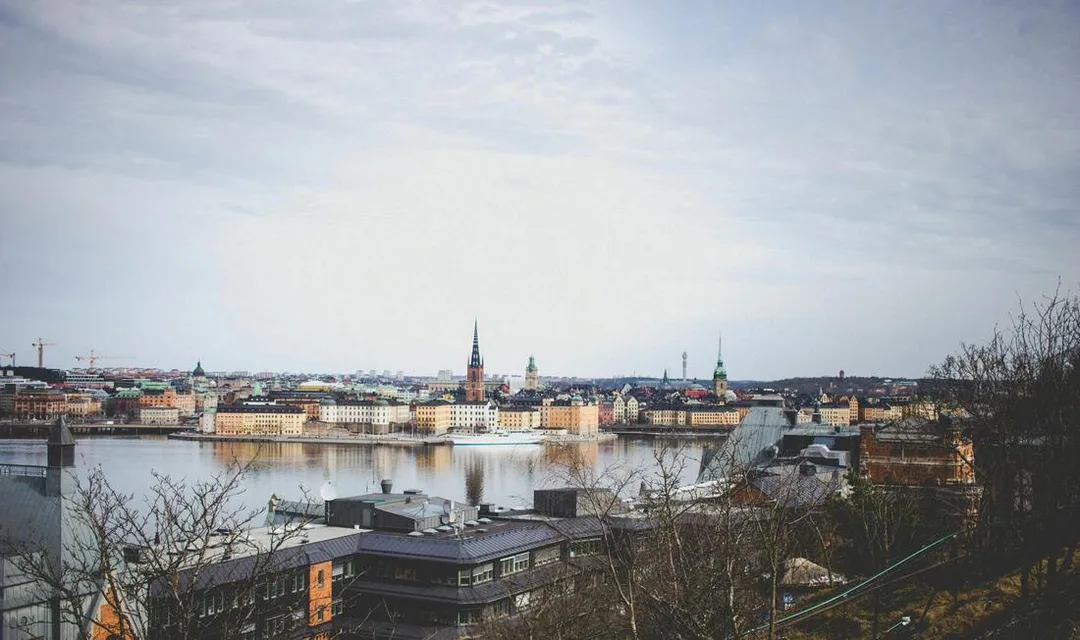
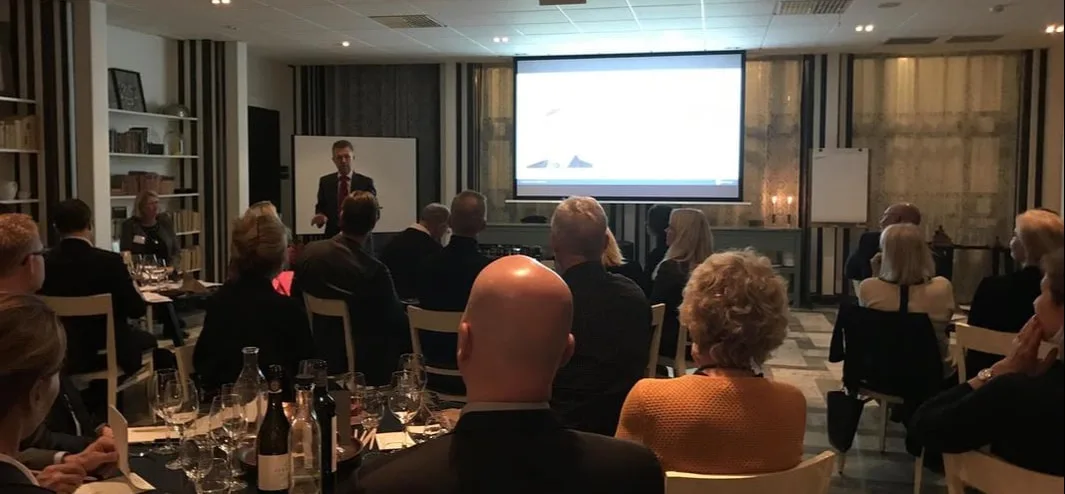
    My speaking and advisory tour of several European cities got off to a great start on Sunday evening. The first port of call was Stockholm. Liselotte Hägertz Engstam, an established director and board chair in the Nordics, hosted a seminar at Tändstickspalatset; a great venue. The theme was [the] Board's role in innovation strategy and governing new digital business models. ​Some 35–40 directors and board chairs with just over 100 board mandates between them, gathered to hear two speakers, namely, Stephanie Woerner and yours truly. The following paragraphs tell the story.
    Digital business model and board contributions
    Stephanie Woerner, a Research scientist at Sloan School of Management in Boston, explored value creation in the digital economy. She observed that many (most?) corporations were somewhat lumberous, offered rather average customer service and, tellingly, were ill-equipped to take advantage of emerging 'digital opportunities'. As such, they are at risk of losing out to younger, more nimble businesses. Woerner identified six questions that companies need to resolve if they are to compete effectively in the digital economy:
    • What is your digital threat?
    • What business model is best for your enterprise's future?
    • What is your digital competitive advantage?
    • How will you connect with your prospective clients?
    • What capabilities are needed to reinvent the enterprise?
    • Do you have the leadership to make it happen?
    Then, Woerner spoke about digital savviness, making two points along the way. First, 62% of directors claim to be 'digital savvy' (and, presumably, ready to tackle emergent challenges), but only 24% are indeed savvy. Second, the presence of three digital savvy directors is sufficient to drive improved [financial] performance outcomes. With that, I sat up. How might a quantitative analysis be a reliable predictor of a contingent outcome? A person at the table I was seated at was similarly exercised. She interjected, asking what the term 'digital savvy' meant. "Great question. We used the experience and qualifications of board members as a proxy." Woerner went on the explain how this has been arrived at: a keyword analysis of resumés (searching for words such as technology, CIO, disruption, software). The presence of such words on a resumé was deemed sufficient to categorise someone as being digitally savvy. You could have heard a pin drop.
    While Woerner's assertion (that boards need to be knowledgeable of emerging technology trends) is intuitively reasonable, the underpinning research appeared to be flawed. Others seemed to agree, suggesting it is more important for directors to have a curious mind, read widely and ask probing questions. Notwithstanding this, Woerner's core point was on the money: boards need to get up to speed with technological innovations and the opportunities they present.
    ​Making a difference, from the boardroom
    I spoke second, the task being to both build on Woerner's comments and add some insights of my own. I started by acknowledging today's reality, that change seems to be the only constant. Woerner set a great platform so there was no need to labour the point, except to say that directors need to work hard to keep up. Importantly,  contemporary recommendations including so-called 'best practices' provide little assurance of better board practice much less improved firm performance.
    An important duty of all boards is ensure the future performance of the governed company. If boards are to make a difference, they need to make informed decisions about the future direction of the company, and verify whether desired performance outcomes are actually being achieved or not. Four crucial questions that boards need to ask were tabled, these being:
    • Are we doing the right things? (explores context, purpose and strategy)
    • Is strategy being actioned as expected? (explores implementation)
    • Are expected benefits being achieved? (verifies performance by way of outcomes, not just effort)
    • Are we making good decisions? (tests efficacy of board's decision-making)
    After suggesting some practical considerations, I introduced the strategic governance framework, an option for more effective contributions (as revealed from my doctoral research and subsequently lauded by both practicing directors and scholars around the world).
    Picture
    ​Insights
    The seminar presented two perspectives, namely, that directors need to become a lot more digital savvy if they are to contribute effectively in the boardroom, and that effectiveness is a function of director capability, board activity and underlying behavioural characteristics of directors, not what they look like.
    Board readiness to lead well in the emerging 'digital' world is a concern—made worse given boards tend to pay much more attention to historical performance than wrestling with the [largely unknown] future. This is the elephant in the room. 'Digital' is but a symptom, I suspect. If boards are to have any hope of influencing firm performance, what they do in the boardroom (i.e., corporate governance) needs to change.
  • Published on

    Upcoming European speaking and advisory tour

    Picture
    In a couple of weeks, I'll be in England and Europe, for the third and final time this year. The schedule includes attendance at two conferences, delivery of two keynotes and a bevy of meetings, as follows:
    Sun 25 Nov

    Mon 26 Nov
    Tue 27 Nov
    Wed 28 Nov
    Thu 29 Nov
    Fri 30 Nov
    Sat 1 Dec
    Sun 2 Dec
    Mon 3 Dec
    Tue 4 Dec
    Wed 5 Dec

    ​Thu 6 Dec
    Stockholm: Deliver keynote at event organised by Digoshen (Topic: Outlook on international corporate governance and board practices).
    Stockholm & London: advisory meetings.
    Transfer to Vienna.
    Vienna: Global Peter Drucker Forum, pre-conference workshops.
    Vienna: Global Peter Drucker Forum, main conference (day 1).
    Vienna: Global Peter Drucker Forum, main conference (day 2).
    Vienna: post-GPDF review; transfer to London.
    Free day in London.
    London: advisory meetings.
    London: ICGN Global Stewardship Forum
    Henley: ​Share research insights with faculty & doctoral students (Henley Business School Governance Seminar); explore future research opportunities.
    London: ​advisory meetings.
    While the schedule is fairly full, some gaps remain for additional meetings (in London).
    If you would like to meet, please get in touch. I'd be glad to discuss any aspect of boards, corporate governance or effective board practice; explore a research idea; or respond to (future) speaking or advisory enquiries.
  • Published on

    Global Drucker Forum: Standing amidst giants

    Picture
    I had the distinct privilege of attending the 9th Global Peter Drucker Forum in Vienna this week. Approximately 500 people attended the two day forum held in Aula der Wissenschften (Hall of Sciences). The programme included fifteen plenary sessions and a parallel session (four tracks). The very full programme was run to time; a Swiss watch operated with Germanic efficiency, in the birthplace of Drucker.
    Many global authorities in strategy, innovation, entrepreneurship and related addressed those in attendance (and many more utilising the live feed option). Presenters included Richard Straub; Angelica Kohlmann; Jenny Darroch; Hal Gregersen; Roger L. Martin; Anil K. Gupta; Bill Fischer; Rita Gunther McGrath; Sidney Finkelstein; Tammy Erickson and Carlotta Perez, and more. The forum produced many insights; the following commentary merely a portion lifted from my 28 pages of notes:
    Richard Straub, President of the Peter Drucker Society, set the scene by noting that Drucker, a man genuinely interested in the bigger 'why' questions, maintained a strong focus on business performance. He avoided cookie-cutter 'solutions', a reflection perhaps that such solutions don't work within the dynamic and social context of modern organisations. Straub went on to say that management is most accurately conceived as a liberal art [to be understood holistically], not as a social science that can be reduced to constituent elements.
    Lisa Hershman, DeNovo Group, posed the question, "How do we generate growth and ensure more people participate in it?" This was not a veiled call to embrace left-leaning socialist ideals and anti-business practices, but rather a clarion call for 'inclusive capitalism'. (I've been using an equivalent term in speeches in the last couple of years: 'capitalism with a heart'.) Hershman noted that around half of the young people in the United States say they prefer socialism over capitalism. This, she said, is a clear indication that something is wrong. Business leaders have become too focussed on themselves and shareholders, to the exclusion of others. This collapse of confidence needs to be addressed by business leaders. If it is not, companies are likely to find it increasingly difficult to recruit motivated and capable young people. Why? Because they are not interested in working for poor leaders who they do not believe in, much less aspire to.
    Jenny Darroch, Dean, US Peter Drucker School, explored the essence of an effective business and societal ecosystem. She described five key interests (characteristics), namely, a functioning society, where all can participate; recognition that management is a liberal art, not a simplistic of formulaic process; that self-management is important, because neither the state nor business 'owes' people work; that performance [actually] matters; and, 'transdisciplinarity' (i.e., looking beyond the immediate context, sector, role, team) is crucial. These comments set a solid platform for what was to follow.
    Hal Gregersen, MIT Leadership Center, spoke on the important topics of community and communication. He asserted that isolation is the number one enemy of innovation. The world is far too complex for one person acting alone to be effective. Leaders that sit in their office and wait for input are far less effective that the best leaders, who actively seek to reduce (to zero, if they can) barriers in pursuit of the best possible information to understand current reality and what might be possible, so as to inform effective decision-making. The best leaders also encourage dissent, inviting people to both ask and respond to uncomfortable questions, because they want to discover what is wrong and what can be improved. Asking the right questions and, importantly, getting authentic responses (but not necessarily simple answers) depends on being in the right place (read: with staff, customers, in the market) and inviting people to challenge the status quo.
    Roger L. Martin, Rotman School of Management, built on Gregersen's comments by observing the prevalence of certitude (that sense of 'being right' common amongst leaders especially so-caleld alpha males and queen bees. Rather than stridently asserting preferences and blindly applying models (which are often wrong because they are simplifications of reality), Martin recommended that leaders reframe their statements as follows. "I'm modelling the world, but my model is incomplete. What can you add?" Great leaders pursue multiple models, combining and building to make something better (note, a better solution not a compromise). According to Martin, this always leads to better outcomes.
    Several speakers addressed the question of whether growth is actually an imperative. No speaker spoke against growth or its optionality. Rather than almost assumed the answer is 'yes', and moved quickly to consider how growth might be achieved. Anil Gupta, for example, noted that China is responsible for 27 per cent of global carbon dioxide emissions, and India 6.6 per cent. He opined that if India is to grow out of poverty then growth must be coloured—green—to avoid killing the very people it seeks to lift out of poverty. The recommended route is to industrialise, but to do so with smart technology to avoid the avoid the environmental mistakes (and their negative consequences) experienced by China and others. 
    Martin Reeves, Boston Consulting Group, added that while growth is necessary, it is beomcing increasingly elusive. As a consequence, companies operating in developed nations need to change their focus. Rather than growth at any cost, companies need to discover and pursue the right type of growth. Invoking Aristotle, Reeves observed that companies that embrace both economic and social goals (oikonomic companies) do better in the long term. Specific recommendations (boards and directors, take note) include:
    • Define purpose
    • Diversify guiding metrics (beyond financial measures)
    • Emphasise the future
    • Invest in technology 'front to back'
    • Retrain employees
    • [Re]shape the future of work
    • Foster ecosystems
    • Embrace a new (inclusive) narrative for growth
    Allyson Stewart-Allen, International Marketing Partners, and Julia Hobshawn, Editorial Intelligence, sounded a warning, arguing that the unfettered pursuit of connectedness—networking in pursuit prosperity, health and whatever else—has a dark side: info-besity. An over-reliance on social media networks have the unwanted effect of starving people of what actually matters: deep socail connections. People are human beings, not human doings, and social connections matter much more than activity masquerading as social connectedness. Pointedly, sustainable relationships and business sustainability is dependent on people, and their interaction and curiosity not social media. I found myself thinking, "Isn't this obvious?". Maybe so, but a quick glance around the room suggested maybe not: almost everyone within eyesight has their eyes down, using a smart device as the speakers continued.
    Joseph Ogutu, Safaricon, and Haiyang Wang, China–India Institute, provided insights from a developing nation perspective. Whereas many Westerners perceive social disparity to be limited in developing nations, the reality is somewhat different. Disparity between people groups in developing nations is actually higher than in developed nations. Further, many African nations have de-industrialised since gaining independence. The speakers made strong calls for developing nations to embrace manufacturing as a means of achieving the economic growth needed to lift millions out of abject poverty. While many entrepreneurs and investors stand ready to fund initiatives, local communities need to pursue partnerships, lest they suffer new forms of dependency.
    Steve Blank, entrepreneur, and Bill Fischer, IMD, observed that the pressures faced by chief executives in the twenty-first century are different from those in the twentieth century. Then, if CEOs met the expectations of their boards (however expressed) and responded to competitive pressures, then they were reasonably safe in their role. But things have become more complex since the turn of the century. Two additional forces have emerged, namely, activist investors (read: corporate raiders) and disruption. If CEOs are to respond well to this new reality, they need to become comfortable with ambiguity and chaos. Helpfully, Blank and Fischer offered four additional suggestions to enhance leadership effectiveness in the twenty-first century:
    • Working out loud (prototyping, sharing and testin ideas early)
    • Ambient awareness (narrow specialists area problem)
    • Quantified self and gamification (enumerate wherever possible)
    • Collective wisdom (no one person has all the answers)
    Rita Gunther McGrath, Columbia Business School, introduced the forum to a tool to help leaders and investors undertsnad the future growth prospects of any given company. The 'ImaginationPremium' is, simply, a ratio of a company's market capitalisation and value from operations. If the imagination premium is high (but not too high to become hype—Tesla), the sustainable growth is likely. Conversely, low ratios suggest growth is unlikely. The extreme case of a ratio less than 1 suggests shrinkage.
    On strategy, innovation and disruption. Several speakers outlined cases to demonstrate that a coherent, longer-term strategy is actually more, not less, important in times of change and disruption. They noted that well-formed strategy, not detailed plans (often, incorrectly, called strategic plans), helps lift the gaze of both leaders and staff above immediate technologies and disruptions, to focus on purpose, the customer and longer-term goals.
    General observations. Standing back a little, the investment to attend was well-spent. To be amidst giants, and chat with some of them (all were accessible and none pretentious) was a privilege and an honour—I learnt a lot. The only disappointment from my perspective concerned the speaking roster. While about 20–25 per cent of the speakers were world-class (both content and delivery), a similar percentage were disappointing. The lesser speakers either repeated what others had said, or their presentations were thinly-veiled sales pitches. Upwards of ten attendees, including some speakers, voiced similar concerns in private. My hope for future editions is that the organisers review speaker candidates more closely, to ensure a consistently high standard. Stepping beyond that, the general calibre of the forum (organisation, content, delivery) was very high. My intention is to return to Vienna in November 2018, for the the 10th edition of the Global Peter Drucker Forum. Hopefully, I'll be able to share the platform, offering some insights relevant to the theme.