• Published on

    Ramping up, for the year ahead

    Picture
    And with little more than a blink, January 2023 is, nearly, done. January is, for me, a time to relax, reflect on the year past, spend time with family and friends, read and get ready for what lies ahead. 
    In the last ten days, things have started to ramp up again: international calls, my first board meeting for the year, and local enquiries—all indicators that minds are turning to board work and the pursuit of sustainable performance once more. ​Soon, I shall be travelling again too, in response to requests to discuss corporate governance, board work, and the role of the board in realising organisational potential.
    After a good break, I not only feel ready for what lies ahead, but excited at the opportunity to help boards and directors, academics and regulators grapple with some complex issues. The first three trips for the year are scheduled, as below—and planning is already underway for several more in the months to come.
    While events and engagements are being loaded into the diary daily, some gaps remain, mainly in Singapore and England. So, if you want to take advantage of me being in your neighbourhood, best to get in touch soon! If you want to talk or meet, but the timing doesn't suit, let me know anyway—there will be opportunities later in the year.
    Dates
    Location
    6–9 February
    Melbourne and Sydney, Australia
    12–15 February
    Singapore, Singapore
    13–25 March
    England, Scotland, Romania, Switzerland, Czechia
  • Published on

    The power of story, to influence decision-making

    Picture
    The claim, that a picture is worth a thousand words, is widely known. Pictures are valuable because they capture one's attention, often evoking memories of significant or special events (as real of imaginary as they may be), or of possibilities. Indeed, the phrases 'every picture tells a story' and 'the picture tells the story' encapsulate the essence of pictures—they tell stories. But visual images are not the only means of stimulation and sharing ideas. Words are important too, especially when the ideas they convey are presented as a story.
    Over the seasonal break, I have been delving into a selection of books, in search of stories and ideas. The very practice of reading is, I find, a powerful enabler—to provoke, gain insight, form opinions, and learn and build knowledge about all manner of things. I have also gone back through the Musings archives and re-read many older posts. Several that piqued my attention were re-posted on LinkedIn (check my feed) to share with a new generation of readers. To my great surprise, many of these re-posts garnered considerable attention and engagement. That some ideas continue to be relevant is gratifying. Thank you to readers who have engaged with those posts.
    Notice the mechanism at play: hearts and minds are captured through 'story'. Pictures and words are important without doubt, but they are, simply, delivery channels: two of four mechanisms (the others being aural and kinesthetic (experiential)—together, VARK) to communicate the message.
    Information and its effective delivery is crucial in organisations too; board work in particular. In such situations, stories can be incredibly influential for informed decision-making, a precursor of all that follows:
    • Managers: The next time you need to prepare a board paper or proposal, think 'story'. How is the central idea conveyed? Is the document simply an assemblage of business case numbers and words, or does the paper tell a story? Is the proposition linked explicitly with the company's purpose and approved strategy? If it is, the likelihood of it being considered in a positive light (and approved) is higher than any straightforward statement of facts.
    • Directors: You stand a greater chance of influencing your board colleagues if you use 'story' to convey ideas, especially if the perspective being offered is somewhat different from others already shared and explored.
    As managers and directors, the way we present and consume written reports, and ask and answers questions, is material to informed decision-making. Ultimately, the board's provision of effective steerage and guidance to achieve the organisation's strategic goals depends on it. Such is the craft of board work. ​With this in mind, what refinements might you consider to lift your game in 2023, and lift the effectiveness of your board?
  • Published on

    Reading through the seasonal break

    Picture
    I have the good fortune of meeting many hundreds of people every year—aspirational and established directors, board chairs, executives, journalists, shareholders, MBA students, doctoral candidates, lobbyists, regulators, policy analysts, conference organisers, and more besides. Sometimes, contact is fleeting; sometimes it is enduring, as we work together to gain insight, educate, or tackle a difficult problem.
    One question that keeps coming up (besides the big three, namely, what is corporate governance; what is the role of the board; and, how should governance be practiced) is, "How do I stay current and relevant?"
    The answer is straightforward. I read, a lot.
    Every morning—well, at least six days a week—I dedicate 90 minutes or more, to check newsfeeds, blog posts and emails that have arrived overnight. The primary goal is to ensure I have sufficient awareness to engage well with colleagues and clients on topical matters. Some people call this continuing professional development. I prefer a simpler description: reading to keep up.
    This commitment is, I find, a bare minimum because it does not afford space to read widely and think deeply about ideas, perspectives and the human condition. For that, I read books; sometimes in the evenings, but most often on flights and during holiday breaks. Why? Because I have time to think and mark (in pencil in the margin if a physical book, or electronic bookmark if an e-book) specific points to investigate further.
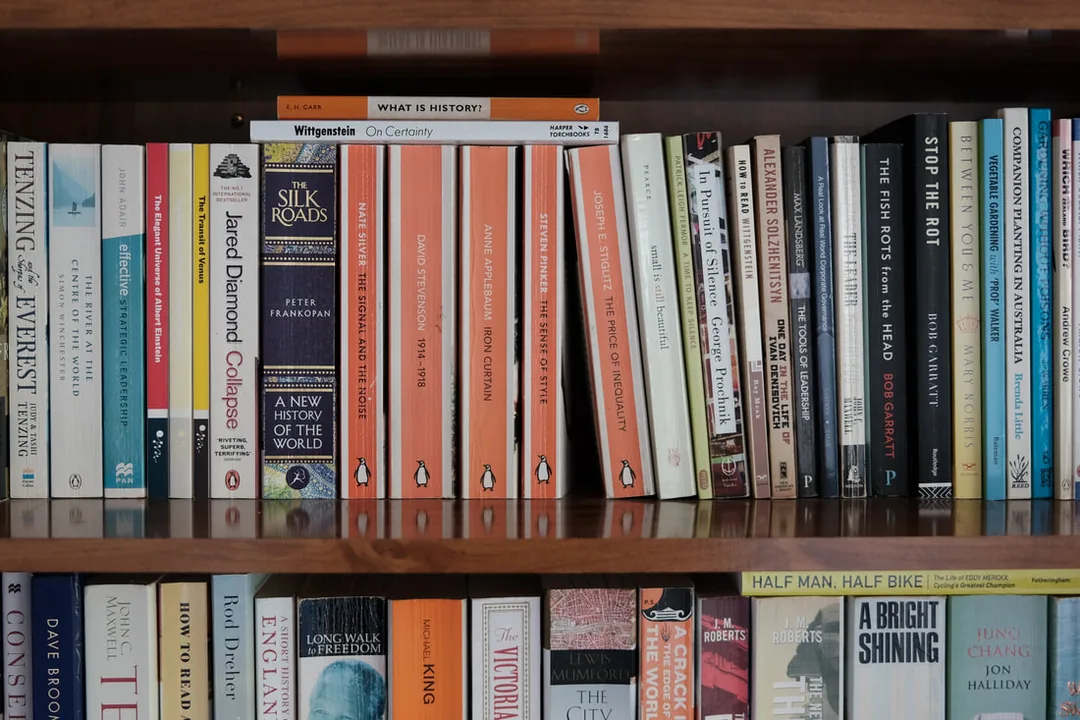
    Several people have asked what I'm reading. Here is a list of books either under way or to be read this summer break. Notice only one is directly linked to my board and governance work. That is intentional. Reading widely means, to me, reading beyond normal boundaries to discover new ideas and ways of thinking about things.
    This list is a selection of the books awaiting my attention. If you read, I'd love to hear any recommendations!
    Enlightenment Now
    Steven Pinker
    The Matter with Things
    Iain McGilchrist
    The Evolution of Corporate Governance
    Bob Tricker
    On Certainty
    Ludwig Wittgenstein
    SOE (Special Operations Executive)
    M. R. D. Foot
    Seven Pillars of Wisdom
    T. E. Lawrence
    Nine Quarters of Jerusalem
    Matthew Teller
    The Unbroken Thread: Discovering the Wisdom of Tradition in the Age of Chaos
    Sohrab Ahmari
    South
    Sir Ernest Shackleton
  • Published on

    Regulatory interventions to drive better outcomes: A bridge too far?

    Picture
    The practice of corporate governance has garnered much attention over the past couple of decades; curiosity about boards growing each time news of a corporate failure and serious misstep becomes public. While those with axes to grind are quick to jump on their hobbyhorses, failure studies indicate that suggestions of hubris, malfeasance, narcissism, ineptitude, incompetence and poor engagement are not without basis.
    More recently, a wider group of so-called stakeholders and claimants have raised their voices, arguing that companies are having a negative effect on a range of social and environmental concerns. The ESG initiative, established in 2005 to put pressure on boards to report their activities and performance more fully, has become a movement (even an industry for personal and professional gain in the eyes of some). 
    On the weight of evidence presented in the media, it would be easy to conclude that practices of companies, and the system that underlies modern commerce—capitalism—are detrimental to sustainable life and wellbeing. Firing shots at boards and companies is easy, because they are visible and command media attention. But are such responses justified? What if the assumptions and motivations that underpin investor, regulator and activist critiques are flawed, or the bases for regulatory interventions ill-advised?
    Some companies deserve criticism, of course. They should be called out and held to account. But many (most) operate within their means. Unsurprisingly, the boards of some reputable companies are reportedly pushing back on the expectations of some institutional investors, which, they say, have become over-prescriptive and formulaic. Alongside, some boards say new disclosure reporting rules being introduced, by the FSB Task Force on Climate-related Financial Disclosures (TCFD) amongst others, are counterproductive—for they add costs without any apparent benefit.
    Together, this begs an awkward question: Are the actions of some, who claim to be acting in the name of sustainability and a fairer society, actually an attempt to exert power and control for their own purposes? And, if so, are current attempts to establish regulations to enforce certain practices on companies reasonable or are they a bridge too far? It is little wonder that relationships between some boards and shareholders are starting to fracture, and society is becoming tribal.
  • Published on

    The craft of board work; 21 years on

    Picture
    Twenty-one years ago this week, I embarked on a journey to pursue a dream: to help directors and boards become value creators, realising the potential of the companies they govern. At the time—four weeks after the terror attack on the World Trade Centre—governance was hardly known as a word, and most boards had a strong compliance orientation. I had no idea whether the dream was realistic, much less attainable. But, at 39 years old, the calling was strong—compelling even. So, I took a deep breath and walked away from a great company and international role, armed solely with a strong belief that I might be able to add some value. I was told that stepping away from financial security and the makings of a stellar international career was crazy. But the decision had been made.
    I found that people would happily talk about their situation and what they wanted to achieve if they thought you were genuinely interested in them. That insight has provided the foundation for everything that followed—including working with thousands of directors in 45 countries across five continents, serving on boards, delivering hundreds of talks and leading many education sessions. The 2012–2016 period dedicated to complete doctoral research, to try to answer that most difficult question of how boards influence company performance provided a breakthrough that I hope, one day, will be taken up widely: the Strategic Governance Framework. To have met and spent time with doyens of corporate governance, strategy and leadership along the way—including Bob Garratt, Bob Tricker, Charles Handy, James Lockhart, Jenny Darroch, Roger L. Martin, Rita Gunther McGrath, Silke Machold, Stuart Farquhar, Andrew Kakabadse and many more besides—has been inspirational. I am indebted to everyone who has spared a few minutes to answer questions and share insights.
    Other highlights include sitting with directors in India, Eastern Europe and other places well off the beaten track, to listen; experience their thirst for insight; and receive their gratitude for what little I had to offer. 
    Without exception, everyone I've met and worked with has wanted to find ways to guide and steer the businesses they govern with greater effect. To have been asked to contribute has been a honour. 
    Thank you to every established director, board trustee, and board chair; every aspiring director; every chief executive and leadership team; every MBA student, researcher and associate; everyone who has heard me speak or read my articles (note: all my articles and blog posts remain available today); every regulator and government who sought confidential assistance; and, untold others I've never met. Thank you for considering my submissions and arguments, for believing in me, for encouraging me and for engaging me.
    Today, 21 years on from stepping out of the boat, the calling remains strong. I remain available to serve for as long as boards and directors call for assistance, and my ability to contribute allows. To that end, and with the passing of the pandemic, I am available once more to travel to meet in person to understand and speak into situations. So, if you have a question or want to discuss a problem, please get in touch. I stand ready to serve.
  • Published on

    The craft of board work: Northern tour

    Picture
    The passing of the Covid pandemic has been a great relief for many; boards of directors are no exception. Several weeks ago, I visited Sydney, Australia to meet with directors, boards and leaders of membership bodies. The feedback was clear: if companies (and through them, economies and societies) are to prosper, boards need to start thinking strategically again. Last week, more grist to the mill. During a successful visit to Bengaluru, India to lead a Board Immersion Programme for a globally-known FMCG company, the question of how boards can add value was front-of-mind throughout.
    Today, I'm delighted to announce my first post-Covid visit to the United Kingdom and Europe, to continue the advisory work there.
    From November 16th through 25th, I will visit the UK, several EU countries, and elsewhere as required, to respond to requests to speak, and to help boards respond well as they pursue sustainable business performance. This includes:
    • Advisory sessions (individual board and executive team)
    • Keynote talk on sustainability issues
    • Half-day immersion workshop to consider modern governance practices
    • Confidential briefings on emerging issues
    • Guest lecture to post-graduate students
    Do you want to meet in November? Regardless of whether you have a specific request or a general question, please get in touch. I'll respond promptly with some suggestions for your consideration.