
• Published on

    Upcoming European speaking and advisory tour

    Picture
    In a couple of weeks, I'll be in England and Europe, for the third and final time this year. The schedule includes attendance at two conferences, delivery of two keynotes and a bevy of meetings, as follows:
    Sun 25 Nov

    Mon 26 Nov
    Tue 27 Nov
    Wed 28 Nov
    Thu 29 Nov
    Fri 30 Nov
    Sat 1 Dec
    Sun 2 Dec
    Mon 3 Dec
    Tue 4 Dec
    Wed 5 Dec

    ​Thu 6 Dec
    Stockholm: Deliver keynote at event organised by Digoshen (Topic: Outlook on international corporate governance and board practices).
    Stockholm & London: advisory meetings.
    Transfer to Vienna.
    Vienna: Global Peter Drucker Forum, pre-conference workshops.
    Vienna: Global Peter Drucker Forum, main conference (day 1).
    Vienna: Global Peter Drucker Forum, main conference (day 2).
    Vienna: post-GPDF review; transfer to London.
    Free day in London.
    London: advisory meetings.
    London: ICGN Global Stewardship Forum
    Henley: ​Share research insights with faculty & doctoral students (Henley Business School Governance Seminar); explore future research opportunities.
    London: ​advisory meetings.
    While the schedule is fairly full, some gaps remain for additional meetings (in London).
    If you would like to meet, please get in touch. I'd be glad to discuss any aspect of boards, corporate governance or effective board practice; explore a research idea; or respond to (future) speaking or advisory enquiries.
  • Published on

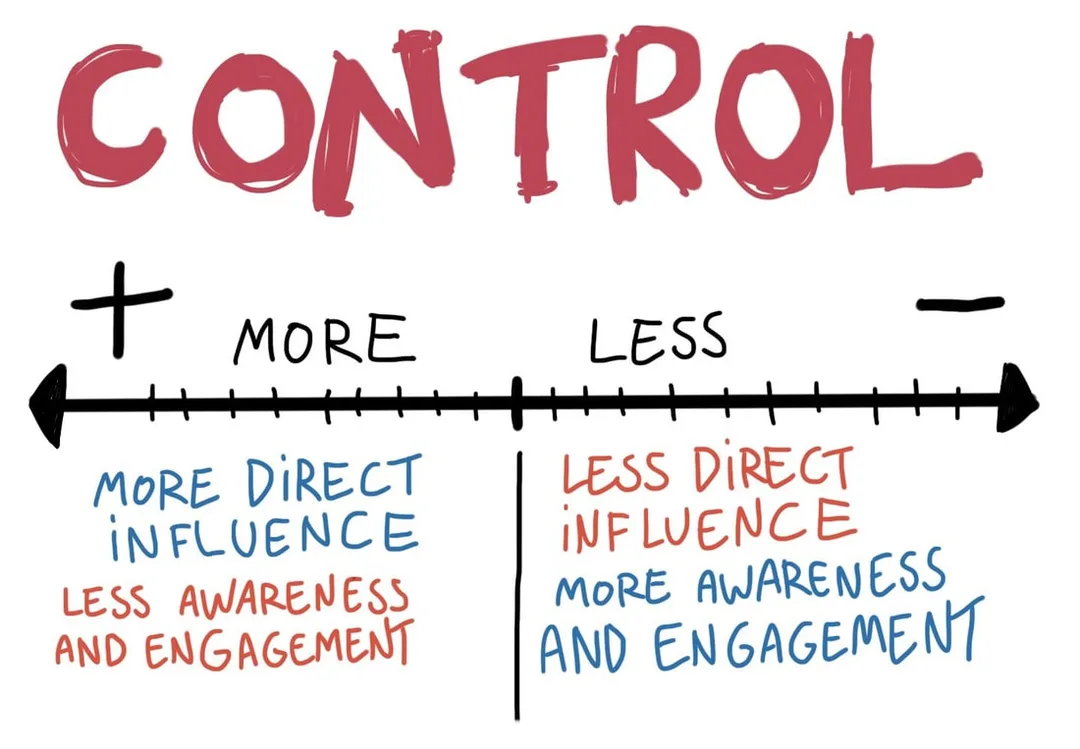
    Re-conceiving 'control', as a constructive mechanism

    Picture
    In business, as in life, the task of exerting control is commonly perceived as being one of exercising limits; of saying 'no' and imposing constraints. Such perceptions are well-founded. Check these verb usages of 'control', lifted straight from the dictionary:
    • to exercise restraint or direction over; dominate; command
    • to hold in check; curb
    • to test or verify (scientific experiment)
    • to eliminate or prevent the flourishing or spread of
    If you have spent much time in boardrooms, you'll know that director behaviour tends to be consistent with these definitions, more so if the chief executive is ambitious or entrepreneurially-minded (the two attributes are not necessarily the same). When asked, board justification for exercising caution is straightforward: to keep the chief executive honest and to keep things 'on track'.
    Such an understanding—holding management to account—seems admirable. Monitoring and supervising management is one key task (of four) of corporate governance after all. But does a strong hand actually lead to better outcomes? More pointedly, how might the exercise of restraint and limits advance the purposes of the company (noting the board is responsible for ensuring performance goals are achieved)? Such conduct is analogous to applying the brake when the intention is to drive on. A growing body of academic and empirical evidence suggests that a strong hand, like increased compliance, may actually counter-productive.
    Rather than persist with what is demonstrably a problematic approach, it might be more fruitful for boards to consider another perspective. ​What if control is re-conceived in positive terms (namely, constructive control), whereby the board's mindset is to provide guidance (think: shepherd or coach) by ensuring the safety of the company and steering management to stay focused on agreed purpose and strategy? Might this deliver a better outcome? 
    Emerging research (here, but contact me to learn more) suggests the answer is 'yes'. Strongly-engaged and strategically competent boards that display high levels of situational awareness as they debate issues from multiple perspectives and make informed decisions in the context of the long-term purpose of the company can make a difference. Constructive control is one of five important behavioural characteristics of effective boards identified in this research.
  • Published on

    The wildcard in family-controlled firms: undue influence

    Picture
    The limited liability company is a great construct; an efficient vehicle for commerce, through which to pursue an overall aim (purpose) and to distribute wealth (however defined) over an extended period. What's more, mixed levels of ownership are possible; greater economies of scale are attainable (beyond what a sole trader or entrepreneur could typically achieve); and, importantly for absentee shareholders, liability is limited to the extent of the capital invested. 
    Though they offer many benefits, the limited liability company is not without flaws—it is a social construction after all, and a complex dynamic one at that. The motivations, priorities and interests of various interested parties (shareholders, directors, managers and staff, amongst others) are often different. Contexts change, and egos can get in the way as well. Left unbridled, differences can fester, morale can suffer and, in more extreme cases, the company can be torn apart. Wynyard Group and Carillion are two recent example but there are many others. Family firms are not immune to such challenges. In fact, when the wildcard of family dynamics is added to the mix, family firms are actually more, not less, susceptible. Though not always visible, the spectre of undue influence often lurks as a contributing factor, as the following discussion reveals:
    Failure to differentiate the roles of 'shareholder' and 'director': Let's start with some definitions. A shareholder is a person or entity that owns shares in a company. Ownership of shares affords certain rights, such as, selecting directors, receiving dividends and participating in major decisions. But those rights do not extend to running the business. That is the responsibility of managers, a delegation via the directors. In family firms, the roles of shareholder, director and manager can become blurred, especially when an influential family member holds multiple roles.
    The most common expression of undue influence that I've seen over the years relates to decision-making at the board table: a director with a significant shareholding 'expects' to influence significant decisions in their favour because they own a large parcel of shares. The important distinction that is lost (sometimes it is 'conveniently' neglected) in such situations is that the board meeting is not a proxy for a shareholder meeting. Shareholders and directors vote differently. Shareholder voting is conducted on a 'one vote per share' basis, whereas each director has a single vote at the board table. Regardless of whether directors hold shares or not, every director has an equal say.
    If situations like this arise, they need to be nipped in the bud. If they are not, board meetings become a farce; the other directors puppets. This is far from acceptable, especially when the duty of acting in the best interests of the company (not any particular shareholder) is factored in. In most cases that I have observed, attempts to exert such [undue] influence tends to stem from ignorance and a desire to do what they think is fair, not malice. Usually, a quiet discussion with the director concerned is often all that is needed to resolve the matter. Another family member or an outsider (an independent director if there is one, or some other trusted advisor) are useful candidates for this task.
    Treating the company as little more than a personal bank account:​ If I had a dollar for each time I've seen this in family firms... Recently, while observing a board meeting as part of an advisory engagement, a director asked, "Why are we always so short of cash when we are supposedly highly profitable?". The discussion that followed was both enlightening and disturbing—and, sadly, it was not the first time that I'd heard it play out. One director with banking access had been buying personal items with company funds and, from time to time, had been taking 'petty cash' for personal use. He saw nothing wrong with this because "it's my firm anyway".
    If a director or shareholder uses company funds to acquire personal items, or uses the company bank account as if it were their own, they are acting in their own interests (whatever those may be). Their actions may put the viability of the company at risk as well. Neither of these motivations is permissible in law. Any shareholder wanting money from the company needs to ask the company, not just take it (that's theft!). Valid payment options include shareholder salaries (payment for effort/services rendered), dividends (a share of the profits), donations (but these may be taxable) and director's fees. ​The company may also agree to lend money to the shareholder. Regardless of the motivation or the payment option, a written policy which outlines the rules and conditions pertaining to payments to shareholders can help mitigate misunderstandings.
    Employment of family members and related matters: ​Another expression of undue influence is the situation in which a family member 'pulls rank' to secure employment for themselves or another family member. While any family member may nominate anyone else (including other family members), to foist a particular person onto a manager is completely unreasonable. If managers are to be held accountable for performance, they  need to be free to make reasonable employment decisions themselves, in accordance with employment policy. In family firms, it is a good idea to add a section entitled 'Employment of family members' in the policy, to set out the rules the be applied whenever a family member is being considered for a role. 
    While none of these examples of undue influence is unique to family firms, they are usually more visible (and often more destructive) in family firms. Once discovered, they need to be resolved. If not, family relationships can become strained, even to the point of breaking down. Actions that families might consider taking to prevent or at least mitigate the types of problems summarised here include:
    • A set of written policies, that specify various operating boundaries. Employment of family members and payments to family members are two areas in which policies can be especially beneficial.
    • A shareholder's agreement, which specifies how family members will interact with the company in matters relating to the company including acquiring and disposing of shares, employment, major decisions, dividends and voting rights, amongst others.
    • A functional board of directors (and associated governance framework), to set strategy, approve policy and oversee the operation of the firm (in accordance with the approved strategy and policy).
    • A communications framework, which outlines both the frequency and form of communications between the company and shareholders (and other stakeholders including non-shareholding family members).
    Boards wanting to explore matters mentioned here should get in touch directly to arrange a private briefing.
    This article is the second of three on the topic, 'Governance in family-controlled companies'. The first explored some items that are currently front-of-mind for many directors and shareholders of family-controlled firms. The third article, which will present recommendations to improve board effectiveness, will follow in late 2018.
  • Published on

    The board of directors: a family business perspective

    Picture
    From entering the business lexicon less than quarter of a century ago, 'corporate governance' has come a long way. Prior to 2000, the term was rarely mentioned in business discussions much less amongst the general public. Boards and directors directed the affairs of the firm, and that was it. Now the term is ubiquitous. Its usage has changed over time as well: from describing the functioning of the board of directors, the term is now used to describe all manner of corporate activity, much of which bears little if any semblance to the board or governance at all.
    The proclivity to use the terms 'governance' and 'corporate governance' has trickled down from big business to now infect family-controlled firms. Well-intentioned but inappropriate usage—notably advisers (typically, but only accounting firms) making assertions such as "You need governance"—has had unintended consequences. When attention is diverted away from running and overseeing the business to "implement governance" (whatever that means or entails) without justification, costs have a tendency to go up not down, and a whole new set of problems including confusion, consternation and strained relationships often follow.
    Over the last two decades, I've had the privilege of working with the directors and shareholders of hundreds of family-controlled firms, ranging from 'mom and pop' operations to much larger (multi-hundred million dollar) enterprises. Awareness of (and interest in) governance has become palpable, more so if a director has just read an article or heard a talk from an expert purporting a 'best practice' governance solution. Yet directors know that a single answer rarely works everywhere. Context is crucial in business; every situation is, to a greater or lesser extent, unique. As a consequence, the universal application of a formulaic 'best practice' solution does not make much sense. Recognition of this gives rise to many questions, especially from the shareholders and directors of family-controlled firms. Here is a selection of the more frequently asked ones:
    • Do we actually need a board?  If the business is a company, yes. But remember that a board is, straightforwardly, a term used to describe the directors collectively.
    • Do we need governance? This question often masks another question: whether the 'practices' of governance are always required. The answer to both is 'it depends'. If all of the directors are also managers and shareholders, and all of the shareholding is held by serving directors (as is generally the case in small firms), then the practice of meeting regularly as a board to set strategy and policy, hold management to account and provide an account to shareholders is redundant. However, once a modicum of separation between shareholding, directors and managers starts to emerge (i.e., some shareholders are no longer directors, or vice versa; or some directors do not work in the business), then its makes sense to embrace board meetings and associated reporting. Another trigger for establishing normative governance practices is the appointment of an independent director.
    • We've been told to appoint at least one independent director, because that is best practice. Is it? Not necessarily. Independence has long been held out as a proxy for better decision-making. For example, most stock markets specify a minimum number of independent directors if the company is to be listed. Yet no categorical link between independence and decision quality, much less better firm performance has been found. However, that is not to say that shareholders should avoid appointing an independent director. If the board lacks some important expertise or needs an extra perspective, an external appointment can be incredibly helpful to the quality of board deliberations and decisions.
    • Our accountant has offered to be a director. Should we take up the offer? Probably not, because to do so introduces an inherent conflict of interest. The accountant (or, accounting firm) is a servant of management, charged with providing specialist financial and reporting expertise. If he/she also sits on the board, then they are, in effect, monitoring themselves, 'marking their own work'', so to speak. Boards that lack financial acumen (for example) should seek such expertise from an external director; there are plenty of highly-skilled people with the requisite technical and governance expertise available. 
    • We are not sure that our 'independent' director is acting in our best interests. What options do we have? First, every director has a duty to act in the best interests of the company, not the shareholder or any other party. If a director, regardless of whether they hold shares or not, demonstrates biases for a particular stakeholder or appears to lack independent judgement, the matter should be raised with them. If the behaviour continues, consider releasing them. 
    • How often should the board meet? There is no hard and fast rule, other than the legal requirement for the board to meet at least once per year. Practically speaking however, the recommended frequency is "as often as is needed to fulfil duties". The boards of family-controlled businesses domiciled in the UK, New Zealand and Australia tend to meet once per month or once every two months, whereas the boards of US-based firms typically meet quarterly. 
    • We've been told to create an advisory board. Is this a good idea?No
    These questions are typical of those that have been front-of-mind for the directors and shareholders of the family-controlled firms that I've interacted with in recent months. Curiously, questions about social interaction, boardroom behaviour and family dynamics (the human dimensions) are asked far less often. This, despite the board being a collective of directors—people—who are required to work together in the best interests of the firm. Boards that resolve these so-called 'soft' questions tend to be more effective. But more on that next time.
    This article is the first of three on the topic of 'Governance in family-controlled companies'. The second, which explores undue influence and the impact of family dynamic is available here. A final instalment, which will make suggestions to improve board effectiveness, will follow in late 2018. Boards wanting to discuss matters raised in these articles should get in touch directly to arrange a private briefing.
  • Published on

    Towards great: learning from recent #corpgov failures

    Picture
    The chattering class has been very active of late, responding vociferously as case after case of corporate failure and misstep has come to light.  Carillion plc and the venerable Institute of Directors (both UK), AMP (Australia) and Fletcher Building (New Zealand) are the latest examples that have resulted in consternation and angst.
    That seemingly strong and enduring organisations continue fail (or have significant missteps) on a reasonably regular basis is a cause for much concern; the societal and economic consequences are not insignificant. Many commentators (primarily, but by no means exclusively, the media) have responded by berating company leaders (the board and management specifically), placing 'blame' squarely at their feet. This is a reasonable: ultimate responsibility for firm performance lies with the board after all. 
    Calls for tighter regulation and stiffer codes abound. Yet the geographical spread of these failures implies that local statutes probably aren't a significant contributory factor. The responses of the boards have been telling: some have circled the wagons (a demonstration of hubris?), others have cast out the chairman or chief executive (diverting blame elsewhere?), and some individuals have simply walked away.
    At this point, it would be easy to join the chattering class; to stand on the margins and berate all and sundry. But let's not go there. Instead, let's try to identify repeated patterns of activity may have contributed to the situations, in search of learnings. Several things that stand out:
    The role of the auditor:​ Most if not all of the firms mentioned above were attested by their respective auditors to have been operating satisfactorily. Yet they were not, clearly. Whether the auditors were in cahoots with management or the board, failing to discharge their duty to provide an accurate assessment or, even, inept remains to be seen. Regardless, something is amiss. To date, few commentators have called out the audit profession as being an accessory (Nigel Kendall is a notable exception). 
    Business knowledge: Remarkably few of the directors of the companies identified here seem to understand the business of the business they were governing. Many directors are recruited for their technical skills (notably, legal and accounting expertise), but few if any have any significant experience in the sector that the business operates in—research by McKinsey shows that one director in six possess such knowledge. How any board can make informed decisions when most of its directors do not understand the wider operating context well is perplexing—it would struggle to detect important though weak signals, much less understand the implications of them.
    Board involvement in strategy: ​ The boards of all of the firms identified here relied heavily on management to prepare strategy. Directors backed themselves to ask questions in response to proposals when they were presented. While most directors are capable and well-intentioned, such a heavy reliance on management is unwise. If the board is not involved in the development of strategy in some way, as many researchers and commentators recommend, the likelihood of the board understanding what it is being asked to approve and subsequently providing adequate steerage and guidance is low.
    If boards are to learn from the failure cases noted here (amongst others), the first and, frankly, most pressing priority is to mitigate apparent weaknesses and focus on what matters. My research suggests that high levels of firm performance are contingent on several factors including:
    • Ownership:​ The board is the apex decision-making authority in every company, meaning the board is responsible making the very biggest decisions. Consequently, if the board expects to have any influence over performance at all it needs to take responsibility—directly—for the big calls.
    • Purpose: If performance is to be achieved and sustained over time, all contributors need to understand their role and why it is important. Sadly, many directors bypass the 'why': they do not understand (and, therefore, cannot describe) why the company exists (activity trumps reason, it seems). Even if they can, they often do not hold a single view. Agreement on why the company exists—its purpose—is crucial; it provides the touchstone against which all other decisions can be made and performance assessed.
    • Strategy: Purpose alone is insufficient. Strategy is the course of action required to achieve the agreed purpose. While no one model (of strategy development) fits all situations, the board should roll its sleeves up and get involved in the formulation of strategy, together with management.
    • Effective board practice: This is the biggie. Check this link, it paints the full picture.
    Some commentators have suggested that the success of the board is entirely a matter of luck. I disagree. While outcomes are not guaranteed, my doctoral research and experience shows that boards can exert influence beyond the boardroom, including on firm performance, but only if they focus on 'the right things'. Unless and until boards start taking their responsibility for the performance for the company seriously the hope of much changing remains, sadly, dim.
  • Published on

    Carillion: A messy but not unexpected fall from grace

    Picture
    Another once proud company has just suffered the indignation of failure. Carillion plc, the UK's second-largest facilities management and construction services conglomerate, collapsed on 16 January 2018, after bankers withdrew their support. The fate of hundreds of contracts with public sector agencies, and thousands of jobs were left in the lurch (although some emergency measures have since been put in place).
    Though tragic, Carillion's demise should not have been a surprise to anyone for it did not occur as a result of a single external catastrophic event. Consider these indicators:
    • Chairman Philip Green had previously been censured for breach of trust and maladministration.
    • The company's 2016 annual report showed debts (current plus non-current liabilities) of £2.8B; well above then current assets (£1.7B)
    • The company issued multiple profit warnings in 2017.
    • Executive remuneration clawback provisions were not exercised by the board; rather, the board sought to change the rules.
    • Demonstrations of executive hubris were apparent throughout 2016 and 2017.
    • Questions about the state of the business were asked in the House of Commons in July 2017.
    These indicators, which are not dissimilar to those of other failures (here and here), raise many questions viz. board performance, including questions of accountability; the board's supervision of management (or lack thereof); malfeasance and ineptitude in the boardroom; the efficacy of 'best practice' recommendations; and, the role of auditors. Why the Carillion board failed to act on the indicators listed here (and others not yet public, no doubt) is a matter for due process to uncover. The investigations should not be limited to the boardroom or even executive management. Other questions worthy of consideration include:
    • Did the directors act continuously and completely in accordance with the seven duties specified in the UK Companies Act?
    • What role did 'best practice' corporate governance codes and guidance play, if any?
    • Why did Carillion's customers, including the UK Government, award contracts to a company that had issued multiple profit warnings? Clearly, contracts were awarded either without adequate due diligence, or the findings from due diligence were ignored.
    Hopefully, the investigations now commencing will result in one or more people actually being held to account. Practical guidance to help boards focus on what actually matters (firm performance) is also needed, if boards are to step beyond conventional wisdom (which is clearly not working), and the damage that inevitably occurs when boards are diverted by spurious (and typically discordant) recommendations that appeal to symptoms or populist ideals is to be limited.