• Published on

    Wither accountability?

    During June, I spent most of my discretionary time reviewing articles about corporate scandals and failures, as reported in the mainstream media and academic press, and discussed on social media. They made fascinating reading, not only for the summaries, but also the amount of finger-pointing and defensiveness—an indication that accountability was missing in action in most cases.
    Consider the Carillion, Wirecard and Petrobas cases, all mentioned in a recent Financial Times feature article (paywall, sorry). The discussion concentrated on the accounting and audit professions; the questions being whether they should have detected the problems, and whether ethics should be a consideration. These are good questions, but they sound a little like positioning an ambulance at the bottom of the cliff. Disclosures, in the form of annual reports, audit statements, and various ESG-related reports, are necessary. But they are just that; disclosure reports. And the more complex the reporting and disclosure requirements, the more time management and the board needs to spend preparing and checking reports, to meet expectations. And with greater focus on reporting and compliance, the greater the likelihood that accountability will become discretionary.
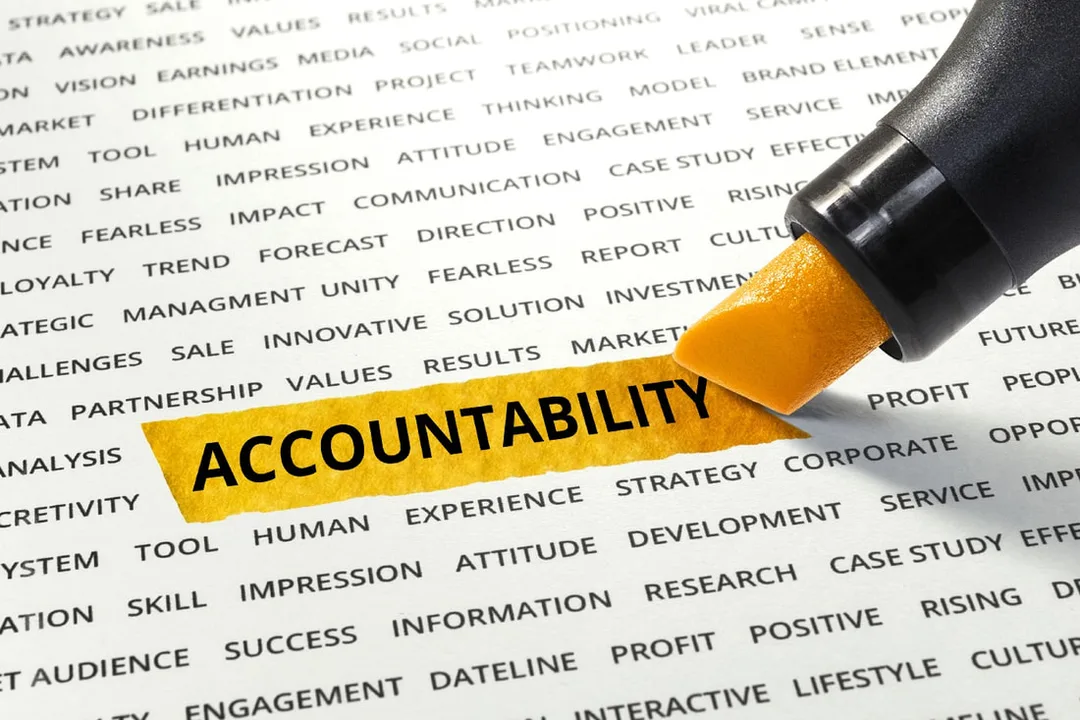
    Accountability is one of four foundational elements of corporate governance. There are two aspects, namely, boards are charged with holding management to account, and they need to provide an account to legitimate stakeholders. (The others are the formulation and approval of corporate purpose and strategy; policymaking; and, monitoring and supervising management, to ensure the company is operated and strategy achieved within prevailing statutory and regulatory boundaries. Together, these four elements comprise the Learning Board Framework, a proposal described in The fish rots from the head, a book written by Bob Garratt, a doyen of corporate governance and board work, circa 1996. The LBF is the single-best approach to board activity that I have come across in my twenty-five years of board and governance practice and research, bar none.)
    As in life, enduring success in business (meaning, achieving and sustaining high levels of organisational performance) can be attributed to many things. These include, inter alia, a great idea, a clear and coherent strategy, excellent execution, capable and highly-motivated people, forces of nature, timing, effective leadership, luck (yes, luck), and more besides. Yes, success has many sources, even to the point of being idiosyncratic. 
    Failure is different. Even a cursory study of corporate failures reveals several common themes, most of which can be readily traced back to the boardroom:
    • hubris
    • ineptitude
    • malfeasance
    • incompetence
    • questionable ethics
    • corporate governance misunderstood
    • wrong expertise mix
    • weak engagement
    • lack of time
    Almost all of these themes emerge from poor behaviour and a leakage of accountability. Knowing what to do is one thing, knowing how to behave (and behaving) is quite another. Fortunately, help is at hand. Insights from research suggest five underlying behaviours are necessary if boards are to contribute well. These include strategic competence, a sense of purpose, active engagement, collective efficacy and constructive control. If any one of these is absent, the likelihood of the board exerting any meaningful influence or adding any value drops to nought. (If you want more information on this, please get in touch.)
    One final comment: The role of director is founded on trust—the fiduciary responsibility. And from this flows accountability—in role and in relationship. If boards place a low value on accountability, by not holding management to account for the achievement of operational and strategic goals; rubber-stamping advice from suppliers such as lawyers, accountants and auditors; or, not providing a candid account of performance to shareholders, regulators and other stakeholders, they deserve ​what comes their way.
  • Published on

    Are TLCs important, or are they NMP?

    Picture
    The opportunity to embrace a transport technology that is cleaner, quieter and considerably cheaper to operate (than petrol or diesel alternatives) is attractive—once the initial purchase price hurdle leapt. The purported benefits seem to be significant, but does the reality match the rhetoric? As with any proposal to embrace system-level change, the costs of moving from one technology to another are far from trivial. If an assessment is to be complete, the total lifetime costs (TLCs) need to be considered; that is, the sum total of all costs incurred over a product/system’s lifetime (includes manufacture, operation, disposal).
    In the case of electric vehicles, what of the economic, environmental and social costs of extracting metals for battery ingredients; logistics and manufacturing; replacement of batteries when they are spent; battery disposal; and, of upgrading the power generation and distribution network to provide adequate electrical power to recharge batteries? Many of these are being quietly ignored, it seems. Not my problem, some argue, as if out of sight is out of mind. This short article argues that when the TLCs are factored in, the benefits associated with a seemingly compelling technology (in this case the adoption of electric powered vehicles and other devices with battery power packs) may not be as great as what has been claimed.
    And so to the purpose of this muse, which is not to argue the benefits or otherwise of adopting electrically powered vehicles. Rather, it is to table an issue often overlooked by board of directors considering so-called strategic projects: total lifetime costs.
    When faced with a strategically-significant proposal, boards first need to check for alignment, by testing whether the proposal is contributory to the corporate strategy (spoiler alert: often linkages are tenuous). Assuming it is, directors should satisfy themselves that total lifetime costs have been included. Only then can the question of whether the recommendation should be embraced or rejected be debated.
    Why might this be important? Directors are duty-bound to act in the best interests of the company. That means taking all relevant information into account. 
    If boards ignore externalities, or abuse the social, environmental and economic capitals consumed in the operation of the company, the governed company is unlikely to endure over the longer term. And in so doing, directors may be exposing themselves, unwittingly, to legal challenge as well.
  • Published on

    The case to SEE beyond ESG

    Picture
    ESG and sustainability are hot topics in business and, increasingly, civil society. Hardly a day goes by without one or both being mentioned in newsfeeds and across social and mainstream media. Since the term ESG was first coined in 2005, and more so through the coronavirus pandemic, researchers and commentators have promoted ESG as the answer to what have been held up as great issues of our time—issues such as changing climatic conditions; the impacts of fossil fuels; population growth; modern slavery; the excesses of capitalism; geopolitics; and, more besides.
    Shareholders are starting to acknowledge companies should be doing a better job, in terms of appropriately stewarding the resources used in the operation of their business and fulfilling their duties. Institutional investors in particular are applying direct pressure to refocus board attention and business priorities to tackle the great issues—their underlying belief is that ESG-based approaches provide more sustainable long-term value creation.
    What is one to make of these developments?
    Evidence to support claims that ESG-based investments outperform other investments is yet to emerge. The  question of why this might be the case remains open. It could be that investments have been poorly placed; expectations are unreasonable; measurement systems are inappropriate; and, probably, more besides. ​​​Of these possibilities, the spectre of inappropriate measurement systems looms large. 
    A couple of years ago, Ethical Boardroom, a magazine read by tens of thousands of board directors, advisors and executives, commissioned an article on the matter. I concluded that a measurement and reporting framework founded on the three main capitals used in business would probably provide a more informative and complete measure of sustainable business performance than ESG. A copy of that article follows. If you have any comments and suggestions on this, including criticisms, please do let me know—either in the comment box below or, if you prefer, a private message.
  • Published on

    Musings: A decade on

    Picture
    This entry is a little more personal than most posted here. But, if you'll allow the indulgence...
    Yesterday started out like many others before it: a mix of client and administration work, video calls across timezones, director commitments and writing (The craft of board work is coming along nicely). I 'logged off' a little later than usual—around midnight—having just completed a two-hour video call with members of the Global Peter Drucker Society (advance planning for the 2022 edition of the Global Peter Drucker Forum to be held in Vienna late this year). 
    Tired but satisfied after a long day, I prepared for bed. And as I did, my mind wandered. March 24th was significant for some reason. Then I remembered; it was Musings' birthday! Yes, ten years ago, on 24 March 2012, I stepped, with some trepidation, into the blogosphere. That first step? A three-line post
    My motivation was straightforward, to share thoughts and test ideas on corporate governance, strategy and board effectiveness. At the time, I had just started on my doctoral journey (a milestone achieved in 2016). A platform to engage with academics and global leaders—and to let off steam from time to time—was going to be helpful, I thought. And so it was, and continues to be. 
    Today, some 712 posts later, Musings has entered middle-age. From tentative first steps, to now a library of comments on professional (corporate governance, strategy, and the craft of board work), philosophical and personal topics. Whether the thinking underpinning the articles has improved over time or not is for readers to determine. Hopefully, a progression is evident. And, while the frequency with which posts have appeared has declined a little in recent years, my desire remains as it was in 2012: that each post proved valuable to at least one person. If that was achieved, the effort was worthwhile.
    Looking back over the decade, I have been most fortunate to have met and learned from many great thinkers, leaders and doyens of corporate governance and strategy. I have also had the privilege of serving aspiring and established directors, and boards, across five continents. Musings has been an enabler.
    The support and encouragement shown as I have pursued my passion—to help boards realise the potential of the organisations they govern—has made a great difference to me. Hopefully, it has been beneficial to others as well. Thank you.
    And, in case you are wondering, Musings, will continue to be published, for as long as readers show interest. 
  • Published on

    Morally-accountable governance?

    Picture
    Much has been made in recent weeks of the invasion of Ukraine by Russia. Social and mainstream media has been awash with commentary, both about the situation on the ground, and of various moral and ethical issues arising, not to mention significant geopolitical and balance of power impacts. 
    The Western world has rallied in support of Ukraine. Governmental–, corporate– and community–level responses have been announced and taken including accepting refugees, providing humanitarian support, and organising fund-raising and community support. Governments have imposed economic and trade sanctions as well. Many companies have decided to withdraw from the market. Others have chosen to remain, for a variety of reasons. Some, who initially held the line, have subsequently changed their mind after feeling the effects of a backlash. Directors have resigned from boards too, signalling they have no interest in continuing to serve on the boards of Russian companies. 
    To say the situation is fluid and outlook is uncertain is an understatement. In cynefin–speak,  the appropriate descriptor is 'chaotic', meaning rapid response is appropriate: searching for the 'right' answers is futile. 
    Despite the ambiguity and uncertainty, directors must continue to make decisions, to govern. In a crisis, most boards, rightly, focus on the here and now. Strategy and strategic initiatives are put to one side, and accountability may languish too. All available resources are applied to understanding and stabilising the situation.
    But after the heat has subsided and the situation is brought under control, boards need to take stock. They owe a duty of care (to themselves but also shareholders and legitimate stakeholders), for both their actions and those of management. Were the decisions made and actions taken during the crisis appropriate given the information to hand and prevailing situation at the time?
    The review may find the board operated within statutory and regulatory boundaries, and that decisions taken in averting the crisis were reasonable. But what if decisions and actions are found to have crossed moral or ethical boundaries? Where should accountability lie? The question of moral accountability cuts across  personal and professional reputation, organisational culture, and market confidence.
    And to the future, where should the board's moral compass point, what conduct is appropriate, and how should the board's actions be assessed?
    • What moral standard should directors be held accountable to (if any)?
    • What might morally-accountable governance look like, in practice?
  • Published on

    Taking stock at year’s end; and peering into 2022

    Picture
    December is a significant month for many peoples around the world. It is the month in which two of the three great Abrahamic faiths have a major festival (Jews, Hannukah; Christians, Christmas), and the Japanese observe Omisoka. For others not professing a faith, December is significant to the extent that it marks the end of the Julian calendar. Each of these observances is distinctive, but a common thread runs through them: celebration and dedication.
    Yes, December is a time to reflect on the year gone and give thanks, and to ponder what lies ahead.
    Through this muse, I too wish to give thanks, to the many board directors, business leaders and students that I have had the good fortune to work with during 2021—both in person in New Zealand, and via video link in the United Kingdom, the European Union, the Caucasus region, North America and the Caribbean, India, several African and Middle Eastern countries, and closer to home in Australia. I have learnt a lot, and hope others have derived value from the interactions. Thank you.
    Peering into 2022, the prospect of travelling internationally to work in person with boards and students is enticing. Once the coronavirus situation stabilises, border restrictions are relaxed and travel becomes viable again, I will accept bookings. But in the meantime, I have decided to take on a new project.
    For over two decades now, I’ve had the privilege of working with aspiring and established directors on five continents, helping them wrestle with problems, consider opportunities, make decisions and learn what it means to be an effective director. Over the same period, two friends have encouraged—even nagged—me to consolidate my ideas, experiences and insights into a book. And each time it has been mentioned, I have pushed the idea away, citing lack of head space. But circumstances have changed in 2021 and the time now seems right to reconsider the prospect of writing 50,000 words about governance and the craft of board work. So, that is what I will attempt in 2022.
    (*) The image shows the Marsden Cross, which marks the location of the first Christian mission settlement in New Zealand, and the spot Samuel Marsden preached the first Christian service, on 25 December, 1814.