• Published on

    Bridging the ‘saying–seeing’ gap

    Picture
    Recently, during a meeting with a company director, I was asked if I'd be interested in seeing the company’s production facilities, to provide context for an upcoming assignment. Context is everything, so I gladly accepted the offer. As we walked, we chatted about a wide range of things. At one point, I asked how things were going since the board's decision to embrace a strategy to become a higher-performing business. His response was as telling as it was succinct:
    They say ‘high performance’, but all I see is ‘average’.
    The melancholic admission was unexpected, but not surprising. Apparently, the most recent board report showed that staff turnover had been creeping up, and engagement scores were trending downwards. And yet the atmosphere in the boardroom was sanguine when I visited. Clearly, something was amiss.
    This vignette highlights one of the great challenges in business—strategy execution; ensuring that strategy planned becomes strategy executed. Regardless of the motivation for creating them, intentions and strategies are not worth the paper they are written on if desired outcomes are not achieved.
    When things go wrong, the problem can often be traced back to one or both of two things: lack of will (the "won't" barrier), and lack of know-how (the "can't" barrier). Both are indicators of a failure of leadership; a failure to equip staff, and motivate and engage them to embrace the call to action. But the root cause may lie elsewhere. If strategy implementation is OK but expected outcomes do not follow, the problem is more likely to be one of governance. This is because ultimate responsibility for organisational performance [outcomes] stops in the boardroom, not the executive suite. Some may challenge this, on the basis that the executive is responsible for running the business and implementing the strategy. They are, but for the avoidance of doubt, responsibility of determining purpose, setting overall strategy and ensuring results are achieved lies with the board of directors. There’s no getting away from it: the buck stops at the top.
    If there is a gap between what the board says it wants, and what is subsequently observed as reality, the likelihood of great outcomes is low. The ‘saying–seeing’ gap must be bridged, and the board needs to own this. 
    Here are some questions the board may wish to consider:
    • Are the expected beneficial outcomes clearly defined and agreed, as part of the strategy approval process?
    • Are the expected outcomes explicitly aligned with approved corporate strategy, purpose and values?
    • What measurement and reporting mechanisms will be used to monitor effort and verify progress?
    • Is staff culture (how we do things around here) and engagement consistent with corporate values?
    • Are the lines of communication throughout the organisation wide open, to create an environment whereby concerns and problems can be reported without fear or favour, and dealt with early?
    • Is the board prepared to hold the chief executive directly accountable for progress and results, as the approved strategy is implemented?
    So, to the direct question: Is your board across this?

  • Published on

    How will you spend your two billion heartbeats?

    Picture
    Did you know that every living creature on Earth has approximately two billion heartbeats to spend over its lifetime (yes, 2,000,000,000)? I never knew that until I read this article recently. Brian Doyle writes so well. He brings science to life. Of heartbeats, he writes:
    "You can spend them slowly, like a tortoise and live to be two hundred years old, or you can spend them fast, like a hummingbird, and live to be two years old".
    This article set me thinking. How I should spend the rest of my two billion heartbeats? Part of my answer is to continue to help boards govern well. Another is to nurture important relationships.
    As a leader, how will you spend the rest of your heartbeats? And what impact do you hope to have?
  • Published on

    What are the keys to effective leadership?

    Picture
    As a devotee of life-long learning and a student of history, I keep an eye out for ideas and examples to share with boards and directors—in the hope that some might prove useful to help boards lead more effectively, from the boardroom. Amongst the news feeds and magazines that cross my desk (actually, computer screen), this journal often contains thought provoking articles. Recently, I was looking through some older issues and stumbled across this item, which explores effective leadership. The author offers seven 'keys' to effective leadership, as follows (I've taken the liberty of attaching a comment to each—a consideration for boards and directors):
    • Provide the why: Why does your firm exist? People get behind causes, not things. Simon Sinek makes the point better than anyone else I know. Purpose first, then strategy
    • Embrace variety and listen: Cookie cutter approaches to strategy rarely work. When your board and management team goes off-site to form strategy (yes, together), are customers, suppliers and industry experts invited into the tent, to explain what's important to them and their success? In my experience both as a director and a facilitator, the value these people provide is priceless.
    • Influence: Boards do not operate companies directly, that role is delegated to the chief executive. The only way boards can get things done is through the actions of others (who need to agree to act). Effective working relationships are crucial, and everything needs to be tied back to the agreed purpose and strategy of the enterprise.
    • Read, think, write: How busy are you as a director? Companies and the markets they operate in are complex and fluid. If directors are to contribute effectively and boards are to make good decisions, they need understand the business of the business. Getting up to speed and staying there takes time. 
    • Lead education and change: It all starts at the top. Bob Garratt made this point deftly about twenty-five years ago. His book should be on every director's reading list. Another suggestion: directors need to commit to continuing professional development (ideally, through an accredited provider or local directors' institute ). 
    • Understand failure and take risk: I re-read this article when preparing to facilitate purpose and strategy development workshops, or to complete a board effectiveness assessment: "True strategy is about placing bets and making hard choices. The objective is not to eliminate risk but to increase the odds of success." Enough said.
    • Understand surprise and chaos: As much as directors and chief executives like to think they can, they cannot predict the future. If Covid-19 is to teach us anything, it is that. Companies that have endured over generations get this. Learn from them.
    Comments?
  • Published on

    On slowing down: From speed to success

    Picture
    I returned today from two overnight trips (both were to attend board meetings, meet shareholders and discuss various company matters with management). It was great to get out and about again—to sit together around a board table, meet staff and see the businesses operating following the constraints imposed by the Covid-19 lockdown.
    While I was away, a Netherlands-based colleague sent a note saying she'd just started reading through Musings, from the beginning. Why someone would go back and read all of my writings since March 2012 is beyond me, but she has chosen to do so. She said that while many writings resonated, one piece in particular stood out as being as relevant today as when it was first written, in 2012.
    Amongst other things waiting for my attention [having arrived overnight] was this article, originally posted by Tony Schwartz on the HBR Blog Network. The article set me thinking. Why are we, in this so-called modern age of productivity, so busy trying to fit so much in to our lives? We use electronic diaries to keep track and save time, but they've come to rule our lives. We seem to be constantly running; going faster, but getting nowhere.

    ​If I drive down the road quickly, my attention is devoted to the road. I don't see the wider vista, just the road. I drive to the view immediately in front of me. And guess what? I stand a real chance of missing vital turning points. Have you ever wondered why car rally drivers have navigators beside them? Simply, they are driving too fast to also concentrate on bigger things like overall direction and goal.


    ​Returning to Schwartz's article. "Speed is a source of stimulation and fleeting pleasure. Slowing down is a route to depth, more enduring satisfaction, and to excellence". This is profound stuff. What do you aspire to? Speed and all its short-term trappings? Or significance? Perhaps it is time to slow down and find out.
    Chantal's comment, and my subsequent re-reading of this piece, set me thinking once again about the impact of speed and busyness on decision quality.
    How can any director make effective contributions in the boardroom if they are so busy, or moving so quickly, that they do not have time to consider the wider context? The prospect of an electronically-enabled world sounds enticing to many. But is it built on a solid foundation? Are board decisions any better than before?
    Directors owe a duty of care to ensure the enduring success of the company governed. For that, they need to create space to think deeply and critically about longer-term options. They ignore this maxim at their peril.
  • Published on

    Towards more effective decision-making

    Picture
    Earlier this week, I had the privilege of framing a discussion on board decision-making with a group of board directors and Digoshen Impact Partners. (Digoshen is a global learning platform to empower experienced and aspiring directors.) The following comments summarise the key points mentioned during this week's session.
    At the core, the board of director's main job is to ensure the performance of the enterprise it governs. For that, the board needs to consider information, ask questions and make decisions, strategic decisions. This sounds straightforward. But many boards struggle; and more so in a highly-dynamic environment. For example:
    Given these research findings, it's little wonder effectiveness is low. The seemingly unending trail of missteps and company failures tells a sorry story. But boards have options; they hold the ultimate decision-making power and, therefore, are by no means powerless. Boards intent on achieving high levels of decision effectiveness may wish to embrace the following suggestions (discussed during the session):
    • Preparation and managing expectations: Directors need to prepare well, which includes reading papers carefully, and making other enquiries and asking questions in advance of the meeting. Also, the board chair should ensure adequate time is allocated during the meeting, for healthy debate.
    • Check alignment: Directors need to consider how the proposal to be decided upon fits with the company’s purpose and strategy, and what benefits will ensue. (This assumes the company has an agreed purpose and strategy, and that it is understood and resourced. Many don’t.)
    • Analyse consequences carefully: Directors need to think holistically. Check several perspectives (and the consequences), to ensure the effects and impact of the decision are known before the decision is taken. Also check the costs and impact of not making a decision, and the 'do nothing' option. Some options that look initially, may be detrimental over the longer term.
    • Committees: The assessment of a proposal by a committee of the board is useful to ensure a more robust analysis and recommendation, leaving the full board to concentrate on higher-level risk and alignment questions.
    • Appoint a devil's advocate: Allocating the advocatus dialobi role ahead of a debate can help ensure assumptions, biases and various points of view are challenged. The board chair needs to remain alert during such discussions however, to ensure vigorous debate does not descend into conflict between directors.
    • Be prepared to postpone: Sometimes, it's good (even necessary) to postpone a decision until better information is available or directors have had more time to ponder options and implications.
    • Trust is fundamental: An open, trusting culture amongst directors is crucial, to support the exploration of multiple perspectives and high quality debate in the boardroom. Tension between directors is OK, conflict is not.
    • Decisions are always collective: The board is a collective of directors, and decisions are taken by the board, not individuals. Therefore, all directors need to agree with the decision—or offer their consensus at least. If any lesser threshold is applied, cliques may form and the effectiveness of the board as a tight unit will be compromised. Directors who cannot agree to support a decision after it is made need to consider leaving the board.
    • Monitor and verify: Post-decision reporting requirements need to be clearly defined before the decision, so that the board and management clearly understand how progress will be monitored, and how if the expected benefits (from the decision) are being realised, or not.
    One final point. Boards are social groups that operate within a stratified social setting, the company and more broadly the wider marketplace. Thus, the actions and outcomes that follow are contingent on many external factors. Things can (and do) change quickly. Therefore, boards need to keep their eyes open, to ensure they have contextually relevant information to hand to make an informed decision; and to remain diligent after the decision, to ensure the expected benefits of the decision are in fact realised.
    This musing is based on a session summary I co-authored (original posted on the Digoshen website).
  • Published on

    Curiosity, COVID19 and the cat

    Picture
    The global crisis brought about by COVID19 has precipitated a range of reactions and emotional responses. These have included fear (of catching the virus, becoming very sick or even losing life); frustration (that civil liberties have been withdrawn); anger (the prospect of high levels of state control after the immediate crisis has passed); praise (the selfless actions of first responders and healthcare professionals); disappointment (of not being able to spend time with loved ones); beatification (of some political leaders); confusion (about the conflicting official guidance); and more besides. Inherent biases are also on display, as people turn to social media to express themselves (or react to what others have written). Some have supported the government's actions and public health responses; others have been highly critical, even vitriolic.
    It's perfectly natural for people to react to what they read and hear about the situation and the uncertainty foisted upon them—and to be curious about the motivations of leaders and what the future might hold. 
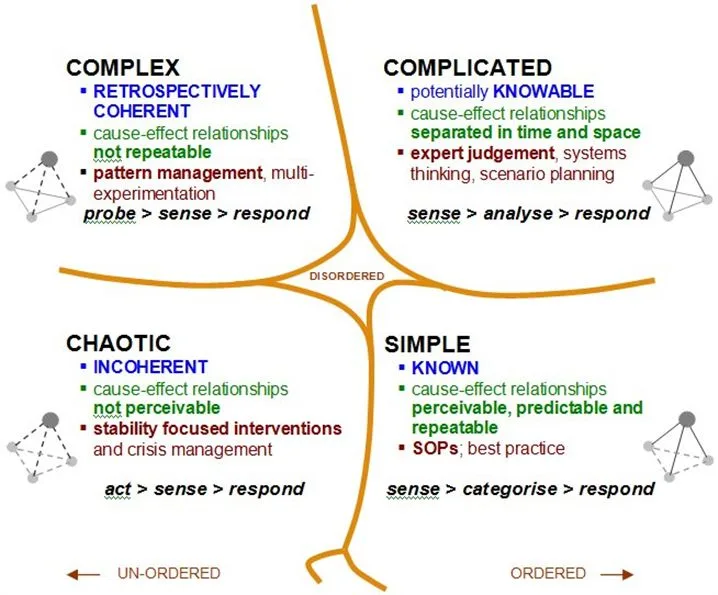
    In times of great crisis (when chaos tends to reign), the most important priority for a leader (board of directors, executive team, community leaders or the government) is to re-establish a sense of stability and order, noting the fine line between providing leadership and imposing one's will.
    Effective leaders tend to roll their sleeves up, identify options, openly encourage alternative perspectives, make decisions based on best-available data and assumptions thought valid at the time of the decision, and explain why decisions have been taken. But as the situation develops—and it will, both naturally and in response to various interventions—progress and data need to be reviewed. Effective leaders display an openness to reverse or amend earlier decisions promptly if new data do not conform to a priori assumptions. Transparency and accountability are both crucial to maintain the confidence and support of stakeholders.
    But effective leaders also look beyond the immediate crisis. They ask questions to discover what the future might hold, and whether the crisis presents an opportunity to do things differently. But they don't pursue change for change sake. Over the past two or three weeks, a bevy of visions of what a post-COVID19 world could or should look like have been published by think-tank groups; futurists; independent consultants; journalists; social media commentators; self-styled experts; company leaders and other pundits. Amongst those shared to date, 'digital transformation'; 'locking in new ways of working'; 'a post-office world'; 'the end of globalisation'; 'balanced capitalism'; 'a more inclusive society' and other similar phrases have featured prominently. Some of the proposals I have seen are coherent and merit further investigation; others are little more than bias-laden and thinly-veiled attempts to influence public opinion in favour the author's favoured ideology. Hopefully, political leaders have been considering options to rebuild the economy and social fabric too, but these are yet to be revealed.
    With so many options (and many more to come, no doubt), business, political and community leaders face a daunting challenge: of threshing the wheat from the chaff, and making strategically-important decisions in the best interests of others, not self. To decide where and how to move next, in the midst of great ambiguity and uncertainty, is not for the faint-hearted. Wisdom and maturity are invaluable capabilities in this context.
    Many tools and frameworks are now available to help leaders make sense of a multiplicity of options, and to respond well given the prevailing context. The Cynefin Framework is worthy of consideration. (Hat-tip to a Netherlands-based colleague who reminded me of it recently.)
    Picture
    Regardless of which approach or framework you use, high-level sense-making and systems thinking expertise is vital. Heterodox ​perspectives are to be encouraged too. Without these, leaders run the risk of becoming introspective, leaning in on natural biases or, worse, preferred ideologies. Also, great care must be exercised to ensure intended visions are made plain, strategies are coherent and decisions are evidence-based. If such care is not taken, those concerned by what they deem to be inappropriate experimentation or investigation might bite back. ​Curiosity killed the cat, after all.
    The COVID19-induced crisis presents leaders (politicians, boards of directors, community leaders) with a golden opportunity to take stock and, having thought carefully, make decisions in the best interests of the constituency, company, community they serve. Effective decision-making in chaotic situations is far from straightforward, but our future prosperity depends on it.