• Published on

    Goodbye Twitter

    I have just deleted my Twitter account (@petercrow1), a conscious decision to step away from what is essentially a soapbox for soundbite-length pronouncements. Self-proclaimed experts who offer opinions (packaged as answers but lacking context) actually contribute little, except noise and clutter—and I can do without that.
    My intention is to pursue more meaningful exchanges of ideas elsewhere. Challenging problems (how boards influence company performance, for example) need devoted time and space for critical thought and analysis. They cannot be resolved in 140 characters. 
    If you are interested, my thoughts on a range of topical matters including inter alia corporate governance, board effectiveness, strategy, the board's role in company performance and the compliance–performance dilemma will continue to be shared online, on LinkedInthis blog and in published articles. Please read and debate them with your colleagues, and share your thoughts (especially strong or opposing views!). If you have a question or a request, ask and I'll respond promptly.
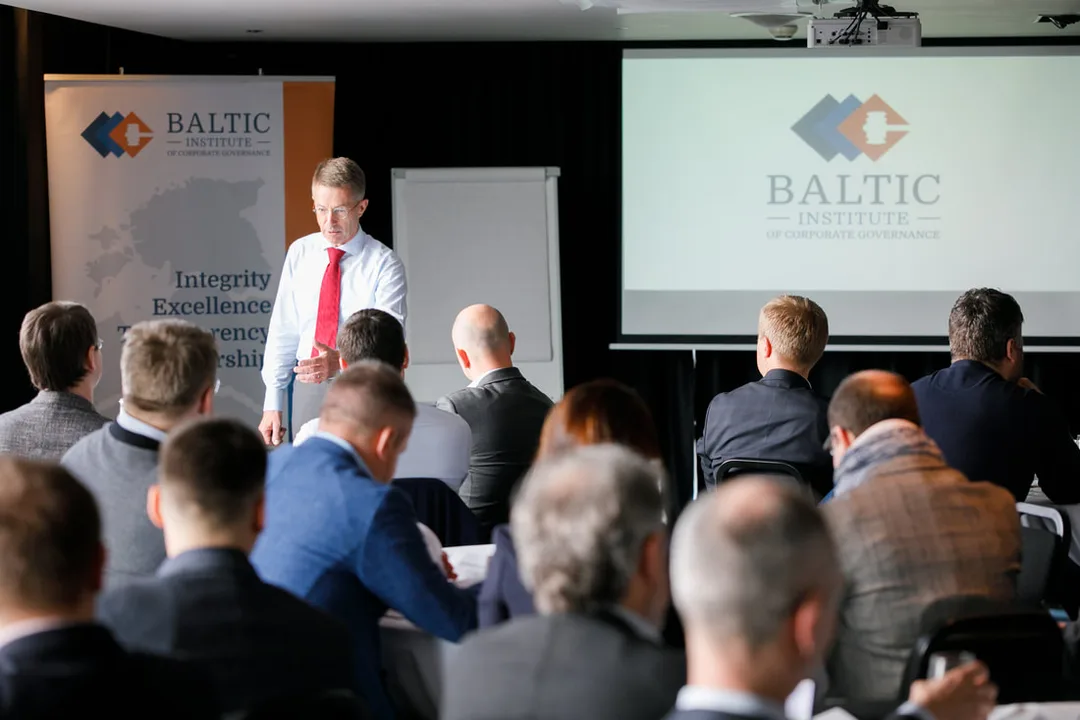
    If you have a preference for in-person discussions, as many directors do, I am available to explore topics of interest, either publicly at conferences or other forums, or privately at workshops or confidential briefings.
  • Published on

    On boards, wicked problems and social media

    Picture
    Over the last twenty years, I have spent countless hours serving on and advising boards, and thinking about governance and the characteristics of effective boards. To have been invited to work with boards around the world as they have sought to realise the full potential of the enterprises they govern has been a real privilege. ​But with such privilege comes responsibility—the importance of standing back from time-to-time to take stock and reflect on learnings cannot be overstated, which is exactly what I have been doing over the last few days. 
    Two things in particular stand out just now. First, boards are increasingly aware that ultimate responsibility for enterprise performance lies with the board itself (not the CEO); and second, social media is starting to get in the way of effective learning.
    That awareness is trending upwards is great news. But the supplementary question of how high performance is achieved and sustained remains problematic. The market is awash with best practice recommendations and supposedly definitive guidance ("five ways to...."), many of which have been implemented diligently. But alas, company failures continue to be blots on the landscape. 
    Directors want reliable guidance, but many directors struggle to sort the wheat from the chaff. They say that the plethora of often discordant information is more a hindrance than it is helpful. Privately, some admit that they have become confused about the purpose of the board, what corporate governance is and how it should be practiced. ​Others have suggested that the question itself (of the board's role in achieving high enterprise performance) is 'wicked', meaning it is easy to describe, but really difficult if not impossible to solve due to incomplete or contradictory information and a highly contextual setting—a moving target camouflaged in a landscape that is far from static.
    The other thing that has become relatively clear in recent times is the role and impact of social media: it seems to be getting in the way of meaningful debate on big questions and wicked problems. Yes, news feeds and the 'like' button can be additive, but self-proclaimed experts offering opinions disguised as 'solutions' generally add little except noise and clutter. If progress is to be made, more reliable guidance is needed to help boards focus on what actually matters—enterprise performance. For this, researchers need to go to the source (the boardroom), to discover, analyse and report what really happens when the board is in session, including what boards do; how decisions are made; and how power is wielded and influence is exerted. Interviews, surveys and the quantitive analysis of large datasets all have their place, but the direct (and ideally, long-term) observation of boards in action is the gold standard. Researchers, advisors and directors need to continue to pursue meaningful dialogue—not sound bites—both with each other and at conferences and other interactive forums (workshops and masterclasses, for example) to explore situations, discover what works (and what doesn't) and, crucially, understand the contextual limitations and nuances of various options. A commitment to read widely and critically is also important.
    Press on we must; the question of how boards influence enterprise performance is far too important to ignore. Tough problems need time and space for critical thought and analysis. Thus my decisions to step away from Twitter and to change my use of LinkedIn—to create more space for critical thinking and analysis. My hope is that what emerges will be of some use to helping boards address something that has remained constant: responsibility for enterprise performance starts—and ends—with the board.
    My current thinking on board effectiveness is available here. If you are interested, please read the articles with a critical eye and let me know what you think.
  • Published on

    The important role of company secretary: Changing times?

    The company secretary, a role defined in law in most jurisdictions, is an important actor in company boardrooms; a servant of the board with a mandate to ensure the smooth running of the board and its activities. Specific tasks include supporting the chair and chief executive in assembling board documentation; ensuring effective communications between key actors and external parties; recording and publishing minutes of meetings; and providing process support to the board as and when needed. Such a role seems clear.
    But in recent times, company secretaries have assumed greater roles including speaking at meetings; exerting influence over decision-making processes, even to the point of presenting papers; and speaking for the board in the market square. This has been encouraged by associations representing company secretaries with the term 'governance professional'. Times are changing, for sure, but are these developments sound? Most of the contributions listed here come dangerously close to the secretary acting, or being seen to act, as a director. 
    But the company secretary is not a director.
    Rightly understood, the role of board secretary should—indeed must—remain one of servant to the board, not part of the board. If governance is a profession (a debatable point, given almost anyone can be a director and professional standards are not enforced), then it is directors not secretaries who are the rightful claimants of the title 'governance professional'. Some other questions boards may wish to consider are:
    • ​The company secretary's modus operandi needs to founded on service, discretion and trust, not power. Is this reasonable, or do you disagree? 
    • How does your board secretary actually operate? How should they?​​
  • Published on

    Will board effectiveness improve in 2019?

    Picture
    With 2018 consigned to history and holiday season break all but over, most business leaders and boards of directors are turning their attention to what the year ahead (and beyond) holds. Even a cursory glance reveals a plethora of issues that may have an impact on business continuity and, potentially, continuance. 
    Consider these indicators:
    • ​Rampant economies that have powered much of the global growth over the last decade may be running out of steam. Many Asian 'tiger' economies are growing less rapidly than before, Apple and other tech giants have issued warnings, indicating that a correction may be just around the corner.
    • Populism and nationalism are no longer words heard only in political and academic hallways.
    • The climate is changing.
    • Medical and social developments are impacting the lives of untold millions around the world.
    • Disruptive technologies and business models are fundamentally changing commerce.
    • Weaponising of biological 'forces' to reshape nations, economies and mindsets.
    • March 29, 2019 is shaping as a watershed date for Britons and Europeans in particular, but also others.
    • The US-China trade war and disquiet in the Middle East have the potential to disrupt international trade.
    • The emergence and potential impact of identity politics and various lobby movements (#MeToo and #GilletsJaune are two examples amongst many).
    • In several countries, general and/or local government elections are occupying the minds of many.
    And that's just the start.
    As is usual at this time of the year, business and governance commentators have stuck their collective necks out, promulgating a variety of predictions given the indicators (as real or imagined as each indicator may be); each behaving as if they possess levels of predictive insight beyond what a reasonably educated person might be able determine by tossing a coin. But do they? They cannot all be correct—in fact, none may be. 
    The challenge for boards, of course, is working out how to respond well. 
    What is becoming increasingly clear is that boards have become confused by what's going on around them. Increasing numbers have grown quite tired of 'conventional wisdoms' and so-called 'best practices' (plurals intentional). Some have responded by taking defensive positions, and others are boldly trying things without first understanding the contextual relevance.
    My response to enquiries from boards is straightforward: open your eyes to the possibilities, think and act strategically, but don't be impetuous. Check the current context, because things change, often in unexpected ways. Helping boards respond well typically involves sharing insights from research and practice; facilitating discussions; and providing contextually-relevant and evidence-based guidance. If you want to discuss options to respond well to a changing world around you, or lift the effectiveness of your board, please get in touch