• Published on

    Netflix: What went wrong?

    Picture
    Over the years since it was founded by Marc Randolph and Reed Hastings (in 1997), Netflix has been at the forefront of entertainment and innovation. Initially a rental service, the company introduced a streaming option in 2007 and, as they say, the rest is history.
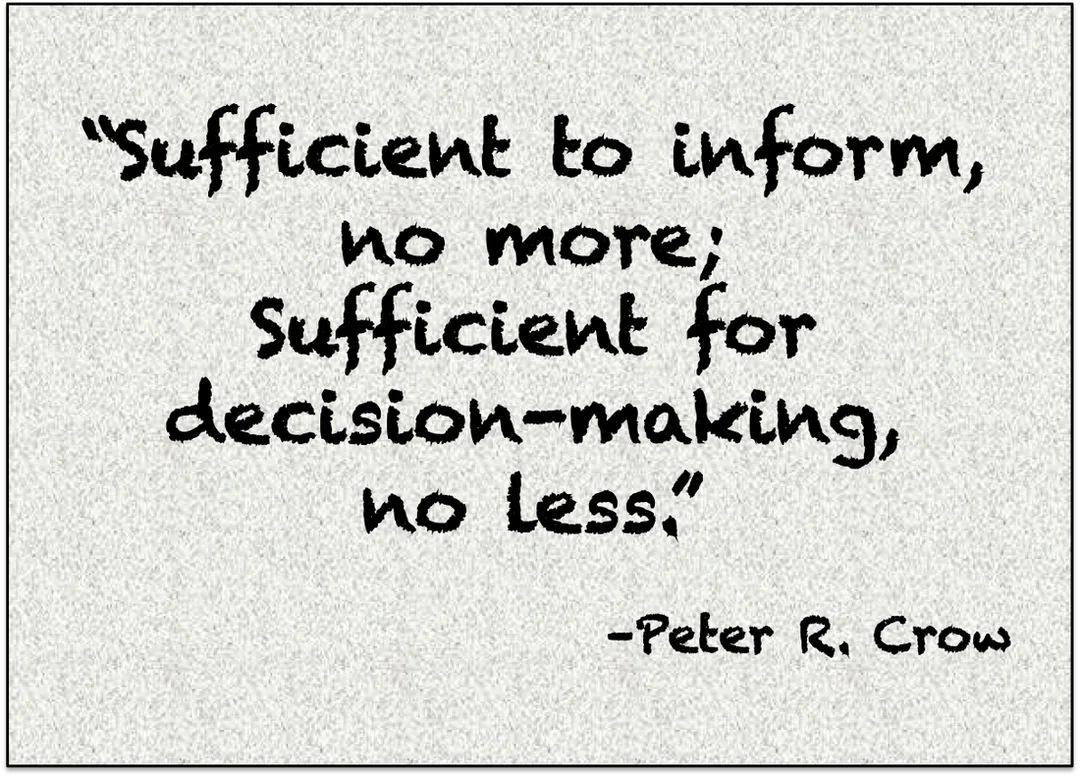
    The company has also garnered attention for its innovative approach to corporate governance—one based on proximity more so than distance. I wrote about it several years ago. The approach, founded on governance by walking about and pragmatic reports, ensured directors were adequately informed to make smart decisions. 
    But that was then. Now, eight years on, things have changed somewhat.
    Jay Hoag, a venture capital investor, was voted off the board recently, after pressure was applied by Institutional Shareholder Services, a data analytics and proxy advisory firm. It turns out Hoag missed three quarters of the board and committee meetings he should have attended. Given the Netflix board usually meets quarterly, it follows that Hoag attended once per year. Quite how anyone can contribute well if they don't attend meetings, is beyond comprehension. 
    That shareholders have taken a stand on the matter is laudable. Well done ISS, for bringing Hoag's absenteeism to the attention of shareholders. But other questions remain:
    • What confidence can shareholders have if the board only meets quarterly, and in directors who  seemingly turn a blind eye to chronically absent colleagues?
    • What of accountability and board effectiveness? When was the last board/governance assessment completed, and was it any more than a cursory exercise?​​
    If boards are to have any hope of governing with impact, all of the directors need to be appropriately engaged (capable and​ present). Ideally, the board should adopt a robust governance framework too, to expedite effective steerage and guidance. How does your board stack up in this regard?

  • Published on

    On complexity, pathways and outcomes

    Picture
    I have had the good fortune of time in South Africa this week, as a guest of GovernEx, a board advisory practice. To have been invited to interact with hundreds of directors, executives, academics and political leaders, to listen, learn, and offer insights has been invigorating.
    South Africa is a dynamic society. In the 31 years since nation-building was restarted (May 1994) much has changed. Black South Africans comprise over eighty per cent of the population; they now dominate the middle class. Efforts to build an inclusive society, whereby circa 63 million people can participate, have produced much fruit. But some cracks are visible: extremes (of wealth and poverty, in particular) remain; guidance introduced to enable and empower has become prescriptive over time; corruption is apparent in some quarters; and, in some cases, the pursuit of inclusion has delivered little more than a power shift, from whites to blacks. The situation is complex, of course, and hope springs eternal. But hope is hardly a strategy.
    South Africa’s political leaders have recognised the situation, and they are responding. The President, Cyril Ramaphosa, together with an entourage of business, community and sporting leaders, met with the President of the United States a few days ago. The G20 summit will be held in South Africa in late 2025. Business leaders have told me of their desire to move beyond various codes and constructs that have devolved to now impose more cost than benefit in many cases. Their question is telling: “Tick-box exercises for what benefit?”
    My sense is that great courage will be needed, if business leaders are to step beyond the pathways and structures that served the nation well in the early years but now seem to have become hindrances to further progress. Those I have spoken with this week are not without courage—and they have been excited to explore alternate pathways to secure better outcomes, amongst these the Strategic Governance Framework. The challenge now is one of deciding: whether and how to act.
  • Published on

    Helping boards govern with impact, in the USA

    Picture
    This is an invitation to US-based directors and chairs who want to move beyond cookie-cutter and tick-box approaches to corporate governance and board work: I'll be visiting the East Coast in July, and would be glad to meet to offer insights to help lift your board's effectiveness.
    One of the enduring joys throughout my life has been to serve. Whether it be confidential conversations with board chairs; advising boards or regulators; delivering keynote talks; leading director education workshops; or writing, the call to support directors and executive leaders in their efforts to realise organisational potential is compelling. 
    Already this year, I have accepted invitations to contribute in Southern Africa, Australia, Eastern Europe, and Central Europe. Now, I am delighted to add North America too. In July, I will return to the USA, to deliver a keynote at the International Corporate Governance Network conference.  
    Alongside the ICGN conference, I am available for private meetings with boards and ​directors based anywhere on the East Coast. The dates are July 14–16th, and July 21–23rd. 
    Yes, it will be summer, but what better time to take stock? To explore options, get in touch today.
    (*) The ICGN conference (July 17–18th, in New York) is 'the' conference for leaders across the institutional investor, sovereign and superannuation fund, and board/governance communities. This year is the 30th anniversary of ICGN's founding, an important waypoint to consider the role and impact of boards and shareholders; approaches to board work; shareholder and stakeholder interests; sustainability; enduring performance; and 'doing the right thing'.
  • Published on

    Taking notice, for context matters

    Picture
    I like exploring: old towns and villages, and the countryside; enjoying the landscape, clambering along trails and even into river beds to look more closely at flora and fauna. The pictures that form in my mind’s eye provide important context to understand the scene, and what may have gone before. Take the above image for example, a photograph I took a few weeks ago, having stepped off the path while walking towards a disused railway. This seemingly innocuous scene is of a fast flowing river, in a gorge. But more than that, it is just along from an abandoned gold mining settlement and an extraction plant (who knew?), and it has a name: the Ohinemuri River, this section is in the Karangahake Gorge.
    If the picture is studied more closely, details not apparent at first glance can be seen: plants in bloom, logs dumped from an earlier flood event, and an adjacent highway. Some details seem inconsequential, like the red blooming plant, others are far more significant (the river obviously floods from time to time, the gorge ‘hosts’ a major highway).
    Clearly, the act of looking ‘into’ the picture, not simply at it, reveals much. 
    And so it is with board work: to look beyond what is written in board papers, to consider what is not written, the wider context within which the company operates, and still-weak signals that may portend trends and potential disrupters is crucial, if the board is to secure a more complete understanding and, ultimately, make more informed decisions. While some boards behave as if such things do not matter, effective boards know better. They are alert to both macro trends and issues (this recent report, from INSEAD, offers helpful insight), and more immediate matters such as sales figures, staff engagement and customer satisfaction trends.
    When was the last time you scanned the horizon to understand the wider context within which the company you serve operates, and how long has it been since the board thought deeply about the future, and the various risks and opportunities that might effect the company and its prospects?
  • Published on

    What lies ahead, in 2025?

    Picture
    I had the good fortune to catch-up with a dear friend and professional associate yesterday; someone I have not had the chance to interact with for nearly nine months.
    Tony and I chatted about all manner of things: his new barn (read: man cave and office); our exploits with Rosa (read: 1951 MG Y-type); geopolitics; ChatGPT; and more besides. What was fascinating was that we both found ourselves chatting as if the last time we spoke was yesterday. ​Before we knew it, some 75 minutes had passed by. ​My father told me that this is a good thing; a sign of true friendship.
    One aspect of our conversation that piqued my attention was Tony’s investigations around artificial intelligence and board reports—or, more specifically, his application of large language model tools to discern and make sense of board reports. The rapid progress over the past twelve months is a sight to behold. Tony summarised his experiments and findings. Did you know that if you feed ChatGPT a set of board papers and ask it to summarise the key points, including nuances and appropriate questions to ask in a board meeting, the likelihood of the responses being both insightful and relevant is high? You can also use it to discern whether directors have read and understood the board papers! I have been a sceptic about the application of AI tools for some time but, on the strength of what was outlined, I’m ready to believe ChatGPT (or Claude, or other) can be a real boon for directors struggling to make sense of large data sets. While context eludes ChatGPT (and all other LLMs), and meaning and reasoning too, the direction and pace of travel seems to be reasonable. Certainly, progress is rapid.
    I went to bed after our call pondering a plethora of options, including whether board directors might be supplanted by machinery in future. Of this, I am doubtful. But where LLMs could be quite valuable is to distinguish between lights in the distance: those that are sunlight at the of the tunnel, and those that are a train heading towards me at great speed.
    And so, with 2025 underway, is your board ready for what lies ahead? Can it, for example, confidently distinguish between [sun]light at the end of the tunnel and a train headlight? Has it carefully considered options having read widely, invoked various tools including AI tools and debated options; or, does it remain reliant on what management feeds up in the board report? To rely on management reports as the sole source of ‘truth’ is not smart; it never has been.
    PS: this is Rosa:
    Picture
  • Published on

    Exploring boards and board work, thrice more

    Picture
    One of the most satisfying aspects of my work involves sharing insights gained from 'live' experiences, in the hope they might be of some value to others. Whether it be facilitating a boardroom discussion, advising a chair, delivering a keynote, leading a capability building workshop, or chatting with a colleague, the call to share my knowledge and experience is strong. So, when Mark Banicevich, Founder of Governance Bitescontacted me for a chat, I was agreeable, more so as we had previously explored various aspects of board work (the recordings are available: herehere and here). The topics Mark wanted to explore included boards in crisis situations; ethical dilemmas in governance; and, governance in developing nations. A date was agreed, and the 'record' button was pressed.
    Now, all three of the fireside chats have been published. You can watch them here ⬇️. If you have any questions having watched them, or want to check something out, please feel free to contact me directly.
    Boards in crisis situations:
    Ethical dilemmas in governance:
    ​Governance in developing nations: