• Home
  • About
  • Musings
  • Research
  • More...
    • Home
    • About
    • Musings
    • Research
Your Cart
Contact me
  • Home
  • About
  • Musings
  • Research
Contact me Your Cart

Tags

  • Accountability (256)
  • Artificial Intelligence (4)
  • Boardcraft (2)
  • Change (2)
  • Complexity (1)
  • Conferences (169)
  • Corporate Governance (117)
  • Decision Making (175)
  • Director Development (24)
  • Diversity (23)
  • Effectiveness (59)
  • Entrepreneur (3)
  • Ethics (48)
  • Family Business (23)
  • Governance (594)
  • Guest Post (5)
  • Language (15)
  • Leadership (237)
  • Management (182)
  • Monday Muse (10)
  • Mundane May (1)
  • Performance (433)
  • Phd (96)
  • Readings (51)
  • Research (318)
  • Research Update (15)
  • Societal Wellbeing (106)
  • Speaking Engagements (26)
  • Strategy (201)
  • Sustainability (11)
  • Teaching (12)
  • Time Management (25)
  • Tough Questions (43)
  • Travel (1)
  • Value Creation (29)
  • Published on
    4 January 2016

    On the DNA of high performing businesses

    Accountability Governance Leadership Performance
    Picture
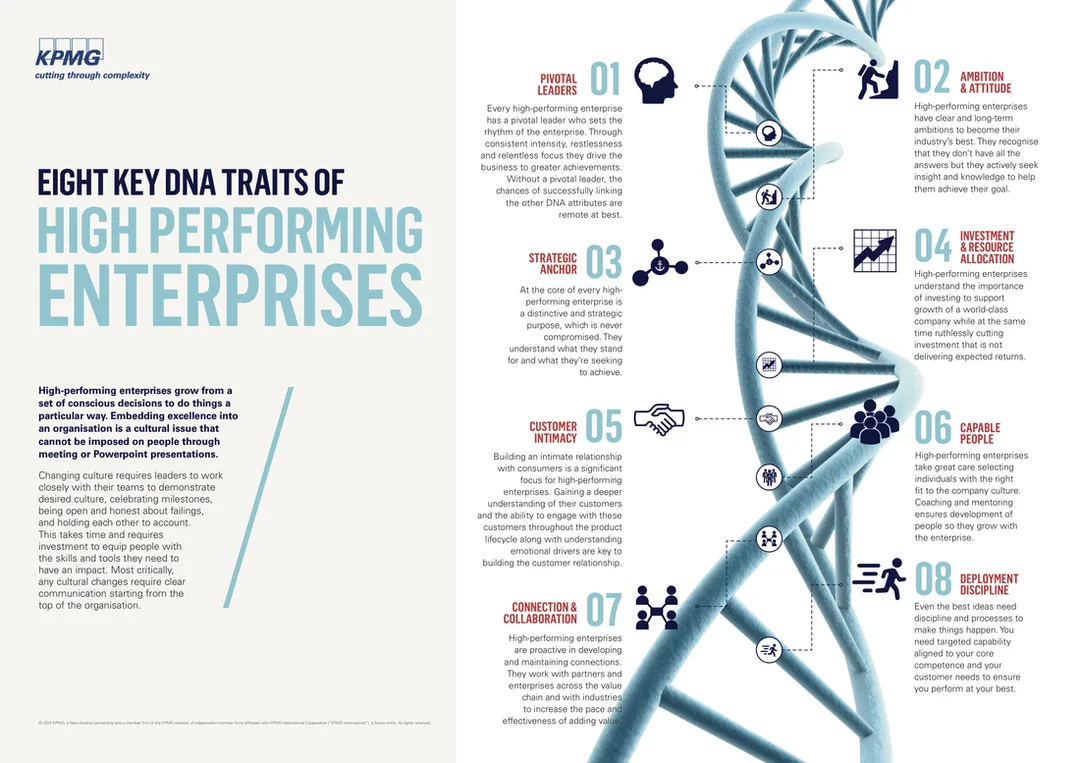
    What makes a successful business successful? Can success be pursued, or are great outcomes largely a matter of luck? Success, it seems, is dependent on companies doing a rather small number of things consistently well. Jim Collins (Good to great), Colin Campbell-Hunt (World famous in New Zealand) and others have studied this question and produced some great insights.
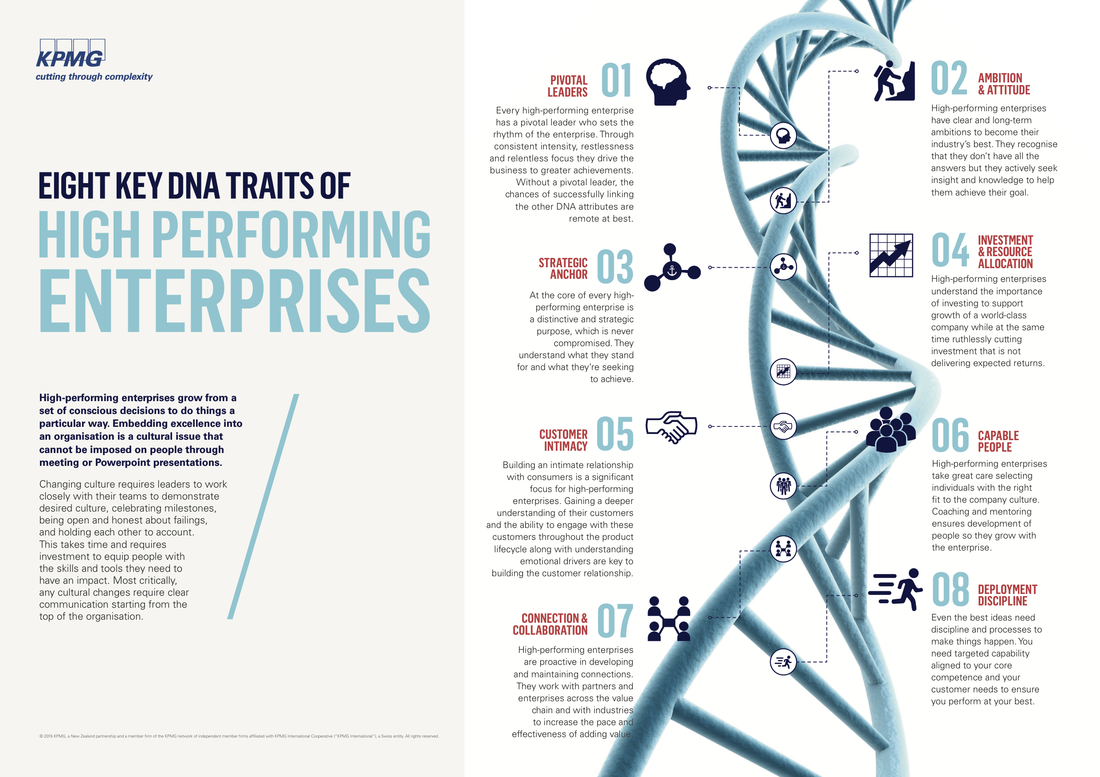
    Recently, business advisory firm KPMG, added their view. The KPMG study revealed eight 'DNA traits' of high-performing enterprises, as follows (click image on right for a larger version):
    • Pivotal leadership
    • Attitude
    • Strategic anchor
    • Investment and resource allocation
    • Customer intimacy
    • Capable people
    • Connection and collaboration
    • Deployment discipline
    Picture
    This guidance is as applicable to smaller companies with big dreams as it is to more mature companies wanting to defend against competitors or push on to the next level. Did you notice that a having great product or a killer app—often lauded as being 'the crucial difference'—does not rate a mention? This point has interesting implications for strategic management, and strategy development in particular. While good products and services are important, leadership, people (customers and team), smart decisions and a sense of purpose are far more significant moderators of business success.
    If you'd like to discuss the implications of these observations for your board or your corporate strategy, please get in touch. I'd be more than happy to be a sounding board.
  • Published on
    1 January 2016

    On democracy, morals and business performance

    Accountability Ethics Governance Leadership Performance Societal Wellbeing
    Image description
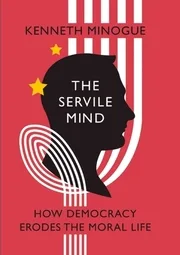
    As 2015 gives way to 2016, many people will be reflecting on the past and looking to the future; thinking about what was and what might have been. I'm no different. One of the books I've been reading while pondering the past and the future this week is The Servile Mind by Kenneth Minogue. A friend recommended it—he wondered whether the commentary might be applicable to directors and boards. My response, having read half of the book so far, is an unreserved 'yes'! Here's the note on the flyleaf:
    One of the grim comedies of the twentieth century was that miserable victims of communist regimes would climb walls, sim rivers, dodge bullets, and find other desperate ways to achieve liberty  the West at the same time that progressive intellectuals would sentimentally proclaim that these very regimes were the wave of the future. A similar tragicomedy is playing out in our century: as the victims of despotism and backwardness from Third World nations pour into Western States, academic and intellectuals present Western life as a nightmare of inequality and oppression.
    In The Servile Mind: How Democracy Erodes the Moral Life,​ Kenneth Minogue explores the intelligentsia's love affair with social perfection and reveals how that idealistic dream is destroying exactly what has made the inventive Western world irresistible to the peoples of foreign lands. The Servile Mind looks at how Western morality has evolved into mere "politico-moral" posturing about admired ethical causes—from solving world poverty and creating peace to curing climate change. Today, merely making the correct noises and parading one's essential decency by having the correct opinions has become a substitute for individual moral responsibility.
    Instead, Minogue argues, we ask that our governments carry the burden of soling our social—and especially moral—problems for us. The sad and frightening irony is that the more we allow the state to determine our moral order and inner convictions, the more we need to be told how to behave and what to think.
    Humbly, I commend this book to all directors who want to govern well and make a difference in 2016.
  • Published on
    30 December 2015

    Accountability. Is it too much to ask?

    Accountability Decision Making Ethics Governance Performance
    History is littered with many stories of corporate successes and, sadly, almost as many failures. Why do some companies perform well over the long term while others become abject failures? Is it, as Jim Collins remarked in Good to great, a matter of luck, or is some other factor at play? While luck and environmental factors can be influential, I suspect there's more to it. A common thread that seems to weave its way through many of the success (Ford, GE, Johnson & Johnson, Xero, Facebook) and failure stories (Pan-Am, Enron, WorldCom, Satyam, and Toshiba, amongst many others) is captured in the title of this posting: Accountability.
    All directors hold, by law, a fiduciary responsibility. In Australia, New Zealand (where I live) and many other commonwealth countries, that responsibility is to the company. In the USA, it is to shareholders. Tellingly, it is never to self (despite some directors behaving as if it was!). If directors are to serve shareholders (who appoint them) and also the wider stakeholder community well, moral fortitude ​is a requirement, as is competence and engagement.
    The role of the director is one of service; of acting (read: considering information and making decisions) in the best interests of another party; and, ultimately, of being accountable for decisions made. Consequently, directors cannot afford to be asleep at the board table, nor be selfish in decision-making. Performance, accountability and ethics needs to take precedence over reputation and prestige.
  • Published on
    26 December 2015

    Ten #strategy musings that generated much discussion in 2015

    Governance Leadership Performance Strategy
    Alongside corporate governance and board practice, the topic that occupied most of my time in 2015—as an advisor, facilitator, researcher and writer—was strategy. The numerous enquiries and  discussions suggest that boards are starting to acknowledge that an involvement in strategic management in some form is appropriate. And not before time: boards are responsible for company performance, after all. 
    Of the hundreds of articles published on Musings this year, strategy and strategic management received almost as much attention as corporate governance. These ten articles in particular stimulated plenty of discussion—and some folk sharing some strongly-held views as well!
    • Strategy without purpose is, actually, just a collection of activities
    • Stepping beyond the summer of [boardroom] malaise
    • "Involve the non-executive director in strategy"
    • ​Big ideas and goals are insufficient, strategy needs a purpose
    • 'Towards a strategic board'
    • On strategy: "A palette of plans"
    • It's time to act: Boards need to focus on leadership and strategy
    • We talk about value creation, a lot, but what is it?
    • ​The board's contribution to strategy and business performance: Some thoughts to ponder 
    • How to keep strategy alive in the boardroom
    If you want to discuss any of these postings (or ask a question about a related topic, or request some assistance), please get in touch. I'll do my best to respond within 24 hours.
  • Published on
    24 December 2015

    Ten #corpgov musings that generated the most discussion in 2015

    Governance Performance Readings Research
    Picture
    The topic of corporate governance—that is, the functioning of the board—has generated much interest in the business community and beyond in 2015. From failures and successes, to emerging ideas and beyond, corporate governance has been front of mind for many throughout the year. Looking back, over 150 articles on corporate governance were added to Musings during the year. Here's a list of ten musings that generated the most discussion in 2015, in no particular order.
    • ​​Insights for boards, from a learned gentleman one Friday afternoon
    • Back to the drawing board: what is corporate governance?
    • Volkswagen emissions problem: portent of a bigger problem?
    • Do boards need to re-conceive control, as a constructive mechanism?
    • The emerging role of the board in business performance
    • ​​Boardroom diversity: is the rhetoric finally starting to mature?
    • Reflections: International Corporate Governance Network conference
    • Martin Wolf at ICGN'15: "Let a hundred flowers bloom"
    • Boardroom authenticity: are director actions consistent with their claims?
    • Qualities of directors and boardroom behaviours that actually make a difference
    The top ten #strategy list will be posted on Dec 26.
    If you want to discuss any of these postings (or ask a question about a related topic or request assistance), please get in touch. 
  • Published on
    17 December 2015

    When is the best time for a board to ask probing questions? Now.

    Accountability Decision Making Governance Performance
    Image description
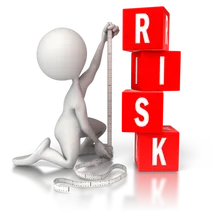
    As a director, where does 'risk' feature in your considerations? Is risk something that gets close attention only when a major proposal is being considered around the board table or when a significant and unforeseen problem occurs? Away from major events, is risk something associated with a register of items (that receives cursory attention)? And whose job is it to identify and manage risk in a company, anyway?
    Should boards rely on management to report both accurately and well, or do boards need to probe? If boards wait on management, as happened at the Christchurch Council a few years ago, the board is entirely dependent on the propensity of management to report risks both accurately and in a timely manner. If they do, well and good. If not, the consequences can be dire.
    Boards have a duty of care to ensure resources are applied well and that expected results are achieved. Verification is a crucial—to ensure projects are on track, that expected outcomes are being achieved, that material risks are being identified and that satisfactory mitigations are established. ​To monitor is insufficient.
    To remain silent and to rely on management reporting (only) is to abdicate one's responsibility. Take this current case, a project that has been allowed to run 100 per cent over budget. What got in the road of objective scrutiny? Hubris, ineptitude, incompetence or something more sinister? Might this problem have been avoided if hard questions were asked early on? Directors need to remember their fiduciary duty. The priority is to serve the company, not self. 
    Directors need to be as cunning as foxes, checking and probing from several angles, in case a problem lies in wait. The best time to ask probing questions is 'now', before it's too late.
Previous 33 of 99 Next

© Copyright 2001–2026. All rights reserved. | Terms of use & privacy.