
• Published on

    On strategy and governance: Whither to next?

    Picture
    As summer gives way to autumn in the Northern Hemisphere—and soon winter—so various externalities that frame the work of boards and enduring performance of companies continue to press in. Topical externalities include climatic change; shifting geo-political forces; technological disruptions; diversity, equity and inclusion demands; ever-increasing levels of regulation; the emergence of ESG; and, stakeholder capitalism.
    The challenge for all directors and boards, whether they acknowledge it or not (or even notice or care!), is to respond well in the face of what is patently a dynamic environment—to ensure the fiduciary duty they accepted when agreeing to serve as a director is fulfilled. Steerage and guidance—the essence of corporate governance—requires every director, and the board collectively, to be alert, to both set a course and to respond well in the face of externalities. The mind’s eye needs to be looking ahead, to ensure the reason for the journey remains clear, and that decisions are made in the context of advancing towards the objective. Quite how that should be achieved is the underlying question that has driven my life’s work.
    Following an extended break from writing—a consequence of dealing with the passing of our patriarch—I have ‘arrived’ back at my desk to think and write again, about organisational performance, governance, strategy and the craft of board work.
    If you have a question, or would like to learn more about a particular aspect of board work or the impact boards can have on organisational performance, please let me know! If we are to journey far, we need to explore relevant topics and learn together.
  • Published on

    Governance: A lesson from tennis

    Picture
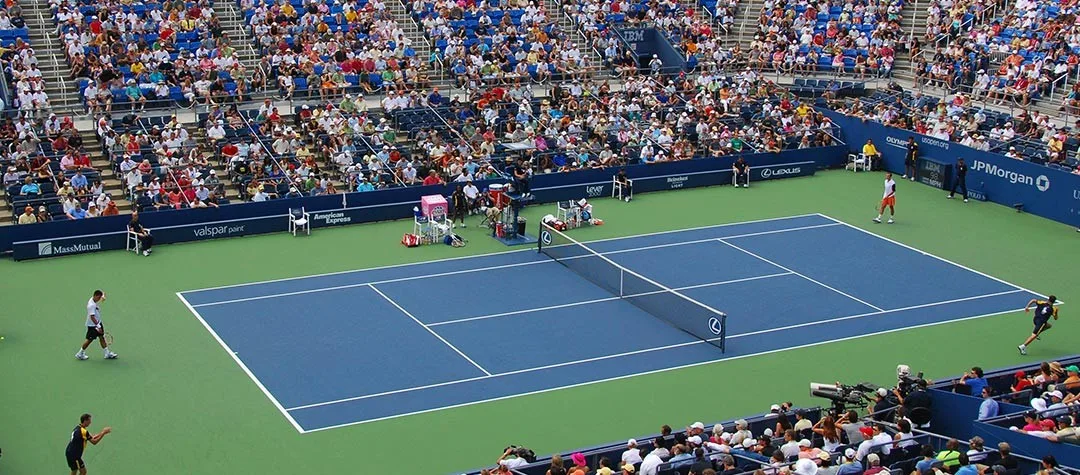
    Tennis is a wonderful game; almost anyone can play. From schoolchildren to elite professional players, the sport is exhilarating; the excitement is often palpable. 
    One of the reasons tennis is attractive is that it is straightforward. The boundaries between acceptable and unacceptable play are, usually, well marked. The ball is served, and if is returned and bounces within the boundaries, play continues. If not, the score is adjusted and play is restarted with another serve. But, neither the net nor the lines play the game, players do; winning or losing is the result of two players (or four, if doubles) having played against each other within the playing space.
    The distinction in tennis between the rules, the playing of the game, and the score at the end has strong parallels in governance. 
    Boards are charged with playing the game (that is, governing—providing steerage and guidance, in pursuit of an agreed goal) within the boundaries of various statutes, regulations and policies (the rules). The 'result' is company performance, which is usually reported in the annual report and any other reports to legitimate stakeholders. ​As with the distinction in tennis, neither the statutes or regulations, nor the annual report are the game. The 'game' is governance, and it is played by the board. Statutes and regulations are necessary, without doubt, but they are no more governance than rules are tennis.
    Another facet of tennis is the player ranking table, which identifies comparisons between players at a population level. The very best players feature at the top; lesser players, further down. Positioning on the ranking table can be a source of motivation for players (to train harder, to embrace various tactics to improve their performance, for example), But position alone does not improve playing standards, player skill or on-court conduct. 
    And so it is with boards and governance. The position a company occupies on a ranking table (adherence to corporate governance standards or ESG metrics, for example) provides a comparative indication of how the company measures up against others. But that is all—to read in more is folly. The likelihood of ranking companies by corporate governance scores improving standards [compliance], for example, is about as tenuous as ranking tennis players improves player conduct. Why so? Standards and rules are thresholds; boundaries that distinguish between acceptable and unacceptable. Nothing more, and nothing less.
    Tennis players wanting to improve their game focus on fitness, technique, strategy and tactics. Similarly, companies intent on improving performance need to focus their attention and efforts on purpose, strategy and execution.
  • Published on

    Misalignment: The elephant in the room

    Picture
    News of Emmanuel Faber's dismissal as executive chairman of Danone, a French food conglomerate, has caused quite a stir. Mr Faber, a fervent proponent of stakeholder capitalism and ESG, had led the company for seven years. Since 2017, he has held both the chair and chief executive roles (a situation disfavoured by many investors, academics and advisors due to concentration of power risk). Though charismatic and influential, the record shows that company performance has languished under Mr Faber's leadership, and staff turnover increased too. Clearly, something was amiss.
    Sustained pressure from activist investors, disgruntled by Danone's performance (relative to its competitors, over several years), finally elicited in a response. The Danone board decided to separate the chairman and chief executive roles; Faber would remain chairman of the board and a new chief executive would be recruited. But this attempt by Faber to placate the activists while also retaining power was received poorly. Faber was, in the eyes of the activists, a lead actor and, therefore, a big part of the problem. He had to go they thought. Realising this, the board ousted Faber.
    Proponents of both stakeholder capitalism and shareholder capitalism have taken Faber's demise as an opportunity to come out from their respective corners to argue the merits of their favoured ideology. The purpose of this muse is not to add to that discourse; it is to consider another matter brought in to view by the case at hand: that of misalignment.
    If a Chief Executive acts against the direction of the board (or without the board's knowledge), or if a board is disunited over a strategically important matter (purpose or strategy, especially), company performance (however measured) will inevitably suffer. Danone is a case in point. 
    Matters of misalignment, either amongst directors or between the board and chief executive, need to be resolved promptly. Similarly, if purpose and strategy are clear, coherent and agreed, but subsequent implementation is poor or ineffective (the saying–seeing gap), the board probably has a leadership problem. ​Attempts to satisfy all interests—appeasement—rarely achieve satisfactory or enduring outcomes, as Neville Chamberlain discovered in 1938–1939
    Directors need to be alert (individually and collectively, as a board); united in their resolve to pursue agreed goals; and, their tolerance for underperformance must be low. If the board is complacent in the face of misalignment or poor strategy execution, and it does not act, it becomes part of the problem. Sooner or later, shareholders will notice, and it is reasonable to expect they will act, to protect their investment.
  • Published on

    Where are we headed, and are we making progress?

    Picture
    Have you ever wondered what it would be like to travel in a plane without any knowledge of where you might be headed? While this prospect may excite some, the idea of flying without a destination or purpose in mind beggars belief for most people. 
    Successful air travel is predicated on knowing the destination; a precursor to the pilot creating a flight plan to make the journey and arrive safely. Air travel is, generally, safe and straightforward when this principle is applied. But things can go wrong, and if they do, pilots must be ready to respond well. For that, years of training and accumulated experience are vital. And vigilance too: continuously reading onboard and external signals to verify progress, and to spot and respond to any emerging problems.
    ​Successful governance is directly analogous. Knowledge of the destination and how to get there (purpose and strategy) is vital, as is constant monitoring of both the general direction (to verify progress is being made towards the desired goal) and the current situation (to detect any emerging problems). 
    Boards are, in general, reasonably good at reading and understanding the current situation. But they are not nearly as good when it comes to general direction. Knowledge and agreement around the ultimate goal, how to get there and how progress might be measured remains problematic. If directors and boards lack clarity on these matters, their ability to govern well and ensure the performance of the company into the future is lost. The consequential risks are high. Chances are, the board and the company will be knocked around—moving but not making progress, just like a cork in a washing machine. 
    Does your board have this in hand?
  • Published on

    Bridging the ‘saying–seeing’ gap

    Picture
    Recently, during a meeting with a company director, I was asked if I'd be interested in seeing the company’s production facilities, to provide context for an upcoming assignment. Context is everything, so I gladly accepted the offer. As we walked, we chatted about a wide range of things. At one point, I asked how things were going since the board's decision to embrace a strategy to become a higher-performing business. His response was as telling as it was succinct:
    They say ‘high performance’, but all I see is ‘average’.
    The melancholic admission was unexpected, but not surprising. Apparently, the most recent board report showed that staff turnover had been creeping up, and engagement scores were trending downwards. And yet the atmosphere in the boardroom was sanguine when I visited. Clearly, something was amiss.
    This vignette highlights one of the great challenges in business—strategy execution; ensuring that strategy planned becomes strategy executed. Regardless of the motivation for creating them, intentions and strategies are not worth the paper they are written on if desired outcomes are not achieved.
    When things go wrong, the problem can often be traced back to one or both of two things: lack of will (the "won't" barrier), and lack of know-how (the "can't" barrier). Both are indicators of a failure of leadership; a failure to equip staff, and motivate and engage them to embrace the call to action. But the root cause may lie elsewhere. If strategy implementation is OK but expected outcomes do not follow, the problem is more likely to be one of governance. This is because ultimate responsibility for organisational performance [outcomes] stops in the boardroom, not the executive suite. Some may challenge this, on the basis that the executive is responsible for running the business and implementing the strategy. They are, but for the avoidance of doubt, responsibility of determining purpose, setting overall strategy and ensuring results are achieved lies with the board of directors. There’s no getting away from it: the buck stops at the top.
    If there is a gap between what the board says it wants, and what is subsequently observed as reality, the likelihood of great outcomes is low. The ‘saying–seeing’ gap must be bridged, and the board needs to own this. 
    Here are some questions the board may wish to consider:
    • Are the expected beneficial outcomes clearly defined and agreed, as part of the strategy approval process?
    • Are the expected outcomes explicitly aligned with approved corporate strategy, purpose and values?
    • What measurement and reporting mechanisms will be used to monitor effort and verify progress?
    • Is staff culture (how we do things around here) and engagement consistent with corporate values?
    • Are the lines of communication throughout the organisation wide open, to create an environment whereby concerns and problems can be reported without fear or favour, and dealt with early?
    • Is the board prepared to hold the chief executive directly accountable for progress and results, as the approved strategy is implemented?
    So, to the direct question: Is your board across this?
  • Published on

    Good things take time, sometimes a very long time

    Picture
    We live in a fast-paced world, where the only constant seems to be change itself. Nine months ago, messages promoting the latest and greatest scheme (or product or idea) bombarded our senses daily, imploring us to embrace something better. Hope prevailed. Now, with the outbreak and impact of coronavirus, the situation is quite different.
    Despite the ebbing and flowing of seasons and circumstances, even the onset of crises, some things remain remarkably constant; stable despite great turbulence and the best intentions of enthusiastic advocates to move things along. The corporate boardroom is one such example.
    Earlier this year, during the early days of the coronavirus, I re-read Making it Happen, Sir John Harvey-Jones' reflections on leadership. Harvey-Jones, a successful businessman and industrialist, was perhaps best known for leadership of British firm ICI, culminating in his chairmanship from 1982 to 1987. His insights are timeless; arguably still relevant today, 32 years after they were first written. To illustrate the point, here is a selection of salient comments Harvey-Jones made about boards in 1988:
    • Many boards are unclear as to whether they are merely a coordinating committee, or whether their primary responsibility is to intentionally make decisions to take the company into the future.
    • Board members are often chosen from amongst the most successful executives. But governance is different from management.
    • Many incumbent board members assume that new appointees will 'pick it up as they go along'.
    • Boards do not easily set for themselves the sort of criteria of success that they unhesitatingly apply to every other part of the business. Unless a board continuously reviews and criticises the way it is working, it is extraordinarily difficult for it to improve its performance.
    • It is important not to go in to a meeting without some clarity as to what you are expecting to achieve. If you attend because the meeting has been called, with little personal aim, you should ask yourself why you are going at all (to the extent of asking why you should continue as a board member).
    • It is perfectly possible for boards of directors to meet regularly and never discuss any creative business at all—a "severe abnegation" of both personal and collective responsibility according to Harvey-Jones.
    Do any of these points sound familiar? They probably do, because, sadly, many of Harvey-Jones' observations are still prevalent today. Given the duties of directors, why are some boards still reluctant to embrace change when circumstances change, or a crisis strikes?
    Is it time your board took stock, not only of the company's strategy and business model, but of itself?