• Published on

    Is it time to think about a Young People Board?

    Board rejuvenation is often considered and discussed, but statistics on boards member ages show little progress. The general public thinks a board of directors is a set of relatively old people. Common sense and corporate governance approaches lead one to think that the introduction of new ideas from younger generations would surely be a company asset.
    Age diversity within a board is unquestionably desirable, but will one or two younger directors be enough? Probably not. In fact, except in exceptional cases (mainly in new technology fields), board members will probably be least 35 years old—hardly 'young' any more—by the time they have acquired the experience needed to be a skilled board director. Also, younger leaders often have full-time jobs, so will there be sufficient candidates available anyway? Recruitment of younger directors may be difficult and generally will not be enough to ensure that potential contribution from truly young people will be brought to the boards. How then to proceed ?
    One approach to solving this problem might to be create a Young People Board, under the leadership of the official board—a 'shadow cabinet' of sorts. With slightly different goals, some municipalities use this approach. A Young People Board could be composed of 18 to 25 year old volunteers—a similar number of members as the official board. Recruitment could be for three-year terms (with renewal of one third every year). The aim would be to achieve multi-faceted diversity.
    Periodically (say three times per year), the company board would invite the Young People Board to consider a topic discussed by the official board. The Young People Board would meet to debate the topic and develop proposals. Many ideas would emerge as young people naturally consider new technologies; social networks; data protection; ecology; ethics; and, international perspectives. Each year, a half-day meeting would be scheduled with the official board, to receive presentations and debate the topics studies by the Young People Board .
    The Young People Board formula would be light, without any significant expenses or time commitment from the official board members. However, the process would enable official board members to be positively confronted with new ideas coming from truly young people. They may even retain some ideas for implementation!
    Members of the Young People Board and, indirectly, their friends and relatives, would derive benefits including learning about the company activities, its executives and, importantly, the 'corporate governance' world. Through the process, the company may identify young talents for later hiring. The company could use this approach to improve its image, especially among young people.
    Many speeches and writings advocate innovation. As one dwells on this, the realisation that innovation applies not only within technology areas, but also in organizational processes and the social domain. The Young People Board is a concrete example of this type of innovation. Is this something your board can support? If so, please contact Guy Lé Pechon at Gouvernance & Structures.
  • Published on

    On the DNA of high performing businesses

    Picture
    What makes a successful business successful? Can success be pursued, or are great outcomes largely a matter of luck? Success, it seems, is dependent on companies doing a rather small number of things consistently well. Jim Collins (Good to great), Colin Campbell-Hunt (World famous in New Zealand) and others have studied this question and produced some great insights.
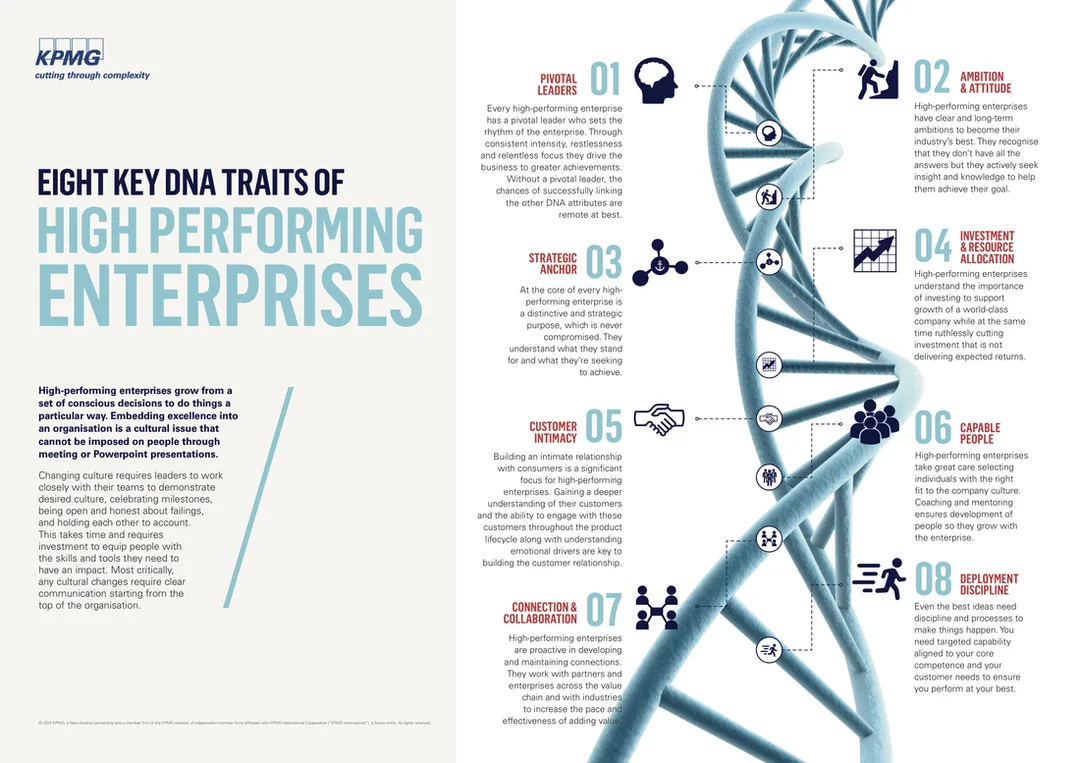
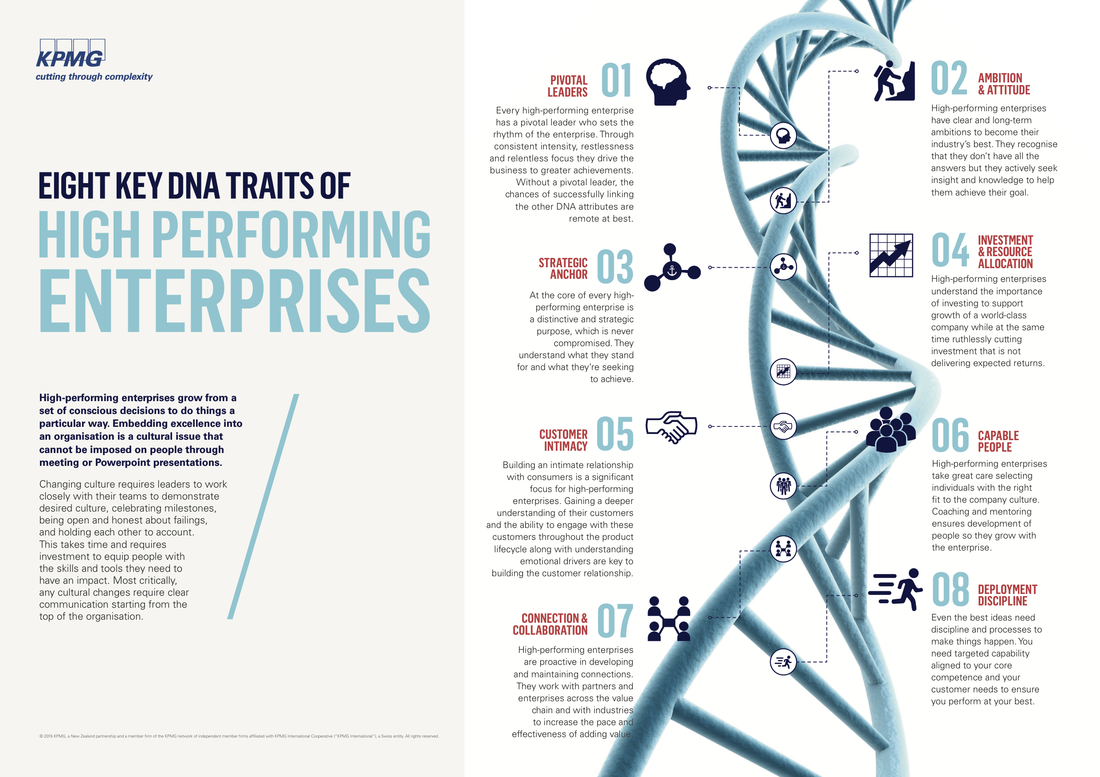
    Recently, business advisory firm KPMG, added their view. The KPMG study revealed eight 'DNA traits' of high-performing enterprises, as follows (click image on right for a larger version):
    • Pivotal leadership
    • Attitude
    • Strategic anchor
    • Investment and resource allocation
    • Customer intimacy
    • Capable people
    • Connection and collaboration
    • Deployment discipline
    Picture
    This guidance is as applicable to smaller companies with big dreams as it is to more mature companies wanting to defend against competitors or push on to the next level. Did you notice that a having great product or a killer app—often lauded as being 'the crucial difference'—does not rate a mention? This point has interesting implications for strategic management, and strategy development in particular. While good products and services are important, leadership, people (customers and team), smart decisions and a sense of purpose are far more significant moderators of business success.
    If you'd like to discuss the implications of these observations for your board or your corporate strategy, please get in touch. I'd be more than happy to be a sounding board.
  • Published on

    On democracy, morals and business performance

    Image description
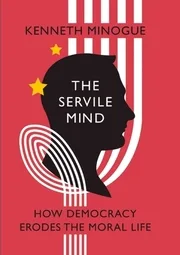
    As 2015 gives way to 2016, many people will be reflecting on the past and looking to the future; thinking about what was and what might have been. I'm no different. One of the books I've been reading while pondering the past and the future this week is The Servile Mind by Kenneth Minogue. A friend recommended it—he wondered whether the commentary might be applicable to directors and boards. My response, having read half of the book so far, is an unreserved 'yes'! Here's the note on the flyleaf:
    One of the grim comedies of the twentieth century was that miserable victims of communist regimes would climb walls, sim rivers, dodge bullets, and find other desperate ways to achieve liberty  the West at the same time that progressive intellectuals would sentimentally proclaim that these very regimes were the wave of the future. A similar tragicomedy is playing out in our century: as the victims of despotism and backwardness from Third World nations pour into Western States, academic and intellectuals present Western life as a nightmare of inequality and oppression.
    In The Servile Mind: How Democracy Erodes the Moral Life,​ Kenneth Minogue explores the intelligentsia's love affair with social perfection and reveals how that idealistic dream is destroying exactly what has made the inventive Western world irresistible to the peoples of foreign lands. The Servile Mind looks at how Western morality has evolved into mere "politico-moral" posturing about admired ethical causes—from solving world poverty and creating peace to curing climate change. Today, merely making the correct noises and parading one's essential decency by having the correct opinions has become a substitute for individual moral responsibility.
    Instead, Minogue argues, we ask that our governments carry the burden of soling our social—and especially moral—problems for us. The sad and frightening irony is that the more we allow the state to determine our moral order and inner convictions, the more we need to be told how to behave and what to think.
    Humbly, I commend this book to all directors who want to govern well and make a difference in 2016.
  • Published on

    Ten #strategy musings that generated much discussion in 2015

    Alongside corporate governance and board practice, the topic that occupied most of my time in 2015—as an advisor, facilitator, researcher and writer—was strategy. The numerous enquiries and  discussions suggest that boards are starting to acknowledge that an involvement in strategic management in some form is appropriate. And not before time: boards are responsible for company performance, after all. 
    Of the hundreds of articles published on Musings this year, strategy and strategic management received almost as much attention as corporate governance. These ten articles in particular stimulated plenty of discussion—and some folk sharing some strongly-held views as well!
    If you want to discuss any of these postings (or ask a question about a related topic, or request some assistance), please get in touch. I'll do my best to respond within 24 hours.
  • Published on

    The 'perfect' board size??

    What is the 'perfect' size for a board of directors? The debate has waxed and waned for years. Shareholders, nominating committees, researchers and boards themselves have asked a range of questions as they have tried to address the conundrum:
    • How many directors are required to get the work of the board done?
    • What is the ideal balance between quality and quantity?
    • At what point does cost become a burden (vs. value)?​
    Answers to these questions have proved to be elusive. The reason? Context. Every situation that boards need to consider is, to some extent at least, unique. Consequently, a broad range of skills and expertise is needed in the boardroom, to address different issues that come up at different times. A configuration that works well for one situation may not work well elsewhere. Consider these vignettes:
    • What about a small board of three or four directors? One small board that I was on (four directors) was great at making decisions quickly, which was helpful for the fast-moving context within which the high-growth company operated. However, we really struggled when one director was absent. On several occasions, we found ourselves reaching for external help because vital skills were not present at the table. The board discussed the matter at length. A decision was made to petition the shareholders for a larger director's fees pool, a cheaper and more effective option that paying external advisors for assistance. Sadly, the petition was never presented: the company was acquired soon thereafter.
    • What about a bigger board, to deal with a range of complex issues? Last year, I was asked to evaluate a board with eighteen (yes, eighteen) directors. When they were asked about board meetings and board practices, the directors said that meetings "took forever", that group dynamics were "overly complex" and that several directors were "passengers": clues that something was wrong. After further discussion, including the desire to move in a new direction (purpose and strategy were MIA), one of the recommendations to emerge was to ask shareholders to consider reducing the board size to nine directors, via a 24-month transition period of fourteen directors. The recommendation was accepted, and both board effectiveness and company performance improved as a result.
    These two cases demonstrate some of the typical challenges faced by small and large boards. While the best answer to the title question is 'it depends', a sweet spot does exist. Boards with between six and nine directors is about right—as Tracy Hickman reports—because board effectiveness seems to peak somewhere in this range. My research suggests bears this out. Boards with fewer than six directors have great dynamics and decisions are generally made quickly. However, small boards often struggle to deal with an array of strategic options, decisions and monitoring tasks. In contrast, group dynamics start to become unwieldy when the board size reaches double digits. Big boards are also expensive to run and the risk of passenger-directors increases markedly!
    If you'd like to know more about how to improve board effectiveness, or want to schedule a board review, please get in touch.
  • Published on

    Strategy without purpose is, actually, just a collection of activities

    Image description
    Do you know why your company exists, it's raison d'etre? Can you provide a clear and succinct response to the question, or does the question leave you somewhat flummoxed? When I ask the question of others (it's usually the first thing I ask when leading a strategy development workshop), the most common response is a description of what the company does. But this does not answer the question! 
    Most people (especially your staff, customers and suppliers) don't care what your company does, they want to know why. You need to be able to tell the story. This article, published by Harvard Business Review sums it up nicely. Here are some questions for your board to consider:
    • Does your company have a single, clearly-stated purpose?
    • Is the purpose consistent with the wishes of shareholders?
    • Is your company's strategy demonstrably linked to achieving the agreed purpose?
    • Has the purpose been communicated throughout the company?
    • Do people (the board, management, staff) buy in to it?
     Directors need to get their collective heads around these questions. It's a matter of leadership, and of accountability. Let me know if you need any assistance with this, I'd be delighted to help.