• Published on

    Chairmanship: a mechanical process, or a deft art?

    Picture
    Board are funny things. They are comprised of selected individuals (directors, board members) charged with meeting together to consider various matters for the purpose of making decisions. While it is true to say directors meet, decisions are made by the collective whole—the board—not individual directors. Therefore, every decision is unanimous. Complicating matters, boards only 'exist' when directors meet, and board work is, largely, endogenous; so, they need to be coordinated—someone needs to 'drive' the board. ​​​
    The term 'chairman' (also, 'board chair, 'chair' or sometimes, 'chairperson') is the term used to identify the board member who carries such responsibilities—these being to convene the board’s meetings, ensure duties are discharged, and that steerage and guidance (that is, governance) is effective. But, as all directors are equal in law, the chair's role is exercised through influence, not command in any controlling sense. Given this, how should a board chair, well, chair the board? ​
    While there is no one 'best' way of chairing, the following characteristics are conducive to better outcomes:
    • Build relationships: Effective chairs nurture trust and respect within the board; with management (especially the chief executive); and, with shareholders and legitimate stakeholders. 
    • Understand the business and the wider landscape: This includes corporate strategy and operations, organisational culture, competitive landscape, and emerging trends and disruptions.
    • Lead on purpose and values: The board needs to set the direction and the basis for decision-making and conduct. Sometimes, tough (even unpopular) decisions are needed, to ensure alignment and to secure in the long-term interests of the company.
    • Boardroom culture: Exercise tact and sensitivity, and maintain decorum. Respect confidences and maintain utmost confidentiality when required. Emotional intelligence, situational awareness, maturity, wisdom, and the ability to draw out the best in others are critical to effective chairmanship.
    • Show decisive leadership: Empathy and understanding is important, but only to a point—for these attributes do not drive decisiveness. Sometimes, assertiveness from the chair is required.
    • Learning and development: Effective chairs know they don't know everything—far from it—and things change anyway. Consequently, they tend to have a continuous learning mindset.
    • Nurture a broader skill set: Technical skills are necessary, but they are far from sufficient. The best chairs read widely and they encourage other directors to do so as well.
    • Embrace multiple perspectives: Eliciting different points of view during ideation and when debating topics is crucial if the board is to guard against groupthink. Cognitive diversity is important too; it has been shown to be an antecedent of higher quality decisions.
    • Listen: Chairs should speak last, having drawn and heard from others. When the time comes to speak, do so clearly and succinctly, and encourage colleagues to do likewise.
    • Manage time:​ Start on time, ensure the board moves steadily through the agenda and where practicable finish on or near time.
    • Ensure continuity: Consider succession, especially for the chief executive role but also for the chair.
    Governance is tough because, inter alia, things change, sometimes unexpectedly; boards often need to make decisions without all the information they want; linkages between decisions and outcomes are contingent; and, directors' duties are unbounded. 
    If boards are to govern with impact, chairs need to be alert: to ensure directors are actively engaged, and that they identify and consider relevant information, think critically and, together, make smart decisions in the best interests of the company. The chairs' priority is to convene the board and its work, and keep directors on track and the organisation safe. For this, a deft hand is needed.
  • Published on

    Ten days in the UK & Europe: A snapshot

    Picture
    I have just arrived back in New Zealand, from ten days in the UK and Europe. My meetings with directors, advisors, academics, students and directors’ institutions had two primary objectives: to listen and to share. The listening aspect was to gain firsthand knowledge of issues and opportunities; the sharing aspect to provide updates on the craft of board work and my experiences as a practicing director.
     Learnings (a few immediate observations, in no particular order):
    • Directors say they are finding it hard to distinguish between signal  and noise—that which is material to monitoring and verifying performance and progress, and that which is, essentially, argumentation from stakeholders asserting preferences with only tenuous associations with sustainable performance.
    • ESG remains 'hot', although everyone I asked said the marketplace was fracturing. Acolytes are becoming more assertive, especially in their expectations that companies prioritise net zero, climatic change response, and equity above all else. Others are less convinced, as they are yet to see any increase in company performance or alpha. The gap between the groups is growing too—adherents have started using the 'anti-ESG' moniker, in an effort to claim the high ground. Detractors have not been silent either, saying the discourse needs to move away from what they describe as ideological fervour to pragmatism and common sense. 
    • Increasingly, directors are questioning whether quarterly board meetings (common in Europe) is actually a good idea. The directors I spoke with said they find it really difficult to keep up with compliance matters, much less contribute well to strategic items. The power balance leans reasonably strongly in favour of the CEO too.
    • Calls for optionality to be removed are becoming more commonplace. (Optionality meaning all directors of companies of substance should be required to be professionally qualified, in the same way as doctors and lawyers need to achieve and maintain a relevant professional accreditation.)
    • Geopolitical turbulence is front of mind (greater in Eastern Europe than Western Europe). The situation is exacerbated by economic headwinds and energy security concerns (think: gas and electricity supplies) despite Europe emerging from a mild winter. The UK and France (in particular) are also struggling with high inflation, strikes and, in France, a proposal to raise the age of retirement. Given the uncertainties, many leadership teams have shortened their strategic horizons and some have become quite defensive.
    • The Credit Suisse bailout by UBS unfolded before my eyes—I was in Zürich the day after the failure. Like many other failures, this one came as little surprise to insiders; the company has endured scandals and criticism for some years. (My early assessment: the board appears to have been asleep at the wheel.)
    • Directors continue to struggle with what corporate governance is and how it should be practiced. Sadly, the confusion observed during this trip is as widespread as in the past. Directors' institutions have a critical role to play, to clearly and straightforwardly assert what corporate governance is and, critically, what it is not. 
    Amongst it all, there were some gems:
    • Several directors spoke passionately about their work, and how efforts to engage more actively, with an underlying sense of purpose, is starting to make a difference.
    • Researchers are moving focus, from quantitative studies using public data, to trying to get inside boardrooms to observe boards in action (ie: the practice of governance).
    • Advisors to General Counsels, CEOs and SME founders have recognised a different conversation is needed to appeal to boards and directors. I was pleased to offer a few insights and suggestions.
    • I had the delight of delivering a guest lecture to forty or more researchers and students at Leeds Beckett University. The Q&A was fascinating—a candid exchange with people passionate about helping boards govern well.
    Several followup visits are now being planned, to advise, assess, educate and speak on topical board and organisational performance matters. If you want to discuss a matter of interest, or check my availability to assist, contact me for a confidential, obligation-free discussion.
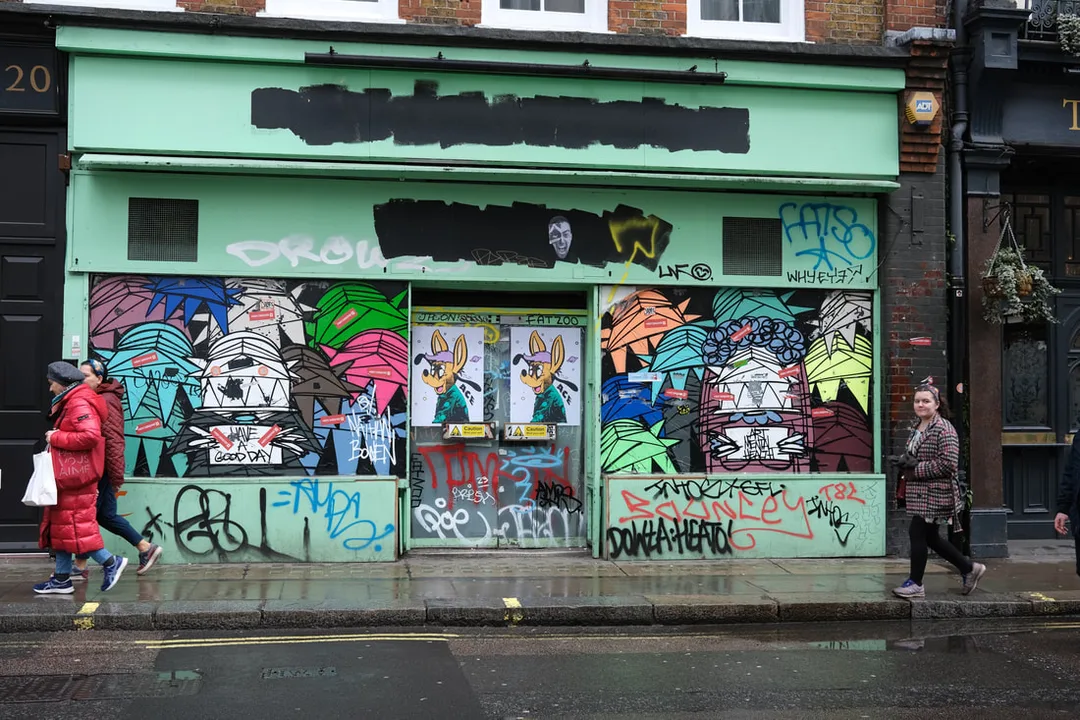
    The headline picture, showing a derelict property in Soho, London, is analogous to the state of governance in many places in Europe: structurally sound but outwardly messy.  
  • Published on

    Reflections, on a most interesting year

    Picture
    ‘That’ time of the year has arrived once more. For many, the time to put the tools down and relax for a few days is nigh. From the hustle and bustle of public life, families are gathering. Some will celebrate the significance of Christmas, others will celebrate because any opportunity for a party with friends and family is a good one. Amongst it all, some will work on, especially in healthcare, emergency services, process manufacturing, retail and hospitality; we should not forget them for they too have family and friends.
    I am one amongst many who carve out a little time and space towards the end of December to reflect on the year gone. Often, my mind is drawn towards relationships and experiences. This year is no exception.
    • The re-emergence of people from the depths of the covid malaise has seen conversations about sustainability (and close cousins climatic change and ESG), stakeholder capitalism, and cyber security return to centre stage. These discussions are important, and boards cannot afford to ignore them. But boards should not be deferential to them either. The role of every board is to provide steerage and guidance, in pursuit of an agreed goal, having carefully assessed and taken into account the wider context within which the organisation operates. This is the craft of board work.
    • The high level of polarisation and discord apparent across communities and nations, and between nations too, is disheartening. I'll not comment further; to do so would mean stepping into politics and nationhood, themes that seem to activate stridency and, at times, conflict. I am ill-equipped to debate the issues with confidence anyway! Regardless of what swirls around, I remain hopeful for the future, that cool heads and calm rational thinking will prevail.
    • Many of the boards and organisational leaders I've spoken with in the past six months are concerned about the effects of geo-political turbulence and economic headwinds. They say they are active in their efforts to distinguish between signal and noise: monitoring  the wider market closely, checking strategic priorities remain fit for purpose and operational plans are on track, and making adjustments where appropriate. Smart boards are also investing in both organisational resilience and themselves.
    • And a personal item, with learnings for board work. An injury sustained in April (comminuted calcaneal fracture) resulted in various post-pandemic plans (notably, fulfilling international engagements) being put on hold. Thankfully, the recovery progressed without complication, although my patience was tested at times. By mid-September, I had sufficient mobility to travel internationally again. Now, nine months on, my shoes and boots fit once more, and I can do most things again, which is wonderful. The experience has provided many lessons, not only for me but also insights for boards and organisations. More on this in 2023 (or, get in touch if you have an immediate need for assistance).
    Before signing off this last post for the year, a note of heartfelt thanks. Thank you to everyone who has seen fit to consider my ideas, challenge my thinking, and invite me to work alongside them this year. To have been afforded the opportunity to contribute, globally, has been delightful. The calling, to serve and support boards intent on realising organisational performance, remains strong. Consequently, the work will continue in 2023, starting in early January with responses to a long list of enquiries to assess, advise, coach and speak.
    Now, I have one report to complete, a client event to attend, and a few Christmas errands to run. Then, I shall set the tablet and pencil down, in favour of a book or two, my vegetable garden, a few small jobs around the house, and some quality family time.
  • Published on

    The craft of board work: Northern tour

    Picture
    The passing of the Covid pandemic has been a great relief for many; boards of directors are no exception. Several weeks ago, I visited Sydney, Australia to meet with directors, boards and leaders of membership bodies. The feedback was clear: if companies (and through them, economies and societies) are to prosper, boards need to start thinking strategically again. Last week, more grist to the mill. During a successful visit to Bengaluru, India to lead a Board Immersion Programme for a globally-known FMCG company, the question of how boards can add value was front-of-mind throughout.
    Today, I'm delighted to announce my first post-Covid visit to the United Kingdom and Europe, to continue the advisory work there.
    From November 16th through 25th, I will visit the UK, several EU countries, and elsewhere as required, to respond to requests to speak, and to help boards respond well as they pursue sustainable business performance. This includes:
    • Advisory sessions (individual board and executive team)
    • Keynote talk on sustainability issues
    • Half-day immersion workshop to consider modern governance practices
    • Confidential briefings on emerging issues
    • Guest lecture to post-graduate students
    Do you want to meet in November? Regardless of whether you have a specific request or a general question, please get in touch. I'll respond promptly with some suggestions for your consideration.
  • Published on

    Thinking about difficult problems, deeply.

    Picture
    I’ve spent quite a bit of time in recent weeks thinking about problem solving; my attention drawn, in particular, to problems that fall between simple (for which answers are self-evident) and wicked (easily defined, but for which an answer is elusive due to incomplete or contradictory information, or changing requirements). Difficult problems are those that can be solved, but answers are far from evident, even following careful enquiry. The BBC Series, The Bomb, explores a case in point. Nuclear fission was discovered to be theoretically possible (Leo Szilard), but considerable effort over the following decade was required to finally tackle the problem in practice.
    So-called ‘difficult problems’ require, clearly, intentional enquiry and, often, patience. As with gravity and magnetism, the underlying explanation (resolution) cannot be observed directly, only through its effects. So, deep and critical thinking is needed, if a resolution is to be discovered.
    Such problems are familiar territory for boards: if they were straightforward, management teams would resolve them. And therein lies the challenge for directors: the underlying cause of a problem raised to board level tends to be hidden under that which can be seen. And what is more, any linkage between the problem, the underlying cause, what can be observed, and any subsequent effects or impacts (note: plural) is tenuous and, almost certainly, contingent.
    If boards are to be effective in their work (governance: the means by which companies are directed and controlled), directors need to be alert, astute and actively engaged—more so because resolutions to difficult problems cannot be discerned directly. Thus, directors need to think beyond what is written in board reports, and what is apparent when reading other materials. Those who think they can get away with quickly reading board papers a few days before the upcoming meeting are kidding themselves.
    If directors are prepared to read widely across a range of topics, allocating 1–2 hours per day for six days every week, to consider ideas and think deeply, the likelihood of uncovering possibilities and solution options is greatly enhanced. Indeed, the correlation between, on one hand, time spent reading and thinking deeply, and on the other, high quality decisions is stark. Time and critical thinking matters, if directors are to add value.
  • Published on

    Taking stock at year’s end; and peering into 2022

    Picture
    December is a significant month for many peoples around the world. It is the month in which two of the three great Abrahamic faiths have a major festival (Jews, Hannukah; Christians, Christmas), and the Japanese observe Omisoka. For others not professing a faith, December is significant to the extent that it marks the end of the Julian calendar. Each of these observances is distinctive, but a common thread runs through them: celebration and dedication.
    Yes, December is a time to reflect on the year gone and give thanks, and to ponder what lies ahead.
    Through this muse, I too wish to give thanks, to the many board directors, business leaders and students that I have had the good fortune to work with during 2021—both in person in New Zealand, and via video link in the United Kingdom, the European Union, the Caucasus region, North America and the Caribbean, India, several African and Middle Eastern countries, and closer to home in Australia. I have learnt a lot, and hope others have derived value from the interactions. Thank you.
    Peering into 2022, the prospect of travelling internationally to work in person with boards and students is enticing. Once the coronavirus situation stabilises, border restrictions are relaxed and travel becomes viable again, I will accept bookings. But in the meantime, I have decided to take on a new project.
    For over two decades now, I’ve had the privilege of working with aspiring and established directors on five continents, helping them wrestle with problems, consider opportunities, make decisions and learn what it means to be an effective director. Over the same period, two friends have encouraged—even nagged—me to consolidate my ideas, experiences and insights into a book. And each time it has been mentioned, I have pushed the idea away, citing lack of head space. But circumstances have changed in 2021 and the time now seems right to reconsider the prospect of writing 50,000 words about governance and the craft of board work. So, that is what I will attempt in 2022.
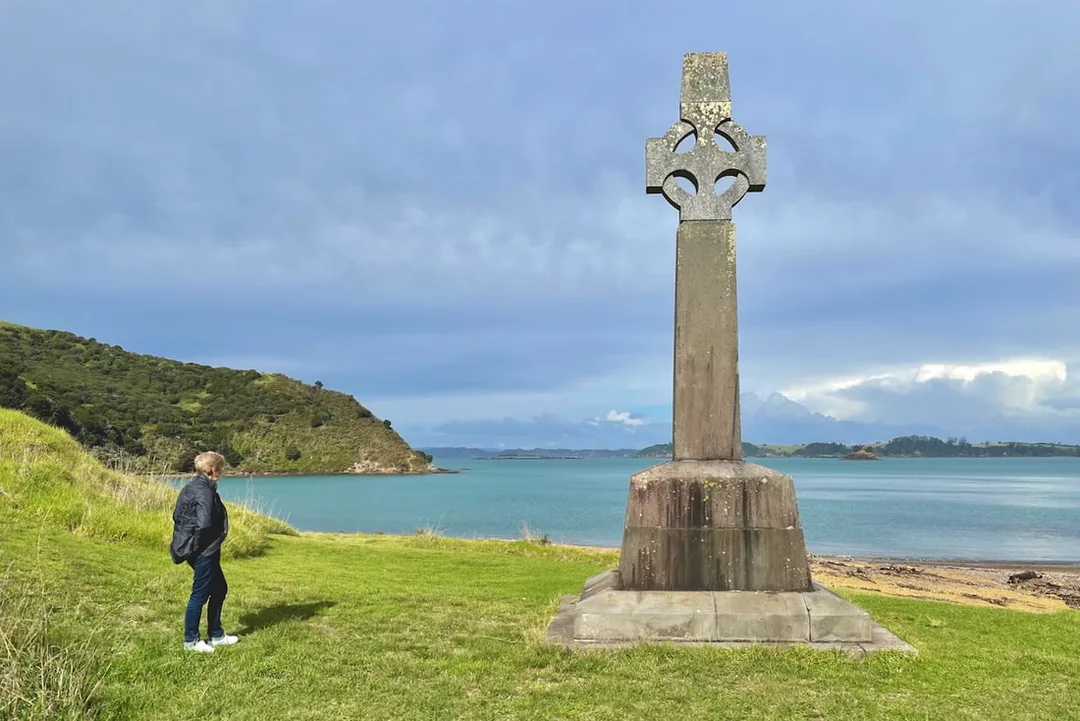
    (*) The image shows the Marsden Cross, which marks the location of the first Christian mission settlement in New Zealand, and the spot Samuel Marsden preached the first Christian service, on 25 December, 1814.