• Published on

    Skin in the game: A boardroom perspective

    Ten days ago, I was in Vienna to attend the Global Peter Drucker Forum, as an observer and participant. However, at the last minute—actually, three days before the Forum—the organisers asked me to 'jump in' to cover for a panelist who was a withdrawal. The session, which was recorded, was entitled "Managing like you have skin in the game". I was asked to provide a boardroom perspective. My comments start at 41m 35s:
  • Published on

    Upcoming European speaking and advisory tour

    Picture
    In a couple of weeks, I'll be in England and Europe, for the third and final time this year. The schedule includes attendance at two conferences, delivery of two keynotes and a bevy of meetings, as follows:
    Sun 25 Nov

    Mon 26 Nov
    Tue 27 Nov
    Wed 28 Nov
    Thu 29 Nov
    Fri 30 Nov
    Sat 1 Dec
    Sun 2 Dec
    Mon 3 Dec
    Tue 4 Dec
    Wed 5 Dec

    ​Thu 6 Dec
    Stockholm: Deliver keynote at event organised by Digoshen (Topic: Outlook on international corporate governance and board practices).
    Stockholm & London: advisory meetings.
    Transfer to Vienna.
    Vienna: Global Peter Drucker Forum, pre-conference workshops.
    Vienna: Global Peter Drucker Forum, main conference (day 1).
    Vienna: Global Peter Drucker Forum, main conference (day 2).
    Vienna: post-GPDF review; transfer to London.
    Free day in London.
    London: advisory meetings.
    London: ICGN Global Stewardship Forum
    Henley: ​Share research insights with faculty & doctoral students (Henley Business School Governance Seminar); explore future research opportunities.
    London: ​advisory meetings.
    While the schedule is fairly full, some gaps remain for additional meetings (in London).
    If you would like to meet, please get in touch. I'd be glad to discuss any aspect of boards, corporate governance or effective board practice; explore a research idea; or respond to (future) speaking or advisory enquiries.
  • Published on

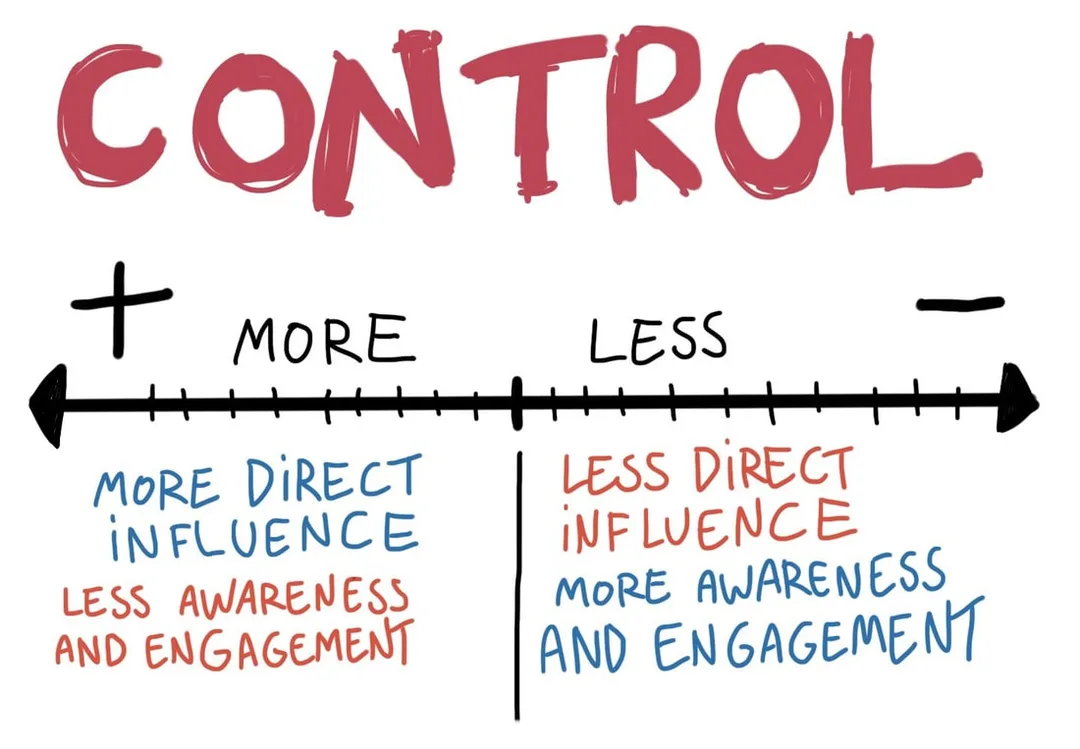
    Re-conceiving 'control', as a constructive mechanism

    Picture
    In business, as in life, the task of exerting control is commonly perceived as being one of exercising limits; of saying 'no' and imposing constraints. Such perceptions are well-founded. Check these verb usages of 'control', lifted straight from the dictionary:
    • to exercise restraint or direction over; dominate; command
    • to hold in check; curb
    • to test or verify (scientific experiment)
    • to eliminate or prevent the flourishing or spread of
    If you have spent much time in boardrooms, you'll know that director behaviour tends to be consistent with these definitions, more so if the chief executive is ambitious or entrepreneurially-minded (the two attributes are not necessarily the same). When asked, board justification for exercising caution is straightforward: to keep the chief executive honest and to keep things 'on track'.
    Such an understanding—holding management to account—seems admirable. Monitoring and supervising management is one key task (of four) of corporate governance after all. But does a strong hand actually lead to better outcomes? More pointedly, how might the exercise of restraint and limits advance the purposes of the company (noting the board is responsible for ensuring performance goals are achieved)? Such conduct is analogous to applying the brake when the intention is to drive on. A growing body of academic and empirical evidence suggests that a strong hand, like increased compliance, may actually counter-productive.
    Rather than persist with what is demonstrably a problematic approach, it might be more fruitful for boards to consider another perspective. ​What if control is re-conceived in positive terms (namely, constructive control), whereby the board's mindset is to provide guidance (think: shepherd or coach) by ensuring the safety of the company and steering management to stay focused on agreed purpose and strategy? Might this deliver a better outcome? 
    Emerging research (here, but contact me to learn more) suggests the answer is 'yes'. Strongly-engaged and strategically competent boards that display high levels of situational awareness as they debate issues from multiple perspectives and make informed decisions in the context of the long-term purpose of the company can make a difference. Constructive control is one of five important behavioural characteristics of effective boards identified in this research.
  • Published on

    Embracing a brave new world

    Picture
    Netflix has been in the news a bit lately, aided no doubt by public interest in its rapidly increasing 'reach', meteoric rise in its stock price and membership of a new generation of behemoth—the FAANG club. Now, the actions of the board of directors have seen Netflix become even more newsworthy, principally a consequence of this article published in Harvard Business Review. ​The board of directors operates quite differently from many others and, indeed, conventional wisdom. Could this be a contributing factor in Netflix's success?
    Conventional wisdom, supported by both agency theory and 'best practice' recommendations of directors' institutes (in the western world, at least), suggests that 'distance' (a clear separation between the board and management) is important if boards are to objective in decision-making. The listing rules of most stock exchanges specify that at least two directors must satisfy established independence criteria at all times. Independence is de rigeuer, even though no consistent link between director independence and firm performance has ever been identified!
    Back to Netflix. Two researchers, David Larcker and Brian Tayan of Stanford University, gained permission to investigate how the Netflix board keeps up to date and informed, a prerequisite of effective decisions. They found that the Netflix board does not embrace conventional wisdom. The full research report, from which the HBR article was derived, is available on the SSRN website.
    The Netflix approach is based on proximity not distance. The approach has been adopted to help directors resolve a fatal flaw present in most boards: Five out of every six directors do not have a comprehensive understanding of the business being governed. Specific measures in place at Netflix include:
    • Governance by walking about: Directors are actively encouraged to view the company "in the wild". This includes attending executive meetings (albeit in silence, as an observer), and the freedom to wander around the office, chatting and asking questions (but not offering guidance nor providing instruction).
    • Pragmatic reports: Memos are both brief and insightful. They must be less than 30 pages long and, in addition to providing links to detailed information, they provide open access to all relevant data on the company's systems.
    The combined effect of these measures has been profound: directors are much more well-informed than they would have otherwise been. The handicaps of lack of transparency or hard-to-assess information are removed. The perennial problem of information asymmetry that besets boards globally has been, it seems, solved—in Netflix's case at least.
    Standing back a little from the Netflix case, several learnings are available for boards, as follows:
    • Proximity trumps distance: If boards are to govern effectively, directors need to  be adequately knowledgeable of the business and the wider operating context including emerging trends and technologies. Information needs to be elicited from multiple sources. Barton and Wiseman's report highlights this. But the Netflix case goes further; boards need to get a lot closer to managers, to establish and maintain a strong relationship founded on trust and expedite the flow of high quality and relevant information. My own research (here and here) provides supporting evidence. But don't be deluded, the recommendation comes with a warning: high levels of maturity are  required, to discern the appropriate proximity, and to minimise the chance of directors becoming 'captured' by managers.
    • Real knowledge takes time to acquire: Conventional wisdom, supported by recommendations emanating from many consultants and directors' institutes, suggests that directors should allocate two hours in preparation for every one hour of board meeting time. Yet the evidence suggests that this is probably insufficient. Real, relevant knowledge (read: deep understanding, wisdom even) takes time to acquire. The Netflix case adds weight to this argument. And knowledge needs to extend beyond the business and ecosystem, to include emerging trends and technologies, and theoretical perspectives as well. Together, this demands that directors invest considerably more time than the two-to-one rule-of-thumb if they are to be well-informed and make meaningful contributions. When asked, I propose five hours for every one hour of board meeting time, and double for the Chair. Established directors, including those who happily describe themselves as 'professional directors' often baulk at this, saying they don't have time. This is not an adequate defence. 
    Many boards and directors do take their role and responsibility very seriously. But, sadly, a significant number do not display appropriate levels of commitment. If boards are to become more consistently committed to the cause—the pursuit of high firm performance and longer-term value creation—they could do a lot worse than take a page from the Netflix playbook and the advice shared here. If you want to learn more, including scheduling a discrete briefing to explore how a mechanism-based understanding of corporate governance can contribute to improved board effectiveness, please get in touch.
  • Published on

    Towards great: learning from recent #corpgov failures

    Picture
    The chattering class has been very active of late, responding vociferously as case after case of corporate failure and misstep has come to light.  Carillion plc and the venerable Institute of Directors (both UK), AMP (Australia) and Fletcher Building (New Zealand) are the latest examples that have resulted in consternation and angst.
    That seemingly strong and enduring organisations continue fail (or have significant missteps) on a reasonably regular basis is a cause for much concern; the societal and economic consequences are not insignificant. Many commentators (primarily, but by no means exclusively, the media) have responded by berating company leaders (the board and management specifically), placing 'blame' squarely at their feet. This is a reasonable: ultimate responsibility for firm performance lies with the board after all. 
    Calls for tighter regulation and stiffer codes abound. Yet the geographical spread of these failures implies that local statutes probably aren't a significant contributory factor. The responses of the boards have been telling: some have circled the wagons (a demonstration of hubris?), others have cast out the chairman or chief executive (diverting blame elsewhere?), and some individuals have simply walked away.
    At this point, it would be easy to join the chattering class; to stand on the margins and berate all and sundry. But let's not go there. Instead, let's try to identify repeated patterns of activity may have contributed to the situations, in search of learnings. Several things that stand out:
    The role of the auditor:​ Most if not all of the firms mentioned above were attested by their respective auditors to have been operating satisfactorily. Yet they were not, clearly. Whether the auditors were in cahoots with management or the board, failing to discharge their duty to provide an accurate assessment or, even, inept remains to be seen. Regardless, something is amiss. To date, few commentators have called out the audit profession as being an accessory (Nigel Kendall is a notable exception). 
    Business knowledge: Remarkably few of the directors of the companies identified here seem to understand the business of the business they were governing. Many directors are recruited for their technical skills (notably, legal and accounting expertise), but few if any have any significant experience in the sector that the business operates in—research by McKinsey shows that one director in six possess such knowledge. How any board can make informed decisions when most of its directors do not understand the wider operating context well is perplexing—it would struggle to detect important though weak signals, much less understand the implications of them.
    Board involvement in strategy: ​ The boards of all of the firms identified here relied heavily on management to prepare strategy. Directors backed themselves to ask questions in response to proposals when they were presented. While most directors are capable and well-intentioned, such a heavy reliance on management is unwise. If the board is not involved in the development of strategy in some way, as many researchers and commentators recommend, the likelihood of the board understanding what it is being asked to approve and subsequently providing adequate steerage and guidance is low.
    If boards are to learn from the failure cases noted here (amongst others), the first and, frankly, most pressing priority is to mitigate apparent weaknesses and focus on what matters. My research suggests that high levels of firm performance are contingent on several factors including:
    • Ownership:​ The board is the apex decision-making authority in every company, meaning the board is responsible making the very biggest decisions. Consequently, if the board expects to have any influence over performance at all it needs to take responsibility—directly—for the big calls.
    • Purpose: If performance is to be achieved and sustained over time, all contributors need to understand their role and why it is important. Sadly, many directors bypass the 'why': they do not understand (and, therefore, cannot describe) why the company exists (activity trumps reason, it seems). Even if they can, they often do not hold a single view. Agreement on why the company exists—its purpose—is crucial; it provides the touchstone against which all other decisions can be made and performance assessed.
    • Strategy: Purpose alone is insufficient. Strategy is the course of action required to achieve the agreed purpose. While no one model (of strategy development) fits all situations, the board should roll its sleeves up and get involved in the formulation of strategy, together with management.
    • Effective board practice: This is the biggie. Check this link, it paints the full picture.
    Some commentators have suggested that the success of the board is entirely a matter of luck. I disagree. While outcomes are not guaranteed, my doctoral research and experience shows that boards can exert influence beyond the boardroom, including on firm performance, but only if they focus on 'the right things'. Unless and until boards start taking their responsibility for the performance for the company seriously the hope of much changing remains, sadly, dim.
  • Published on

    Carillion: A messy but not unexpected fall from grace

    Picture
    Another once proud company has just suffered the indignation of failure. Carillion plc, the UK's second-largest facilities management and construction services conglomerate, collapsed on 16 January 2018, after bankers withdrew their support. The fate of hundreds of contracts with public sector agencies, and thousands of jobs were left in the lurch (although some emergency measures have since been put in place).
    Though tragic, Carillion's demise should not have been a surprise to anyone for it did not occur as a result of a single external catastrophic event. Consider these indicators:
    • Chairman Philip Green had previously been censured for breach of trust and maladministration.
    • The company's 2016 annual report showed debts (current plus non-current liabilities) of £2.8B; well above then current assets (£1.7B)
    • The company issued multiple profit warnings in 2017.
    • Executive remuneration clawback provisions were not exercised by the board; rather, the board sought to change the rules.
    • Demonstrations of executive hubris were apparent throughout 2016 and 2017.
    • Questions about the state of the business were asked in the House of Commons in July 2017.
    These indicators, which are not dissimilar to those of other failures (here and here), raise many questions viz. board performance, including questions of accountability; the board's supervision of management (or lack thereof); malfeasance and ineptitude in the boardroom; the efficacy of 'best practice' recommendations; and, the role of auditors. Why the Carillion board failed to act on the indicators listed here (and others not yet public, no doubt) is a matter for due process to uncover. The investigations should not be limited to the boardroom or even executive management. Other questions worthy of consideration include:
    • Did the directors act continuously and completely in accordance with the seven duties specified in the UK Companies Act?
    • What role did 'best practice' corporate governance codes and guidance play, if any?
    • Why did Carillion's customers, including the UK Government, award contracts to a company that had issued multiple profit warnings? Clearly, contracts were awarded either without adequate due diligence, or the findings from due diligence were ignored.
    Hopefully, the investigations now commencing will result in one or more people actually being held to account. Practical guidance to help boards focus on what actually matters (firm performance) is also needed, if boards are to step beyond conventional wisdom (which is clearly not working), and the damage that inevitably occurs when boards are diverted by spurious (and typically discordant) recommendations that appeal to symptoms or populist ideals is to be limited.