• Published on

    Governance and ESG: what’s driving what?

    Picture
    I’ve been holidaying in Scotland this week, the first of two in the Highlands after whistle-stop visits to Edinburgh and Glasgow. I prefer the countryside over cities, the wide-open spaces and the scenery. The vistas in Scotland are especially magnificent, especially if the weather is fine, which it has been this week. Today, I saw the Jacobite Steam Train in action as it crossed the famous Glenfinnian Viaduct—well almost in action, for the chance of a wayward spark starting a fire in the adjacent bracken has limited this famous tourist experience to a push-me pull-you configuration with a heritage diesel locomotive bringing up the rear. The question, in my mind and the minds of others witnessing the viaduct crossing, was, “Which locomotive is actually doing all the work?” Or, more plainly, what is driving what? From the picture, the answer is not immediately obvious. However, the very presence of the diesel locomotive provides an important clue. And so it was. Today, the Jacobite Steam Train excursion was, in fact, the Jacobite Steam Train experience, powered by diesel.
    The visual imagery provides a powerful analogy for something else I saw today; a press release issued by the Institute of Directors entitled, “ESG must not neglect governance!
    The headline implies that governance (from the Greek, meaning to steer, to guide, to pilot) is little more than a component of ESG (a means of measuring corporate performance). This, despite governance being the term that describes the work of the board of directors (the means by which companies are directed and controlled). But, reading on, the situation is not quite as it first seemed. Dr. Roger Barker, head of the policy unit, acknowledged the importance of boards taking non-financial (so-called, ESG) factors into account when making decisions. But he also noted the emergence of an “ESG industry” that has started to control various agendas, with little interest in the enduring performance of the company. And, with it, boards are being subordinated to a lesser role. Barker issued a strong call: to subsume governance within ESG may well result in the important work of the board in driving business performance becoming neglected.
    Bravo, Dr. Barker! This is exactly what institutions need to be telling their members and others interested in corporate performance: ESG is a measurement and reporting mechanism, no more and no less. The board of directors is duty-bound to ensure the performance of the company, now and into the future, a high calling. If it is to discharge its duties well, the board needs to remain in control, driving the agenda. In doing so, the board should consider various externalities including social and environmental factors), of course, but it should not be beholden to them or to those applying the pressure.

  • Published on

    Picking an adjective...

    Picture
    When aiming to achieve something in business, is it better to be good, or effective, or both? ​Should boards for example pursue good governance, or prioritise effectiveness? And, are these qualifiers mutually exclusive, or can a board claim both? These 'challenge' questions have beset contemporary boards of directors, more so as various stakeholders have sought to impose their expectations and ideological preferences onto corporate values, purpose, strategy and decision making.
    If these questions are to be considered and answered well, agreement on the meaning of the adjectives is necessary. To wit:
    • 'Goodness' speaks to benevolence and decency—of doing the right thing. It conjures an ethical or moral motivation, of acting in the best interests of someone else. 
    • 'Effectiveness' is about producing an effect or achieving a goal, result or outcome.
    Instinctively, good governance sounds attractive. It satisfies a human condition; of doing the right thing and acting in the best interests of someone else (a particular stakeholder interest, for example). But what if doing the right thing has the effect of compromising the competitive position of the company; the achievement of agreed performance objectives; or, potentially, the viability of the company? And, what might be considered good by one person or group may not be upheld elsewhere. Turning to effectiveness, the threshold is more objective—either the goal is achieved or it is not. But, what if the pursuit of an agreed objective results in environmental or social harm, or some other negative consequence?  That is not acceptable either.
    Given the extremes, some sort of balance is needed, in the same way that every board must ensure conformance requirements are satisfied (compliance, value protection) and performance objectives are achieved (value creation). If this is reasonable, should a different adjective be used, to more adequately describe the value of the board's work?
    My recommendation: drop goodness and effectiveness, for one (at least) is highly subjective and has become emotively charged (think, what ESG has become), and the other focuses more on the goal without necessarily considering unintended consequences. Ultimately, in extremis, neither is sustainable without the other. Instead, boards should pursue enduring impact.
    Boards that strive to be effective in role without incurring social or environmental harms are more likely to exert a positive and enduring influence beyond the boardroom (that is, have impact). As a result, they should be well-regarded by shareholders and legitimate stakeholders as well. The Strategic Governance Framework offers insights to boards intent on realising the full potential of the companies they govern.
  • Published on

    Ramping up, for the year ahead

    Picture
    And with little more than a blink, January 2023 is, nearly, done. January is, for me, a time to relax, reflect on the year past, spend time with family and friends, read and get ready for what lies ahead. 
    In the last ten days, things have started to ramp up again: international calls, my first board meeting for the year, and local enquiries—all indicators that minds are turning to board work and the pursuit of sustainable performance once more. ​Soon, I shall be travelling again too, in response to requests to discuss corporate governance, board work, and the role of the board in realising organisational potential.
    After a good break, I not only feel ready for what lies ahead, but excited at the opportunity to help boards and directors, academics and regulators grapple with some complex issues. The first three trips for the year are scheduled, as below—and planning is already underway for several more in the months to come.
    While events and engagements are being loaded into the diary daily, some gaps remain, mainly in Singapore and England. So, if you want to take advantage of me being in your neighbourhood, best to get in touch soon! If you want to talk or meet, but the timing doesn't suit, let me know anyway—there will be opportunities later in the year.
    Dates
    Location
    6–9 February
    Melbourne and Sydney, Australia
    12–15 February
    Singapore, Singapore
    13–25 March
    England, Scotland, Romania, Switzerland, Czechia
  • Published on

    The power of story, to influence decision-making

    Picture
    The claim, that a picture is worth a thousand words, is widely known. Pictures are valuable because they capture one's attention, often evoking memories of significant or special events (as real of imaginary as they may be), or of possibilities. Indeed, the phrases 'every picture tells a story' and 'the picture tells the story' encapsulate the essence of pictures—they tell stories. But visual images are not the only means of stimulation and sharing ideas. Words are important too, especially when the ideas they convey are presented as a story.
    Over the seasonal break, I have been delving into a selection of books, in search of stories and ideas. The very practice of reading is, I find, a powerful enabler—to provoke, gain insight, form opinions, and learn and build knowledge about all manner of things. I have also gone back through the Musings archives and re-read many older posts. Several that piqued my attention were re-posted on LinkedIn (check my feed) to share with a new generation of readers. To my great surprise, many of these re-posts garnered considerable attention and engagement. That some ideas continue to be relevant is gratifying. Thank you to readers who have engaged with those posts.
    Notice the mechanism at play: hearts and minds are captured through 'story'. Pictures and words are important without doubt, but they are, simply, delivery channels: two of four mechanisms (the others being aural and kinesthetic (experiential)—together, VARK) to communicate the message.
    Information and its effective delivery is crucial in organisations too; board work in particular. In such situations, stories can be incredibly influential for informed decision-making, a precursor of all that follows:
    • Managers: The next time you need to prepare a board paper or proposal, think 'story'. How is the central idea conveyed? Is the document simply an assemblage of business case numbers and words, or does the paper tell a story? Is the proposition linked explicitly with the company's purpose and approved strategy? If it is, the likelihood of it being considered in a positive light (and approved) is higher than any straightforward statement of facts.
    • Directors: You stand a greater chance of influencing your board colleagues if you use 'story' to convey ideas, especially if the perspective being offered is somewhat different from others already shared and explored.
    As managers and directors, the way we present and consume written reports, and ask and answers questions, is material to informed decision-making. Ultimately, the board's provision of effective steerage and guidance to achieve the organisation's strategic goals depends on it. Such is the craft of board work. ​With this in mind, what refinements might you consider to lift your game in 2023, and lift the effectiveness of your board?
  • Published on

    The craft of board work; 21 years on

    Picture
    Twenty-one years ago this week, I embarked on a journey to pursue a dream: to help directors and boards become value creators, realising the potential of the companies they govern. At the time—four weeks after the terror attack on the World Trade Centre—governance was hardly known as a word, and most boards had a strong compliance orientation. I had no idea whether the dream was realistic, much less attainable. But, at 39 years old, the calling was strong—compelling even. So, I took a deep breath and walked away from a great company and international role, armed solely with a strong belief that I might be able to add some value. I was told that stepping away from financial security and the makings of a stellar international career was crazy. But the decision had been made.
    I found that people would happily talk about their situation and what they wanted to achieve if they thought you were genuinely interested in them. That insight has provided the foundation for everything that followed—including working with thousands of directors in 45 countries across five continents, serving on boards, delivering hundreds of talks and leading many education sessions. The 2012–2016 period dedicated to complete doctoral research, to try to answer that most difficult question of how boards influence company performance provided a breakthrough that I hope, one day, will be taken up widely: the Strategic Governance Framework. To have met and spent time with doyens of corporate governance, strategy and leadership along the way—including Bob Garratt, Bob Tricker, Charles Handy, James Lockhart, Jenny Darroch, Roger L. Martin, Rita Gunther McGrath, Silke Machold, Stuart Farquhar, Andrew Kakabadse and many more besides—has been inspirational. I am indebted to everyone who has spared a few minutes to answer questions and share insights.
    Other highlights include sitting with directors in India, Eastern Europe and other places well off the beaten track, to listen; experience their thirst for insight; and receive their gratitude for what little I had to offer. 
    Without exception, everyone I've met and worked with has wanted to find ways to guide and steer the businesses they govern with greater effect. To have been asked to contribute has been a honour. 
    Thank you to every established director, board trustee, and board chair; every aspiring director; every chief executive and leadership team; every MBA student, researcher and associate; everyone who has heard me speak or read my articles (note: all my articles and blog posts remain available today); every regulator and government who sought confidential assistance; and, untold others I've never met. Thank you for considering my submissions and arguments, for believing in me, for encouraging me and for engaging me.
    Today, 21 years on from stepping out of the boat, the calling remains strong. I remain available to serve for as long as boards and directors call for assistance, and my ability to contribute allows. To that end, and with the passing of the pandemic, I am available once more to travel to meet in person to understand and speak into situations. So, if you have a question or want to discuss a problem, please get in touch. I stand ready to serve.
  • Published on

    The craft of board work: Northern tour

    Picture
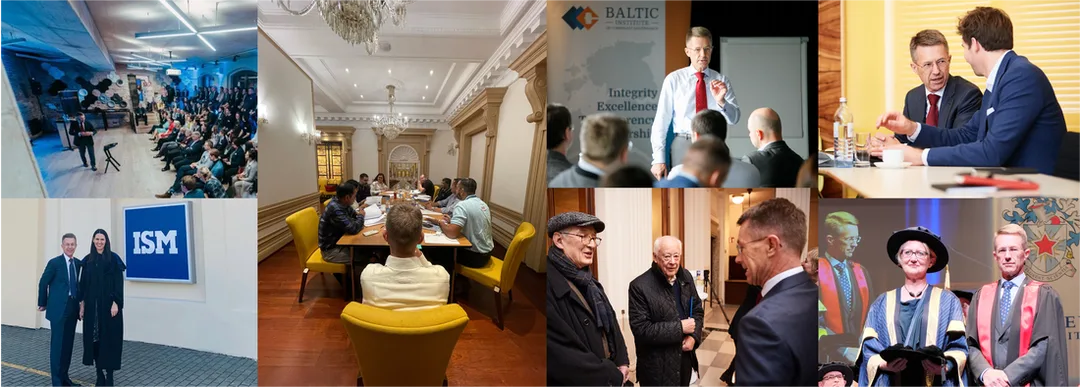
    The passing of the Covid pandemic has been a great relief for many; boards of directors are no exception. Several weeks ago, I visited Sydney, Australia to meet with directors, boards and leaders of membership bodies. The feedback was clear: if companies (and through them, economies and societies) are to prosper, boards need to start thinking strategically again. Last week, more grist to the mill. During a successful visit to Bengaluru, India to lead a Board Immersion Programme for a globally-known FMCG company, the question of how boards can add value was front-of-mind throughout.
    Today, I'm delighted to announce my first post-Covid visit to the United Kingdom and Europe, to continue the advisory work there.
    From November 16th through 25th, I will visit the UK, several EU countries, and elsewhere as required, to respond to requests to speak, and to help boards respond well as they pursue sustainable business performance. This includes:
    • Advisory sessions (individual board and executive team)
    • Keynote talk on sustainability issues
    • Half-day immersion workshop to consider modern governance practices
    • Confidential briefings on emerging issues
    • Guest lecture to post-graduate students
    Do you want to meet in November? Regardless of whether you have a specific request or a general question, please get in touch. I'll respond promptly with some suggestions for your consideration.