• Published on

    When boards are dissected, they are no longer boards

    The modern society we live in has many benefits. Life expectancy and well-being have steadily improved for many: health and education being important building blocks. Most would agree that progress has been 'good'.
    Paradoxically, life has become more complex in some quarters, and answers to some everyday problems remain elusive. The human response to complexity—dissection in search of 'truth' and understanding—has not helped. The reductive assumption that the sum of knowledge of the parts explains the whole is helpful in science, but in social science it fails. Companies (boards, in particular) are a case in point. The pursuit of a single truth ('best practice') is about as helpful to understanding how boards work as dissection studies of body parts is helpful to understanding how humans interact or experience life. 
    The problem is that when boards are dissected and individual elements are studied in search of answers about how boards work, the subject of research is no longer the board. Thus, the very essence of the socially-dynamic entity (the board) being studied is lost. As a consequence, any conclusions cannot, by definition, be representative of what the board as a whole is, does, or might contribute. 
    If we are to understand how boards work and to discover any relationship between boards and business performance, boards must be studied holistically: both in situ and in action. While every situation considered by a board is (to a greater or lesser extent) unique, emerging research suggests that some patterns can be discerned if the empirical data collected from within the boardroom is abstracted. An important dependency appears to be the decisions made by the board when it is in session. The quality (and, therefore, the potential impact) of board decisions appears to be associated with the quality of social interactions between directors and qualities of the directors themselves, as they seek to fulfil their duties. These qualities and social interactions are the subject of my doctoral research, currently before the examination panel. I look forward to sharing the results of this work, here and elsewhere, once the examination process is complete.

  • Published on

    Research update + heartfelt thanks

    Over the last month or so, I've begun to receive questions—several per week—about my doctoral research. Most have been variations on these themes:
    • Has the thesis been examined yet / have you get your PhD yet?
    • Can I have a copy (or a summary) please?
    That people beyond close friends and associates might be interested in the status of the research and in reading the outputs has been gratifying. Sadly, process delays have impeded the provision of affirmative responses for the time being. The background and current situation is as follows:
    On the examination: I had hoped to have some news by now, as eleven weeks has passed since the dissertation was submitted for examination (oral examinations normally occur about 8–12 weeks after submission). However, there was a problem with the examiner panel and some seven weeks elapsed before it was resolved. I've now been told to expect to expect the oral examination during the week of 19 October—another nine weeks away! Thankfully, my head supervisor is trying to accelerate the process, and I've got other things to be going on with.
    On the request for a copy of the full dissertation: A copy of the dissertation (The influence of boards on business performance: Evidence from inside the boardroom) will be posted here after the examination and emendation process is complete. A copy will also be available via academic search engines in due course. In addition, I plan to consolidate the main research findings into a slim (but readable, with practical implications) volume. If you would like to be added to a mailing list to receive a copy when it is available, please let me know.
    Notwithstanding the rather annoying delay, feedback from several people who know about the research findings suggests it will be worth the wait, both as a useful guide for boards and as a basis for future research. However, such claims are preemptive and presumptive in my view: the dissertation needs to emerge from the examination process first! 
    My heartfelt thanks for your interest in the research, and your patience while the examination process runs its course. My hope is that your interest and patience will be satisfied soon!
  • Published on

    The importance of catching one's breath: time-out is not time wasted

    Picture
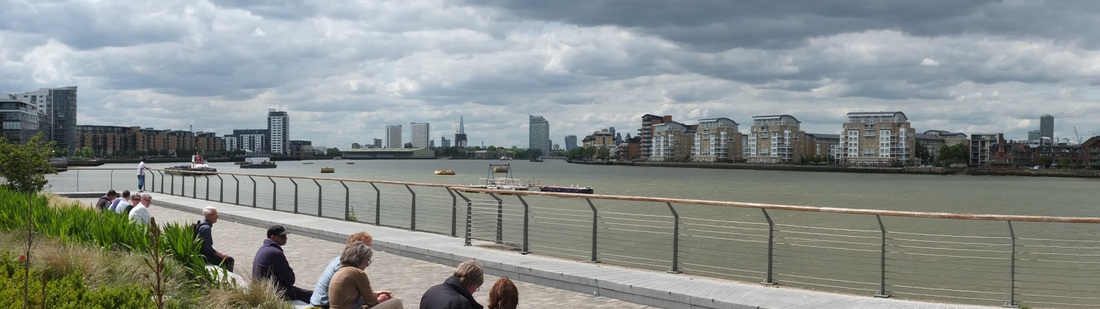
    When I was in London most recently, in June, I fortunate to visit Greenwich. A friend had told me that Greenwich Village is 'different' and that a visit was in order. And it was! In contrast to the hustle and bustle of the City, Canary Wharf and the West End, the people of Greenwich are more laid back. They smile, they say 'hello' and they walk more slowly than their neighbours across the Thames. Many, like the twelve in the picture, happily sit and peer into the distance, taking it all in. Who knows what they were thinking or even looking at. It probably doesn't matter, I guess.
    Why am I relating this story? My short visit occurred three-quarters of the way through a hectic three-week multi-country trip. It reminded me of the importance of downtime. With hindsight, the interlude—to gather my thoughts—probably made the difference between just making it through the final week of the trip, and finishing the trip well.
    Today, as I was working on a presentation to be delivered on my next trip (1–11 September), thoughts of that Greenwich interlude entered my consciousness. The upcoming trip is packed with seventeen significant commitments including two master classes, three presentations, two important dinners and several planning and roundtable meetings; in London, Canterbury, Leeds, Wolverhampton, Dublin and Belfast. It'll be a busy trip. To top it off, our elder son, who is working in Germany at present, has just asked if we can meet up in London while I'm there. Of course, but when? Then the penny dropped. Rather than pursue two remaining 'pencilled in' meetings, why not spend an afternoon with Tim? Two carefully crafted emails later, some 'Greenwich Time' was locked in. I'm looking forward to it already.
    As you move through Friday, my hope is that you too will have the opportunity—better still, take the opportunity—to run on Greenwich Time this weekend. If we are to perform well when it counts, we need to set time aside to relax, recharge and to prepare—mentally, physically and spiritually—for that which lies ahead.
  • Published on

    International Governance Workshop: starts tomorrow

    The annual International Governance Workshop, hosted by the Toulouse Business School, starts tomorrow in Barcelona. Although only in its second year, this conference is an important gathering because it has attracted many of the world's leading corporate governance and board researchers. To be in the same room as these people, to hear them present and debate the results of emergent research is truly an honour. In contrast to the scale of the ICGN annual conference, the IGW is more intimate and more focussed. However, the programme of topics to be explored is no less significant. 
    Session summaries will be posted here, as usual, so you can keep up to date. My paper will be delivered on Thursday afternoon. 
  • Published on

    Pausing to celebrate two important milestones

    Picture
    May 31 is an important day on our family calendar: This year doubly so. It's our daughter's birthday (our youngest reached the ripe old age of 21 this year). We hosted a luncheon for her and several of her friends. Gifts were given and stories were told. We had a great time together. The 'doubly so' part is that I finished writing up my doctoral thesis! Some three-and-a-quarter years after setting out (to discover how boards influence business performance), the main output of the doctoral research process, the thesis dissertation, is complete and ready to be examined.
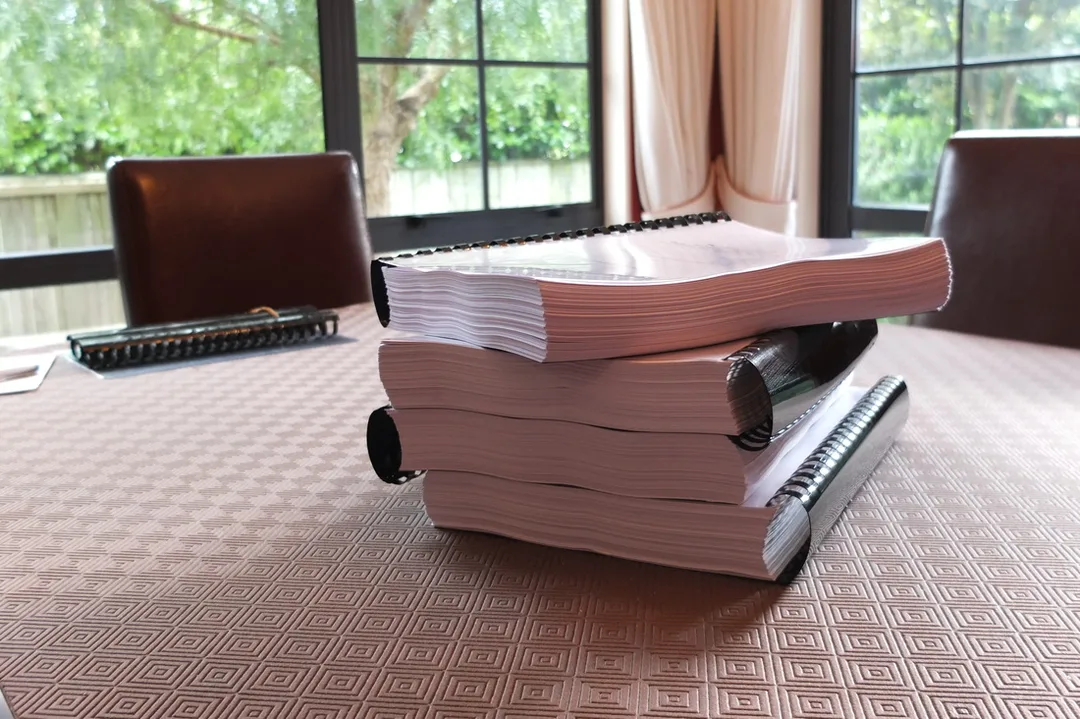
    Four copies of the 336-page tome have been printed and bound, and the associated 'submission' paperwork has been signed. Will the thesis dissertation be good enough? I hope so, but only the examiners can answer that question.
    Where to from here? Today I will rest, to start dissipating the intensity of the final ten days of the write-up and to 'change gear' (from writing to meeting people). I am en route to London, ahead of three exciting corporate governance conferences—two of which I have the honour of addressing. Tomorrow I will start preparing presentations and thinking about the future.
    Thank you to everyone who has provided support and offered encouragement in recent weeks. The focus on the write-up process has been total. I appreciate your comments—deeply.
  • Published on

    EURAM: conference programme now available online

    The 15th European Academy of Management (EURAM) annual conference will be held in Warsaw, Poland on 17–20 June. The conference programme is now available online. Over 1200 delegates have registered to attend, to hear about the latest developments in management research and the implications for practice.
    I am looking forward to attending what promises to be a very interesting (and busy!) conference. EURAM is the third of three international conferences that I will be attending in June. In addition to listening to as many of the corporate governance papers as possible and meeting with colleagues, I have two formal commitments, as follows:
    • Chair the second corporate governance session, entitled Boards of Directors: Outside/Non-executive directors, on Thu 18 June.
    • Present my paper, entitled Boards, strategy and business performance: Observations from inside the boardroom, in the afternoon session on Thu 18 June.
    If you would like to receive more information about any of the papers, please let me know. I will do my best to attend the appropriate session and write a report.