• Published on

    ANZAM'13: Streams of knowledge and learning

    The 27th Australian and New Zealand Academy of Management conference starts this morning, in Hobart, Australia. If the registration process and pack is any indication, the three day conference will be a well-run, high quality affair. This year, papers have been categorised into 15 subject streams:
    • Managing on the Edge
    • Critical Management Studies
    • Entrepreneurship, Small Business and Family Enterprise
    • Gender, Diversity and Indigeneity
    • Human Resource Management
    • International Management
    • Leadership and Governance
    • Management Education and Development
    • Marketing and Communication
    • Organisational Behaviour
    • Organisational Change and Development
    • Health, Public Sector and Not-for-profit
    • Strategic Management
    • Sustainability and Social Issues in Management
    • Technology, Innovation and Supply Chain Management

    With about 340 papers on the programme, and several plenary keynotes, the logistics exercise of paper and stream selection has not been without challenge. Today, I'll be concentrating my attention on two streams: Leadership and Governance, and Strategic Management. I will post reflections and comments as time and wi-fi access permits. 
  • Published on

    Holiday reading plans

    The task of exposing the twelfth and last page of my desk calendar, in a couple of days' time, signals the arrival of the Christmas season in our household. As happens each year, my mind moves to the prospect of spending time with family and friends; to BBQs; to warm weather (as happens when one lives in the Southern Hemisphere); and, to the books that I'd like to read over the holiday period. This year, there are just three titles on my list. Hopefully one or more of them finds their way under the Christmas tree later in the month!

    Image description
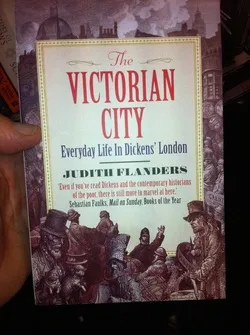
    The Victorian City, by Judith Flanders.

    Flanders has written several books about Victorian London, none of which I've read. This particular title caught my eye when I was browsing in a local book store, perhaps as a result of my heightened awareness of the great city following my recent visit there.
    Image description
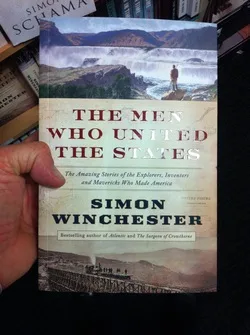
    The Men who United the States, by Simon Winchester.

    Winchester ranks amongst my favourite story-telling authors. I've enjoyed The Surgeon of Crowthorne, A Crack in the Edge of the World, and The River at the Centre of the World in the past. If this new title is comparable, then I suspect that I'm in for a treat.
    Image description
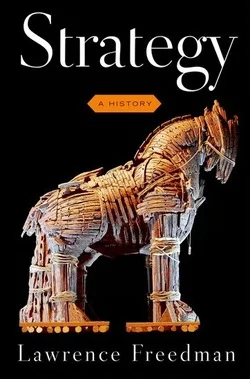
    Strategy: A History, by Lawrence Freedman. 

    This newly published title has received critical acclaim from several well-regarded reviewers. It offers an expansive view of strategy and strategic thinking, from ancient military strategists (Achilles, Sun Tzu, Machiavelli) to modern business strategists (Drucker, Sloan). At 768 pages, I may take a while to get through this one!
  • Published on

    ANZAM Conference: Observations and insights

    I will be attending the 27th Australian and New Zealand Academy of Management (ANZAM) Conference, in Hobart, Australia, next week. The three-day gathering, from Wed 4 to Fri 6 December, is the premier conference for management scholars and practitioners in this part of the world, with over 340 research papers and several keynote presentations on the programme! Papers have been grouped into 15 topic areas, with up to eight streams of papers being presented at any one time. Consequently, delegates have the challenging task of deciding what papers they want to hear—a not insignificant logistics exercise for sure.

    While I will not be presenting a paper this year, I will be sharing observations and insights during the conference, as I have done with other conferences. Please check back here later next week if you like to hear about the latest developments in the management field.
  • Published on

    ECMLG'13: reflections from day 2

    The ECMLG conference is over again for another year. The second day saw another twenty papers (approximately) delivered, by some very capable scholars. As happened on the first day, most of the presentations on day 2 were well received, with some very good questions and discussions during question time.

    The following bullet points are my summary reflections, having just returned to my hotel room after an end-of-conference dinner with six other delegates:
    • The ACPI people ran a good conference. They do 18–20 conferences per year, so it would be relatively easy to just go through the motions. Not ACPI. They seem to genuinely care about delivering a great conference package.
    • The highlight of the whole conference—for me at least—was Vlado Dimovski's keynote on the second morning. 
    • Some presenters (including some who had written simply outstanding papers) suffered the indignity of addressing very small audiences. It would appear that a group of the delegates chose to bypass sessions in favour of tourist activities. While one can't compel delegates to attend, the organisers may want to look at ways to stimulate "fringe" delegates to remain engaged throughout.
    • The majority of the papers were delivered by European scholars, which is perhaps not surprising given the regional orientation of the conference. However, the topics of management leadership and governance have global reach and import, so it would have been nice to see more papers from North American and Asian scholars. I think it would have enriched the discussion.
    • As with other similar conferences, I met some amazing people, and was welcomed into the community of leadership and governance scholars with open arms. This included opportunities to test ideas and get some feedback to inform the next stages of my own research, which I deeply appreciated.

    Looking ahead to next year, the 10th European Conference on Management Leadership and Governance will be held in Zagreb, Croatia, in October 2014. I have already pencilled the conference in my diary, with a view to presenting my final thesis findings to the world.
  • Published on

    ECMLG'13: Keynote address day 2

    Prof Vlado Dimovski (University of Ljubljana, Slovenia, and formerly a Minister in the Slovenian government) spoke on the topic of advanced approaches to leadership, from the perspective of his experience in Central and Eastern Europe.

    After providing a summary of leadership in socialist Yugoslavia (where leadership was not discussed—indeed it was suppressed), Dimovski caught the audience's attention when he answered the classic question Are leaders born or made? with "Yes". In so doing he introduced the concepts of holistic leadership and complexity. He went on to challenge the superman leadership paradigm which dominates western thought and practice. Rather than criticising Western thought and practice outright—and promoting Eastern philosophies as "better"—Dimovski challenged the audience to consider the possibility that effective leadership might best be built on a "both–and" model. He then suggested three frameworks that may be helpful to leadership practice in the future:
    • Authentic leadership: Leadership without masks, related to values, the "true you".
    • Daoist leadership: Leadership is not intrusive (as it is in Western models) but inclusive and based on a deep reality, that nothing is exactly as it first seems.
    • Neuroleadership: Connects neuroscientific knowledge with leadership practice. Suggests that leadership potential can be fulfilled through a better understanding of how the brain functions and cognition.

    Dimovski's paper was well received by the audience, some of whom said to me beforehand that they were expecting to hear from a "socialist evangelist". However this was not the case. We need to hear more from people like Dimovski.
  • Published on

    ECMLG'13: Reflections from Day 1

    The first day of the 9th European Conference on Management Leadership and Governance is over. During the course of the day, some 29 peer-reviewed research papers were presented, in addition to Sloan's keynote at the beginning of the day. Some of the highlights and reflections from day 1 are listed below:
    • We have much to learn from each other. For example, I sat with a Professor from Neapolis University (Pafos, Cyprus) over dinner. We had a great, wide-ranging conversation, which included the sharing of some stories about the demands of tertiary education, and especially the challenges of securing a place in undergraduate programmes in highly-regarded universities around the world. I concluded that New Zealand students have it easy, especially when compared to the demands of entry at places like Imperial College in London (mind you, it is one of the top five rated engineering schools in the world).
    • We have much to learn from each other #2. In a side conversation between sessions, I was told that an Australian-based doctoral candidate had recently completed a multi-year case study of leadership in several organisations, using direct observation as a key data collection method. This is the first time I have heard of any study (anywhere) that has attempted the same sort of design as I am using. Hopefully, when more details are available in the next week or two, I'll be able to assess the correspondence between their study and mine, with a view to securing a meeting to learn more—especially to  discover what learning might be applicable to my own work.
    • Many of the papers from Eastern European contributors followed a predictable pattern, of the statistical analysis of a set of quantitative data gathered from publicly available records. Some of the conclusions presented were a little tenuous, which is not surprising given the difficulties reporting generalisations about social phenomena from statistical data. Notwithstanding this, it was great to hear from enthusiastic researchers from a part of the world that I know little about, apart from what I have been exposed to in books and television programmes.
    • My own paper seemed to be well-received, despite a small audience. I appreciated the opportunity to summarise my work; to field questions from the floor; and, defend the philosophical and methodological approach that underpins my work. I am looking forward to more conversations on day 2 and beyond.
    • The conference dinner was held at Schloss Maria Loretto, on the shores of Wothersee. This beautiful castle that dates back to 1700s. The schloss is a short 8-minute walk from the conference hotel, so many of the delegates took a "walking bus" to get there. The food and service was outstanding. It was raining when we left, so many of us "enjoyed" the stroll back to the hotel in the gentle rain. My day ended damp but happy.