• Published on

    Space to wait: will it help you be a better contributor?

    Picture
    I was fascinated last evening, at a variety of behaviours on display following news that UA787, a flight from Houston to Chicago-O’Hare was delayed due to a technical problem. The captain provided updates, initially announcing the delay and reason. A little later, he came on the PA again, to apologise. Then he added, “that the engineers were working on it, and were confident of resolving the issue soon.”
    Some, likely the elderly gentleman I was seated beside, were a little anxious.  He was being met by a family member and did not want to put the family member out at all. His response was to ask the flight attendant for an ETA, so he could make a telephone call to the party meeting him. Others, such as the business woman seated across the aisle, became agitated, as if the delay was the flight attendants’ fault; the impression being that she was busy and important and, therefore, the problem needed to be fixed “now”. Her response was direct: as soon as she had the opportunity, she collected her things and hurried off the flight. Others got off too, without fanfare. Yet others, sat quietly and waited, knowing there was little they could do.
    The situation provided an impromptu study of human behaviour and, in particular, how some people seem to have lost (or rejected) the art of waiting.
    I wanted to get to Chicago as much as any other passenger, especially having already flown in the care of Air New Zealand from home to Houston. And, a younger me may well have become frustrated at the situation, as the woman who left abruptly. But, I have learned to leave those things we cannot control to others.
    As I reflect on the experience, my mind is drawn to board work. The role of director is one of service. Have I allocated sufficient time to not only read papers, but consider them and read further? How patient am I when arrangements do not flow as planned, especially logistical arrangements? Is my schedule crammed, or does it provide space, not only as contingency but also for critical thinking?
    The very best directors arrive at meetings prepared, calm, and ready to go, having allocated space before the meeting, to read, think, and prepare questions. The rest, who tend to look harried and unprepared, need to reflect on their situation. Why are they not ready to contribute well? Are they poorly organised? Are they overboarded? Ultimately, are they fit to serve as directors, given the duties they owe?
    PS: UA787 departed 57 minutes late, and arrived approximately 24 minutes behind schedule. The Captain apologised once more. Flight attendants were polite. Passengers were looked after. The world didn’t end.
  • Published on

    Seasons greetings!

    Christmas Eve is upon us, signalling both the end of the work year for many (including me) and, importantly, one of the most significant days on the Christian calendar. 
    Before stepping away from my desk and client projects for a few days, I want to express gratitude to the thousands of people around the world who sought advice, attended courses, listened to talks or asked questions during 2016. Thanks also to an anonymous readership: the website received over 382,000 page views (double last year)—a level of interest beyond my wildest imagination. I count it a great privilege to have had the opportunity to serve so many boards and directors. Thank you for your encouragement and support.
    Looking to 2017, my commitment to serve boards and directors intent on realising the performance of the companies they govern is strong. To this end, if you have a question or a request, please let me know and I'll respond in the first few days of 2017. In the meantime, my best wishes to you and your family. Kia kaha.
  • Published on

    On board reports: How long, and what to say?

    One of the humbling privileges of working with boards and directors is the opportunity to participate in discussions and provide guidance on themes as varied as corporate purposestrategycorporate governance and board effectiveness. The overarching aim is straightforward: to help boards become more effective in the important role of steering and guiding the organisation they govern towards its intended purpose. 
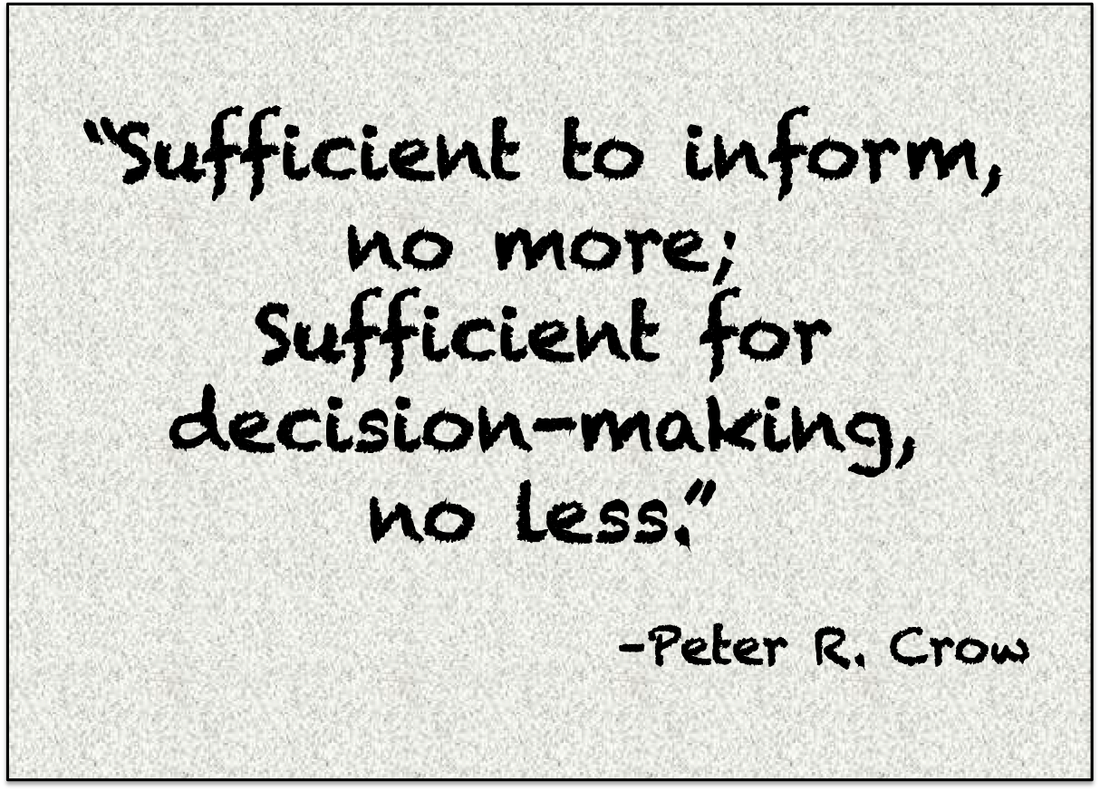
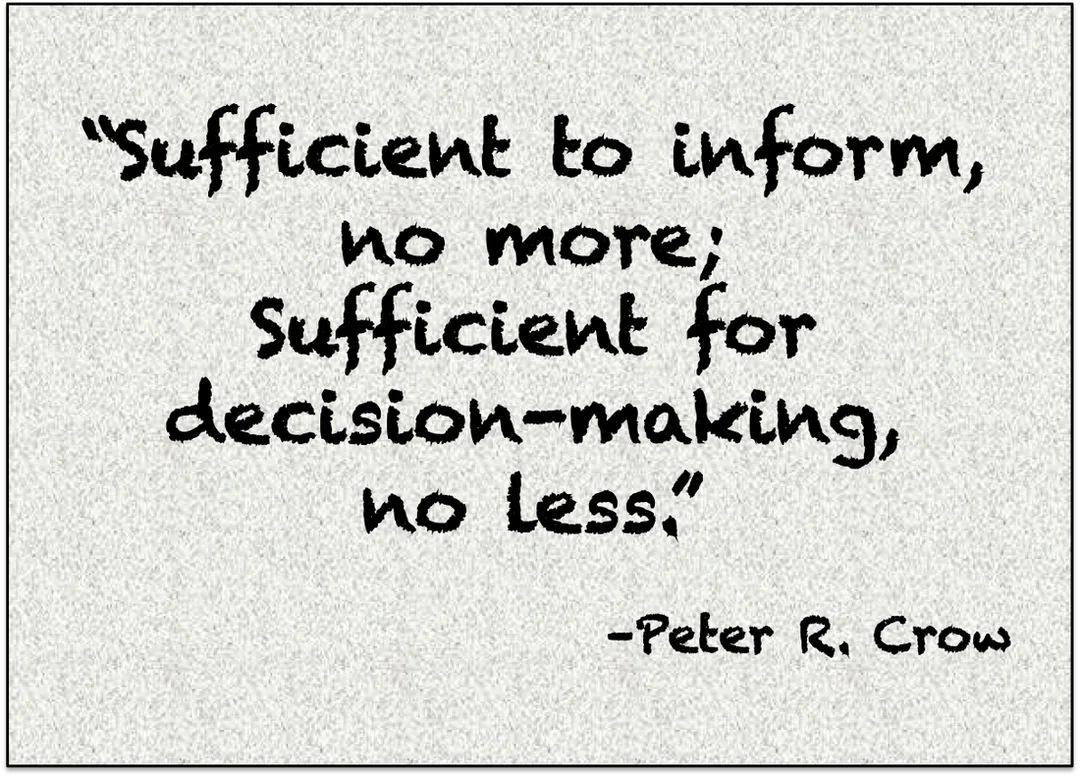
    Recently, the topic of reporting seems to have been front of mind for many directors. I've been asked who should determine the structure and content of the board pack (the board), and what the appropriate amount of detail to include in the board pack is ("sufficient"—see the maxim below). 
    In responding to these questions, the first consideration is that the board report is no different from any other communications channel between two parties: the purpose of the report is to transport information to both inform the receiver and enable decisions to be made. Like other communications channels, the effectiveness of the exchange between management and the board is determined by the receiver, alone. Did the board understand the contents of the material in the board report?
    If the board is to have any hope of doing its job well, it needs to ensure the chief executive understands what information it requires for effective decision-making. Otherwise, what hope has the chief executive got of knowing or, worse, of the board of making high-quality decisions? If the chief executive has to second-guess the board, the likelihood (from bitter experience) is that the board pack will be structured in a form that suits the chief executive and the information may not be readily usable. 
    ​The remedy to ensure the board pack meets the board's needs is straightforward: a 'board pack review' item should be included in the annual work plan. While one review per annum is appropriate, a brief review should be undertaken whenever a new director joins the board. The board should discuss the contents and structure of the board pack to ensure directors understand the information and can readily navigate their way around the pack as presented. If there are any concerns, changes should be recommended for the chief executive to act upon. This simple task should ensure the board gets what it needs to do its job properly and the chief executive knows what to prepare.
    The second question (detail) is similarly straightforward. On this question, the following maxim applies:
    Picture
    If you would like some more information, including examples of how to structure the chief executive's report and financial report, please get in touch.
  • Published on

    Breaking three weeks of silence

    This musing is a little more personal and introspective than most written here. It has been written in the spirit of one of my core values: openness. I hope you allow the indulgence.
    In recent days, three people have contacted me because they had noticed that Musings had 'gone quiet'—they had noticed that no new articles had been posted for three weeks. I was blown away, that people had even noticed, let alone reached out. They wanted to know whether everything was OK and if was I still writing.
    The short answer is 'yes, I'm fine'. The reason for the three weeks of 'blog silence' (is that what one calls the blog equivalent of 'radio silence'?) is that I've been very busy. Several demanding priorities saw me fully committed elsewhere (I won't bore you with the details, save to say that big task included making sense of some seemingly contradictory information related to a crucial aspect of my thesis). Then, an unexpected delay to one project resulted in me being overcommitted for a few days. As a consequence, something needed to give, so I temporarily stopped writing articles for Musings. That's all.
    The craziness of the past three weeks has passed, meaning normal transmission can resume. Top priorities in the short term are to tidy up the remaining loose ends before resubmitting my doctoral thesis; respond to several speaking and advisory enquiries; travel domestically and internationally to fulfil client and conference commitments; and, to write some new Musings articles (first up, a summary piece on the recent Institute of Directors Annual Conference). I'm looking forward to it.
  • Published on

    The 'call' of the digital boardroom

    Much has been made of the value of board 'going digital' in recent years. Many software-based systems have been produced including offerings from Boardpad, Diligent, Boardpacks and Board Management, amongst others. The benefits of these systems are reasonably self-evident: improved coordination and management of board reports, reduced administrative costs and improved security, not to mention far less weight to carry to and from meetings.
    However, 'going digital' is not without its challenges. Some perhaps less credible claims have been made about software-based systems for boards, leading to misplaced optimism. Take the promise of increased engagement for example. Glance around the table at your next meeting. How many directors are listening intently, fully engaged in the discussion, and how many are covertly checking their devices for messages? Engagement with devices and systems has certainly gone up, but what of engagement between directors and with the topic at hand?
    In my experience (hundreds of board meetings over the last fifteen years, as a director or an observer), the task of direction is a full-time commitment requiring total concentration, especially if the board is large and/or the topic at hand is complex. It's a tough job, with a hidden twist to boot. While directors attend board meetings, they don't make decisions—boards do. If directors are to do their job well, they need to express their opinions and concerns; ask questions; debate topics; listen carefully (to hear both what is being said and what is not being said); and, depending on arguments raised, they may need to gather more information and modify their opinions. Messages on electronic devices can wait.
    ​While computer- or tablet-based board productivity systems can improve the administrative aspects of board meetings (and greatly so), directors cannot afford to be at their beck and call. They provide no substitute for discussion, debate and collaboration as directors meet together to carefully consider important matters and make decisions. Let's not forget that.
    [Postscript: Technology and devices are appealing. I get that. I'm happy to support the introduction of any system that improves director effectiveness. The challenge for directors is to learn how to use systems well, so they can concentrate on what they are actually there for—to make decisions.]
  • Published on

    Is it better to give, or to receive?

    Do you know the origin of the well-known saying 'it's better to give than receive'? This phrase (from the Bible) calls our focus into question: are we better to have an outward mindset for the benefit of others, or to concentrate on self? This dilemma has been front of mind over the last twenty-four hours. The following list is a snapshot of the important giving and receiving tasks that I need to complete over the next seven days:
    • This morning: Re-read parts of my doctoral thesis, working through various scenarios that might be raised during the oral examination. This is a receiving task—it's for my benefit.
    • This afternoon: Start work on the slide deck to accompany my paper to be presented in Brussels next week. This is a preparation task, ahead of a giving activity.
    • This evening: Fly to Hamilton to ahead of presenting on the Institute of Directors' Company Directors Course tomorrow. The task at hand is threefold—to present the Strategy Day material, facilitate discussion and share insights. This is primarily a giving task.
    • Wednesday: At the home office, making final preparations for the oral examination.
    • Thursday: Drive to Palmerston North, for the oral examination of my doctoral research. After three-and-a-half years effort, it all comes down to this meeting. No pressure!
    • Friday: Finalise the slide deck for the EIASM presentation and write a letter to confirm an important speaking and facilitation engagement—both after some reflection on the outcome of the previous day's activity, no doubt.
    • Monday 26: Leave for Brussels via London, to attend and speak at the 12th European Institute of Advanced Management Studies Corporate Governance Workshop. Summaries of this giving and receiving activity will be posted here later next week.
    So, a busy seven days lies in wait, with some important giving and receiving tasks along the way. My week highlights a dilemma faced by many busy people: where should one's priorities be placed? All of the tasks are important—but are any more important? If compromises are required, what should prevail? Better to spend time preparing for the teaching and speaking commitments, or the examination—to give or to receive? If you are facing a similar challenge this week, what yardstick will you use to make your choices?