• Published on

    On strategy and governance: Whither to next?

    Picture
    As summer gives way to autumn in the Northern Hemisphere—and soon winter—so various externalities that frame the work of boards and enduring performance of companies continue to press in. Topical externalities include climatic change; shifting geo-political forces; technological disruptions; diversity, equity and inclusion demands; ever-increasing levels of regulation; the emergence of ESG; and, stakeholder capitalism.
    The challenge for all directors and boards, whether they acknowledge it or not (or even notice or care!), is to respond well in the face of what is patently a dynamic environment—to ensure the fiduciary duty they accepted when agreeing to serve as a director is fulfilled. Steerage and guidance—the essence of corporate governance—requires every director, and the board collectively, to be alert, to both set a course and to respond well in the face of externalities. The mind’s eye needs to be looking ahead, to ensure the reason for the journey remains clear, and that decisions are made in the context of advancing towards the objective. Quite how that should be achieved is the underlying question that has driven my life’s work.
    Following an extended break from writing—a consequence of dealing with the passing of our patriarch—I have ‘arrived’ back at my desk to think and write again, about organisational performance, governance, strategy and the craft of board work.
    If you have a question, or would like to learn more about a particular aspect of board work or the impact boards can have on organisational performance, please let me know! If we are to journey far, we need to explore relevant topics and learn together.

  • Published on

    Every stick has two ends

    Picture
    To suggest that the COVID-19 pandemic is the news story of the year is, as they say, a bit of an understatement. And it is easy to understand why. The personal, community and economic impact has been dramatic. Many thousands of people have died; untold millions have lost their jobs or soon will; community life has been put on hold; and economic activity has, largely, ground to a halt.
    As of today (14 April), nearly 2,000,000 people are known to have been infected by the SARS-CoV-2 virus. The actual number is unknown, but it will be far greater, without doubt. About 120,000 deaths have been linked to the virus as well—although most were due to co-morbidities. Only a small portion of the reported fatalities were directly due to COVID-19 (data from Italy suggests 12 per cent).
    Understandably, most of the reportage has concentrated on the headline numbers, decisions by politicians, and the public health response. But personal stories have featured too. As you would expect, partisan biases are also on display: Trump has been slammed and Ardern lauded
    Despite the seemingly strong alignment apparent across the reportage, the picture being painted is far from complete (the situation is still developing, after all), and it may not be accurate either. ​Underlying data may be misunderstood, misinterpreted or missing. Yet decisions need to be made, and decisions have consequences, just as sticks have two ends.
    The challenge for politicians is no different from that boards of directors face all the time. The best and most effective boards are those who seek counsel from a diverse range of perspectives (including competing options) before they make a decision.
    This article, positioned prominently on the front page of the Dominion Post today, highlights the emerging situation in New Zealand and the challenge for political decision-makers. It is well worth reading, as much for the language used as the story itself. The first sentence in the print edition read, "A group of public health experts has broken ranks on the Government's lockdown strategy ...". (The online edition was subsequently edited, at 8.28am, to read, "A group of public health experts has challenged the Government's public health strategy ..."​.) The cited experts argue that, with the border secure, various restrictions in place can (should) be relaxed, to enable people to return to a level of normalcy. This view is at odds with the advice the government seems to be relying on, but it remains valid as an option nonetheless and, therefore, merits consideration. 
    Whether the government decides to balance the best interests of the economy and society, or to hold tightly to the current course, should become clear soon. Regardless, its decisions will have consequences, just as every stick has two ends. Politicians, as boards of directors, ignore this truism at their peril.
  • Published on

    (Mis)counting the cost?

    Picture
    Like many people, I've been reading reports of the spread of COVID-19, and the impact it is clearly having on both the health and well-being of communities, and the economy. The number of confirmed cases is growing. Daily reports in New Zealand show confirmed and probable cases (April 3: 772 cases, 96 probable). Globally, the number of deaths attributed to COVID-19 also continues to climb, even though the vast majority of the deceased had comorbidities.
    Stepping beyond the human elements for a moment (anxiety, cabin-fever, ambivalence, physical distancing), aspects of the reportage have confused me (and others as well, I know), to the point I wonder about the underlying motivations of some of the reporters.
    ​Consider the case count: How many people have or have had COVID-19 in New Zealand? The following data lifted from the Ministry of Health website:
     
    Cases
    Probables
    Total
    April 2
    723
    74
    797
    April 3
    772
    96
    868
    The New Zealand media is reporting the total (797, 868) as the number of cases of COVID-19 in New Zealand. But, when the Ministry of Health's criteria is applied (definition of a probable case, here), the actual number of cases is the lower number (723, 772). The WHO, too, is reporting these same official numbers.
    The question that emerges from this analysis is straightforward: Why does the media persist in overstating the case count? Is it ineptitude, bias, or something more sinister?
    Fatalities: Official reports from around the world have been clear: many (most, but perhaps not all) of the patients who have died had comorbidities at the time of death. Was COVID-19 actually the cause of all the reported deaths (as the media has implied), or was it a contributory factor alongside other factors?
    In and of themselves, these misrepresentations by the media are probably of little consequence—until you consider that they may be indicative of a bigger problem that does merit attention.
    If New Zealand is to climb out of the hole it is now in, some bold decisions are needed. Decision-makers need to think strategically, not tactically. There is widespread agreement that the social and economic costs of the measures currently being taken in New Zealand in response to the COVID-19 outbreak are going to be very high. The effects of the community lockdown, widespread economic destabilisation and imposition of high levels of sovereign debt will probably linger for a long time. They may be generational.
    The decision to stop was easy; it has been made (although questions remain over whether the border is actually closed). The looming decisions concern when and how to restart. Ultimately, the quality of these decisions will be, to a large extent, dependent on the quality of evidence presented. If the government is to expedite the economic recovery, it needs to set ideology and worst-case models aside, and enlist seasoned, non-partisan critical thinkers to analyse the raw data, draw rational conclusions and present pragmatic recommendations. Without this, the real cost will continue to climb; a winter of discontent indeed.
  • Published on

    Sunlight, and the insolvency line

    Picture
    The global onset of the COVID-19 virus has precipitated a wide range of reactions in the community, from ambivalence to anxiety. Many governments have stepped in to support their citizens. Some have imposed community-wide lockdowns and social distancing protocols in an effort to break the spread of the contagion; others have implemented rigorous testing and quarantine regimes to identify and isolate those affected.
    Business leaders have been considering their options too. Working from home has become a 'thing', as has the use of video conferencing and other online tools. Amongst the many responses, one in particular caught my eye this week: proposals by the directors' institutes of several countries—notably AustraliaNew Zealand and Britain, and Germany and others as well—to temporarily suspend director liability in the case of insolvency.
    Superficially, this sounds like a reasonable idea. When a force majeure event strikes, the impact on sales, working capital and jobs may be very significant. The effect may be immediate, especially if the company is prevented from trading due to a lockdown. If the affected company cannot restructure its cost base, draw on financial reserves or secure finance quickly, business continuity will be at risk. Insolvency may follow, and all jobs will be lost. Thus goes the argument. But on the flip side (there always is one), the suspension of director liability and allowance to trade whilst insolvent may open the door for abuse, despite the honourable intention of keeping the economy functioning. 
    Insolvency has always been a red line for boards and companies. This proposal makes it porous, by absolving directors of responsibility for trading while insolvent. Some questions worth considering as lawmakers assess the proposal:
    • What is an acceptable level of insolvency, both in financial terms and time?
    • How will the suspension of liability provisions be monitored and policed?
    • How will any suspected abuses be detected and dealt with?
    • How will the judiciary distinguish between a crisis-induced insolvency, and one resulting from recklessness?
    • When the COVID-19 scare has run its course and a level of normalcy is reached again, will the proposed provision be removed, promptly and in full? Or will a further period of grace be allowed?
    ​While a force majeure event can catch even the most well-run companies out, those with strong balance sheets and highly-engaged boards are better placed to respond well. They probably do not need the protection of the proposed provision, because they are more likely to have a robust risk assessment and mitigation framework in place, and strategic risks will have been assessed at most board meetings. But those companies being run close to the wire, or with inadequately engaged boards or weaker systems, may be caught flat footed. And if they are, what then? Should directors be protected, or be held to account? 
    Lawmakers need to tackle these types of questions, and resolve ambiguities thoroughly. If they don't, expect scurrilous directors to exploit the inevitable loopholes—to defend against other, board-induced, problems such as ineptitude, incompetence, negligence or malfeasance, for example. 
    Enquiry is appropriate, regardless of the catalyst, because sunlight, as they say, is a great disinfectant.
  • Published on

    Advisory boards: A good thing, or no?

    Several times in recent weeks, I have been asked about advisory boards. Individually, none of the requests are especially remarkable. But when several questions are posed in close succession (such as those listed below), by people in several different countries including Australia, New Zealand, the United States and Ireland, it may be timely (again) to review the phenomenon.
    • What is an advisory board?
    • I'm running a company and it's going gang-busters; but a consultant said I should set up a[n advisory] board. Why, and should I take this recommendation seriously?
    • What does an advisory board do anyway?
    • What is the relationship between an advisory board and a real board? 
    • Could you (me), given your 'governance expertise', chair my advisory board?
    The spate of enquiries set me thinking. Advisory boards have, at various times, been both topical and the source of much confusion and debate. But why the heightened level of interest at this time? Has the recently-published HBR article on shadow boards been a catalyst, or is something else going on? It's almost impossible to tell, except to observe that the person posing the question—usually an entrepreneur or a founding group—wants to know more. Either they've read or heard about advisory boards, or been advised by someone that they 'need' one (their accountant, a firm specialising in establishing advisory boards, some other consultant). The recommendation is typically justified on the basis that advisory boards are a stepping stone, "before taking on a full board". The implication is that the entrepreneur or founding group does not have to give up control. And therein lies a common misunderstanding: that an advisory board provides a bridge to, or is a substitute for, a board of directors. It is not (*).
    Before going any further, let's lay down some definitions:
    • A director is a person who acts as a director of a company and fulfils various (specified) duties, as defined in the [company] law. This definition is universal. Collectively, a group of directors is called a board of directors. Although the name (director) is reserved in the statute, the name itself is not as important as the function the person is performing. Regardless of the term used, if a person is doing things that a director would normally be expected to do, they can be deemed to be a director. If the entity is a company then it must have at least one director (some jurisdictions require at least two), which means it has a board already. But that is not to say that the normative practices of corporate governance (the provision of steerage and guidance, monitoring and supervising management, etc.) are apparent, or even necessary (most statutes do not mention the word 'governance').
    • An advisor is someone who is retained (typically from outside the company) to provide advice that the recipient may, at their sole discretion, accept or reject. In a company context, the person or group seeking the advice could be a manager, a company founder/entrepreneur, a director or the board of directors. Examples include a lawyer;  a coach; a tax, IT or AI specialist; or an industry expert.
    • An advisory board is a term of convenience that has entered the lexicon in the past decade or so, usually in the context of smaller size companies. It is typically used to describe a group of advisors who meet periodically—even regularly—to consider questions and provide advice.
    Turning now to the question posed in the title of this muse: Are advisory boards a good thing? The answer depends on the purpose and function of the group of advisors (let's not use the term 'board' just now):
    • ​If the group is formed to discuss a situation and provide specialist advice, that is little different from the retention of a lawyer or any other subject matter expert. This can be a good thing—depending on the quality of the advice provided, of course!
    • ​If the group meets regularly, and especially if meetings are conducted (or tasks performed) in a manner normally associated with a board of directors, then the group may be exposing itself to additional risks. Indicators include an advisory board charter, the appointment of a board chair, a regular meeting schedule with an agenda and minutes (which are subsequently checked and approved at a later meeting) and the consideration of reports produced by a manager (or management). If such indicators are present, the group may be, in the eyes of the law, acting as if it is a board of directors (and the duties and responsibilities that entails). Thus the terms 'deemed directors' and 'shadow board' prevalent in various jurisdictions.
    It's important to note that the 'deemed director' / 'shadow board' risk is borne by the advisor(s), not the manager, entrepreneur or company. But it is easily mitigated. Here are some suggestions:
    • ​When a manager (entrepreneur, director, board) seeks advice, advisors should request a terms of reference or an engagement letter that clearly defines the type of advice sought, and by whom; the advisory period; the expected deliverables; and the fee to be paid. After the advice is provided (or the advisory period lapses), the advisor(s) should be released.
    • The term 'advisory board' should not be used, ever. To do so implies regularity and conduct normally characteristic of a board of directors.
    • If external advice is required from several advisors, call the group for what it is, a group of advisors (or some other informal descriptor).
    • Meetings should be called and run by the manager (entrepreneur, director, board).
    • The person or group seeking the advice may elect to take notes for his/her/their own record, but these should not be described or circulated as 'minutes'.
    While this is not an exhaustive list of mitigations, they are globally applicable.
    The bottom lines? (Yes, there are two)
    • Managers (entrepreneurs, directors, boards) can and should continue to seek specialist advice from external parties from time to time.
    • Advisors should avoid being enthralled by the prospect of joining an advisory board—the risks are not worth it. Win the business, provide the advice, move on.
    (*) If the entity is a company, a board needs to be in place from day one, regardless of whether advice is sought from third parties or not. The role of the board (i.e., corporate governance) typically includes setting corporate purpose and strategy; policymaking; advising, monitoring and supervising management; holding management to account for performance and compliance with relevant statutes; and providing an account (from both a performance and a compliance perspective) to shareholders and legitimate stakeholders. The formality with which these functions are enacted is, appropriately, contextual. Click here for more information.
  • Published on

    Re-conceiving 'control', as a constructive mechanism

    Picture
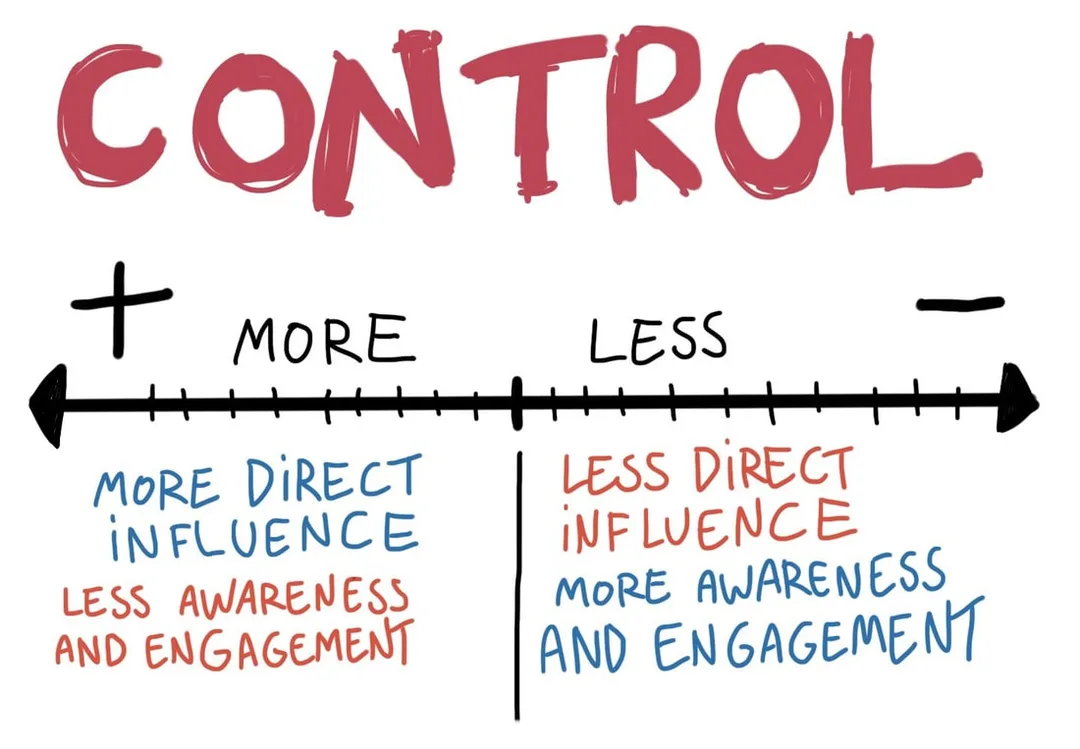
    In business, as in life, the task of exerting control is commonly perceived as being one of exercising limits; of saying 'no' and imposing constraints. Such perceptions are well-founded. Check these verb usages of 'control', lifted straight from the dictionary:
    • to exercise restraint or direction over; dominate; command
    • to hold in check; curb
    • to test or verify (scientific experiment)
    • to eliminate or prevent the flourishing or spread of
    If you have spent much time in boardrooms, you'll know that director behaviour tends to be consistent with these definitions, more so if the chief executive is ambitious or entrepreneurially-minded (the two attributes are not necessarily the same). When asked, board justification for exercising caution is straightforward: to keep the chief executive honest and to keep things 'on track'.
    Such an understanding—holding management to account—seems admirable. Monitoring and supervising management is one key task (of four) of corporate governance after all. But does a strong hand actually lead to better outcomes? More pointedly, how might the exercise of restraint and limits advance the purposes of the company (noting the board is responsible for ensuring performance goals are achieved)? Such conduct is analogous to applying the brake when the intention is to drive on. A growing body of academic and empirical evidence suggests that a strong hand, like increased compliance, may actually counter-productive.
    Rather than persist with what is demonstrably a problematic approach, it might be more fruitful for boards to consider another perspective. ​What if control is re-conceived in positive terms (namely, constructive control), whereby the board's mindset is to provide guidance (think: shepherd or coach) by ensuring the safety of the company and steering management to stay focused on agreed purpose and strategy? Might this deliver a better outcome? 
    Emerging research (here, but contact me to learn more) suggests the answer is 'yes'. Strongly-engaged and strategically competent boards that display high levels of situational awareness as they debate issues from multiple perspectives and make informed decisions in the context of the long-term purpose of the company can make a difference. Constructive control is one of five important behavioural characteristics of effective boards identified in this research.