• Published on

    Musings: A decade on

    Picture
    This entry is a little more personal than most posted here. But, if you'll allow the indulgence...
    Yesterday started out like many others before it: a mix of client and administration work, video calls across timezones, director commitments and writing (The craft of board work is coming along nicely). I 'logged off' a little later than usual—around midnight—having just completed a two-hour video call with members of the Global Peter Drucker Society (advance planning for the 2022 edition of the Global Peter Drucker Forum to be held in Vienna late this year). 
    Tired but satisfied after a long day, I prepared for bed. And as I did, my mind wandered. March 24th was significant for some reason. Then I remembered; it was Musings' birthday! Yes, ten years ago, on 24 March 2012, I stepped, with some trepidation, into the blogosphere. That first step? A three-line post
    My motivation was straightforward, to share thoughts and test ideas on corporate governance, strategy and board effectiveness. At the time, I had just started on my doctoral journey (a milestone achieved in 2016). A platform to engage with academics and global leaders—and to let off steam from time to time—was going to be helpful, I thought. And so it was, and continues to be. 
    Today, some 712 posts later, Musings has entered middle-age. From tentative first steps, to now a library of comments on professional (corporate governance, strategy, and the craft of board work), philosophical and personal topics. Whether the thinking underpinning the articles has improved over time or not is for readers to determine. Hopefully, a progression is evident. And, while the frequency with which posts have appeared has declined a little in recent years, my desire remains as it was in 2012: that each post proved valuable to at least one person. If that was achieved, the effort was worthwhile.
    Looking back over the decade, I have been most fortunate to have met and learned from many great thinkers, leaders and doyens of corporate governance and strategy. I have also had the privilege of serving aspiring and established directors, and boards, across five continents. Musings has been an enabler.
    The support and encouragement shown as I have pursued my passion—to help boards realise the potential of the organisations they govern—has made a great difference to me. Hopefully, it has been beneficial to others as well. Thank you.
    And, in case you are wondering, Musings, will continue to be published, for as long as readers show interest. 
  • Published on

    Morally-accountable governance?

    Picture
    Much has been made in recent weeks of the invasion of Ukraine by Russia. Social and mainstream media has been awash with commentary, both about the situation on the ground, and of various moral and ethical issues arising, not to mention significant geopolitical and balance of power impacts. 
    The Western world has rallied in support of Ukraine. Governmental–, corporate– and community–level responses have been announced and taken including accepting refugees, providing humanitarian support, and organising fund-raising and community support. Governments have imposed economic and trade sanctions as well. Many companies have decided to withdraw from the market. Others have chosen to remain, for a variety of reasons. Some, who initially held the line, have subsequently changed their mind after feeling the effects of a backlash. Directors have resigned from boards too, signalling they have no interest in continuing to serve on the boards of Russian companies. 
    To say the situation is fluid and outlook is uncertain is an understatement. In cynefin–speak,  the appropriate descriptor is 'chaotic', meaning rapid response is appropriate: searching for the 'right' answers is futile. 
    Despite the ambiguity and uncertainty, directors must continue to make decisions, to govern. In a crisis, most boards, rightly, focus on the here and now. Strategy and strategic initiatives are put to one side, and accountability may languish too. All available resources are applied to understanding and stabilising the situation.
    But after the heat has subsided and the situation is brought under control, boards need to take stock. They owe a duty of care (to themselves but also shareholders and legitimate stakeholders), for both their actions and those of management. Were the decisions made and actions taken during the crisis appropriate given the information to hand and prevailing situation at the time?
    The review may find the board operated within statutory and regulatory boundaries, and that decisions taken in averting the crisis were reasonable. But what if decisions and actions are found to have crossed moral or ethical boundaries? Where should accountability lie? The question of moral accountability cuts across  personal and professional reputation, organisational culture, and market confidence.
    And to the future, where should the board's moral compass point, what conduct is appropriate, and how should the board's actions be assessed?
    • What moral standard should directors be held accountable to (if any)?
    • What might morally-accountable governance look like, in practice?
  • Published on

    On the challenge of explaining how boards work

    Picture
    In 1960, Jane Goodall, a trailblazer in the field of primatology, visited the Gombe Stream National Park in Tanzania to study chimpanzees. And so began a 60-year study of chimpanzee social interaction. The study was groundbreaking; revealing new insights about chimpanzee behaviour and interaction. Goodall observed directly, for the first time, human-like behaviours in chimpanzees. These included toolmaking (albeit rudimentary) and armed conflict between competing individuals and groups. Consequently, humanity's understanding, of both chimpanzees and itself, changed.
    Some centuries earlier, Copernicus produced insights about the transit of planets; specifically, that the planets have the Sun as a fixed point around which they orbit. This observation undid conventional wisdom, which held that the Earth was the hub around which other bodies orbited. Later, Kepler explained the observations.
    These examples illuminate the value of long-term direct observations of dynamic entities, especially groups of entities, to achieve more accurate understandings of not only the entities, but their actions and interactions.
    The principle holds in contemporary society. Sociologists and anthropologists, for example, have long seen the importance of observing social groups first hand (long-term ethnographic studies, sometimes involving full participation) to gain insights that might lead to more complete understandings and explanations of group dynamics, and the impacts and consequences of group action and interaction. 
    Moving now to consider a subject of great personal interest: boards and governance. How do boards work, and what are the characteristics of an effective board of directors? Can, and if so how, boards influence company performance? And how might one go about finding out?
    To date, the predominant approach to tackling these questions has been to apply scientific principles, in search of linkages between attributes of boards and company performance. But this enquiry has raised yet more questions. For example, can a comprehensive understanding of the function, interaction and impact of boards be gained by studying isolated attributes of boards, such as the number of directors, independence, 'diversity', or other static attributes, all from outside the boardroom? Or by applying statistical methods to search for regularities (or differences) in publicly available data? Or by interviewing or surveying directors and/or managers about their perceptions about the conduct or behaviours of directors during board meetings?
    Enquiries utilising these approaches have produced thousands of research papers and published articles. They have been helpful in so far as they have provided clues about what may or may not be material to identifying the characteristics of high performing boards and the impact of boards on company performance. But the basis of these studies is not as it first seems. These are not studies of boards in action, they are studies based on representations of specific attributes associated with boards, not actual data about the board going about its work—just as the headline picture looks like a pair of giraffes but they are representations, not giraffes.
    A small but burgeoning group of researchers have taken a different approach. Invoking Goodall, they have completed long-term observation studies of boards of directors going about their work (i.e., the researcher in the board room, silently observing the board in session, over an extended period to move beyond the behaviour modification that naturally occurs when someone or something arrives in the environment). To date, fewer than a dozen studies have been published. These studies have produced insights that are somewhat different from those produced by remote studies of isolated attributes of directors and boards. In particular, the importance of certain director capabilities, board activities (tasks) and director behaviours is highlighted. Static attributes, such as board structure and composition, seem to be far less relevant. 
    So, two different approaches, and two different sets of conclusions. ​That is perhaps not unexpected. But it does leave a rather awkward question—the same as that faced by Kepler, Copernicus and Goodall, and others who have reached observation-based conclusions that have differed from conventional wisdom. Might the small group be on to something? And, if so, might the majority (in this case, business school academics, regulators, institutions, governance consultants) be prepared to set conventional wisdom aside, to pursue a different understanding of how boards can influence the performance of the companies they are charged with governing?
  • Published on

    Taking stock at year’s end; and peering into 2022

    Picture
    December is a significant month for many peoples around the world. It is the month in which two of the three great Abrahamic faiths have a major festival (Jews, Hannukah; Christians, Christmas), and the Japanese observe Omisoka. For others not professing a faith, December is significant to the extent that it marks the end of the Julian calendar. Each of these observances is distinctive, but a common thread runs through them: celebration and dedication.
    Yes, December is a time to reflect on the year gone and give thanks, and to ponder what lies ahead.
    Through this muse, I too wish to give thanks, to the many board directors, business leaders and students that I have had the good fortune to work with during 2021—both in person in New Zealand, and via video link in the United Kingdom, the European Union, the Caucasus region, North America and the Caribbean, India, several African and Middle Eastern countries, and closer to home in Australia. I have learnt a lot, and hope others have derived value from the interactions. Thank you.
    Peering into 2022, the prospect of travelling internationally to work in person with boards and students is enticing. Once the coronavirus situation stabilises, border restrictions are relaxed and travel becomes viable again, I will accept bookings. But in the meantime, I have decided to take on a new project.
    For over two decades now, I’ve had the privilege of working with aspiring and established directors on five continents, helping them wrestle with problems, consider opportunities, make decisions and learn what it means to be an effective director. Over the same period, two friends have encouraged—even nagged—me to consolidate my ideas, experiences and insights into a book. And each time it has been mentioned, I have pushed the idea away, citing lack of head space. But circumstances have changed in 2021 and the time now seems right to reconsider the prospect of writing 50,000 words about governance and the craft of board work. So, that is what I will attempt in 2022.
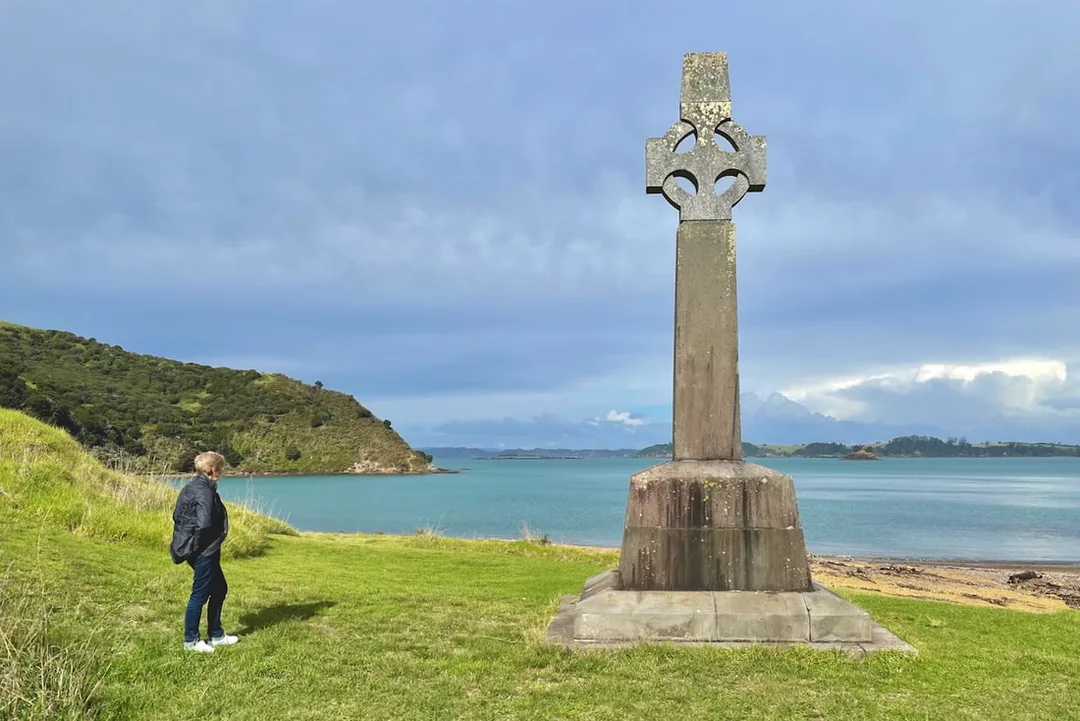
    (*) The image shows the Marsden Cross, which marks the location of the first Christian mission settlement in New Zealand, and the spot Samuel Marsden preached the first Christian service, on 25 December, 1814.
  • Published on

    What of 2022, and beyond?

    Picture
    Every year, at about this time, sages and futurists of various stripes peer out from their sanctuaries  to offer opinions of what the future holds. Many speak or write deterministically, as if they have been blessed with special powers to know or postulate the future with great accuracy. Pronouncements are read with great anticipation by many, and embraced as if categorical. But some commentators are more circumspect; their contingent expressions reveal great maturity and wisdom.
    “Forecasting is always a hazardous business. … no one can claim that the future is entirely inscrutable.”
    One does not need to look far to see examples of the difficulties faced by those charged with forecasting and strategising. Over the last two years, for example, undertones of fear and stasis have been prominent. People and companies have frozen in response to pronouncements and dictates from national leaders. Economic and social priorities have been set to one side; the main—nay, only—focus has been on the pesky virus known as Covid19. First, borders were closed and populations were locked down, in an effort to flatten the curve. Some even tried to eliminate the virus. Then, recognising their folly, leaders embraced vaccination to reduce the effects of the virus. Most recently, mandates have seen populations divided into two classes, the vaccinated and the un-vaxxed. Naysayers have jumped in, but many of their predictions have proven to be wrong as well. Meanwhile, economies have struggled and the social fabric has frayed.
    Amidst this backdrop, boards remain responsible for the performance of the companies they govern. Of those who recognise this (and not all do), some boards wait, perplexed by the unknowns, and others strike out, believing they can control the future, despite a plethora of externalities. Neither response is particularly wise.
    High performing boards and leadership teams recognise that things change, often unexpectedly. They remain vigilant, watching for weak signals that might portend the emergence of something significant. They hold options open for as long as possible. Then, when it is time, they act, decisively. 
    The types of questions high performing boards ask (and keep asking) include:
    • Are we monitoring and assessing signals, trends and other relevant changes effectively, and what are the data telling us?
    • Are we attuned to the expectations and preferences of legitimate stakeholders, and are our responses appropriate?
    • Is sufficient time being allocated for scenario planning and strategising?
    • Is resource allocation aligned with desired outcomes?
    • Are we doing the right things?
    • Are plans being enacted as intended?
    • Are expected benefits being realised?
    While some of these questions may be difficult to answer, boards must persevere. Even partial answers are likely to indicate a more reliable way forward than the lazy option of blindly pursuing the supposedly categorical predictions of mediums, sages and futurists.
  • Published on

    The blame game

    Picture
    News of a new variant of the coronavirus emerged this week. B.1.1.529 (now Omicron, a moniker assigned by the World Health Organization) was first isolated by scientists in South Africa. Already, it has been detected in several neighbouring countries and in the United Kingdom, Belgium, Czechia, Hong Kong, Germany, Australia and Israel. Governments are reportedly “scrambling to protect their citizens from a potential outbreak". These responses are supposedly to protect but also, undoubtedly, to buy time.
    Given the experiences since the coronavirus disease was first detected and subsequently declared to be a global pandemic, the reactions to the latest variant are hardly surprising. News agencies and social media commentators have been up to their usual antics; newsfeeds are abuzz. Fear is a powerful catalyst, of course. But reliable guidance to indicate whether Omicron is more or less contagious, and more or less virulent, is yet to emerge. For example, the two cases in Australia are asymptomatic and both people are fully vaccinated. A calm response is needed.
    Another interesting aspect of the current situation is the response to those who first alerted the world to what they had discovered. When virologists in South Africa openly shared the results of their advanced gene sequencing tests, others (especially in so-called advanced economies) were quick to point the finger. They accused several countries in southern Africa of being the source of the outbreak, and ostracised them by banning travel—even from countries with no recorded cases—demonstrating the blame game is alive and well.
    Effective leaders (boards) do not get caught up in the blame game. They take another path:
    • They think strategically and dynamically;
    • they seek multiple perspectives, and consider a wide range of options and possibilities;
    • they are proactive, formulating plans ahead of time to ensure they and those around them can respond well to various scenarios that might emerge, including scenarios that are difficult or even impossible to predict;
    • they document plans, response options and desired outcomes into risk management frameworks; and,
    • they communicate openly with others.
    Then, having prepared and decided upon a course of action, effective boards remain engaged. They keep their eyes open, scanning for weak signals that might portend danger. If danger strikes, they engage immediately and fully—supporting the executive response but remaining calm at all times.
    Is your board well-equipped to lead in an event that threatens the company’s prosperity or viability? And what is the likelihood it will oversee an appropriate response? Will it work calmly with the executives as a conjoint team to assess the situation and activate an appropriate response, or will it remain aloof and descend into finger pointing (perhaps because directors are more interested in protecting their personal reputation)? If there is any chance of the latter, consideration should be given to replacing the board with directors who are prepared to take their duties more seriously.