• Published on

    The blame game

    Picture
    News of a new variant of the coronavirus emerged this week. B.1.1.529 (now Omicron, a moniker assigned by the World Health Organization) was first isolated by scientists in South Africa. Already, it has been detected in several neighbouring countries and in the United Kingdom, Belgium, Czechia, Hong Kong, Germany, Australia and Israel. Governments are reportedly “scrambling to protect their citizens from a potential outbreak". These responses are supposedly to protect but also, undoubtedly, to buy time.
    Given the experiences since the coronavirus disease was first detected and subsequently declared to be a global pandemic, the reactions to the latest variant are hardly surprising. News agencies and social media commentators have been up to their usual antics; newsfeeds are abuzz. Fear is a powerful catalyst, of course. But reliable guidance to indicate whether Omicron is more or less contagious, and more or less virulent, is yet to emerge. For example, the two cases in Australia are asymptomatic and both people are fully vaccinated. A calm response is needed.
    Another interesting aspect of the current situation is the response to those who first alerted the world to what they had discovered. When virologists in South Africa openly shared the results of their advanced gene sequencing tests, others (especially in so-called advanced economies) were quick to point the finger. They accused several countries in southern Africa of being the source of the outbreak, and ostracised them by banning travel—even from countries with no recorded cases—demonstrating the blame game is alive and well.
    Effective leaders (boards) do not get caught up in the blame game. They take another path:
    • They think strategically and dynamically;
    • they seek multiple perspectives, and consider a wide range of options and possibilities;
    • they are proactive, formulating plans ahead of time to ensure they and those around them can respond well to various scenarios that might emerge, including scenarios that are difficult or even impossible to predict;
    • they document plans, response options and desired outcomes into risk management frameworks; and,
    • they communicate openly with others.
    Then, having prepared and decided upon a course of action, effective boards remain engaged. They keep their eyes open, scanning for weak signals that might portend danger. If danger strikes, they engage immediately and fully—supporting the executive response but remaining calm at all times.
    Is your board well-equipped to lead in an event that threatens the company’s prosperity or viability? And what is the likelihood it will oversee an appropriate response? Will it work calmly with the executives as a conjoint team to assess the situation and activate an appropriate response, or will it remain aloof and descend into finger pointing (perhaps because directors are more interested in protecting their personal reputation)? If there is any chance of the latter, consideration should be given to replacing the board with directors who are prepared to take their duties more seriously.

  • Published on

    The self-corrective power of the market

    Picture
    The invisible hand, Adam Smith opined, is a metaphor for self-corrective power in systems. If one party within a system, or one part of a system, becomes too strong or dominant then, sooner or later, an alternative will emerge, to restore equilibrium. Regardless of whether it is applied personally (think: bodily effects of obesity), in politics (extreme ideologies), or at population (demographic and social inequities) or even planetary level (geological stresses), the maxim holds, it seems. 
    In business, the self-corrective power is the market. If price is perceived to be too high, or too low; workplace culture or employment conditions are unhealthy; product or service quality does not meet expectations; or, return on funds invested is too low, prospective customers (staff, suppliers, shareholders) respond—they seek alternatives. This inherent power, held by those who interact within the system, has underpinned sustainable commerce for centuries, even millennia.
    And yet some governments and para-governmental agencies find it necessary to intervene, through the creation of rules. But such interventions are usually costly, and they rarely achieve enduring equilibrium. Inevitably, those with decision-making power within companies find ways around what they perceive to be unreasonable barriers to sustainable prosperity. ​Please don't misconstrue this observation as a wholesale rejection of rules. It is not. Rather, it is a plea for regulators and boards to take stock. What is the minimum regulatory or policy framework to facilitate commerce and ensure fairness; the point beyond which effort will naturally be diverted, resulting in inefficiencies?
    Consider stakeholder capitalism as a case in point. Advocates argue a more stringent regulatory framework is required to ensure the value created by companies is 'shared equitably'. This seems fair. But what if an external stakeholder group influences company strategy in a direction different from that which the board and management have agreed is appropriate? Where does accountability lie is such a situation? Should external stakeholder groups be held to account if they ‘force’ certain practices and policies onto a company that impair the performance of the business and lead to in value erosion? The more time spent satisficing the expectations of external stakeholders, including complying with regulatory requirements, the less time remains to pursue agreed goals and sustainable performance.
    If company leaders—boards in particular—focus resolutely on the pursuit of agreed strategy, and on the achievement and reporting of results across the three critical dimensions, namely, social (staff, client, supplier satisfaction, which includes fair pay, good relations, etc.); environmental (impact, minimising footprint) and economic (financial return to shareholders), prosperity should follow. But if leaders trade recklessly; abuse staff or suppliers, price goods and services above what is reasonable, or disregard the environment, the company they govern deserves to struggle or, in severe situations, fail. Regardless, the invisible hand will have made its presence felt. What more should anyone expect?
  • Published on

    On strategy and governance: Whither to next?

    Picture
    As summer gives way to autumn in the Northern Hemisphere—and soon winter—so various externalities that frame the work of boards and enduring performance of companies continue to press in. Topical externalities include climatic change; shifting geo-political forces; technological disruptions; diversity, equity and inclusion demands; ever-increasing levels of regulation; the emergence of ESG; and, stakeholder capitalism.
    The challenge for all directors and boards, whether they acknowledge it or not (or even notice or care!), is to respond well in the face of what is patently a dynamic environment—to ensure the fiduciary duty they accepted when agreeing to serve as a director is fulfilled. Steerage and guidance—the essence of corporate governance—requires every director, and the board collectively, to be alert, to both set a course and to respond well in the face of externalities. The mind’s eye needs to be looking ahead, to ensure the reason for the journey remains clear, and that decisions are made in the context of advancing towards the objective. Quite how that should be achieved is the underlying question that has driven my life’s work.
    Following an extended break from writing—a consequence of dealing with the passing of our patriarch—I have ‘arrived’ back at my desk to think and write again, about organisational performance, governance, strategy and the craft of board work.
    If you have a question, or would like to learn more about a particular aspect of board work or the impact boards can have on organisational performance, please let me know! If we are to journey far, we need to explore relevant topics and learn together.
  • Published on

    On board effectiveness and accountability

    Picture
    Over the past eighteen months, many commentators, critics and self-styled experts around the world used the onset of the coronavirus pandemic to promote new ways of working; postulating that working from home is somehow better or more productive than working in a group setting (in an office or boardroom, for example). Zoom became a 'thing' (lockdowns being the catalyst, of course); Microsoft Teams, too. ​Proponents have suggested that the conduct of board meetings and annual meetings via video link (virtual meetings) saves  time and money, and increases participation.
    But, as the weeks and months have passed, the novelty of working separately has began to wear off. Stories of frustration have emerged, with widespread claims that decision quality and productivity has suffered. Staff and managers who once asserted the benefits of #WFH—even to the extent that people would not have to commute to office space any more—have gone quiet. Younger staff are pining to be together again; social magnetism at work.
    And what of boards and their effectiveness? Can boards maintain high levels of productivity and decision quality when directors cannot meet together in person for extended periods? Might the availability of high quality video links and board portal software supplant the need to meet together in a boardroom?
    In considering these questions, let's acknowledge that the board is a social group, and social groups work better when they are together. Not having to travel to a meeting is attractive to many, but proximity trumps distance in relationships, n'est-ce pas? Also, decisions are made the under tutelage of the board chair, following interaction to discover, discuss and debate. But body language,  non-verbal cues and unspoken reservations are difficult to discern when on-line. What is more, the wider context within which the board and company operate is dynamic and generally complex, and ambiguity is prevalent, due to missing information. 
    If boards are to be effective (measured by the board providing steerage and guidance in pursuit of agreed company purpose; making smart decisions; holding management to account for execution; and, verifying progress towards agreed strategic goals), directors need to be on their game. For this, they need to be competent in role; be actively engaged (individually and collectively); know why they are there; understand the business of the business, the company's strategy and the strategic implications thereof (just one in six directors do); and, exercise control constructively—all of which is made easier if they meet together.
    Do you agree or disagree? If you disagree, I'd love to hear your thoughts and experiences! 
  • Published on

    Governance: A lesson from tennis

    Picture
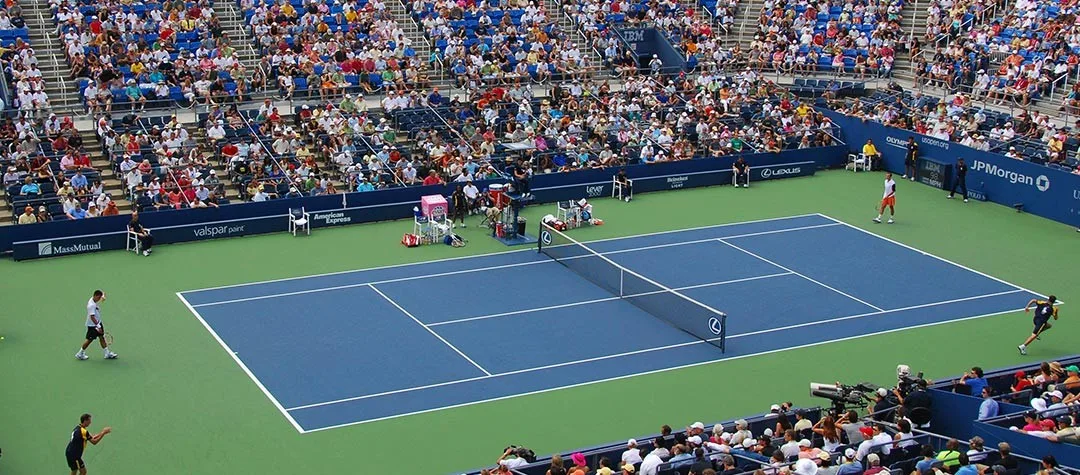
    Tennis is a wonderful game; almost anyone can play. From schoolchildren to elite professional players, the sport is exhilarating; the excitement is often palpable. 
    One of the reasons tennis is attractive is that it is straightforward. The boundaries between acceptable and unacceptable play are, usually, well marked. The ball is served, and if is returned and bounces within the boundaries, play continues. If not, the score is adjusted and play is restarted with another serve. But, neither the net nor the lines play the game, players do; winning or losing is the result of two players (or four, if doubles) having played against each other within the playing space.
    The distinction in tennis between the rules, the playing of the game, and the score at the end has strong parallels in governance. 
    Boards are charged with playing the game (that is, governing—providing steerage and guidance, in pursuit of an agreed goal) within the boundaries of various statutes, regulations and policies (the rules). The 'result' is company performance, which is usually reported in the annual report and any other reports to legitimate stakeholders. ​As with the distinction in tennis, neither the statutes or regulations, nor the annual report are the game. The 'game' is governance, and it is played by the board. Statutes and regulations are necessary, without doubt, but they are no more governance than rules are tennis.
    Another facet of tennis is the player ranking table, which identifies comparisons between players at a population level. The very best players feature at the top; lesser players, further down. Positioning on the ranking table can be a source of motivation for players (to train harder, to embrace various tactics to improve their performance, for example), But position alone does not improve playing standards, player skill or on-court conduct. 
    And so it is with boards and governance. The position a company occupies on a ranking table (adherence to corporate governance standards or ESG metrics, for example) provides a comparative indication of how the company measures up against others. But that is all—to read in more is folly. The likelihood of ranking companies by corporate governance scores improving standards [compliance], for example, is about as tenuous as ranking tennis players improves player conduct. Why so? Standards and rules are thresholds; boundaries that distinguish between acceptable and unacceptable. Nothing more, and nothing less.
    Tennis players wanting to improve their game focus on fitness, technique, strategy and tactics. Similarly, companies intent on improving performance need to focus their attention and efforts on purpose, strategy and execution.
  • Published on

    Misalignment: The elephant in the room

    Picture
    News of Emmanuel Faber's dismissal as executive chairman of Danone, a French food conglomerate, has caused quite a stir. Mr Faber, a fervent proponent of stakeholder capitalism and ESG, had led the company for seven years. Since 2017, he has held both the chair and chief executive roles (a situation disfavoured by many investors, academics and advisors due to concentration of power risk). Though charismatic and influential, the record shows that company performance has languished under Mr Faber's leadership, and staff turnover increased too. Clearly, something was amiss.
    Sustained pressure from activist investors, disgruntled by Danone's performance (relative to its competitors, over several years), finally elicited in a response. The Danone board decided to separate the chairman and chief executive roles; Faber would remain chairman of the board and a new chief executive would be recruited. But this attempt by Faber to placate the activists while also retaining power was received poorly. Faber was, in the eyes of the activists, a lead actor and, therefore, a big part of the problem. He had to go they thought. Realising this, the board ousted Faber.
    Proponents of both stakeholder capitalism and shareholder capitalism have taken Faber's demise as an opportunity to come out from their respective corners to argue the merits of their favoured ideology. The purpose of this muse is not to add to that discourse; it is to consider another matter brought in to view by the case at hand: that of misalignment.
    If a Chief Executive acts against the direction of the board (or without the board's knowledge), or if a board is disunited over a strategically important matter (purpose or strategy, especially), company performance (however measured) will inevitably suffer. Danone is a case in point. 
    Matters of misalignment, either amongst directors or between the board and chief executive, need to be resolved promptly. Similarly, if purpose and strategy are clear, coherent and agreed, but subsequent implementation is poor or ineffective (the saying–seeing gap), the board probably has a leadership problem. ​Attempts to satisfy all interests—appeasement—rarely achieve satisfactory or enduring outcomes, as Neville Chamberlain discovered in 1938–1939
    Directors need to be alert (individually and collectively, as a board); united in their resolve to pursue agreed goals; and, their tolerance for underperformance must be low. If the board is complacent in the face of misalignment or poor strategy execution, and it does not act, it becomes part of the problem. Sooner or later, shareholders will notice, and it is reasonable to expect they will act, to protect their investment.