• Published on

    What is going on with New Zealand's largest company?

    Picture
    After several years of paying high milk prices to its farmer-suppliers, Fonterra has hit hard times. International demand for milk products has slumped. On the supply side, prices paid to farmer-suppliers have tumbled. Some have said the problem is primarily related to changing demand especially in China, whereas others have suggested that Fonterra is complicit having stimulated supply to 'feed' its massive processing plants. To make matters worse, Fonterra has started losing farmer-suppliers to its competitors and it seems to be exercising "considerable discretion" with payment terms as well. 
    The latest commentary, an interview on Paul Henry's breakfast show today, lay out some of the challenges in plain English. Click here to watch the video clip. (disclosure:  James Lockhart is my doctoral supervisor, but had no prior knowledge of this interview.)
    The situation, which has been brewing for a several years, is messy to say the least. Other companies including Tatua and Open Country Dairy seem to coping much better. This begs several questions including whether the Fonterra board and management are actually in control; whether the corporate strategy is sound or not; and, whether the company has the financial and managerial resources to respond effectively. While I'm nowhere near close enough answer these questions, the old saying "where there's smoke there's fire" seems to apply.
  • Published on

    On democracy, morals and business performance

    Image description
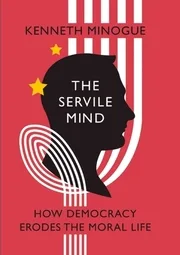
    As 2015 gives way to 2016, many people will be reflecting on the past and looking to the future; thinking about what was and what might have been. I'm no different. One of the books I've been reading while pondering the past and the future this week is The Servile Mind by Kenneth Minogue. A friend recommended it—he wondered whether the commentary might be applicable to directors and boards. My response, having read half of the book so far, is an unreserved 'yes'! Here's the note on the flyleaf:
    One of the grim comedies of the twentieth century was that miserable victims of communist regimes would climb walls, sim rivers, dodge bullets, and find other desperate ways to achieve liberty  the West at the same time that progressive intellectuals would sentimentally proclaim that these very regimes were the wave of the future. A similar tragicomedy is playing out in our century: as the victims of despotism and backwardness from Third World nations pour into Western States, academic and intellectuals present Western life as a nightmare of inequality and oppression.
    In The Servile Mind: How Democracy Erodes the Moral Life,​ Kenneth Minogue explores the intelligentsia's love affair with social perfection and reveals how that idealistic dream is destroying exactly what has made the inventive Western world irresistible to the peoples of foreign lands. The Servile Mind looks at how Western morality has evolved into mere "politico-moral" posturing about admired ethical causes—from solving world poverty and creating peace to curing climate change. Today, merely making the correct noises and parading one's essential decency by having the correct opinions has become a substitute for individual moral responsibility.
    Instead, Minogue argues, we ask that our governments carry the burden of soling our social—and especially moral—problems for us. The sad and frightening irony is that the more we allow the state to determine our moral order and inner convictions, the more we need to be told how to behave and what to think.
    Humbly, I commend this book to all directors who want to govern well and make a difference in 2016.
  • Published on

    Accountability. Is it too much to ask?

    History is littered with many stories of corporate successes and, sadly, almost as many failures. Why do some companies perform well over the long term while others become abject failures? Is it, as Jim Collins remarked in Good to great, a matter of luck, or is some other factor at play? While luck and environmental factors can be influential, I suspect there's more to it. A common thread that seems to weave its way through many of the success (Ford, GE, Johnson & Johnson, Xero, Facebook) and failure stories (Pan-Am, Enron, WorldCom, Satyam, and Toshiba, amongst many others) is captured in the title of this posting: Accountability.
    All directors hold, by law, a fiduciary responsibility. In Australia, New Zealand (where I live) and many other commonwealth countries, that responsibility is to the company. In the USA, it is to shareholders. Tellingly, it is never to self (despite some directors behaving as if it was!). If directors are to serve shareholders (who appoint them) and also the wider stakeholder community well, moral fortitude is a requirement, as is competence and engagement.
    The role of the director is one of service; of acting (read: considering information and making decisions) in the best interests of another party; and, ultimately, of being accountable for decisions made. Consequently, directors cannot afford to be asleep at the board table, nor be selfish in decision-making. Performance, accountability and ethics needs to take precedence over reputation and prestige.
  • Published on

    The board chair's dilemma: what would you do?

    Each month, Julie Garland McLellan, non-executive director and board consultant, invites several people to respond to a tricky board or governance situation. This month (Oct'15 issue), she crafted a challenging relationship dilemma with an ethical twist, and I was asked to provide a response. Thanks for inviting me to contribute Julie. The dilemma and my response are replicated here:
    The dilemma:
    ​Ximena chairs a government utility business that operates large primary industrial processes and is also involved in construction of new assets. Safety is a key issue and the board have zero appetite for any physical harm to staff, contractors or innocent bystanders. As board Chair Ximena also chairs the remuneration committee and has recently incorporated some nominations work into the charter and activities to better support the government with their desire to involve boards in director succession planning.

    The HR Director recently asked Ximena for a meeting at which she told Ximena that staff were concerned by the CEO’s activities outside of work. Specifically the CEO is involved in White Collar Boxing and the HR director feels this is not appropriate given the culture of the workplace and the visible support the organisation, and many other government companies, has given to anti-domestic violence campaigns. The HR Director also checked the terms of the company’s key man insurance policy and discovered that this would be voided for injuries or death resulting from action sports activities that include boxing. The HR Director has asked that Ximena talk to the CEO about ceasing his involvement with the sport.
    Ximena is concerned but cautious. She knows that the CEO, who was brought in from commercial industry, and the HR Director, a long serving public sector employee, have often differed in their opinions and that, whilst both are professional, there is scant respect and less regard between them. But she has to admit that a boxing CEO might not sit well with the ‘A Fight is Never Right’ campaign the company has just sponsored.
    Is this the CEO’s private business or an issue for the company and its board: What should Ximena do?
    Peter's response:
    ​Broadly, Ximena has four options:
    1. To ignore the HR Director’s appeal, by pushing back. However, this may see the issue ‘leaked’ to the public domain, especially given the HRD’s lack of respect towards to the CEO. If this were to occur, the board may be faced with a bigger problem - a damage control action. This option also provides tacit endorsement of the CEO’s actions.
    2. A private conversation will enable Ximena to hear the CEO’s perspective, ask questions and make suggestions. The CEO may not see the matter as a problem! Contingent on the quality of the working relationship, the chairman should be able explore options, present the wider perspective and reach an agreement over how best to proceed.
    3. To ask the CEO to meet with a board committee does two things. It signals to the CEO that the board is treating the matter seriously, in pursuit of a workable solution. However, it also sets a precedent whereby staff can approach the board directly. Staff need to take their concerns to the CEO first.
    4. To launch a full (presumably formal) investigation. This is probably an over-reaction.

    The most tenable option is probably the private conversation. While legal private activities are not and should not be the concern of the company, activities that may be considered to be incompatible with the company’s purposes, values or culture, or may call the company’s reputation into question or bring it into disrepute need to be curbed - particularly as the CEO is a highly visible role. Through their actions, they set the cultural tone of the organisation.
    Notwithstanding which option is eventually selected, the tension between the CEO and the HRD is a problem that needs to be resolved. The scant respect and regard is a harbinger of low trust, empathy and teamwork; thus rendering the working relationship difficult, at best. Whether the two parties are able to work together productively in the future is probably moot, especially as the HRD went around the CEO to the chairman directly. The HR Director probably needs to consider her tenure with the business.
    If you want to understand more about these options, or if you think you might need assistance with a challenging board situation, please get in touch.
  • Published on

    Are the latest OECD #corpgov principles an opportunity lost?

    Finance Ministers from the twenty most powerful trading nations, the G20, have endorsed a new set of corporate governance principles published by the OECD. The principles provide recommendations on matters including shareholder rights, executive remuneration, financial disclosure, the behaviour of institutional investors and how stock markets should function.
    The OECD principles have been promoted as contributing to more effective corporate governance. That sounds good—but what does 'effective corporate governance' mean and why might it be important? The OECD preamble offers this guidance:
    Good corporate governance is not an end in itself. It is a means to create market confidence and business integrity, which in turn is essential for companies that need access to equity capital for long term investment.  
    Wow, this suggests that corporate governance is a mechanism to protect investors and markets. The responsibility of the board for business performance is not mentioned—thus implying that  corporate governance is not a performance-based mechanism through which to pursue wealth creation. Rather it is positioned as a conformance tool to manage agency costs. What is the likelihood of boards spending time thinking about the purpose of the company, strategy or future performance if they are beholden to a set of conformance-oriented principles? 
    Sadly, it would be appear that these latest OECD principles represent an opportunity lost—for medium-sized and privately-held companies at least.
  • Published on

    Boardroom behaviours: What role culture?

    I've been reading back through some older Musings this week, to review (and smile at) ideas that were front-of-mind a couple of years ago. Which ones have been superceded or discredited; which has been forgotten; and, which are still topical?
    This one, on boardroom motivations and habits, appears to still be topical today—perhaps even more so than when it was written in April 2012. How so? I was party to a discussion on boardroom behaviour today and a question of culture was raised. To what extent might culture drive conduct and ultimately business performance? The results of a recent survey conducted by Grant Thornton suggest that culture is a huge factor in corporate governance and strategy. There is much evidence to suggest that good business performance is an outcome of 'good' culture (here's one piece).
    However, culture is complex. Consequently, when one of the discussants said that a senior leader at ASIC is looking for policies and procedures to support [a positive] culture in boardrooms I was bemused, to say the least. How might one successfully codify—much less 'legislate'—culture, in pursuit of good conduct and presumably good business performance? 
    A long time ago, Drucker famously said that culture eats strategy for breakfast. Might the corollary be that a well-written code of ethical conduct that is periodically discussed, agreed and pursued by directors trump any attempt to 'legislate' any particular culture into being?
    Compliance-based regimes rarely achieve much more than to incur expense, resentment and, sometimes, avoidance. That is well-known. However, while codes are by no means fool-proof they can be helpful if every director 'signs up' and willingly embraces them. My research suggests that the key lies with director behaviour and social interactions in the boardroom, not the code per se
    That said, why all boards that are serious about creating a positive culture both within the boardroom and the wider business they govern have not implemented a suitable code of conduct is beyond me. It is a matter of accountability. Perhaps boards that decline to travel this path have not realised that the fish rots from the head!