• Published on

    Observations from interactions with 520 directors

    Picture
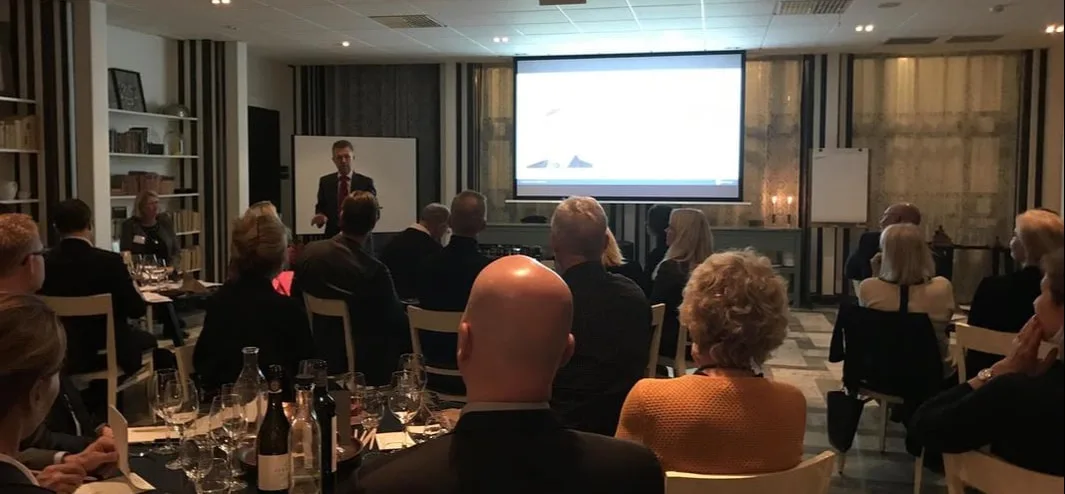
    Today marks the beginning of a lull following a busy programme of international and domestic commitments since early February. Over a 110-day period, I have spent time in Australia (four times), England (twice), the US (twice), Germany (twice), Ireland, Sweden and Lithuania—and at home in New Zealand; interacting with over 520 directors, chairs and chief executives from 19 countries. Formal and informal discussions at conferences, seminars, masterclass sessions, education workshops, dinners, advisory engagements and board meetings were instructive to understanding what's currently top-of-mind for boards around the world. The following notes are a brief summation of my observations. I hope you find them useful.
    Diversity and inclusion: These topics continue to dominate governance discussions in many countries. But, and noticeably, the discourse has matured somewhat over the last six months. The frequency with which the rather blunt (and often politically-motivated) instruments of gender and quota is mentioned is starting to subside, as directors and nomination committees start to realise the importance of diverse perspectives and options to inform strategic thinking and strategising. Long may this continue, as board effectiveness is dependent on what boards do, not what they look like.
    Big data and AI: What a hot topic! Globally, boards are being encouraged by, inter alia, futurists, academics and consultants to get on board (if you'll excuse the pun) with the promise that developments in this area will change the face of decision-making and improve corporate governance. Some assert that these developments will obviate the need for board of directors in just a few years. The directors I spoke with agree that these tools can help managers make sense of complex data to produce information, even knowledge. But these same directors have significant reservations when it comes to strategic decision-making. Automated systems are poor substitutes for humans when it comes to making sense of (even recognising) contextual nuances, non-verbal cues and other subtleties. Unless and until this changes, the likelihood that boards will continue to be comprised of real people engaged in meaningful discussion remains high.
    Corporate governance codes: The number of corporate governance codes introduced in markets has been steadily rising over the last decade. Most western nations, and a growing number of Asian and developing nations, have implemented codes to supplement statutory arrangements. Many directors and institutions around the world continue to look to proclamations that the UK is the vanguard when it comes to corporate governance thinking and related guidance: the recently-updated UK corporate governance and stewardship codes are held up as evidence of good practice. While the quality of board work in the UK has improved over the last decade, a strong compliance focus continues the pervade director thinking—across the business community in the UK and beyond. The reason is stark: codes are little more than rulebooks. Further, rules don't drive performance, they define boundaries. The more time boards spend either complying with the rules or finding ways to get around them, the less time is left for what actually matters, company performance. In many discussions over the past few months, I've pointed people to the ground-breaking work of contributors such as Bob Tricker, Sir Adrian Cadbury and Bob Garratt. These doyens provided much-needed impetus to help boards understand their responsibility for company performance. The emergent opportunity for regulators and directors' institutions is to consider alternative responses to ineptitude and malfeasance: instead of creating more rules all the time, why not hold boards to account to the existing statutes, most of which seem to be eminently suitable?
    Best practice: Many individual directors (and boards collectively) are starting to move beyond 'best practice' as an aspirational goal. Further, directors and boards are demanding to hear educators and thinkers who are also practicing directors, not trainers delivering off-the-shelf courses. Context is everything. The evidence? When a director asks to explore the difference between theory and practice you know something in his prior experience has missed the mark. Practising directors know that the board is a complex and socially-dynamic entity, and that the operational environment is far from static. Directors' institutes, consulting firms and trainers need to stake stock and move beyond definitive 'best practice' claims, lest they be left behind and become monuments to irrelevance. Enough said.
    Governance remains a fashionable topic: ​If I had a dollar every time I've heard 'governance' promoted as a career in recent months, or the term used in discussions (including, sadly, often inappropriately), I would be really well off. But the act of invoking a term during a discussion is no panacea to whatever situation is being discussed. More capable directors are needed to contribute to the effective governance of enterprises, of that I am sure. But the established pattern of selecting directors from a pool of seemingly successful executives—as if a reward—is folly. The findings from a growing number of failure studies from around the world attest to this. The role of a director is quite different from that of a manager or executive. Managers and executives have hierarchical authority and decisions are made by individuals. In contrast, directors lead by influence and decisions are always collective. The challenge for those aspiring to receive a board appointment is to set their managerial mindset aside, to enable a more strategic mindset and commitment to the tenet of collective responsibility to emerge. 

    Picture
    Standing back from these interactions, the board landscape seems troubled. But I remain hopeful. Progress is being made (albeit more slowly than many would wish) and a pattern is slowly emerging. Increasing numbers of directors are acknowledging that the board's primary role is to ensure performance goals are achieved, and that the appropriate motivation for effective boardroom contributions is service, not self. 
    The challenge is to press on. If the number of requests from those wanting to understand what capabilities are needed in directors, what boards need to do before and during board meetings, and desirable behavioural characteristics is any indication, boards are getting more serious about making a difference—and that points to a brighter future. If a tipping point can be reached, arguments centred on board structure and composition that have dominated the discourse can be consigned to their rightful place: history. I look forward to that day.
  • Published on

    On boards, wicked problems and social media

    Picture
    Over the last twenty years, I have spent countless hours serving on and advising boards, and thinking about governance and the characteristics of effective boards. To have been invited to work with boards around the world as they have sought to realise the full potential of the enterprises they govern has been a real privilege. ​But with such privilege comes responsibility—the importance of standing back from time-to-time to take stock and reflect on learnings cannot be overstated, which is exactly what I have been doing over the last few days. 
    Two things in particular stand out just now. First, boards are increasingly aware that ultimate responsibility for enterprise performance lies with the board itself (not the CEO); and second, social media is starting to get in the way of effective learning.
    That awareness is trending upwards is great news. But the supplementary question of how high performance is achieved and sustained remains problematic. The market is awash with best practice recommendations and supposedly definitive guidance ("five ways to...."), many of which have been implemented diligently. But alas, company failures continue to be blots on the landscape. 
    Directors want reliable guidance, but many directors struggle to sort the wheat from the chaff. They say that the plethora of often discordant information is more a hindrance than it is helpful. Privately, some admit that they have become confused about the purpose of the board, what corporate governance is and how it should be practiced. ​Others have suggested that the question itself (of the board's role in achieving high enterprise performance) is 'wicked', meaning it is easy to describe, but really difficult if not impossible to solve due to incomplete or contradictory information and a highly contextual setting—a moving target camouflaged in a landscape that is far from static.
    The other thing that has become relatively clear in recent times is the role and impact of social media: it seems to be getting in the way of meaningful debate on big questions and wicked problems. Yes, news feeds and the 'like' button can be additive, but self-proclaimed experts offering opinions disguised as 'solutions' generally add little except noise and clutter. If progress is to be made, more reliable guidance is needed to help boards focus on what actually matters—enterprise performance. For this, researchers need to go to the source (the boardroom), to discover, analyse and report what really happens when the board is in session, including what boards do; how decisions are made; and how power is wielded and influence is exerted. Interviews, surveys and the quantitive analysis of large datasets all have their place, but the direct (and ideally, long-term) observation of boards in action is the gold standard. Researchers, advisors and directors need to continue to pursue meaningful dialogue—not sound bites—both with each other and at conferences and other interactive forums (workshops and masterclasses, for example) to explore situations, discover what works (and what doesn't) and, crucially, understand the contextual limitations and nuances of various options. A commitment to read widely and critically is also important.
    Press on we must; the question of how boards influence enterprise performance is far too important to ignore. Tough problems need time and space for critical thought and analysis. Thus my decisions to step away from Twitter and to change my use of LinkedIn—to create more space for critical thinking and analysis. My hope is that what emerges will be of some use to helping boards address something that has remained constant: responsibility for enterprise performance starts—and ends—with the board.
    My current thinking on board effectiveness is available here. If you are interested, please read the articles with a critical eye and let me know what you think.
  • Published on

    Is 'good' governance to be desired?

    Picture
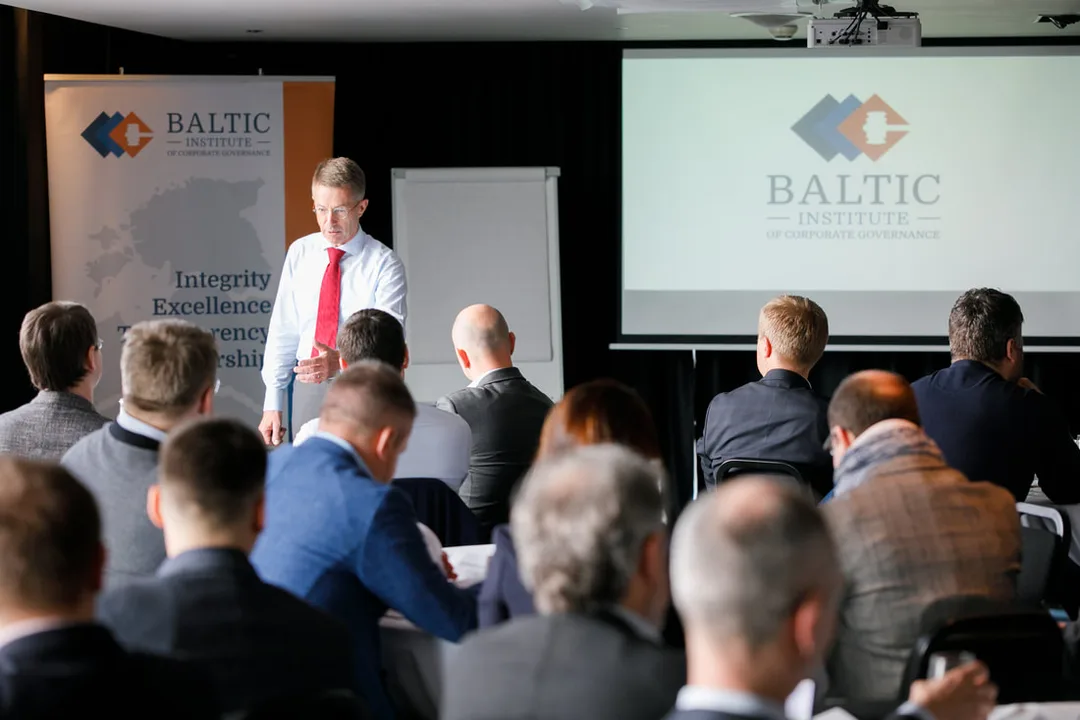
    I'm in London for the weekend, an interlude between inter alia commitments hosted by the Institute of Public Administration (a masterclass for board chairs, in Dublin); Lagercrantz Associates (a workshop, in Stockholm); and the Baltic Institute of Corporate Governance (a masterclass and the BICG conference keynote, in Vilnius). 
    To work with people across cultures, countries and contexts is a great privilege. Discussions reveal differences in perspective and approach. Yet, some things are consistent, transcending borders and cultures. One example is 'good governance'. Directors everywhere want to know how to achieve good governance.
    This is a tough request. The problem is that 'good' is a moral qualifier, implying someone or something is morally excellent, virtuous or even righteous. But that is not all it means. A quick check in any dictionary reveals at least 39 other definitions! Which one does a person have in mind they ask for help to achieve 'good governance' or 'good corporate governance'? And what about other directors around the table. Do they have the same understanding or not?
    It's little wonder that directors have become confused about the role and purpose of the board.
    Pragmatically, corporate governance is the means by which companies are directed and controlled (Cadbury, 1992), that is, it describes the work of the board. The objective is to produce an agreed level of performance (however measured). 'Effectiveness' is a more appropriate qualifier than goodness. If something is effective it is adequate to accomplish a purpose; producing an intended result. 
    Returning to the question of how to achieve good governance. After reminding the enquirer that so-called best practices offer little guarantee of success (which one is best anyway), I usually steer the discussion away from goodness towards effectiveness (performance), and suggest that Bob Garratt's Learning Board matrix, and the Strategic Governance Framework are useful starting points for a lively discussion at the board table.
    Once directors acknowledge that high company performance is the appropriate goal, and that success is a function of effectiveness more so than goodness, they start to ask more relevant questions, such as, "What actually matters?" and, "How do I as a director and we as a board become more effective?"
  • Published on

    Will board effectiveness improve in 2019?

    Picture
    With 2018 consigned to history and holiday season break all but over, most business leaders and boards of directors are turning their attention to what the year ahead (and beyond) holds. Even a cursory glance reveals a plethora of issues that may have an impact on business continuity and, potentially, continuance. 
    Consider these indicators:
    • ​Rampant economies that have powered much of the global growth over the last decade may be running out of steam. Many Asian 'tiger' economies are growing less rapidly than before, Apple and other tech giants have issued warnings, indicating that a correction may be just around the corner.
    • Populism and nationalism are no longer words heard only in political and academic hallways.
    • The climate is changing.
    • Medical and social developments are impacting the lives of untold millions around the world.
    • Disruptive technologies and business models are fundamentally changing commerce.
    • Weaponising of biological 'forces' to reshape nations, economies and mindsets.
    • March 29, 2019 is shaping as a watershed date for Britons and Europeans in particular, but also others.
    • The US-China trade war and disquiet in the Middle East have the potential to disrupt international trade.
    • The emergence and potential impact of identity politics and various lobby movements (#MeToo and #GilletsJaune are two examples amongst many).
    • In several countries, general and/or local government elections are occupying the minds of many.
    And that's just the start.
    As is usual at this time of the year, business and governance commentators have stuck their collective necks out, promulgating a variety of predictions given the indicators (as real or imagined as each indicator may be); each behaving as if they possess levels of predictive insight beyond what a reasonably educated person might be able determine by tossing a coin. But do they? They cannot all be correct—in fact, none may be. 
    The challenge for boards, of course, is working out how to respond well. 
    What is becoming increasingly clear is that boards have become confused by what's going on around them. Increasing numbers have grown quite tired of 'conventional wisdoms' and so-called 'best practices' (plurals intentional). Some have responded by taking defensive positions, and others are boldly trying things without first understanding the contextual relevance.
    My response to enquiries from boards is straightforward: open your eyes to the possibilities, think and act strategically, but don't be impetuous. Check the current context, because things change, often in unexpected ways. Helping boards respond well typically involves sharing insights from research and practice; facilitating discussions; and providing contextually-relevant and evidence-based guidance. If you want to discuss options to respond well to a changing world around you, or lift the effectiveness of your board, please get in touch
  • Published on

    Global Peter Drucker Forum: Day 2 highlights

    Picture
    The 2018 edition of the Global Peter Drucker Forum was convened in Vienna, Austria this week. This post summarises insights from the second day (click here for insights from Day 1). I didn't take as many notes on the second day, preferring instead to sit, listen and dwell on what was said. (I also missed a couple of sessions, one to finalise my own preparations to speak; another to spend time privately with a two inspirational thinkers.) However, there were, for me, two speakers that really stamped their mark on the day, as follows:
    Hermann Hauser,​ director of Amadeus Capital Partners and chair of the European Innovation Council, delivered a strong message, arguing that humanity is on the cusp of an inflection point (moving beyond evolution to design thinking) that has the potential to 'change everything' in the reasonably near future. He identified four significant disrupters:
    • Artificial intelligence and machine learning: Allows for smart processes and removal of menial work
    • Block chain and smart contracts: Enables automated [process] execution to be designed into systems
    • Synthetic biology: Enables biological patterns of life to be modified, at the will of man
    • Quantum computing: Nascent technology with the potential to render security systems useless
    The implications of these disrupters are, frankly, rather daunting. Synthetic biology offers the prospect of defeating disease, but at what cost? Quantum computing has the potential to render electronic security systems useless. One doesn't have to be a rocket scientist to realise the massive implications for commerce, banking and warfare. Researchers and technologists are committed to bringing these capabilities to market. But at what cost to humanity? The ethical implications are not insignificant. Recognising this, Hauser suggested that the state has an important role to play, to ensure appropriate regulatory boundaries and safeguards are established. But it must act quickly, before the genie gets out. 
    Martin Wolf, chief economics editor of the Financial Times, spoke passionately about the role of the state; in his view, the single-most important institution in human history. I first heard Wolf speak a few years ago. He left a strong impression on me then, and did so again as he spoke. Addressing the question of how states can 'work better', Wolf named several important roles that the state 'must' fulfil par excellence:
    • To ensure society is both collective and inclusive (no one left behind)
    • To provide a fair and effective judicial system
    • To underpin the monetary system
    • To regulate and control sovereign borders
    • To finance innovation (in effect R&D, not product development)
    • To regulate and guide economic activity
    • To protect the commons
    • To collaborate with other states, to ensure stability of 'global' governance
    • To establish the laws, roles, purposes and legitimate operations of all business
    Such roles need to be implemented with aplomb. Failure to do so will inevitably lead to anarchy, in Wolf's view.
  • Published on

    Notes from a nomad in Europe

    Picture
    My speaking and advisory tour of several European cities got off to a great start on Sunday evening. The first port of call was Stockholm. Liselotte Hägertz Engstam, an established director and board chair in the Nordics, hosted a seminar at Tändstickspalatset; a great venue. The theme was [the] Board's role in innovation strategy and governing new digital business models. ​Some 35–40 directors and board chairs with just over 100 board mandates between them, gathered to hear two speakers, namely, Stephanie Woerner and yours truly. The following paragraphs tell the story.
    Digital business model and board contributions
    Stephanie Woerner, a Research scientist at Sloan School of Management in Boston, explored value creation in the digital economy. She observed that many (most?) corporations were somewhat lumberous, offered rather average customer service and, tellingly, were ill-equipped to take advantage of emerging 'digital opportunities'. As such, they are at risk of losing out to younger, more nimble businesses. Woerner identified six questions that companies need to resolve if they are to compete effectively in the digital economy:
    • What is your digital threat?
    • What business model is best for your enterprise's future?
    • What is your digital competitive advantage?
    • How will you connect with your prospective clients?
    • What capabilities are needed to reinvent the enterprise?
    • Do you have the leadership to make it happen?
    Then, Woerner spoke about digital savviness, making two points along the way. First, 62% of directors claim to be 'digital savvy' (and, presumably, ready to tackle emergent challenges), but only 24% are indeed savvy. Second, the presence of three digital savvy directors is sufficient to drive improved [financial] performance outcomes. With that, I sat up. How might a quantitative analysis be a reliable predictor of a contingent outcome? A person at the table I was seated at was similarly exercised. She interjected, asking what the term 'digital savvy' meant. "Great question. We used the experience and qualifications of board members as a proxy." Woerner went on the explain how this has been arrived at: a keyword analysis of resumés (searching for words such as technology, CIO, disruption, software). The presence of such words on a resumé was deemed sufficient to categorise someone as being digitally savvy. You could have heard a pin drop.
    While Woerner's assertion (that boards need to be knowledgeable of emerging technology trends) is intuitively reasonable, the underpinning research appeared to be flawed. Others seemed to agree, suggesting it is more important for directors to have a curious mind, read widely and ask probing questions. Notwithstanding this, Woerner's core point was on the money: boards need to get up to speed with technological innovations and the opportunities they present.
    ​Making a difference, from the boardroom
    I spoke second, the task being to both build on Woerner's comments and add some insights of my own. I started by acknowledging today's reality, that change seems to be the only constant. Woerner set a great platform so there was no need to labour the point, except to say that directors need to work hard to keep up. Importantly,  contemporary recommendations including so-called 'best practices' provide little assurance of better board practice much less improved firm performance.
    An important duty of all boards is ensure the future performance of the governed company. If boards are to make a difference, they need to make informed decisions about the future direction of the company, and verify whether desired performance outcomes are actually being achieved or not. Four crucial questions that boards need to ask were tabled, these being:
    • Are we doing the right things? (explores context, purpose and strategy)
    • Is strategy being actioned as expected? (explores implementation)
    • Are expected benefits being achieved? (verifies performance by way of outcomes, not just effort)
    • Are we making good decisions? (tests efficacy of board's decision-making)
    After suggesting some practical considerations, I introduced the strategic governance framework, an option for more effective contributions (as revealed from my doctoral research and subsequently lauded by both practicing directors and scholars around the world).
    Picture
    ​Insights
    The seminar presented two perspectives, namely, that directors need to become a lot more digital savvy if they are to contribute effectively in the boardroom, and that effectiveness is a function of director capability, board activity and underlying behavioural characteristics of directors, not what they look like.
    Board readiness to lead well in the emerging 'digital' world is a concern—made worse given boards tend to pay much more attention to historical performance than wrestling with the [largely unknown] future. This is the elephant in the room. 'Digital' is but a symptom, I suspect. If boards are to have any hope of influencing firm performance, what they do in the boardroom (i.e., corporate governance) needs to change.