
• Published on

    Upcoming European speaking and advisory tour

    Picture
    In a couple of weeks, I'll be in England and Europe, for the third and final time this year. The schedule includes attendance at two conferences, delivery of two keynotes and a bevy of meetings, as follows:
    Sun 25 Nov

    Mon 26 Nov
    Tue 27 Nov
    Wed 28 Nov
    Thu 29 Nov
    Fri 30 Nov
    Sat 1 Dec
    Sun 2 Dec
    Mon 3 Dec
    Tue 4 Dec
    Wed 5 Dec

    ​Thu 6 Dec
    Stockholm: Deliver keynote at event organised by Digoshen (Topic: Outlook on international corporate governance and board practices).
    Stockholm & London: advisory meetings.
    Transfer to Vienna.
    Vienna: Global Peter Drucker Forum, pre-conference workshops.
    Vienna: Global Peter Drucker Forum, main conference (day 1).
    Vienna: Global Peter Drucker Forum, main conference (day 2).
    Vienna: post-GPDF review; transfer to London.
    Free day in London.
    London: advisory meetings.
    London: ICGN Global Stewardship Forum
    Henley: ​Share research insights with faculty & doctoral students (Henley Business School Governance Seminar); explore future research opportunities.
    London: ​advisory meetings.
    While the schedule is fairly full, some gaps remain for additional meetings (in London).
    If you would like to meet, please get in touch. I'd be glad to discuss any aspect of boards, corporate governance or effective board practice; explore a research idea; or respond to (future) speaking or advisory enquiries.
  • Published on

    Re-conceiving 'control', as a constructive mechanism

    Picture
    In business, as in life, the task of exerting control is commonly perceived as being one of exercising limits; of saying 'no' and imposing constraints. Such perceptions are well-founded. Check these verb usages of 'control', lifted straight from the dictionary:
    • to exercise restraint or direction over; dominate; command
    • to hold in check; curb
    • to test or verify (scientific experiment)
    • to eliminate or prevent the flourishing or spread of
    If you have spent much time in boardrooms, you'll know that director behaviour tends to be consistent with these definitions, more so if the chief executive is ambitious or entrepreneurially-minded (the two attributes are not necessarily the same). When asked, board justification for exercising caution is straightforward: to keep the chief executive honest and to keep things 'on track'.
    Such an understanding—holding management to account—seems admirable. Monitoring and supervising management is one key task (of four) of corporate governance after all. But does a strong hand actually lead to better outcomes? More pointedly, how might the exercise of restraint and limits advance the purposes of the company (noting the board is responsible for ensuring performance goals are achieved)? Such conduct is analogous to applying the brake when the intention is to drive on. A growing body of academic and empirical evidence suggests that a strong hand, like increased compliance, may actually counter-productive.
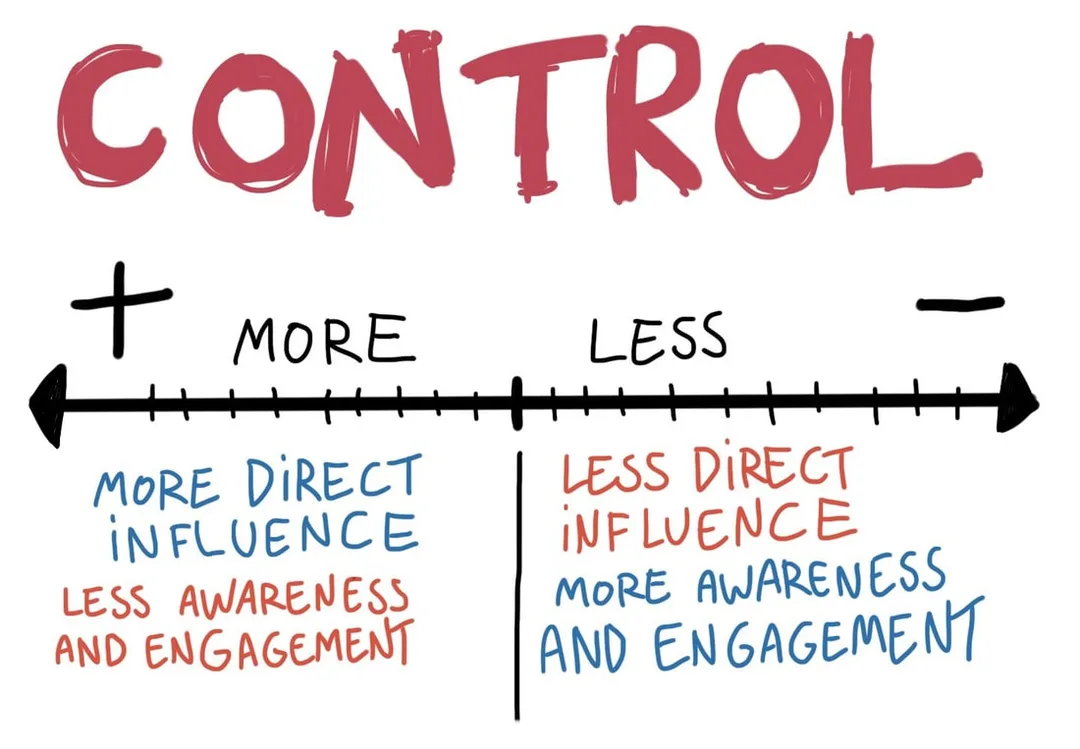
    Rather than persist with what is demonstrably a problematic approach, it might be more fruitful for boards to consider another perspective. ​What if control is re-conceived in positive terms (namely, constructive control), whereby the board's mindset is to provide guidance (think: shepherd or coach) by ensuring the safety of the company and steering management to stay focused on agreed purpose and strategy? Might this deliver a better outcome? 
    Emerging research (here, but contact me to learn more) suggests the answer is 'yes'. Strongly-engaged and strategically competent boards that display high levels of situational awareness as they debate issues from multiple perspectives and make informed decisions in the context of the long-term purpose of the company can make a difference. Constructive control is one of five important behavioural characteristics of effective boards identified in this research.
  • Published on

    Picking up the #corpgov & #boardpractice discussion

    Picture
    After a longish hiatus—nearly four months—Musings is back. Thank you to regular readers and supporters who have asked about the radio silence. The explanation is straightforward: a busy period of speaking and advisory engagements, research and board work left precious little time to ponder.
    But that is history now. My intention is to pick up where I left off in early August, by posting on topical matters and emerging trends; challenging orthodoxy and, importantly, exploring how boards might become more effective in their pursuit of high firm performance and sustainable wealth creation. 
    Thank you for your interest in Musings. Your feedback and commentary is appreciated.
  • Published on

    Companies, boards and strategy—and Plato?

    What can Plato, a philosopher who lived over 2400 years ago possibly teach the leaders of modern companies? After all, the modern form of company only came into being in the last few hundred years, two millenia after Plato died. As it happens, when it comes to strategy and decision-making, Plato can teach us a lot—a point made by the author of this article. Here's an excerpt:
    Plato likened the guidance of a state to the navigation, piloting, and crewing of a ship at sea. The analogy holds for the strategist and a war effort. The strategist is the navigator with skills that few others have but he may not always be the captain who leads the crew, those that must actually carry out the strategy. Strategy is not responsive to constant or wild adjustments; the hand on the rudder must be subtle and steady; the mind behind it focused on the north star of the political end state. It is for this reason that one could expect that the navalist’s mind more easily grasps the nature of strategy than that of the continentalist. For centuries, ship’s captains engaged in strategy both military and diplomatic with little guidance and no recourse to seek more just by the nature of communications and the distance that a ship could carry them.  ​​
    This is one of the best summaries that I have read in a long time. Though written in the context of naval strategy and referring to Plato, the roles and tasks described here are directly applicable to companies and boards. The author writes that strategy (strategos: the art of command) is something developed at senior levels, with the long-term purpose (north star) in mind. The captain's job is to implement the strategy. Teamwork between the strategist and the captain is both expected and crucial. 
    The correspondence to companies and boards is stark. 'Guidance' (first sentence) corresponds to governance (kybernetes: to steer, to guide to pilot), for example. The senior-most decision-maker is the board of directors; the chief executive is 'the captain'. In naval terms, the best chance of making progress towards the 'north star' occurs when the strategist and captain collaborate closely—and so it is with the modern corporation.
  • Published on

    The board of directors: a family business perspective

    Picture
    From entering the business lexicon less than quarter of a century ago, 'corporate governance' has come a long way. Prior to 2000, the term was rarely mentioned in business discussions much less amongst the general public. Boards and directors directed the affairs of the firm, and that was it. Now the term is ubiquitous. Its usage has changed over time as well: from describing the functioning of the board of directors, the term is now used to describe all manner of corporate activity, much of which bears little if any semblance to the board or governance at all.
    The proclivity to use the terms 'governance' and 'corporate governance' has trickled down from big business to now infect family-controlled firms. Well-intentioned but inappropriate usage—notably advisers (typically, but only accounting firms) making assertions such as "You need governance"—has had unintended consequences. When attention is diverted away from running and overseeing the business to "implement governance" (whatever that means or entails) without justification, costs have a tendency to go up not down, and a whole new set of problems including confusion, consternation and strained relationships often follow.
    Over the last two decades, I've had the privilege of working with the directors and shareholders of hundreds of family-controlled firms, ranging from 'mom and pop' operations to much larger (multi-hundred million dollar) enterprises. Awareness of (and interest in) governance has become palpable, more so if a director has just read an article or heard a talk from an expert purporting a 'best practice' governance solution. Yet directors know that a single answer rarely works everywhere. Context is crucial in business; every situation is, to a greater or lesser extent, unique. As a consequence, the universal application of a formulaic 'best practice' solution does not make much sense. Recognition of this gives rise to many questions, especially from the shareholders and directors of family-controlled firms. Here is a selection of the more frequently asked ones:
    • Do we actually need a board?  If the business is a company, yes. But remember that a board is, straightforwardly, a term used to describe the directors collectively.
    • Do we need governance? This question often masks another question: whether the 'practices' of governance are always required. The answer to both is 'it depends'. If all of the directors are also managers and shareholders, and all of the shareholding is held by serving directors (as is generally the case in small firms), then the practice of meeting regularly as a board to set strategy and policy, hold management to account and provide an account to shareholders is redundant. However, once a modicum of separation between shareholding, directors and managers starts to emerge (i.e., some shareholders are no longer directors, or vice versa; or some directors do not work in the business), then its makes sense to embrace board meetings and associated reporting. Another trigger for establishing normative governance practices is the appointment of an independent director.
    • We've been told to appoint at least one independent director, because that is best practice. Is it? Not necessarily. Independence has long been held out as a proxy for better decision-making. For example, most stock markets specify a minimum number of independent directors if the company is to be listed. Yet no categorical link between independence and decision quality, much less better firm performance has been found. However, that is not to say that shareholders should avoid appointing an independent director. If the board lacks some important expertise or needs an extra perspective, an external appointment can be incredibly helpful to the quality of board deliberations and decisions.
    • Our accountant has offered to be a director. Should we take up the offer? Probably not, because to do so introduces an inherent conflict of interest. The accountant (or, accounting firm) is a servant of management, charged with providing specialist financial and reporting expertise. If he/she also sits on the board, then they are, in effect, monitoring themselves, 'marking their own work'', so to speak. Boards that lack financial acumen (for example) should seek such expertise from an external director; there are plenty of highly-skilled people with the requisite technical and governance expertise available. 
    • We are not sure that our 'independent' director is acting in our best interests. What options do we have? First, every director has a duty to act in the best interests of the company, not the shareholder or any other party. If a director, regardless of whether they hold shares or not, demonstrates biases for a particular stakeholder or appears to lack independent judgement, the matter should be raised with them. If the behaviour continues, consider releasing them. 
    • How often should the board meet? There is no hard and fast rule, other than the legal requirement for the board to meet at least once per year. Practically speaking however, the recommended frequency is "as often as is needed to fulfil duties". The boards of family-controlled businesses domiciled in the UK, New Zealand and Australia tend to meet once per month or once every two months, whereas the boards of US-based firms typically meet quarterly. 
    • We've been told to create an advisory board. Is this a good idea?No
    These questions are typical of those that have been front-of-mind for the directors and shareholders of the family-controlled firms that I've interacted with in recent months. Curiously, questions about social interaction, boardroom behaviour and family dynamics (the human dimensions) are asked far less often. This, despite the board being a collective of directors—people—who are required to work together in the best interests of the firm. Boards that resolve these so-called 'soft' questions tend to be more effective. But more on that next time.
    This article is the first of three on the topic of 'Governance in family-controlled companies'. The second, which explores undue influence and the impact of family dynamic is available here. A final instalment, which will make suggestions to improve board effectiveness, will follow in late 2018. Boards wanting to discuss matters raised in these articles should get in touch directly to arrange a private briefing.
  • Published on

    Embracing a brave new world

    Picture
    Netflix has been in the news a bit lately, aided no doubt by public interest in its rapidly increasing 'reach', meteoric rise in its stock price and membership of a new generation of behemoth—the FAANG club. Now, the actions of the board of directors have seen Netflix become even more newsworthy, principally a consequence of this article published in Harvard Business Review. ​The board of directors operates quite differently from many others and, indeed, conventional wisdom. Could this be a contributing factor in Netflix's success?
    Conventional wisdom, supported by both agency theory and 'best practice' recommendations of directors' institutes (in the western world, at least), suggests that 'distance' (a clear separation between the board and management) is important if boards are to objective in decision-making. The listing rules of most stock exchanges specify that at least two directors must satisfy established independence criteria at all times. Independence is de rigeuer, even though no consistent link between director independence and firm performance has ever been identified!
    Back to Netflix. Two researchers, David Larcker and Brian Tayan of Stanford University, gained permission to investigate how the Netflix board keeps up to date and informed, a prerequisite of effective decisions. They found that the Netflix board does not embrace conventional wisdom. The full research report, from which the HBR article was derived, is available on the SSRN website.
    The Netflix approach is based on proximity not distance. The approach has been adopted to help directors resolve a fatal flaw present in most boards: Five out of every six directors do not have a comprehensive understanding of the business being governed. Specific measures in place at Netflix include:
    • Governance by walking about: Directors are actively encouraged to view the company "in the wild". This includes attending executive meetings (albeit in silence, as an observer), and the freedom to wander around the office, chatting and asking questions (but not offering guidance nor providing instruction).
    • Pragmatic reports: Memos are both brief and insightful. They must be less than 30 pages long and, in addition to providing links to detailed information, they provide open access to all relevant data on the company's systems.
    The combined effect of these measures has been profound: directors are much more well-informed than they would have otherwise been. The handicaps of lack of transparency or hard-to-assess information are removed. The perennial problem of information asymmetry that besets boards globally has been, it seems, solved—in Netflix's case at least.
    Standing back a little from the Netflix case, several learnings are available for boards, as follows:
    • Proximity trumps distance: If boards are to govern effectively, directors need to  be adequately knowledgeable of the business and the wider operating context including emerging trends and technologies. Information needs to be elicited from multiple sources. Barton and Wiseman's report highlights this. But the Netflix case goes further; boards need to get a lot closer to managers, to establish and maintain a strong relationship founded on trust and expedite the flow of high quality and relevant information. My own research (here and here) provides supporting evidence. But don't be deluded, the recommendation comes with a warning: high levels of maturity are  required, to discern the appropriate proximity, and to minimise the chance of directors becoming 'captured' by managers.
    • Real knowledge takes time to acquire: Conventional wisdom, supported by recommendations emanating from many consultants and directors' institutes, suggests that directors should allocate two hours in preparation for every one hour of board meeting time. Yet the evidence suggests that this is probably insufficient. Real, relevant knowledge (read: deep understanding, wisdom even) takes time to acquire. The Netflix case adds weight to this argument. And knowledge needs to extend beyond the business and ecosystem, to include emerging trends and technologies, and theoretical perspectives as well. Together, this demands that directors invest considerably more time than the two-to-one rule-of-thumb if they are to be well-informed and make meaningful contributions. When asked, I propose five hours for every one hour of board meeting time, and double for the Chair. Established directors, including those who happily describe themselves as 'professional directors' often baulk at this, saying they don't have time. This is not an adequate defence. 
    Many boards and directors do take their role and responsibility very seriously. But, sadly, a significant number do not display appropriate levels of commitment. If boards are to become more consistently committed to the cause—the pursuit of high firm performance and longer-term value creation—they could do a lot worse than take a page from the Netflix playbook and the advice shared here. If you want to learn more, including scheduling a discrete briefing to explore how a mechanism-based understanding of corporate governance can contribute to improved board effectiveness, please get in touch.