• Published on

    Reading, to refuel the heart and soul

    Picture
    The end of 2025 is nigh, which means that time of the year when many folk take stock and ponder the future is upon us. Some people use the time to scrutinise the year past closely and make resolutions, some pause and ponder, and others hardly blink. While the idea of New Year resolutions leaves me cold, I do think about my quest to become a better person. And, with it, I usually select a few books to read during the year ahead. For me, reading—typically, long-form books (hard copy, not on-screen)—is a valuable means of relaxing, reflecting, refuelling, and exercising my cognition. If the insights gained are useful in my work-life as well, that is a bonus. 
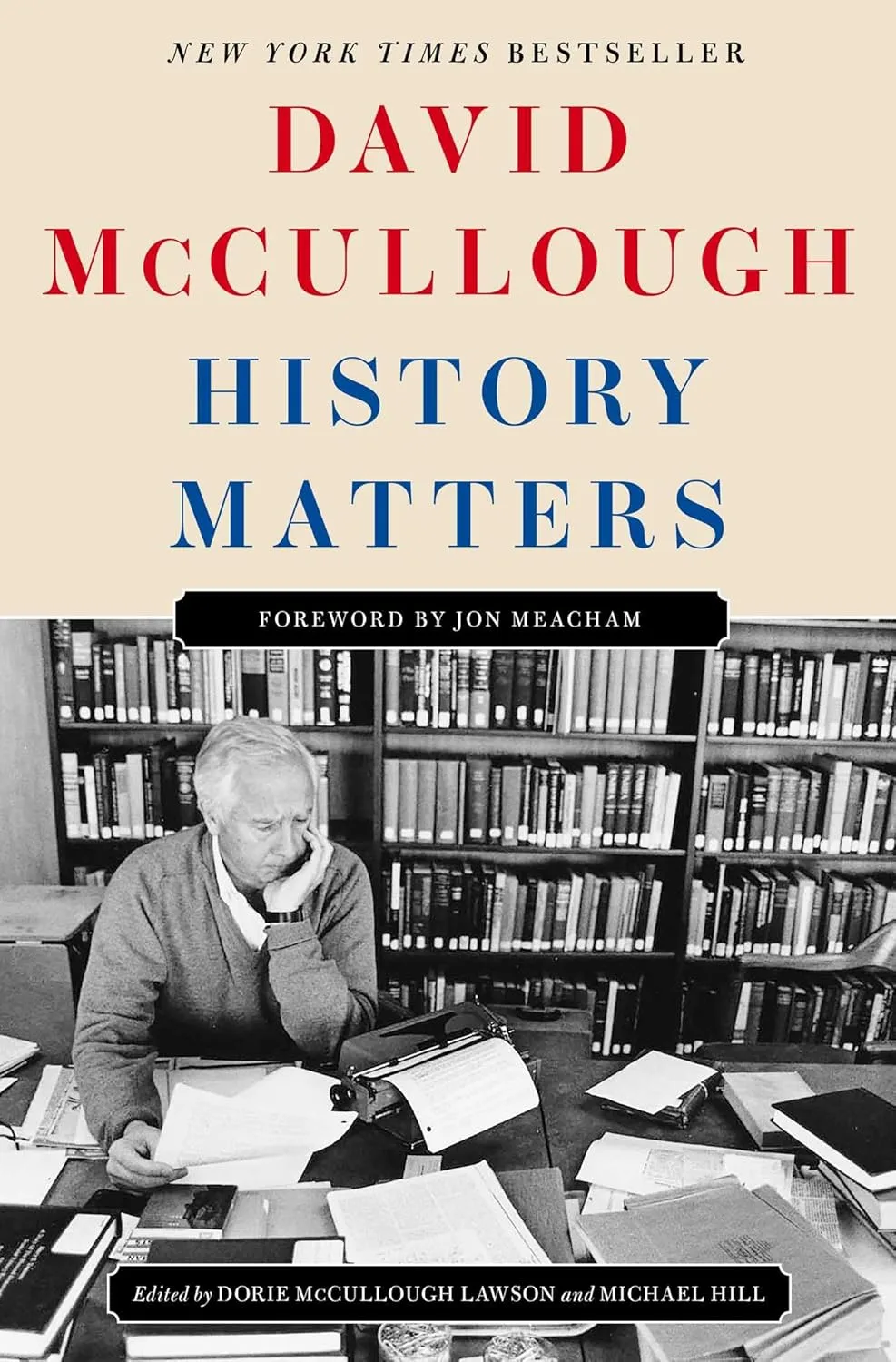
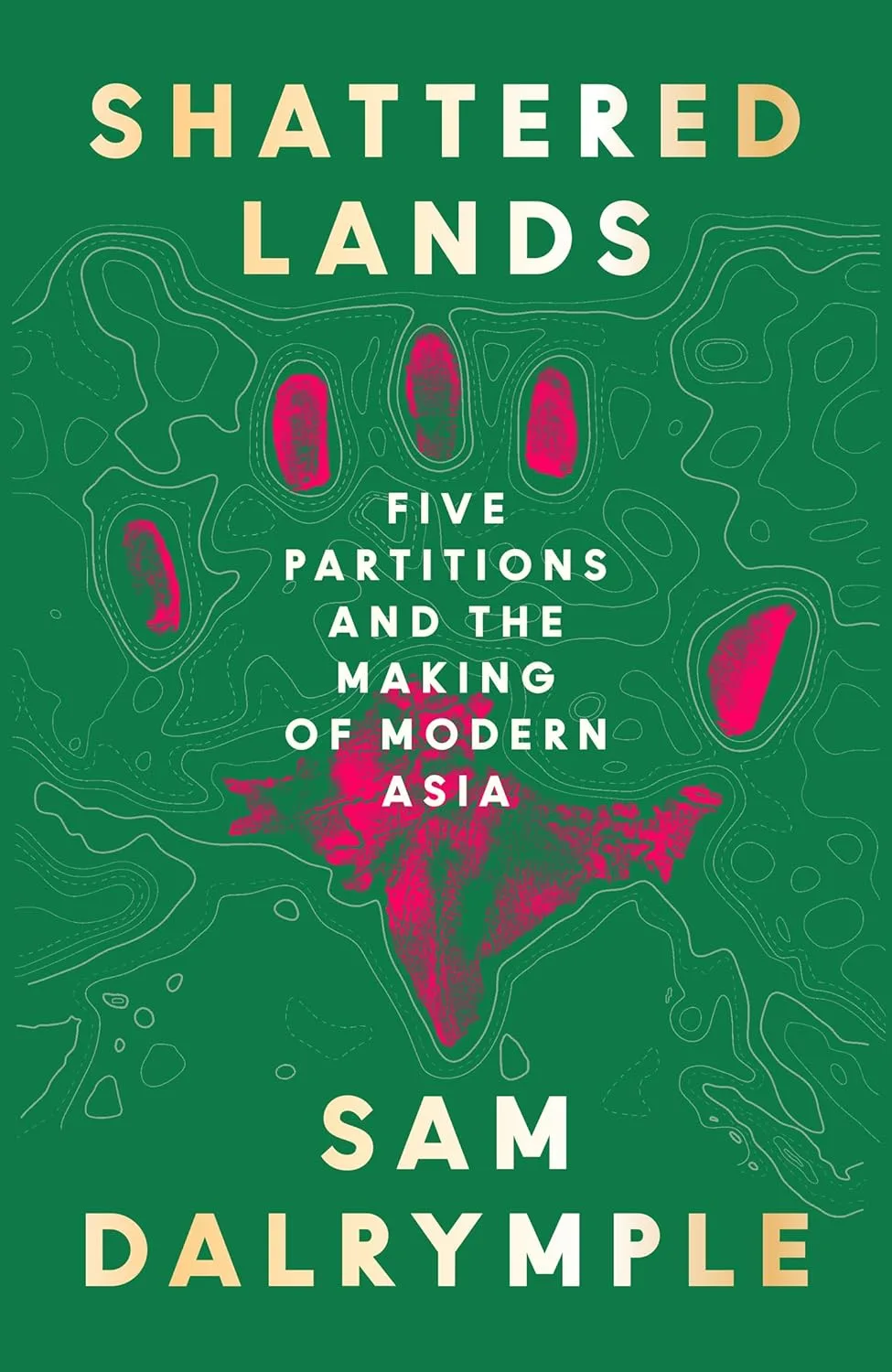
    This year, I have selected six books from my shelf, to tackle alongside a slow-reading project:

    Picture
    Picture
    Picture
    Picture
    Picture
    Picture
    My slow-reading project? Tolstoy's War and Peace. I intend to read one chapter a day, for 366 days.
    If you read, would you mind sharing what you have ahead of you, to inform my future choices?

  • Published on

    The map is not the terrain

    Picture
    Since time immemorial, man has sought to explore: natural curiosity has led to many discoveries, of previously unknown lands, flora and fauna, and more besides. Innovations and inventions too; discoveries enabling further exploration, and on it goes. Through the arc of history, exploration and discovery has been based upon empirical techniques—going and having a look.
    About six decades ago, Jane Goodall put this approach to work as part of her research to learn more about chimpanzees. Her assessment was, straightforwardly, that if reliable understandings of how chimpanzees socialise were to be achieved, they needed to be watched, directly, over an extended period, as difficult as that might be. The extended period is necessary because behaviours change when a new actor arrives. Thus, Goodall’s study could not begin in earnest until the chimps became more familiar with her and reverted to behavioural patterns thought natural. When behaviours reverted, as Goodall thought they might, several new discoveries not previously known were made.
    The approach Goodall used, and her discoveries, demonstrated the high value of longitudinal ethnographic techniques when studying social groups and their behaviours. And yet, while this has been understood for decades, centuries even, its application to my field—boards—is rare. Instead, since the dawn of board research, the dominant paradigm has been to collect data about directors, the composition of the board and other data, from outside the boardroom, typically from public databases, interviews and surveys. Such approaches have been deemed acceptable because researchers have found it very difficult to enter the boardroom. Given the only place the board and its work actually exists is in the boardroom, and that the board is a social group, surely the gold standard must be to conduct long-term studies of boards in session (through direct and non-participatory observation), as Goodall studied chimpanzees?
    This issue, of using appropriate techniques that explore the subject of interest, not a proxy, was made plain by an ex-military colleague recently; his pertinent remark was, simply, “The map is not the terrain.” What seems to be the case (on the map) may not be the case (in reality). The underlying message was confronting: if you want to really understand, go there, gain first-hand knowledge. And so it is with board research. If we really want to understand how boards work, and how boards actually make decisions and influence performance, not how directors say they do when they are interviewed, watch them over an extended period. Then, possibly, you might be able discern what happens; how directors act and interact; and, even, spot associations between a strategic decision and some subsequent change in organisational performance. The findings will be contingent, of course, because the group is social, the situation complex, and external influences are many and varied.
    To date, fewer than a dozen longitudinal observation studies, of boards going about their work, have been published. And, somewhat awkwardly, the reported findings present a different perspective from that commonly asserted by others informed by research conducted away from the boardroom: The capability of directors (what they bring), the activity of the board (what it does), and behaviour (how directors act and interact), appears to be far more important than the structure or composition of the board.
    Now, as I wait to board a flight, for yet another international trip to work with boards, my colleague’s comment is ringing in my ear. And with it, a question, “What guidance will you rely on, given the importance of governing with impact?”

  • Published on

    Boardroom effectiveness: Managing difference

    Picture
    In recent times, diversity, equity and inclusion (often, DEI) has become topical in many spheres of business, social, organisational and political life, and boardrooms are no exception. The moot is that increased in-group diversity directly enhances organisational (project, team) performance. While this remains unproven, expectations are running high, and there are no signs they are abating.
    With this development, tensions have become apparent: between those people and groups who argue that demographic diversity is material to better outcomes, and those who do not; those who assert that boards should be representative of the shareholders or communities they serve, and those who prefer the best governors in the room, regardless of representation, to ensure the best decisions are made. 
    These tensions, and the underlying complexities extant both within an organisation and in the wider marketplace, are real. Boards ignore them (or discount or run roughshod over them) at their peril. Difference needs to be acknowledged and harnessed, to draw out multiple perspectives. But directors need to be sufficiently mature and wise to also align their efforts, to ensure great decisions are made having taken various contextual factors into account. This is hard, not only because directors need to find common ground where little may exist, but also because cultural differences tend to run deep and they may be difficult to navigate.
    Seemingly straightforward matters are almost guaranteed to become difficult if cultural norms are ignored or brushed over. Consider these cultural scenarios, all of which I have experienced over the past twelve months:
    • Starting the meeting 60 minutes after the advertised time. This was a misread on my part: the hosts started at the advertised time, but not with the business meeting as I expected. There was a formal welcome and a light meal (culturally normal for the board, but not advised to me). Around 60 minutes the after we first assembled, the chair called the directors and visitors together, and the 'formal meeting' got underway.
    • A female board member seemingly ignored. In the West this would be uncommon; indeed it would be offensive for some. But it happened during a board observation in a highly patriarchal community setting. While the group seemed to be accommodating, the woman was present in body only; cultural norms prevented her from speaking or otherwise contributing in any meaningful way.
    • An entire group I was working with went silent on me. The group had been animated and engaged until they were asked a question that put them on the spot. Rather than engaging with the question, or expressing their discomfort at being asked, they simply sat and waited, and waited. After a minute or so, I asked for help. The group 'leader' said that, culturally, they preferred not to debate sensitive matters 'in public' (that is, with outsiders, such as me).
    When working across cultures, seek first to understand. Breathe. Invest time and effort to learn how others think; what drives them; how they feel; how their mind works; how decisions are made; and whatever else seems relevant. And, what is more:
    • Prepare ahead of time.
    • Read widely.
    • Ask for guidance.
    • Learn how to ask questions in a culturally safe manner.
    • Listen carefully, especially to what is not spoken.
    • Break bread together (gather socially, over a meal).
    • Travel together (to remote meetings).
    • Spend time in each other's company.
    The group leader (board chair) has an incredibly important role in this, to draw everyone into the conversation; acknowledge difference, but harness it for the common good.
    Finally, a note: The techniques listed here are simply suggestions. But, in my experience, they can be incredibly powerful catalysts upon which relationships can develop and trust can be built. Ultimately, if boards are to have any hope of governing with impact, a sound understanding of 'who' is in the room, and 'how' they think, act and contribute is necessary. Invest time and effort, it'll pay off.
  • Published on

    Back into (writing) gear

    Picture
    Over the past couple of months, I have been deeply embedded in a pro-bono advisory engagement, and fulfilling several speaking and capability-building assignments—to such an extent that my writing has languished. Progress on Boardcraft stalled, and my last blog entry was back in May. But now, with those commitments in hand, I have surfaced to draw breath, scan the vista, and to begin writing again.
    Starting next week, I will pick up my pen (keyboard!) once more, to share my thoughts and observations on corporate governance, the board's role in driving organisational performance, and other topics that catch my attention. Expect a new muse some time on the first Monday of each month.
    As we get going again, may I ask a favour? Please tell me what you want to know about (as a comment to this post or via private message) and I'll do what I can to respond. This is a genuine offer to explore anything of interest—except if it is illegal or immoral, of course!
    For now, have a great weekend. See you Monday!
  • Published on

    Looking back, for guidance to move forward

    Picture
    Questions of where we came from, why various things happened or evolved as they did, and what we can learn from them to guide us as we live our lives fascinate many people—me included. From neo-lithic henges and stone circles, to the development of more recent industrial-scale enablers (notably, the wheel, the printing press, manufactories, the motor car and the Internet), man has long been fascinated with history, innovation and possibility. When we ponder historical developments and innovations such as the examples noted here—and other foundational things like language, writing, mathematics, ethics and civics—we gain insight to apply in our daily lives or use as a springboard to try to make new discoveries. This maxim applies personally, in family and social groups, and more broadly in society—and if we ignore it, it may be to our peril.
    The idea of learning from those who have gone before us is applicable in organisations too. How else would individuals and teams know what to do? This is what learning and development departments organise, and why professional development programmes exist.
    In the realm of boards and boardwork, relevant questions include three I have been asked most often over the past two decades: What is corporate governance; what is the role of the board; and, how should governance be practiced? That these questions are asked so often suggests directors (at a population level) lack the knowledge needed to be effective.
    Helping directors and boards govern with impact is a calling for me, so when Mark Banicevich invited me to explore the history of corporate governance—well, make a fleeting visit across a few high points in the Western context—I jumped at the chance. Hopefully, the commentary is helpful. Do let me know whether you agree or disagree with the various perspectives, and why, because I’m no Yoda (use the comment section below, or contact me directly). Life is a learning journey for me as well!
    This conversation is the third in a series recorded recently. Recordings of the first and second conversations are also available.
  • Published on

    A journey, in thought and deed

    Picture
    When I was a boy, milk was free (I was raised on a dairy farm), but you could buy it in a glass bottle with a silver foil top (pasteurised but not homogenised) for four cents a pint at the general store. Television (once we got one, in 1969, to see the Apollo 11 moonshot) was a grainy, black-and-white experience, with a single channel available. You got to watch whatever the broadcaster chose to deliver across the airwaves.
    Now, milk costs several dollars a litre, but it comes in many different styles (blue, light blue, skim, lo-fat, full-cream, calcium fortified, lo-lactose and UHT—as well as products called milk that contain no milk at all, such as oat milk and almond milk, in a wide variety of packaging options). Television has changed too: from a take it or leave linear broadcast experience via rabbit-ear antennae, to a plethora of video-on-demand (streaming) options via the internet. 
    These are but two of thousands of examples that illustrate the onwards match of technology. Oh how life has changed, even in my lifetime.
    The onward march has also affected the way we communicate, not only personally with family and friends, but also with clients, suppliers and the general public as well. The notion of using a fountain pen to handwrite a letter, or making a toll call, seems quaint now—but some of us still value these moments. The emergence of social media has extended our reach in ways not thought possible twenty years ago. Sharing business cards, once commonplace, is now rare. If people want to contact me or learn about me, they tend check my LinkedIn profile (notice the assumption, that I have one), even before mentioning Google or asking about a website or blog. 
    And that brings me to the point of this muse, which is to share one aspect of a conversation with an esteemed company director, in the hope it might encourage others committed to serving the director community. Yesterday, I was asked about the role of social media in my business life, what channels I use and how long had I been using these. The first two questions were readily answered; the third took a little longer—because I needed to find the menu option!
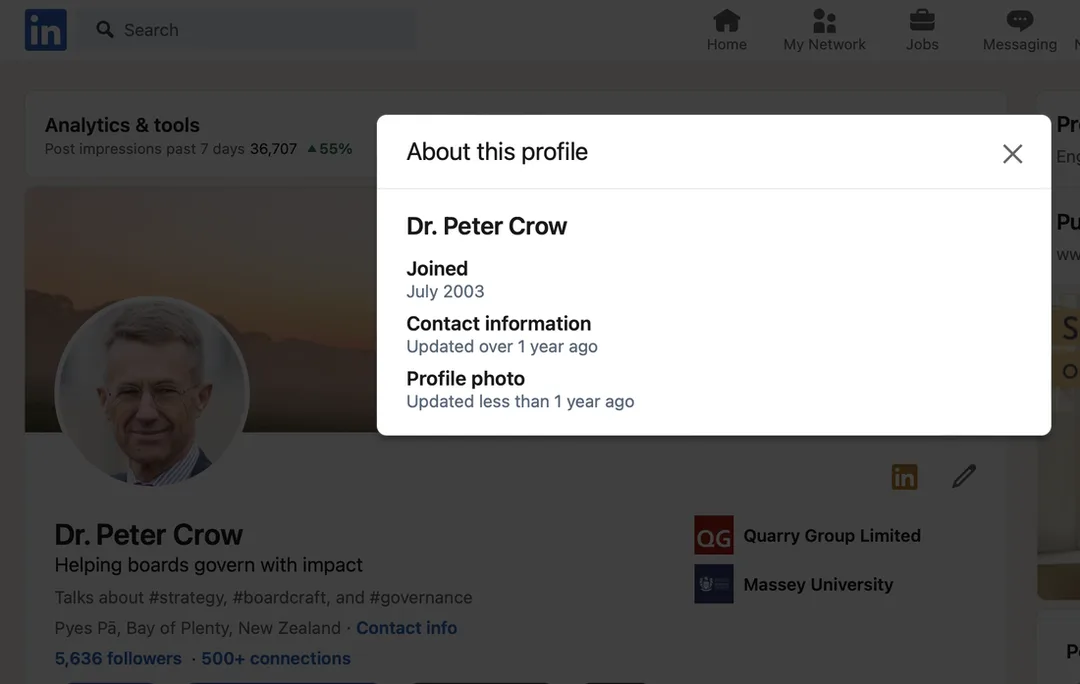
    • Social media: LinkedIn is the only social platform I use. It complements my website and blog, as a forum to comment on topical issues, share articles written by other people and, candidly, reach boards and directors who make use of Linkedin as a trusted source of information. Previously, I used Twitter, but that did not last long for the platform was, I thought, little more than a soapbox for people to shout at each other. When I checked my LinkedIn profile, I was surprised to see I had first used the platform in July 2003, over twenty years ago and just three months after the platform was officially launched by Reid Hoffman!
    • Website: petercrow.com was first launched in November 2001, the month after I left paid employment and founded QuarryGroup, the global board advisory practice. Musings, the blog, came later, in March 2012. The websites were (and remain) online brochures, whereas the blog was created as a place to share my thoughts and test ideas while working on my doctorate. Since 2016, Musings has become a forum for a wider range of board and governance topics. Today, approaching 750 entries later, Musings is read widely, by a global audience.
    Thank you for permitting me to share my experience. I hope anyone considering using social media or a blog as a channel might be encouraged—not only to do so, but to stick at it over the longer term. My journey to date has been fulfilling; I have met thousands of people from many walks of life and, I hope, they have valued the interaction as much as I have.