• Published on

    Is 'good' governance to be desired?

    Picture
    I'm in London for the weekend, an interlude between inter alia commitments hosted by the Institute of Public Administration (a masterclass for board chairs, in Dublin); Lagercrantz Associates (a workshop, in Stockholm); and the Baltic Institute of Corporate Governance (a masterclass and the BICG conference keynote, in Vilnius). 
    To work with people across cultures, countries and contexts is a great privilege. Discussions reveal differences in perspective and approach. Yet, some things are consistent, transcending borders and cultures. One example is 'good governance'. Directors everywhere want to know how to achieve good governance.
    This is a tough request. The problem is that 'good' is a moral qualifier, implying someone or something is morally excellent, virtuous or even righteous. But that is not all it means. A quick check in any dictionary reveals at least 39 other definitions! Which one does a person have in mind they ask for help to achieve 'good governance' or 'good corporate governance'? And what about other directors around the table. Do they have the same understanding or not?
    It's little wonder that directors have become confused about the role and purpose of the board.
    Pragmatically, corporate governance is the means by which companies are directed and controlled (Cadbury, 1992), that is, it describes the work of the board. The objective is to produce an agreed level of performance (however measured). 'Effectiveness' is a more appropriate qualifier than goodness. If something is effective it is adequate to accomplish a purpose; producing an intended result. 
    Returning to the question of how to achieve good governance. After reminding the enquirer that so-called best practices offer little guarantee of success (which one is best anyway), I usually steer the discussion away from goodness towards effectiveness (performance), and suggest that Bob Garratt's Learning Board matrix, and the Strategic Governance Framework are useful starting points for a lively discussion at the board table.
    Once directors acknowledge that high company performance is the appropriate goal, and that success is a function of effectiveness more so than goodness, they start to ask more relevant questions, such as, "What actually matters?" and, "How do I as a director and we as a board become more effective?"

  • Published on

    Does the term 'corporate governance' need a spring clean?

    Have you noticed how 'corporate governance' has pervaded the modern lexicon? The term is used in all manner of contexts nowadays. Some are appropriate and some less so. I wrote about this last year, off the back on a comment made by Rob Campbell. Here's a couple of fresh examples that I've heard used in the last sixty days:
    • ​That "more women are needed in governance". The speaker probably meant more women are needed on boards, to govern. The subtlety? Women are people and boards are structures, whereas corporate governance is a mechanism through which and by which boards act. I doubt more women are needed within the mechanism! Rather, more women are needed on the board, to activate the mechanism more effectively, in pursuit of desired performance objectives.
    • "We'll get governance to look at that", and the variant "That will need governance approval". The two different executives (same forum, I was the facilitator) meant that the matters on the table needed to go to the board for consideration. 
    Both of these examples might sound a little contrived, but they are not. All three phrases were spoken, spontaneously and in my hearing, by capable and well-intentioned people. The people in the room knew what was meant, I think. However, these three vignettes set me thinking. Is our usage of the term 'corporate governance' starting to change—away from the original intention (describe the functioning of the polity, i.e., the board of directors) to something different, or have we become somewhat lazy in our usage? I'd be interested in your views on this one!
  • Published on

    Ideas: Reading to relax and recharge for the journey ahead

    Have you ever arrived at the completion point of a major project, breathing heavily (as it were) having expended much mental and emotional (even physical) energy on the journey, only to find yourself twiddling your thumbs and wondering about the challenges that lie ahead? While some folk are anxious to move on quickly (those defined by busy-ness or a fear of idleness perhaps?), others happily use the time to read—both to relax and to recharge the mind for the journey ahead.
    I have been happily working my way(*) through the following books since completing the doctoral dissertation on 1 June. I commend them to you and, if you choose to open the front cover, trust you gain much enjoyment from the experience.

    Image description
    Why things matter to people, Andrew Sayer.
    Sayer shows how social theory and philosophy need to change to reflect the complexity of everyday ethical concerns and the importance that people attach to dignity.
    Image description
    Akenfield, Ronald Blythe.
    This modern classic gives voice to the inhabitants of a rural village in Suffolk, England, was an early and shining example of what an oral history could be.

    Image description
    Half man, half bike: The life of Eddy Merckx, William Fotheringham.
    A biographical narrative of cycling's greatest rider. On the bike, Merckx had an insatiable appetite for victory. Off the bike, he was sensitive and surprisingly anxious.
    Image description
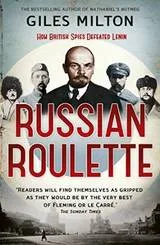
    Russian Roulette, Giles Milton.
    An historical account of how British spies thwarted Lenin's attempts to destroy British India, the intrepid activities of which led to the formation of MI6.
    Image description
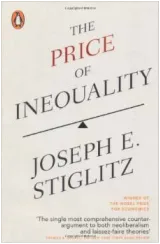
    The price of inequality, Joseph Stiglitz.
    Stiglitz discusses the social impacts and causes of inequality, and the economic and political impacts of what appears to be a growing problem.
    Image description
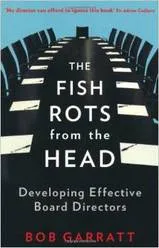
    The fish rots from the head, Bob Garratt.
    Garratt's much acclaimed book, considered a classic by many, clarifies and integrates the roles and tasks of directors, and includes a programme to help them develop the skills and approach required to do their job well.
    Image description
    To the edge of the world, Christian Wolmar.
    A fascinating history of he construction and operation of the trans-Siberian Railway, including its impact on Russian society and relations with neighbours.
    Image description
    One summer: 1927, Bill Bryson.
    A narrative of the reckless optimism and delirious energy that characterised America in the summer of 1927.
    (*) This is very much a work-in-progress. As of 4 July, the 'score' is four books down and four to go, and several new research and board practice ideas to boot!
  • Published on

    I stand corrected!

    A muse that I wrote yesterday asked a series of questions about company ownership. It stimulated quite a bit of interest, albeit for reasons other than I expected. Having discussed the matter with several commentators, I now know why. It turns out that one of the underlying assumptions upon which the muse was based—that companies have owners—was wrong. 
    How often have you heard someone say they 'own a portion of <company name>' or that they are 'company owners'? These statements, while plausible, are actually incorrect. People (individuals, groups, other companies) own shares in a company, they don't own the company (or a portion of the company) directly. The company is an entity itself. It issues shares ('bundles of intangible rights') and these can be owned or traded, as is so ably explained here (see clause 2).
    Thank you to those people that contacted me to point out my error. The phrase 'company owner' has been removed from my vocabulary! However, the notion of 'ownership' remains. I hope this brief note goes some way to putting the record straight. Please contact me if you would like to know more.
  • Published on

    ICMLG'15: Day one wrap

    The first day of ICMLG2015 has been completed, with a very pleasant dinner cruise on Auckland Harbour. The three-hour cruise gave delegates time to enjoy the view back to the city across one of the world's great harbours; to get to know each other better; and, to reflect on the conference to date. The conversations were upbeat—both for the venue and logistics (thanks AUT and Massey) and the topical nature of the presentations and discussion on Day 1. The following points provide the tiniest of glimpses into some of the conversations and thinking so far:
    • Is 'good enough' actually good enough? Many academic researchers pursue high degrees of precision, whereas most consumers (business leaders and boards in this case) are happy to gain insights and a general sense. Several of the delegates, encouraged by Phil O'Reilly's keynote, have openly questioned whether business schools should come down from their ivory towers. Good stuff!
    • Can we go faster? Research needs to change gear, to get ahead of the curve. Instead of reporting what has occurred, researchers need to provide guidance for leaders and for board practice, to explain what can happen to business performance if certain activities or events occur.
    • Does the researcher have a role 'within' the research? Much quantitative/positivist research has the researcher as an external bystander, whereas qualitative/interpretivist research approaches often expect the researcher to position themselves 'within the research'. The risks of the latter are many, but the relevance of much of the research produced by the former is questionable. the research agenda needs to move beyond simply counting things or describing things. I think a middle ground exists. However, explanatory research inspired by realism is not well understood in business schools—yet.
    • The chasm between business and research simply must be bridged. That many businesses do not think of contacting business schools to commission research is an indictment on business schools, not business. Business researchers need to possess business experience and acumen, so they know what they are looking at when they investigate business phenomena. More work—much more—is needed on this score.
    • Are business researchers tantalisingly close to a breakthrough? Thomas Kuhn (The structure of scientific revolutions) spoke about this decades ago. Much research simply builds, incrementally, on what has gone before. Assumptions are reinforced, myths perpetrated and are mistakes legitimised. However, every so often, a step-change occurs. Kuhn called it a paradigm shift. Several of the delegates think that business research—and board and governance research in particular—is on the cusp of such a paradigm shift.
    In addition, many new relationships were formed, ideas for collegial working groups were discussed and several invitations were issued for cross-border and multinational cooperation. (Gosh, that sounds like the OECD or the United Nations!) I'm looking forward to seeing and hearing how the discussion builds and develops on Day 2, starting with Andrea Thompson's keynote.
  • Published on

    ICMLG'15: Breaking to mould—new perspectives on executive development

    Dorothy McKee, University of Ulster, Northern Ireland, presented a fascinating paper that explored the extent to which executive development (read professional development for executives) that focusses on leadership, governance and business ethics has a positive impact on business performance.
    The research was insightful, for it bridges the oft-discussed chasm that exists between academia and practice. Courses bathed in research rigour and practical application are far less common than you'd expect. I have been critical of the way many academics happily resist any activities that might see them becoming tainted by 'the real world'. Yet McKee walked right into the centre of the issue, and intentionally so, to try to gain some understanding as to what is really going on and what needs to go on to ensure executives are appropriate equipped to to lead and direct well. She surveyed and interviewed a group of business executives who are also graduate business students (Masters level). The findings were very revealing:
    • Leadership is a key feature that differentiates effective from ineffective boards, and collaborative leadership was particularly important
    • Many executives believe that gender balance has a positive impact on leadership decision-making, event though the research does not categorically support this perception
    • Effective interpersonal relationships are crucial to optimise the workings of the board (read: board processes and practices)
    While none of these insights were particularly revolutionary, they reinforce the "I think this is correct but can't put my finger on it" perceptions held by many working directors and business executives. The insights provide great guidance for professional bodies (including the Irish Institute of Directors) to inform the development of their professional development programme. They also speak volumes to academics, to get busy and to produce some meaningful theory-based models and frameworks to support the emerging perceptions of skilled and insightful executives.
    Given the overlap between our research interests and professional backgrounds, McKee and I plan to get together in a few months time, and advance these ideas, with a view to developing some new professional programmes for working directors. If you are interested in learning more, including the possibility of becoming an early adopter, please contact me.