• Published on

    On leadership: there is no silver bullet

    The production of silver bullets—panaceas—is a growth industry. New books, all claiming to contain "the" answer, appear in the bookstores almost daily. Sadly, many are far more self-indulgent than helpful to the reader. Yet we lap them up, as we search for ways to be more effective in our professional and personal lives.

    I've become a bit jaundiced by the self-help gravy-train of late, however one of the books from my summer reading list has restored my faith somewhat: History Lessons: what business and management can learn from the great leaders of history. Jonathan Gifford, the author, asserts that there is no one model leadership model or kind of leader that can hope to be effective in all situations. Leadership is a complex phenomenon, and different attributes need to come to the fore in different situations. What a breath of fresh air.

    Gifford identifies eight skills and abilities that represent many of the essential things that any leader should be able to do and—ideally—be good at. He uses great leaders from history (not all of whom will be well known in the Western world) to illustrate his points.
    • Changing the mood
    • Boldness of vision
    • Doing the planning
    • Leading from the front
    • Bringing people with you
    • Making thing happen
    • Taking the offensive
    • Creating opportunities

    The book is easy to read. I commend it as a great investment, to aspiring and established leaders. But be warmed: it will make you think about your current leadership situation.
  • Published on

    What research can we accept then?

    I had a fantastic meeting with my PhD supervisor earlier this week, to review my approach to the research methodology chapter of my thesis. When we stopped for some lunch and a walk outside, James showed me two articles from the 19 October 2013 issue of The Economist. They blew my mind. Entitled How science goes wrong and Trouble at the lab, the articles outlined how much of the so-called scientific research conducted by academics is actually a load of rubbish. For example:
    • Last year researchers at one biotech firm, Amgen, found they could reproduce just six of 53 'landmark' studies in cancer research.
    • A leading computer scientist frets that three-quarters of papers in his subfield are bunk.
    • In 2000–10 roughly 80,000 patients took part in clinical trials based on research that was later retracted because of mistakes or improprieties.

    The examples and supporting narrative floored me—it was sobering reading. The points about how research is conducted, how research articles are reviewed and, most importantly, how research is funded (the funding mechanisms drives the behaviours) were enlightening. The lingering question in my mind, having dwelt on these articles over the last two days, is this: just what research can we accept then? The answer probably lies in the maxim recorded in the first sentence of the 'goes wrong' article: 'trust, but verify'.

    The exercise was a timely and helpful wakeup call for my own efforts, to ensure my work is 'good science'. Thank you James.
  • Published on

    Reading list: all queued up

    I had a wonderful Christmas Day yesterday with my family: giving and receiving gifts, eating together, telling stories and relaxing. This year, I was blessed to receive three books (I'd sent some signals), and no e-anything!  I have come to really enjoy reading for pleasure in recent years, as a diversion from the copious volume of journal articles and books that I have to deal with for my research. The books I received as gifts are:
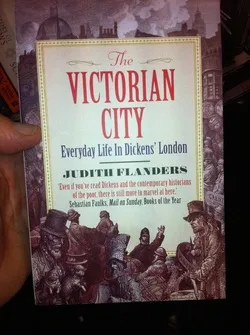
    • Victorian City by Judith Flanders
    • One Summer by Bill Bryson
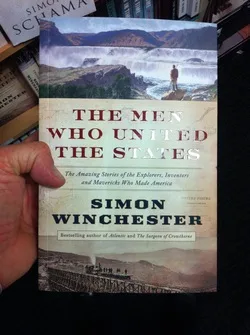
    • The Men who United the States by Simon Winchester

    I am seriously tempted to start reading these straight away, but two books currently on loan from the local library need to take priority:
    • Cronkite by Douglas Brinkley
    • History Lessons by Jonathan Gifford

    In case you are wondering whether I am a glutton for punishment, I also have two books on order from Amazon:
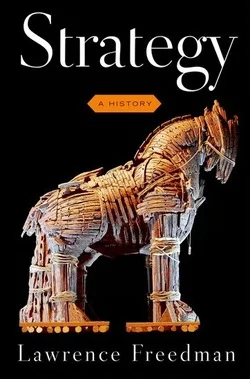
    • Strategy: a History by Lawrence Freedman
    • The Equation That Couldn't Be Solved by Mario Livio

    Given the rate at which I read, these books are likely to keep me gainfully occupied well into Autumn! Do you read? If so, what titles are you currently enjoying?
  • Published on

    Holiday reading plans

    The task of exposing the twelfth and last page of my desk calendar, in a couple of days' time, signals the arrival of the Christmas season in our household. As happens each year, my mind moves to the prospect of spending time with family and friends; to BBQs; to warm weather (as happens when one lives in the Southern Hemisphere); and, to the books that I'd like to read over the holiday period. This year, there are just three titles on my list. Hopefully one or more of them finds their way under the Christmas tree later in the month!

    Image description
    The Victorian City, by Judith Flanders.

    Flanders has written several books about Victorian London, none of which I've read. This particular title caught my eye when I was browsing in a local book store, perhaps as a result of my heightened awareness of the great city following my recent visit there.
    Image description
    The Men who United the States, by Simon Winchester.

    Winchester ranks amongst my favourite story-telling authors. I've enjoyed The Surgeon of Crowthorne, A Crack in the Edge of the World, and The River at the Centre of the World in the past. If this new title is comparable, then I suspect that I'm in for a treat.
    Image description
    Strategy: A History, by Lawrence Freedman. 

    This newly published title has received critical acclaim from several well-regarded reviewers. It offers an expansive view of strategy and strategic thinking, from ancient military strategists (Achilles, Sun Tzu, Machiavelli) to modern business strategists (Drucker, Sloan). At 768 pages, I may take a while to get through this one!
  • Published on

    When "tongue-in-cheek" cuts close to the bone

    A somewhat satirical opinion piece, written by Joe Bennett, caught my eye this morning. As I read it, over my morning coffee, I smiled, for the opinion piece is very well written. But afterwards, as I sipped on my coffee again, I winced, for the images conjured in Bennett's mind and exposed through prose, cut a little closer to the bone than many who are au fait with boards and governance would care to admit.

    Most of the directors that I know, and boards that I am familiar with, work hard, as they seek to optimise business performance and build shareholder value. They read their board papers carefully and critically before meetings, prepare well and ask searching questions. They also spend time understanding the business of the business, so they can contribute meaningfully to strategic discussions, and make informed decisions about the strategic future of the business. In other words, they engage actively in the process of governance.

    However, some (perhaps the majority?) directors and boards still don't engage in this way. They adopt a more passive modus operandi of monitoring past performance. They spend little, if any, time considering strategic options and marking out the future of the business. In extreme cases, they behave as Bennett suggests. Sadly, the self-serving, fat cat imagery described by Bennett will remain part of the psyche—for as long as it continues to describe how some boards behave at least. I long for the day that such imagery becomes folklore, of the way things used to be, but no longer are.