• Published on

    Is an elephant [in the room] obscuring our view?

    Picture
    ​The rise of artificial intelligence capabilities over the past 4–5 decades (you read that correctly, not 4–5 months or even 4–5 years) has brought some awkward questions into stark relief.
    • How might AI enable or impair our strategic priorities?
    • Are the data in management reports to the board accurate, and conclusions credible?
    • As directors, we’re supposed to govern with impact. But what matters most amongst the many priorities in the reports from management—and how might we decide?
    • Are the so-called experts that management keeps putting in front of us actually experts, or are they just AI-junkies who have generated content that appears to be informed?
    These questions, and many others like it, highlight an overarching question that has become very real for many directors, more so as the onset of AI-generated content has started to pervade boardrooms, executive suites and beyond:
    The report behind the question brings the problem into stark relief: Many conclusions developed from academic research and peer-reviewed articles may not be reliable. Indeed, many may not be worth the paper (screen) they are written on, despite the seemingly attractive arguments put up by the authors.
    This being the case, how might directors validate the data and reporting in board packs?
    If boards are to govern with impact, they must first ensure the reports they receive are not only accurate but credible. This is a demanding expectation, but it is the baseline. Fortunately, we are not the first people to ponder this matter: This muse explores some of the core considerations.
    The elephant in the room is not AI, per se; it is the directors’ ability to distinguish between what matters and what does not—the signal and the noise.

  • Published on

    Keeping up appearances

    Picture
    Today, on the third day of an intrepid journey through several Eastern European countries, we have been exploring Kraków Stare Miasto—the Old Town—searching for glimpses of how life was lived in the past. Back streets and less-trod paths, away from trinket stands and touts, are my happy place, for they offer opportunities to peer beyond facades and veneers. ​​
    This scene was one amongst several that caught my attention today. The seemingly decrepit building itself was far from remarkable—but then I noticed two signs—clues to what lay inside: a five-star hotel named after a Polish polymath, and a Michelin-starred restaurant. Who knew? 
    As I looked at the building and signage, a woman sauntered past, on the phone to an unknown soul and seemingly oblivious to her surroundings. My mind wandered. Who was she speaking with and about what? Was she a local or a visitor? What were her circumstances?
    The imagery and parallels with board work are stark. Statements written in board packs may seem complete and accurate, but they may not be. Often, there is more to the story than what is first ‘seen’ in the board pack. Depending on how eloquently the papers have been written, directors may find it easy to form opinions quickly—jump to conclusions, even. Directors should resist such urges! Boards have a duty of care to look beyond the facade, to gain a more complete understanding through discovery and debate, before deciding. Some boards do this well; some are well-intended but struggle; and yet others appear to be motivated by looking good (as evidenced by complying with various ‘best practice’ recommendations and corporate governance codes) than doing what it takes to operate as a high-performing unit.
    When the pretence of keeping up appearances is stripped away, how does  the board you serve on stack up?
    Wittgenstein cautioned people to reserve judgement, for what seems to be so may not actually be so.
  • Published on

    The map is not the terrain

    Picture
    Since time immemorial, man has sought to explore: natural curiosity has led to many discoveries, of previously unknown lands, flora and fauna, and more besides. Innovations and inventions too; discoveries enabling further exploration, and on it goes. Through the arc of history, exploration and discovery has been based upon empirical techniques—going and having a look.
    About six decades ago, Jane Goodall put this approach to work as part of her research to learn more about chimpanzees. Her assessment was, straightforwardly, that if reliable understandings of how chimpanzees socialise were to be achieved, they needed to be watched, directly, over an extended period, as difficult as that might be. The extended period is necessary because behaviours change when a new actor arrives. Thus, Goodall’s study could not begin in earnest until the chimps became more familiar with her and reverted to behavioural patterns thought natural. When behaviours reverted, as Goodall thought they might, several new discoveries not previously known were made.
    The approach Goodall used, and her discoveries, demonstrated the high value of longitudinal ethnographic techniques when studying social groups and their behaviours. And yet, while this has been understood for decades, centuries even, its application to my field—boards—is rare. Instead, since the dawn of board research, the dominant paradigm has been to collect data about directors, the composition of the board and other data, from outside the boardroom, typically from public databases, interviews and surveys. Such approaches have been deemed acceptable because researchers have found it very difficult to enter the boardroom. Given the only place the board and its work actually exists is in the boardroom, and that the board is a social group, surely the gold standard must be to conduct long-term studies of boards in session (through direct and non-participatory observation), as Goodall studied chimpanzees?
    This issue, of using appropriate techniques that explore the subject of interest, not a proxy, was made plain by an ex-military colleague recently; his pertinent remark was, simply, “The map is not the terrain.” What seems to be the case (on the map) may not be the case (in reality). The underlying message was confronting: if you want to really understand, go there, gain first-hand knowledge. And so it is with board research. If we really want to understand how boards work, and how boards actually make decisions and influence performance, not how directors say they do when they are interviewed, watch them over an extended period. Then, possibly, you might be able discern what happens; how directors act and interact; and, even, spot associations between a strategic decision and some subsequent change in organisational performance. The findings will be contingent, of course, because the group is social, the situation complex, and external influences are many and varied.
    To date, fewer than a dozen longitudinal observation studies, of boards going about their work, have been published. And, somewhat awkwardly, the reported findings present a different perspective from that commonly asserted by others informed by research conducted away from the boardroom: The capability of directors (what they bring), the activity of the board (what it does), and behaviour (how directors act and interact), appears to be far more important than the structure or composition of the board.
    Now, as I wait to board a flight, for yet another international trip to work with boards, my colleague’s comment is ringing in my ear. And with it, a question, “What guidance will you rely on, given the importance of governing with impact?”

  • Published on

    Inflection points: The times, they are a changin'

    Picture
    Have you ever thought about the arc of your career, and how things change over time—not only preferential changes, but societal and technological changes too?
    My first university degree (a bachelor with first-class honours in computing technology, manufacturing systems and management science) marked me as an engineer, of sorts. But five years into my work career, I was invited to set the programming skills down and to take on a ground breaking project. And I did, and it was good. Sales, leadership and international business development roles followed. Then, in 2001, I stepped away from an executive career having realised a preference to become a consultant or advisor. This, and a post-graduate diploma in business that followed, saw me re-marked, as a social scientist. Most recently, in 2016, I completed a third tranche of study, this time a doctorate, in corporate governance and strategy, to support my passionate interest in helping boards govern with impact and realise organisational potential. Retraining and continuing professional development has been a constant thread through my career since I first graduated from university.
    Clearly, my professional preferences and interests have moved over the arc of my professional career. And technology has too. Telex machines were de rigueur when I got my first job, but the onset of facsimile machines saw telexes and their operators cast off. Later, email replaced internal and postal mail. The arrival of the Internet, smart phones, and apps changed everything again. Jobs commonplace in 1984 simply do not exist any more, and untold numbers of new job titles have appeared too.
    Today, humanity stands on the cusp of another change: a transition some say will be transformation, a paradigm shift, in a Kuhnian sense. The emergence of artificial intelligence (AI), and its application to routine tasks (notably but not only administrative and repetitive tasks), portends the demise of a whole swathe of roles, just as jobs entitled telegram runner, mailroom sorter, and telex operator have been consigned to the annals of history.
    One area where the onset of AI strikes close to home is administrative support for boards: the role of company secretary (or, board secretary)—that role that helps prepare board agendae, record minutes of meetings and ensure various compliance items are attended to. I've been trialling Zoom's AI companion (a meeting recording system), Microsoft Co-pilot and a few other tools to document conversations. The results are astounding. Now, I am wondering whether [human] secretarial support will be required in the boardroom in the near future, for the quality of the outputs from AI tools is already pretty good. 
    Assuming these tools continue to get better, which they will, what of all the people who have trained as board/company secretaries (or the modern moniker, governance professional)? Might these people now be standing at an inflection point, even on the cusp of obsolescence? Or, will boards still need a human to check what is written and what is prepared? 
    I'd really appreciate hearing your thoughts on this, especially company secretaries and governance professionals, for whom the onset of AI has the potential to completely disrupt career choices.
  • Published on

    Back into (writing) gear

    Picture
    Over the past couple of months, I have been deeply embedded in a pro-bono advisory engagement, and fulfilling several speaking and capability-building assignments—to such an extent that my writing has languished. Progress on Boardcraft stalled, and my last blog entry was back in May. But now, with those commitments in hand, I have surfaced to draw breath, scan the vista, and to begin writing again.
    Starting next week, I will pick up my pen (keyboard!) once more, to share my thoughts and observations on corporate governance, the board's role in driving organisational performance, and other topics that catch my attention. Expect a new muse some time on the first Monday of each month.
    As we get going again, may I ask a favour? Please tell me what you want to know about (as a comment to this post or via private message) and I'll do what I can to respond. This is a genuine offer to explore anything of interest—except if it is illegal or immoral, of course!
    For now, have a great weekend. See you Monday!
  • Published on

    Looking back, for guidance to move forward

    Picture
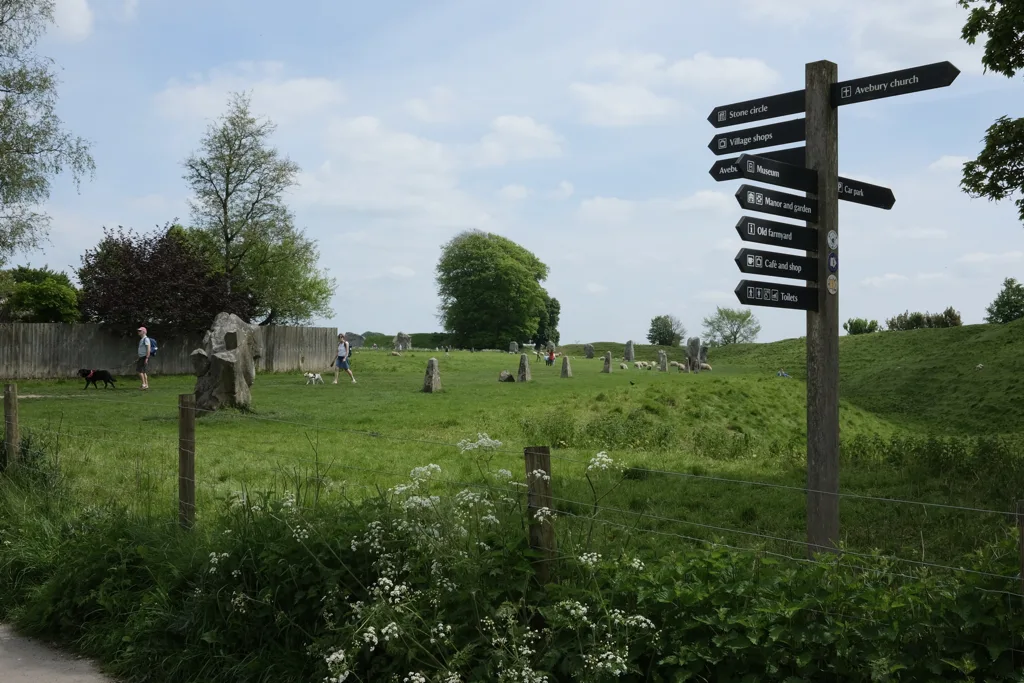
    Questions of where we came from, why various things happened or evolved as they did, and what we can learn from them to guide us as we live our lives fascinate many people—me included. From neo-lithic henges and stone circles, to the development of more recent industrial-scale enablers (notably, the wheel, the printing press, manufactories, the motor car and the Internet), man has long been fascinated with history, innovation and possibility. When we ponder historical developments and innovations such as the examples noted here—and other foundational things like language, writing, mathematics, ethics and civics—we gain insight to apply in our daily lives or use as a springboard to try to make new discoveries. This maxim applies personally, in family and social groups, and more broadly in society—and if we ignore it, it may be to our peril.
    The idea of learning from those who have gone before us is applicable in organisations too. How else would individuals and teams know what to do? This is what learning and development departments organise, and why professional development programmes exist.
    In the realm of boards and boardwork, relevant questions include three I have been asked most often over the past two decades: What is corporate governance; what is the role of the board; and, how should governance be practiced? That these questions are asked so often suggests directors (at a population level) lack the knowledge needed to be effective.
    Helping directors and boards govern with impact is a calling for me, so when Mark Banicevich invited me to explore the history of corporate governance—well, make a fleeting visit across a few high points in the Western context—I jumped at the chance. Hopefully, the commentary is helpful. Do let me know whether you agree or disagree with the various perspectives, and why, because I’m no Yoda (use the comment section below, or contact me directly). Life is a learning journey for me as well!
    This conversation is the third in a series recorded recently. Recordings of the first and second conversations are also available.