• Published on

    Spring speaking and advisory tour: Reserve your space now

    Picture
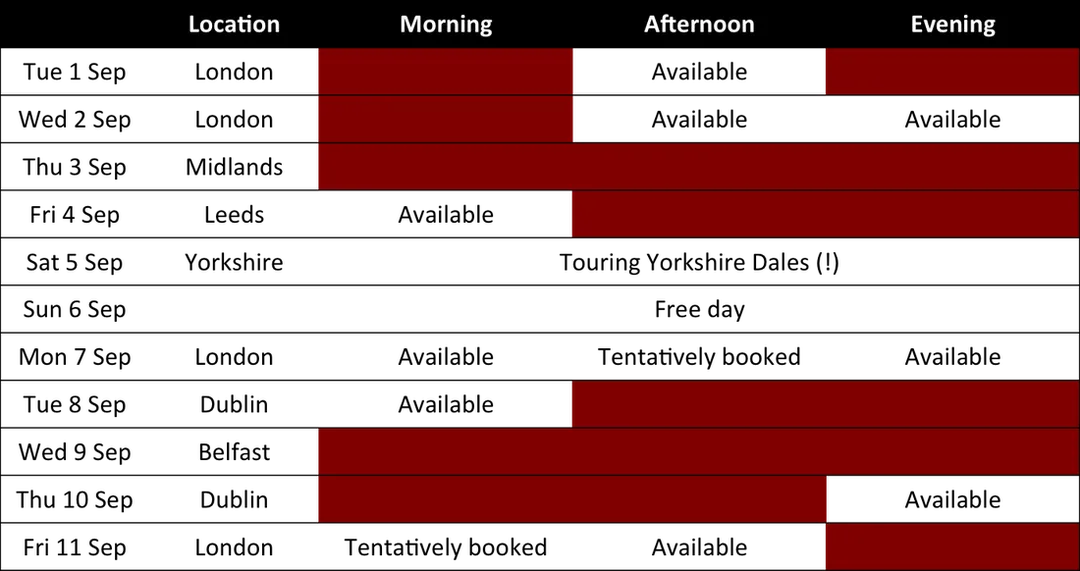
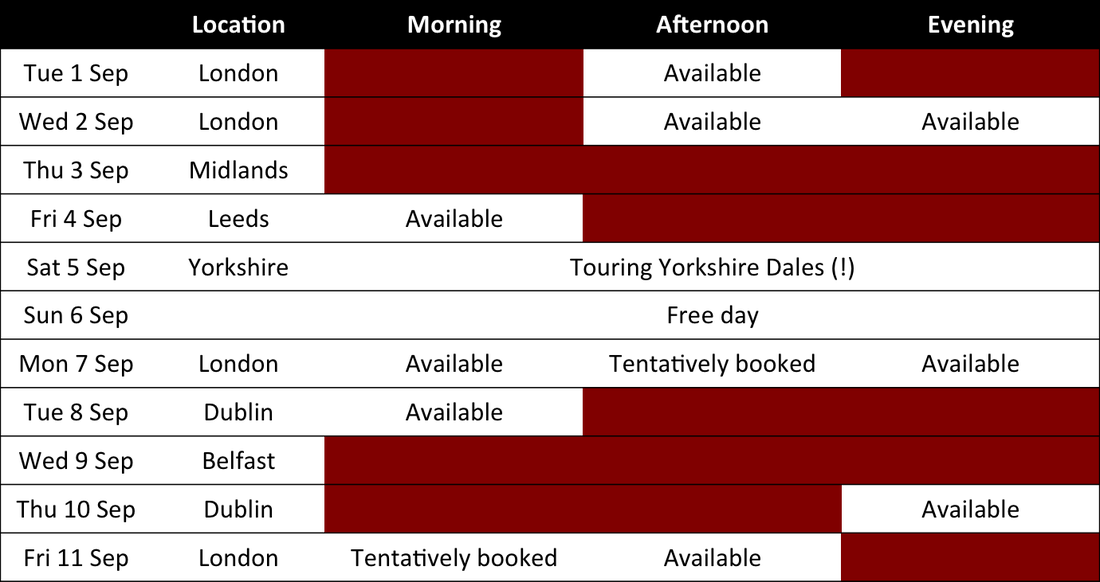
    Plans for my next trip to Great Britain and Ireland—a speaking and advisory tour to share insights from my latest research and practical experience in boardrooms—are starting to come together. My schedule is filling up—only a third of the available slots are still available. Thank you to everyone who has already reserved space. The dates and times you have requested are secure.
    If you are based in London (or the home counties), Leeds (or elsewhere in Yorkshire) or Dublin; and you want me to address your board or executive team, discuss a future speaking or advisory engagement, or chat privately about a difficult challenge, please get in touch soon to avoid disappointment. I look forward to hearing from you, and then to discussing any aspect of board practice, corporate governance, strategic management, value creation or business performance that is of interest to you.

  • Published on

    REDUX: Towards a 'strategic board'

    Many commentators—academics and practitioners—agree that corporate governance is complex and difficult to get right. In the context of maximising business performance, boards must satisfy many demanding (and competing) priorities including shareholder expectations; legal and compliance requirements; the management of risk; the determination of future direction; and, the hiring (and sometimes firing) of the chief executive. Directing is a busy job, and it is one that takes time and commitment to do well. The steady stream of boardroom 'fails' in recent years (HSBC and Christchurch City Council amongst many others) and indiscretions (FIFA) suggests many boards are not doing their job as well as they need to. Why is this?
    • Are director's schedules too full to give each board the necessary time and effort?
    • Are boards defaulting to the arguably 'easier' task of performance monitoring, and disregarding strategy and future value?
    • Are directors simply not asking the right questions?
    • Is the safety of consensus thinking suppressing the debating of diverse options?
    Many aspects of boards and board practice have been studied in recent decades including structure, composition and boardroom behaviour in an effort to understand how boards work and how they might contribute to performance. Independent directors have been held up as being crucial to boards maintaining distance from the chief executive and to the effective oversight of performance. Gender (and other) diversity has been promoted heavily in many quarters. The forming of a strong team through high levels of engagement and desirable behaviours has also been explored. As yet, none of the research has exposed any conclusive results in terms of increased company performance and value creation.
    Imagine what board meetings might be like if the focus changed. They'd probably last longer. Directors would read their papers before meetings, and they would be actively engaged. There may be heated discussions. Necessarily, directors would sit on fewer boards. But perhaps, if boards were bold enough to change their focus, they might become more effective. Perhaps. Here's hoping.
    The original version of this muse, posted in December 2012, is available here.
    The prevailing theory of board–management interaction (agency theory) that underpins much of the current understanding of how boards work (or should work) appears to be flawed. It assumes that management is opportunistic and cannot be trusted and, therefore, needs to be closely monitored. Yet none of the structural provisions based on the theory (independence, incentives, various structures) have been causative to increased performance, despite considerable effort over many years.
    Rather than continue to dogmatically pursue a flawed model, we need to move on. The goal posts need to be shifted—from a focus on compliance, structure and composition to a focus on value creation. The notion of a strategic board suggests a focus on future performance and strategy; on high levels of engagement to understand the business and the market; on critical thinking and an independence of thought; and, on robust debates which explore a wide range of strategic options (diversity of thought being considered crucial to avoid consensus thinking). 
  • Published on

    Corporate governance: Is it time to return to first principles?

    Picture
    Thirty years ago, the term 'corporate governance' rarely rated a mention. However, an awareness of boards and corporate governance has grown in the minds of the general populace as a steady stream of reports—of corporate failures, scandals, moral failures, hubris, incompetence, judicial investigations and sanctions—have been published in the popular press. In fact, the term has entered the lexicon to such an extent that it is routinely mentioned and all manner of faults are attributed to it, even though it is rarely defined. FIFA, HSBC and now Renault F1 are recent examples. Further, the systemic response to each 'wave' of corporate failures has become quite  predictable: The introduction of hard law (statutory regulation) and, in the case of publicly traded companies, stricter codes of compliance. The goal of such measures is to prevent reoccurrences.
    While well-intentioned, the costly actions of legislators and code writers have not led to any discernible improvements in corporate behaviour or performance. Consequently, some groups have become quite vocal; the reputation of boards and business more generally have become tarnished as a result. Worse still, the research community, which has been studying boards for forty years or more, has yet to propose any credible explanations of how boards could or should work. That this much effort has been expended without 'success' (excepting a raft of spurious correlations) is a travesty of justice. It also points to a deeper problem. Our underlying assumptions could be wrong.
    The evidence suggests that less is known about boards, board practice, director behaviour and corporate governance than what most of us have assumed to be the case. This is not good! However, all is not lost, for two pathways to knowledge seem to be available. One option is to continue to use existing tools and techniques in pursuit of a deterministic 'truth' about boards (assumption: on the right path, just not there yet). The other option is to take stock, on the chance that the contemporary understanding of ownership, shareholding and control; and popular conceptions of board practice and corporate governance are actually founded on a less-than-firm footing. But that would mean putting popular models and ideas to one side, which could be a bitter pill to swallow. Which is the best option then? Might a return to first principles be necessary? I'm starting to think so. What do you think?
  • Published on

    ICGN, IGW, EURAM : Post-conference reflections

    • All of the host organisations rang great conferences. Thanks ICGN, Toulouse Business School and Kozminski University! That you attracted and hosted delegates from around the world, and stage-managed them to the correct venues and activities at the correct time, and fed and watered them, and attracted great speakers like Bob Monks, Martin Wolf and Lech Wałęsa to speak is a testament to the quality and reputation of your organisations.
    • The 20th ICGN annual conference was a lavish affair with close to five hundred delegates in attendance. Of the three conferences, this was the most commercially focussed one. Most of the delegates were active in the institutional investor community. Serving company directors and academic researchers were very much in the minority. While this conference has a well-established constituency, I could not help but think that the quality of the conversation, and the impact on board practice and business performance, would be enhanced if more serving company directors and board researchers were in attendance, both to speak and to participate in the debate. 
    • The International Governance Workshop, in Barcelona, was the smallest of the three conferences—by a long way. Fewer than thirty board research scholars assembled to discuss emergent themes. Yet, the quality of the discussion was outstanding. That the conference has managed to attract such a strong cohort of esteemed scholars is amazing, especially when the cost of getting to conferences and the plethora of choices is taken into consideration. This workshop is on my 'must attend' list.
    • EURAM is a good forum within which to exchange management ideas. I overheard many enthusiastic discussions in hallways and over coffee and food. It's a pity that the conference only attracts academics (which is perhaps not surprising, as EURAM is an academy after all). Notwithstanding this, the EURAM executive may wish to take steps to bridge the academy–practice divide by inviting more business people, to address the conference and to participate as delegates. 
    • A concern about EURAM? Membership is steady at about 1200 members. About 1300 papers were submitted, of which 650 were accepted onto the programme after the review process (the corporate governance special interest group received 60 papers, of which 46 were accepted). These numbers make good reading, until the surface is scratched. It turns out that EURAM experiences a 70 per cent turnover in membership each year (yes, seventy per cent)! That EURAM experiences this level of churn should be ringing alarm bells. Something about the organisation is broken, or are academics simply being mercenary (buying a membership only for those years that they attend the conference)?
    The last three weeks have been great, although progress towards 'effective corporate governance' remains torturously slow. Notwithstanding this, I met some amazing people and learnt a lot. The challenge now is to assimilate the newfound knowledge, and to incorporate it into my advisory work and research, so that directors and boards can gain benefits as well. If you wish to know more, or arrange for me to speak with your board, please contact me directly.
    The annual European Academy of Management conference is done for another year. Consequently, my commitments in the UK and Europe are also done. As I make way home (my favourite destination!) and reflect on both EURAM and the two preceding conferences (International Corporate Governance Network and International Governance Workshop), the following ideas and observations come to mind:
  • Published on

    EURAM'15: Governance in social enterprises

    If you were to look across the board research landscape, the view would be dominated by studies of large, publicly-listed (and typically Anglo–American) corporations. Small-medium enterprises,  family-owned businesses and businesses in emerging economies have received far less attention (although this is starting to change), and social enterprises even less so.
    Saskia Crucke, of Ghent University in Belgium, is interested in social enterprises and, more specifically, in the governance function. She reported the preliminary results of a study that is considering governance in a category of social enterprise called Work Integration Social Enterprise (WISE). WISEs help disadvantaged or disabled people enter or return to the workforce.
    Crucke is using an organisational behaviour construct called 'faultlines' to try to understand why some WISEs perform better than others. She used a two-stage questionnaire (the first to ask the chairman and CEO about the WISE, and the second to ask all board members questions about decision-making and performance) to collect data from several dozen Belgian WISEs for analysis. Her preliminary findings show that where faultlines exist, decision-making is impaired and organisational performance is weaker.
    While this result may sound self-evident to some, it does provide a useful platform for further (qualitative) research, to discover how and why decision-making is compromised, and to inform board member recruitment. If faultlines can be minimised, then higher levels of organisational performance may be possible on an on-going bass. For a sector that is typically cash-strapped, that would be a very good outcome.
  • Published on

    EURAM'15: So, what about outside directors?

    I had the pleasure of chairing a corporate governance topic session at EURAM this year, in which three papers on outside directors were presented. Each of the studies were fascinating. The first one explored director motivations, and the other two added emerging market contexts (China and India):
    • Axel Walther, Germany, presented a very interesting paper about the motivations of non-executive directors and board effectiveness. While many board researchers limit their investigations to a limited range of established board–management interactions theory (including most often agency theory), Walther and his colleagues incorporated organisational behaviour and psychology literature and theory in an effort to understand director motivations. This inter-discipline approach offers exciting possibilities for board research. While the results of the case research are preliminary, they did demonstrate that the motivational drivers of non-executive directors are complex, and that a straightforward split between intrinsic and extrinsic factors is somewhat simplistic. A more subtle differentiation is needed. The team has identified some possibilities. More analysis is now underway, to try to dig deeper into the data to try to isolate triggers to various motivations. From there, it may be possible to re-approach the original question, of the relationship between director motivations and board effectiveness.
    • Wenxuan Hou Hou, a Chinese national living and studying at University of Edinburgh, has been investigating non-executive directors in Chinese firms. Prior studies of director behaviours have reported mixed results. Wen decided to extend the research into an unstudied area—behaviour relating to dissenting director decisions. In China, voting in public company boardrooms must be made public. Thus any dissenting votes should be identifiable. Interestingly, the analysis conducted by Wen showed that a tiny percentage of the decisions made by Chinese boards included any dissenting votes, suggesting the voting tended to be unanimous. Wen concluded that it was unlikely that all directors agreed with proposals all of the time, but that other factors including 'power' and 'cultural norms' were likely to be moderating the decision preferences of directors. This raised the question of alignment. Were directors just following the leader (the chairman or the chief executive), or were they genuinely in agreement in proposals requiring decisions. Wen couldn't answer that question. However, he did say that further (qualitative) research might reveal what is actually going on. I suspect direct observations within Chinese boardrooms will be required, but that prove to be a difficult challenge!
    • Tara Shankar Shaw reported the findings of his quantitative study of data collective from Indian companies on the Bombay Stock Exchange (BSE500). Shaw wanted to find out whether institutional theory might offer explanatory support for any relationship between non-executive directors and firm performance. The audience pricked up their ears, because it sounded as though Shaw might be going to reveal a cause-and-effect relationship from the data. However, and to Shaw's credit, causality was not claimed (straightforward causality is rare in natural science and unheard of in social science). Rather, he reported mixed results (as would be expected in a quantitative study of this type). Shaw study was helpful, in that it added to the growing list of studies that challenge suggestions that any given board structure or composition is conducive, let alone causal, to firm performance.
    Perhaps the strongest message from this session was one that wasn't explicitly stated: that statistical analyses of quantitative data can only ever reveal correlations between variables (attributes) of interest—because variable measure change, not reasons. My hope is that researchers start to move beyond simply counting things, and soon. Precious research time would be far better spent collecting primary data, ideally from inside boardrooms, to understand what boards actually do, and then to draw conclusions from there.