• Published on

    On democracy, morals and business performance

    Image description
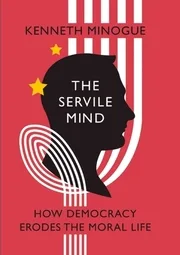
    As 2015 gives way to 2016, many people will be reflecting on the past and looking to the future; thinking about what was and what might have been. I'm no different. One of the books I've been reading while pondering the past and the future this week is The Servile Mind by Kenneth Minogue. A friend recommended it—he wondered whether the commentary might be applicable to directors and boards. My response, having read half of the book so far, is an unreserved 'yes'! Here's the note on the flyleaf:
    One of the grim comedies of the twentieth century was that miserable victims of communist regimes would climb walls, sim rivers, dodge bullets, and find other desperate ways to achieve liberty  the West at the same time that progressive intellectuals would sentimentally proclaim that these very regimes were the wave of the future. A similar tragicomedy is playing out in our century: as the victims of despotism and backwardness from Third World nations pour into Western States, academic and intellectuals present Western life as a nightmare of inequality and oppression.
    In The Servile Mind: How Democracy Erodes the Moral Life,​ Kenneth Minogue explores the intelligentsia's love affair with social perfection and reveals how that idealistic dream is destroying exactly what has made the inventive Western world irresistible to the peoples of foreign lands. The Servile Mind looks at how Western morality has evolved into mere "politico-moral" posturing about admired ethical causes—from solving world poverty and creating peace to curing climate change. Today, merely making the correct noises and parading one's essential decency by having the correct opinions has become a substitute for individual moral responsibility.
    Instead, Minogue argues, we ask that our governments carry the burden of soling our social—and especially moral—problems for us. The sad and frightening irony is that the more we allow the state to determine our moral order and inner convictions, the more we need to be told how to behave and what to think.
    Humbly, I commend this book to all directors who want to govern well and make a difference in 2016.
  • Published on

    "Rise but seldom..."

    In November 1787, George Washington offered this advice in a letter to his nephew Bushrod:
    “Rise but seldom—let this be on important matters—and then make yourself thoroughly acquainted with the subject. Never be agitated by more than a decent warmth, & offer your sentiments with modest diffidence—opinions thus given, are listened to with more attention than when delivered in a dictatorial stile. The latter, if attended to at all, although they may force conviction, is sure to convey disgust also.”
    What profound advice. Could it still be relevant in the always-on and rather selfish culture that has pervaded the twenty-first century? We live in a world infested by sound-bites in search of ears. Sadly, many offer little more than noise. The paucity of in-depth or critical thought is stark, yet we continue on—often blindly—in pursuit of change.
    If real progress is to be made to effect change, whether it be in the halls of power, boardrooms, executive suites or on the factory floor, might a 'rise but seldom' philosophy offer more hope than the prevailing sound-bite culture? On Washington's example, the answer could be 'yes'.
  • Published on

    Health sector seminar: Board governance, a reality check

    Every day, around the world, leaders in the health sector face a formidable challenge. On one hand, insatiable demands press in as people expect physical and mental health (foundational to our well-being). On the other, resources are limited—providers simply can't do everything. Consequently, tough choices need to be made, to ensure the appropriate services are delivered, efficiently and effectively. The complexity of the problem means 'best practice' answers are few and far between. However, progress should be possible if a clear sense of purpose, appropriate strategy and effective monitoring systems are all in place.
    The England Centre for Practice Development is hosting an interactive seminar on 11 September, to help health and social care sector leaders explore these key issues and challenges. I have been asked to facilitate the seminar, and to share insights from research and experience in boardrooms. Topics to be discussed include:
    • Lessons from the coalface ‘School of hard knocks’
    • Emerging international research
    • Keeping strategy on the agenda
    • Driving (the need for) efficiency and effectiveness
    • Ensuring accountability and performance
    • A pathway forward: An integrated strategy framework for boards
    If you are a board director or an executive of a clinical commissioning group or health provider; a policy maker; a researcher; or, an interested party, I encourage you to join the debate
  • Published on

    Are #corpgov statutes and compliance codes detrimental to business performance?

    Every now and again a thought piece really sets me thinking—like this one, which arrived in a mail feed over the weekend:
    Most people like the comfort of having rules to follow. Rules give us a clear understanding of what is expected. Obey the rules and we feel safe, confident in our actions, and assured of positive outcomes. However, excessive focus on rules can make us arrogant and judgmental.
    Hard law (that is, statutes and compliance codes) seems to be the de rigueur response to major corporate indiscretion. Sarbanes–Oxley, Dodd–Frank and the UK Corporate Governance Code are but three recent examples. These measures set fairly well defined expectations in terms of how boards are supposed to operate. However, they don't ensure performance. They add cost as (most) companies seek to conform, or they lead to evasive practice). 
    Might the strong focus on regulation, statutes and compliance codes actually be bad for business performance and economic growth, especially as most directors and boards operate ethically and well within accepted social and societal norms? How might the risk–cost balance change if there were fewer rules to divert directors' attention away from value creation?
  • Published on

    EURAM'15 Keynote: "I am a revolutionist!"

    Wałęsa continued by looking to the future. He challenged—hard—both the communist system that dominated the Eastern bloc and the capitalist system that dominates the West. He asserted that to replace one form of evil with another was not good. Rather, European unity should be the goal, but that requires people to get together to talk and to listen. Wałęsa stressed the importance of values as a crucial foundation to enduring peace.
     Wałęsa's talk was inspirational, to the extent that the impact of his contributions on the lives of ordinary Polish people and the wider Eastern bloc has been huge. However,  Wałęsa's rhetoric, while eloquent, strayed a little at times. Some of his comments were thinly-veiled political statements that, in another context, could have been interpreted as calls to action. Notwithstanding this, one of his calls, for a new generation of leaders to rise up to continue to fight to freedom and unity was clear and unambiguous. It's a pity that more business leaders and company directors were not present to hear it! Although unstated, the implication of Wałęsa's call was clear: leaders need to know when to lead and when to let go.
    Wałęsa started with the claim "I am a revolutionist!" He regaled the largely academic audience with stories of 'great divisions'; of 200 men who fought for change against 200,000 Soviet soldiers with little success; and, of the tipping point provided by a papal appointment and subsequent visit. Within a year of Pope John Paul II's appointment, Wałęsa had gathered over two million supporters. Change became possible. "I want you to believe." Soviet soldiers watched the rallies as the people cheered for their Polish Pope. They even made the sign of the cross across their chests, something that surprised Wałęsa but gave him hope that change might be possible. Indeed it was, and indeed is happened.
    Delegates at the European Academy of Management conference were treated to an inspirational keynote speech by Lech Wałęsa, co-founder of Solidarity, Nobel Peace Prize winner and former President of Poland. His comments, in Polish, were translated by a very impressive translator.
    After speaking for 45 minutes, Wałęsa answered audience questions for another 45 minutes (he skilfully avoided answering any provocative questions, including one about Vladimir Putin). All too soon, the allotted 90 minutes was up. Wałęsa needed to catch a plane. He remains in demand as an international speaker on politics and history.
  • Published on

    EURAM'15: Is it time for a new paradigm?

    Professor Thomas Clarke, of UTS Sydney, opened the corporate governance track of the European Academy of Management 2015 conference by discussing both the history and the future of board research. In so doing, he asked the question as to whether boards and board research were on the cusp of a paradigm shift. 
    Looking back 83 years, Clarke called on the memory of Berle and Means, and their oft-cited work that explored the separation of ownership and control. Berle and Mean envisaged a collective and collaborative approach (between shareholders, boards and managers) to the achievement of various business goals. The article has been accorded seminal status by many researchers, yet it has been largely usurped in more recent times by agency theory (one of the most debilitating ideologies of moderns time, according to Clarke), a contribution that conceives an individual and separatist view where shareholder primacy is the primary (even only) goal. 
    In looking ahead, Clarke asserted that new a model is required because the world is on the cusp of a massive disruption caused by climate change. A continuation of the extant approaches will simply accelerate the demise of many economies. In calling for a zero-emission post-carbon economy, Clarke said that boards of directors have a key role to play. However, they need to be farsighted, determined and courageous. He called out Chandler (1967) and Stout (2012) as highly influential thinkers in this regard, and contrasted their theses with that of the more commonly cited Jensen and Meckling (1976) (who promoted agency theory). 
    The challenge for boards in the future is to return to the ideas of Berle and Means, for history suggests that their ideas were largely correct. Whereas the 19th Century was characterised by production and the 20th Century by marketing and consumption; the 21st Century will, more than likely be characterised by sustainability. Boards need to embrace this if they are to oversee the fundamental changes needed to make the transition. Whether boards will be prepared to look inwards, to re-invent themselves and the way they work is the first challenge to be surmounted. Clarke's thesis suggests that failure to act on this initial point may consign boards and the very companies they oversee to the very place they wish to avoid—the scrapheap.