• Published on

    Global Peter Drucker Forum: Day 2 highlights

    Picture
    The 2018 edition of the Global Peter Drucker Forum was convened in Vienna, Austria this week. This post summarises insights from the second day (click here for insights from Day 1). I didn't take as many notes on the second day, preferring instead to sit, listen and dwell on what was said. (I also missed a couple of sessions, one to finalise my own preparations to speak; another to spend time privately with a two inspirational thinkers.) However, there were, for me, two speakers that really stamped their mark on the day, as follows:
    Hermann Hauser,​ director of Amadeus Capital Partners and chair of the European Innovation Council, delivered a strong message, arguing that humanity is on the cusp of an inflection point (moving beyond evolution to design thinking) that has the potential to 'change everything' in the reasonably near future. He identified four significant disrupters:
    • Artificial intelligence and machine learning: Allows for smart processes and removal of menial work
    • Block chain and smart contracts: Enables automated [process] execution to be designed into systems
    • Synthetic biology: Enables biological patterns of life to be modified, at the will of man
    • Quantum computing: Nascent technology with the potential to render security systems useless
    The implications of these disrupters are, frankly, rather daunting. Synthetic biology offers the prospect of defeating disease, but at what cost? Quantum computing has the potential to render electronic security systems useless. One doesn't have to be a rocket scientist to realise the massive implications for commerce, banking and warfare. Researchers and technologists are committed to bringing these capabilities to market. But at what cost to humanity? The ethical implications are not insignificant. Recognising this, Hauser suggested that the state has an important role to play, to ensure appropriate regulatory boundaries and safeguards are established. But it must act quickly, before the genie gets out. 
    Martin Wolf, chief economics editor of the Financial Times, spoke passionately about the role of the state; in his view, the single-most important institution in human history. I first heard Wolf speak a few years ago. He left a strong impression on me then, and did so again as he spoke. Addressing the question of how states can 'work better', Wolf named several important roles that the state 'must' fulfil par excellence:
    • To ensure society is both collective and inclusive (no one left behind)
    • To provide a fair and effective judicial system
    • To underpin the monetary system
    • To regulate and control sovereign borders
    • To finance innovation (in effect R&D, not product development)
    • To regulate and guide economic activity
    • To protect the commons
    • To collaborate with other states, to ensure stability of 'global' governance
    • To establish the laws, roles, purposes and legitimate operations of all business
    Such roles need to be implemented with aplomb. Failure to do so will inevitably lead to anarchy, in Wolf's view.
  • Published on

    Corporate governance in the UK: What is the real problem?

    Picture
    When Theresa May went on record recently, the key message for boards was that they needed to pull their socks up lest additional structural measures including employee directors become a requirement for UK companies. Much of the commentary was aimed at the boards of publicly-listed companies, in an attempt to curb (perceived and real) corporate excess in the form of excessive remuneration; hubris; and, a flagrant disregard of some stakeholders. 
    Today, ICSA: The Governance Institute announced that it had written to the Prime Minister calling for the boards of privately-held companies to be held to the same levels of accountability and disclosure as publicly-listed firms. This request seems perfectly reasonable, especially as the UK Companies Act 2006 applies to all companies.
    The UK statute is clear: directors (actually, boards because it is boards that make decisions) are required to  consider the long-term consequences of their decisions and the impact on employees and the community. Good practice suggests that boards should, amongst the things, keep shareholders informed (through the board's annual report to shareholders) of its activities.
    ICSA is right to raise the issue, but will enforced compliance with codes of practice fix the problem?
    If boards act within the law and in accordance with codes of practice as they pursue business objectives, then letters such as the one written by ICSA should not be necessary. But they don't. Some directors and boards take liberties. Enough examples have come to light in recent years (e.g., HSBC, FIFA, Volkswagen, Fonterra, Solid Energy, Toshiba and, most recently, BHS) to suggest that some boards knowingly run close to or beyond boundaries defined in law. But where does the real problem lie? Is it with the law, the principles-based codes of practice; the directors themselves; or, something else entirely?
    Consider this: The road toll has not declined as a direct result of increased enforcement measures but rather a change of behaviour—drivers choosing to driver safer vehicles more carefully. Are boards any different? If boards are analogous to drivers, probably not. Unless and until boards make a conscious decision to embrace company performance as an important priority, and to do so in accordance with both established law and published codes of practice, I suspect the media will continue to be gainfully employed.
    Finally, shareholders have an important and oft overlooked contribution to make. Recent experience suggests that greater care is needed in the appointment process, to ensure only suitably capable directors who are intent on acting in the best interests of the company are appointed to boards. In addition, shareholders should not overlook their right to hold directors to account including dismissing those who fail to discharge their legal duties or exercise requisite care and attention.
  • Published on

    Guidance for coping with change

    In 1970, Alvin Toffler's book Future Shock was published. It quickly became a bestseller. Toffler died recently, triggering a series of articles and reflections (including this one published in the New York Times) about his life and 'the book'. Toffler had an amazing ability to look well ahead of almost all of us, to think critically, and to make some sense of it all. Consider these observations by Manjoo in his reflection:
    Alvin Toffler ... warned that the accelerating pace of technological change would soon make us all sick.
    Yet in rereading Mr. Toffler’s book, as I did last week, it seems clear that his diagnosis has largely panned out, with local and global crises arising daily from our collective inability to deal with ever-faster change.
    That societies are racing with great speed to embrace new ideas and innovations, yet without the ability to cope with the consequences of high rates of change, might be one of the great problems of our age. Perhaps those in influential positions in society have a responsibility to shift their gaze, from their own ambitions towards altruistic ideas that serve the greater good? This is by no means a call to embrace utopian principles nor uniformity because we are all different. Much pragmatism is needed if society is to continue to endure. 
    Leaders—of all types but especially business leaders, company directors, politicians and academics—could do well by (re)reading Future Shock. We need to talk about stuff, because we all have much to learn.
  • Published on

    It's not working. But why is nobody talking about it?

    Guest blog: Tim Sillay (Wellington, New Zealand)
    I'm angry. It appears that as a society, we are hell bent on eliminating risk. There doesn't appear to be any sensible discussion on acceptable levels of risk, witness the current implementation of the health and safety legislation. When you see a site board on a building site list 'uneven ground' as a hazard, it is obvious that things have become seriously retarded.
    Now I'm not saying we should stand idly by and watch people bury depleted uranium, or leave boxes of dynamite laying around school playgrounds, but these futile attempts to wrap the world in cotton wool are breeding entire generations with no ability to assess or manage real world risk. What it is breeding is an entire generation of 'non-producers', paper shuffling bureaucrats whose job it is to police this whole mess.
    Let's face it, we've cut down all the trees in the playgrounds and removed all the really fun playground equipment, so little Johnny has no idea that walking on a slender branch will eventually result in hard contact with mother earth. You can't play bull rush or ball tag, so he also has no idea that fast moving people or things really hurt when they hit you... How are you going to figure practical application of geometry if you don't live the dream of 'tangent to the arc' on the witch’s hat? How do you figure out that some kids are better at sport, some are better at math and some are just plain stupid if everyone gets a certificate for participation.
    So by the time Johnny has completed his tertiary education and graduated with real world skills in something like coffee making, subsequently sued his employer for allowing him to come into contact with a hot cuppa and taken a nice safe office job as a health and safety inspector in an egalitarian agency where everyone has an opinion and everyone’s opinion matters, little Johnny, with no ability to judge what is and is not a real world risk, with no concept that someone may be smarter, more experienced or just plain crazy is the man who may eventually rise through the ranks and craft policy.
    With no one to argue the toss, the policy pendulum has swung firmly to the outer limit of 'no risk is acceptable' and 'all people are equals'.
    Which is patently ridiculous. This is just not the way the world works. This is what happens when as a country, you stop producing things. You lose the generational memory and experience of what it means to balance risk and reward. You forget that some people are good at thinking about stuff and some people just like to do stuff. The western world would not exist if it was settled under this legislation. When the thinkers start mandating to the doers, or the doers revolt against the thinkers, when you reach a point in the development of civilisation where no injury, code violation or upset feelings shall go unpunished, you are, quite frankly, fucked.
    But here I find a startling double standard. Let's start with a Saturday evening some three weeks ago when I received the unsettling news that a wonderful lady and long time acquaintance of ours had been murdered by her friend. Shock, disbelief, anger but most of all a sense of a grand imbalance in the fabric of the world. How can such a gentle girl have met such a violent end? What possible sequence of events led to this? How did we as a society so obsessed with the elimination of risk let this happen? 
    And there it was, that of which we shall never speak, our old bed fellow mental health. Over the last 30 years as we moved inexorably towards this sham world of universal acceptance, equality, tolerance and non-productivity we forgot that crazy people are actually crazy.
    Somewhere, in spite of all the signs to the contrary, we forgot all about unacceptable risk. I fail to see the chain of logic symbolised by these responses:
    • "It's not polite to incarcerate."
    • "This simply will not do."
    • "Let's tear down Kimberly, Kingseat and Lake Alice."
    • "You weren’t yourself when you did it."
    • "Be a good boy, take your drugs and hangout downtown shuffling through rubbish bins."
    • "What possible harm can you do."
    Somewhere, the policy wonks ran riot over the doers, those who lived the reality of day-to-day life with the insane.
    I can hear the sharp intake of breath. I can hear the agonised humanitarian wails of "You can't say that". I can even hear the bean counters rationalise it on a cost basis. I bet if you listened carefully, on a quiet day where the wind is blowing in just the right direction, you'll find an actuarial report that rationalises the occasional damaged child or other collateral damage about a crazy person gone off the rails.
    But you'd better be whispering. We NEVER discuss this kind of thing in polite society.
    So here's a brief history lesson. Teenage Suicide. It was a bloody epidemic in the 80's. I lost several from the circle and it hurt. It hurt a hell of a lot. Witnessing the grieving parents of a teenage girl will stay with me forever. It was more horrendous than the senseless killing of my friend by a crazy person, in as much as there is a scale for these things.
    It obviously was a problem, it obviously wasn't acceptable. So what did we do as a society? WE STARTED TALKING ABOUT IT.
    So I applaud the news that Coroner Michael Robb is conducting an enquiry into mental health related killings. Long may it make front page news. Maybe, just perhaps, this senseless, vile, unfathomable thing is the point where we all cry ‘enough’.
    Guest blog: Tim Sillay (Wellington, New Zealand)
  • Published on

    Downtime is great for relocating your True North

    Busy-ness seems to be a fact of life for many people these days. Whether it is running between commitments, as a business person, as a parent or anything in between, downtime has become a precious commodity—one to be treasured and nurtured. Modern conveniences like unlimited wifi (including on some flights nowadays) mean we are never far away from activity and doing things that, in our own mind at least, add to our personal sense of worth.
    While busy-ness can be a good thing, more often than not sustained periods of busy-ness will lead to reduced effectiveness and possibly even burnout or breakdown. We get so wound up doing stuff that our world closes in around us, until we lose sight of 'why'—our True North. Loosing perspective is not good for us, or those around us.
    As a senior executive or company director with significant responsibilities, you no doubt have a busy schedule. How do you keep things in perspective to ensure that you are actually effective in your work? Do you have an anchor, a True North, and do you referencing back to it? ​​
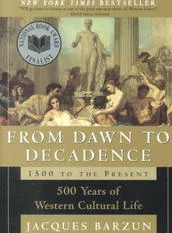
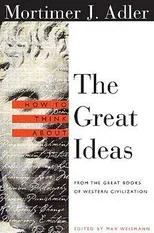
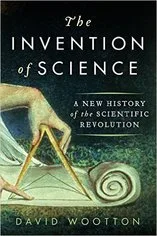
    For me, downtime is the key to effectiveness—slowing the heart rate; getting away from people; taking time out to explore ideas (that would not normally even register on my everyday radar); and, in so doing, remind myself of what really matters, my True North. I do that by reading. Here's a selection of the books currently on my reading list. If you read as a means of maintaining your perspective, I commend them to you.
    Picture
    Picture
    Picture
    Picture
    Picture
    Picture
    PS: What you do to keep track of your True North doesn't really matter. Go for a walk, paint, read, sew, draw or whatever else takes your fancy. That you are taking time out from the busy-ness of life is what will make the difference to your effectiveness—as paradoxical as that may seem. 
  • Published on

    Experts, yet we have much to learn

    One of the biggest shake-ups to confront the Western World (since the collapse of communism and the fall of the Berlin Wall anyway) occurred in the United Kingdom last week. The result of a much anticipated plebiscite was a decision by the British people to leave the EU. In the weeks leading up to the referendum, the flow of information became a cacophony as politicians, scaremongers and other 'experts' promoted various positions, in an effort to influence to voting public. 
    Finally, the day arrived and the people voted. Soon, the results were published. The people had spoken. Some cheered while others mourned. Curiously, some reacted by rueing their decision, wondering whether they had voted wisely. Really? With a straightforward question to answer and a plethora of information to hand, how could anyone make the 'wrong' choice (unless they didn't vote, of course)? Is this reaction an outpouring of buyer's remorse on a national scale, or is something else going on—an indication that some did not take the decision seriously or that a dose of hubris clouded the better judgement of some voters perhaps?
    Picture
    The British plebiscite highlights a behavioural weakness that besets many people. From an early age, we spend our lives learning as much as we can, aspiring to become experts in whatever field interests us. Most of us want to excel; to realise our potential. In our haste to make decisions and get ahead, we tend to embrace new ideas and disregard 'old' ones. If we can secure an advantage, we'll take it—thank you very much. But when it comes to big decisions, we may not be as smart as we think we are. Decisions that are based on politically-motivated or emotion-filled pleas, or knee-jerk responses seldom deliver the 'best' outcome.
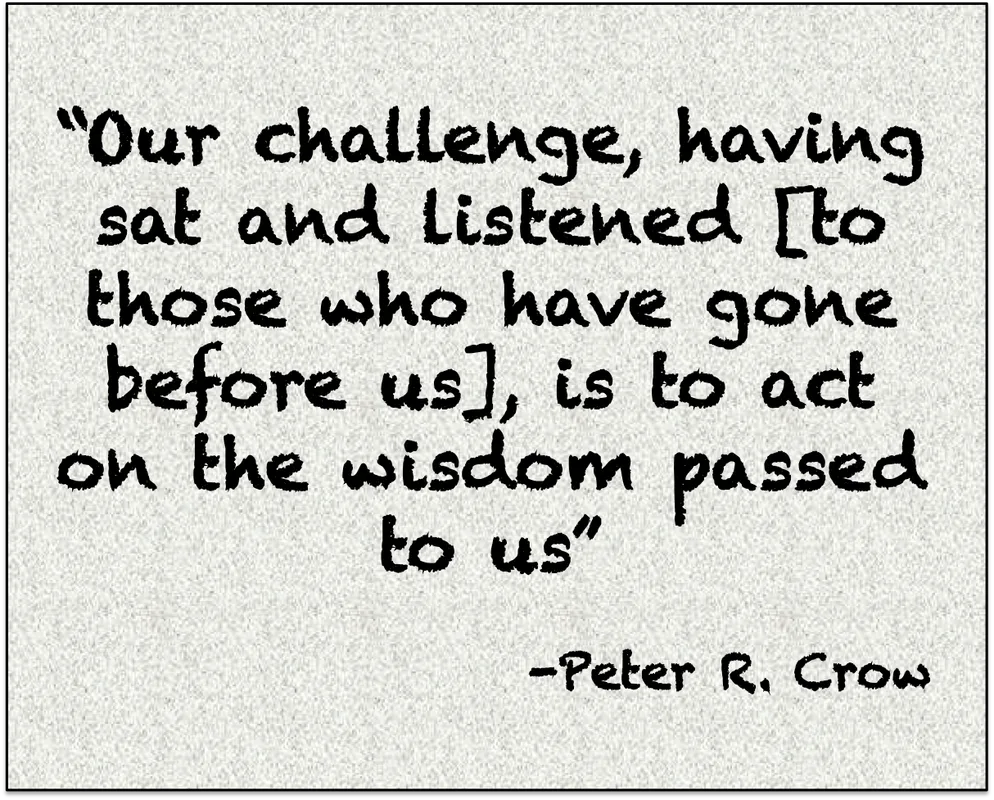
    Often, the best decisions are those made after we have paused and looked back, for guidance about how best to move forward. Whether we are cast as leaders or followers, we could do far worse than to seek out people like Bill and Augusto, sit with them and, having asked them a question, listen intently to what they have to say. Our challenge, having sat and listened, is to act on the wisdom passed to us.