• Published on

    Notes from a nomad in Europe

    Picture
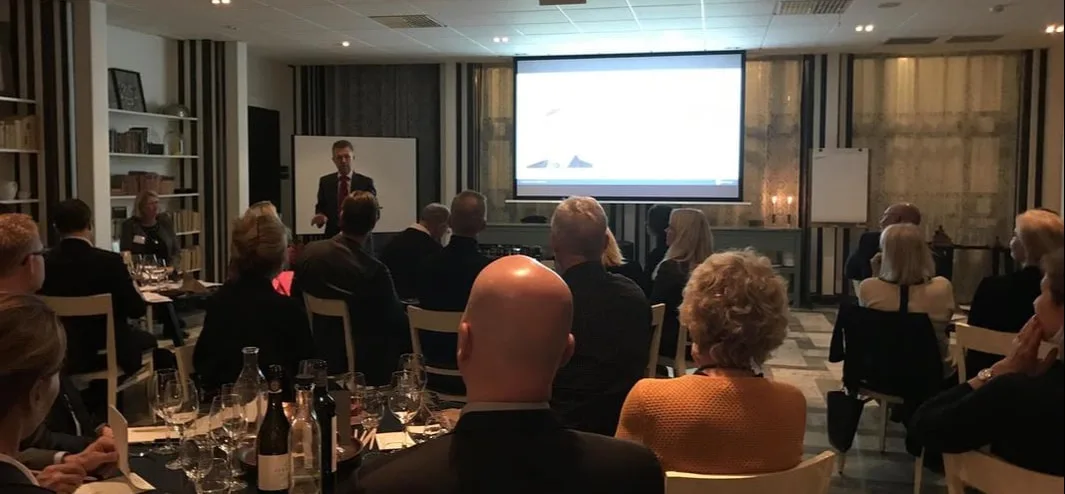
    My speaking and advisory tour of several European cities got off to a great start on Sunday evening. The first port of call was Stockholm. Liselotte Hägertz Engstam, an established director and board chair in the Nordics, hosted a seminar at Tändstickspalatset; a great venue. The theme was [the] Board's role in innovation strategy and governing new digital business models. ​Some 35–40 directors and board chairs with just over 100 board mandates between them, gathered to hear two speakers, namely, Stephanie Woerner and yours truly. The following paragraphs tell the story.
    Digital business model and board contributions
    Stephanie Woerner, a Research scientist at Sloan School of Management in Boston, explored value creation in the digital economy. She observed that many (most?) corporations were somewhat lumberous, offered rather average customer service and, tellingly, were ill-equipped to take advantage of emerging 'digital opportunities'. As such, they are at risk of losing out to younger, more nimble businesses. Woerner identified six questions that companies need to resolve if they are to compete effectively in the digital economy:
    • What is your digital threat?
    • What business model is best for your enterprise's future?
    • What is your digital competitive advantage?
    • How will you connect with your prospective clients?
    • What capabilities are needed to reinvent the enterprise?
    • Do you have the leadership to make it happen?
    Then, Woerner spoke about digital savviness, making two points along the way. First, 62% of directors claim to be 'digital savvy' (and, presumably, ready to tackle emergent challenges), but only 24% are indeed savvy. Second, the presence of three digital savvy directors is sufficient to drive improved [financial] performance outcomes. With that, I sat up. How might a quantitative analysis be a reliable predictor of a contingent outcome? A person at the table I was seated at was similarly exercised. She interjected, asking what the term 'digital savvy' meant. "Great question. We used the experience and qualifications of board members as a proxy." Woerner went on the explain how this has been arrived at: a keyword analysis of resumés (searching for words such as technology, CIO, disruption, software). The presence of such words on a resumé was deemed sufficient to categorise someone as being digitally savvy. You could have heard a pin drop.
    While Woerner's assertion (that boards need to be knowledgeable of emerging technology trends) is intuitively reasonable, the underpinning research appeared to be flawed. Others seemed to agree, suggesting it is more important for directors to have a curious mind, read widely and ask probing questions. Notwithstanding this, Woerner's core point was on the money: boards need to get up to speed with technological innovations and the opportunities they present.
    ​Making a difference, from the boardroom
    I spoke second, the task being to both build on Woerner's comments and add some insights of my own. I started by acknowledging today's reality, that change seems to be the only constant. Woerner set a great platform so there was no need to labour the point, except to say that directors need to work hard to keep up. Importantly,  contemporary recommendations including so-called 'best practices' provide little assurance of better board practice much less improved firm performance.
    An important duty of all boards is ensure the future performance of the governed company. If boards are to make a difference, they need to make informed decisions about the future direction of the company, and verify whether desired performance outcomes are actually being achieved or not. Four crucial questions that boards need to ask were tabled, these being:
    • Are we doing the right things? (explores context, purpose and strategy)
    • Is strategy being actioned as expected? (explores implementation)
    • Are expected benefits being achieved? (verifies performance by way of outcomes, not just effort)
    • Are we making good decisions? (tests efficacy of board's decision-making)
    After suggesting some practical considerations, I introduced the strategic governance framework, an option for more effective contributions (as revealed from my doctoral research and subsequently lauded by both practicing directors and scholars around the world).
    Picture
    ​Insights
    The seminar presented two perspectives, namely, that directors need to become a lot more digital savvy if they are to contribute effectively in the boardroom, and that effectiveness is a function of director capability, board activity and underlying behavioural characteristics of directors, not what they look like.
    Board readiness to lead well in the emerging 'digital' world is a concern—made worse given boards tend to pay much more attention to historical performance than wrestling with the [largely unknown] future. This is the elephant in the room. 'Digital' is but a symptom, I suspect. If boards are to have any hope of influencing firm performance, what they do in the boardroom (i.e., corporate governance) needs to change.

  • Published on

    Upcoming European speaking and advisory tour

    Picture
    In a couple of weeks, I'll be in England and Europe, for the third and final time this year. The schedule includes attendance at two conferences, delivery of two keynotes and a bevy of meetings, as follows:
    Sun 25 Nov

    Mon 26 Nov
    Tue 27 Nov
    Wed 28 Nov
    Thu 29 Nov
    Fri 30 Nov
    Sat 1 Dec
    Sun 2 Dec
    Mon 3 Dec
    Tue 4 Dec
    Wed 5 Dec

    ​Thu 6 Dec
    Stockholm: Deliver keynote at event organised by Digoshen (Topic: Outlook on international corporate governance and board practices).
    Stockholm & London: advisory meetings.
    Transfer to Vienna.
    Vienna: Global Peter Drucker Forum, pre-conference workshops.
    Vienna: Global Peter Drucker Forum, main conference (day 1).
    Vienna: Global Peter Drucker Forum, main conference (day 2).
    Vienna: post-GPDF review; transfer to London.
    Free day in London.
    London: advisory meetings.
    London: ICGN Global Stewardship Forum
    Henley: ​Share research insights with faculty & doctoral students (Henley Business School Governance Seminar); explore future research opportunities.
    London: ​advisory meetings.
    While the schedule is fairly full, some gaps remain for additional meetings (in London).
    If you would like to meet, please get in touch. I'd be glad to discuss any aspect of boards, corporate governance or effective board practice; explore a research idea; or respond to (future) speaking or advisory enquiries.
  • Published on

    Re-conceiving 'control', as a constructive mechanism

    Picture
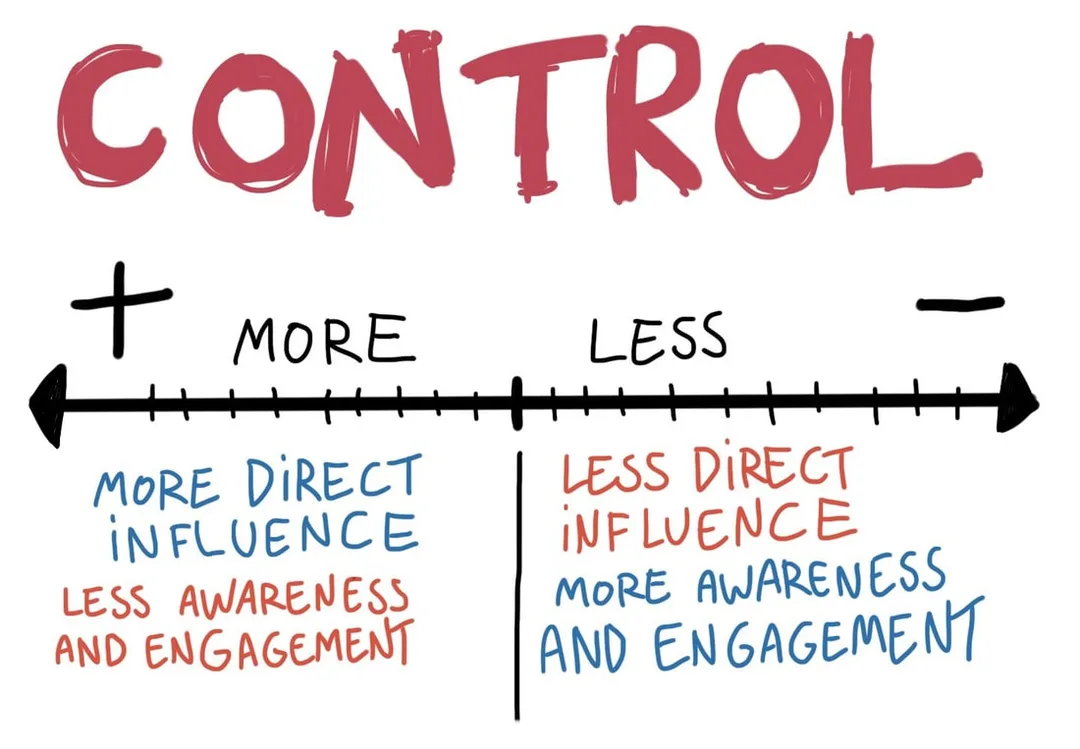
    In business, as in life, the task of exerting control is commonly perceived as being one of exercising limits; of saying 'no' and imposing constraints. Such perceptions are well-founded. Check these verb usages of 'control', lifted straight from the dictionary:
    • to exercise restraint or direction over; dominate; command
    • to hold in check; curb
    • to test or verify (scientific experiment)
    • to eliminate or prevent the flourishing or spread of
    If you have spent much time in boardrooms, you'll know that director behaviour tends to be consistent with these definitions, more so if the chief executive is ambitious or entrepreneurially-minded (the two attributes are not necessarily the same). When asked, board justification for exercising caution is straightforward: to keep the chief executive honest and to keep things 'on track'.
    Such an understanding—holding management to account—seems admirable. Monitoring and supervising management is one key task (of four) of corporate governance after all. But does a strong hand actually lead to better outcomes? More pointedly, how might the exercise of restraint and limits advance the purposes of the company (noting the board is responsible for ensuring performance goals are achieved)? Such conduct is analogous to applying the brake when the intention is to drive on. A growing body of academic and empirical evidence suggests that a strong hand, like increased compliance, may actually counter-productive.
    Rather than persist with what is demonstrably a problematic approach, it might be more fruitful for boards to consider another perspective. ​What if control is re-conceived in positive terms (namely, constructive control), whereby the board's mindset is to provide guidance (think: shepherd or coach) by ensuring the safety of the company and steering management to stay focused on agreed purpose and strategy? Might this deliver a better outcome? 
    Emerging research (here, but contact me to learn more) suggests the answer is 'yes'. Strongly-engaged and strategically competent boards that display high levels of situational awareness as they debate issues from multiple perspectives and make informed decisions in the context of the long-term purpose of the company can make a difference. Constructive control is one of five important behavioural characteristics of effective boards identified in this research.
  • Published on

    Towards a better understanding of corporate governance

    Picture
    Research is a funny thing. On one hand, experience can be greatly helpful: knowing what one is looking for or expecting to see is a boon. On the other, experience can be a hinderance: knowledge often resulting in bias and  preconception, and the very real possibility of missing vital clues. This is one of the great dilemmas for board and governance research.
    Some forty years have now passed since researchers started investigating boards in earnest. That an answer to the question of the role of the board and how they influence firm performance (i.e., what corporate governance is and how it is practiced) remains elusive is an indictment on the research community. Directors and boards need clear and well-founded guidance so they can become effective in role.
    Medical research is conducted by medics; cultural research is conducted by anthropologists; and, engineering research is conducted by engineers, so why is board research typically conducted by academics with little if any business experience? How might a researcher who has never been inside a boardroom hope to recognise the normative practices of board meetings? Or that a subtle interaction between two directors might actually be material to a pending decision?
    That most board and governance researchers have never been in a boardroom or served as a director is alarming. Yes, gaining access to observe boards directly is difficult to achieve. But to restrict board and governance research to counting isolated attributes of boards from outside the boardroom is folly. To be useful, recommendations need to account for the socially-dynamic nature of boards and the behaviours of directors (both of which can only be reliably discerned through direct observation).
    If the question of explaining how boards influence firm performance is to be answered, three things are needed: 
    • Researchers need to get inside boardrooms, to observe boards in action. (What directors actually do can be quite different from what they say they do when interviewed.)
    • Research needs to be conducted through the lens of experience.
    • Recommendations need to be holistic, accounting for both the activities of boards (what they do) and behaviours of directors (individually and collectively). That the structure and composition of boards is, relatively speaking, far less important.
  • Published on

    Picking up the #corpgov & #boardpractice discussion

    Picture
    After a longish hiatus—nearly four months—Musings is back. Thank you to regular readers and supporters who have asked about the radio silence. The explanation is straightforward: a busy period of speaking and advisory engagements, research and board work left precious little time to ponder.
    But that is history now. My intention is to pick up where I left off in early August, by posting on topical matters and emerging trends; challenging orthodoxy and, importantly, exploring how boards might become more effective in their pursuit of high firm performance and sustainable wealth creation. 
    Thank you for your interest in Musings. Your feedback and commentary is appreciated.
  • Published on

    Companies, boards and strategy—and Plato?

    What can Plato, a philosopher who lived over 2400 years ago possibly teach the leaders of modern companies? After all, the modern form of company only came into being in the last few hundred years, two millenia after Plato died. As it happens, when it comes to strategy and decision-making, Plato can teach us a lot—a point made by the author of this article. Here's an excerpt:
    Plato likened the guidance of a state to the navigation, piloting, and crewing of a ship at sea. The analogy holds for the strategist and a war effort. The strategist is the navigator with skills that few others have but he may not always be the captain who leads the crew, those that must actually carry out the strategy. Strategy is not responsive to constant or wild adjustments; the hand on the rudder must be subtle and steady; the mind behind it focused on the north star of the political end state. It is for this reason that one could expect that the navalist’s mind more easily grasps the nature of strategy than that of the continentalist. For centuries, ship’s captains engaged in strategy both military and diplomatic with little guidance and no recourse to seek more just by the nature of communications and the distance that a ship could carry them.  ​​
    This is one of the best summaries that I have read in a long time. Though written in the context of naval strategy and referring to Plato, the roles and tasks described here are directly applicable to companies and boards. The author writes that strategy (strategos: the art of command) is something developed at senior levels, with the long-term purpose (north star) in mind. The captain's job is to implement the strategy. Teamwork between the strategist and the captain is both expected and crucial. 
    The correspondence to companies and boards is stark. 'Guidance' (first sentence) corresponds to governance (kybernetes: to steer, to guide to pilot), for example. The senior-most decision-maker is the board of directors; the chief executive is 'the captain'. In naval terms, the best chance of making progress towards the 'north star' occurs when the strategist and captain collaborate closely—and so it is with the modern corporation.