• Published on

    Feltex: A lemon with the juice squeezed out?

    Feltex Carpets, once a great New Zealand business went public a decade ago, in May 2004. However, the business was mismanaged and it went bust within two years. The $185m case against the board, brought by a former shareholder, is now before the High Court in Wellington. The primary defendant is the board (actually, the directors). The second and third defendants are Credit Suisse Private Equity (promoter of the sale) and Credit Suite First Boston Asian Merchant Partners (CSPE parent).

    During submissions yesterday it was revealed that the company was likened to a lemon from which most of the goodness had been squeezed out. Further, one director referred to "these lousy shares" in an email several months before the company's IPO. These startling revelations place the defendants is a rather awkward position. How material will these pieces of evidence be to the overall case?

    The case, which is expected to last nine weeks, is being watched closely by company directors, the IoD and many others, for it will more than likely set a precedent against which future cases of mismanagement and poor governance are measured.
  • Published on

    On entrepreneurial thought and action: getting the low down

    Delegates at the International Conference on Management Leadership and Governance are in for a treat next week. Dr Leonard Schlesinger, Professor of Business Administration at Harvard and leading company director (including Forbes and Demandware), is the keynote speaker on Fri March 21. He'll be talking about the entrepreneurial thought process and the conversion of thinking into action.

    Dr Schlesinger is highly regarded in the business and academic communities, and I'm looking forward to hearing what he has to say. I'll post a summary of his talk here, as part of my commitment to provide reflections and comments throughout the ICMLG'14 conference, for the benefit of those that can't attend.
  • Published on

    ICMLG'14: just around the corner

    The International Conference on Management Leadership and Governance (ICMLG) is only a week away. This year, the conference is being held at Babson College, just outside Boston. The programme looks really interesting. I'll post reflections and comments here during the conference, so please check back if you are interested.

    I leave home on Mon 17 on the Air New Zealand evening flight to San Francisco, to meet a United flight across to Boston. The conference dates are 20–21 March, so I will have some time beforehand to reacquaint myself with a city that I last visited 20 years ago, and to attend meetings with some highly regarded governance advisors who are based in Boston. My paper will be presented on the first day of the conference, and I will chair a session the second morning.

    Immediately after the conference, I fly out to northern Minnesota, to visit the family I lived with as an exchange student 35 years ago. It'll be my first trip back since 1990, and possibly the last time I see my now elderly host parents. While the schedule is tight, I am looking forward to this trip very much. I'll keep you informed.
  • Published on

    On women in leadership, the glass ceiling and statistics

    The glass ceiling seems to be alive and operating well in New Zealand—or so a reporter's interpretation of a recently published report by Grant Thornton would have us believe.

    Whereas New Zealand was the first country in the world to embrace universal adult suffrage, it now ranks 15th in terms of the proportion of senior executive positions held by women (down from fourth a decade ago). The reporter seems to have used this statistic to make the glass ceiling claim. The Grant Thornton spokesman has made similar claims. However, when one reads the Grant Thornton report more carefully, the picture is actually somewhat different. The global average has also stalled. The proportion of women in senior executive positions jumped from 19% to 24% in the three years from 2004 to 2007 but has remained largely static since. (The New Zealand proportion is 31%.)

    Rather than make speculative claims, of a glass ceiling, the discussion needs to centre on why the proportion has stalled. It could be that a quarter to a third is representative of the number of effective female leaders available to contribute. Or, it could be that more are willing, but they lack the expertise to be truly effective when measured against male counterparts. Or, it could be due to a myriad of other contributing factors. Whatever the reason, business and society would be well served by finding out. Notwithstanding this, simplistic approaches (like counting things) are unhelpful. They cannot produce anything more than correlations, statements of what 'is' and emotive claims. The problem is complex, so a different research approach is required to reveal the underlying mechanisms. However, such research is typically slow and demanding, as I've discovered in my own research work. In the meantime, reporters like Mr Foreman would be well served by taking a little more care in their reporting.

    * For the record, I am a strong advocate of appointing the best and most capable person to any role, regardless of their gender or any other diversity variable.
  • Published on

    Healthy team dynamics trumps individual performance

    A new piece of research, about boards and performance, confirms what many people already know: the power of 'team' is more conducive to performance than individual brilliance is. You see it all the time in team sports. Whether it's the Seattle Seahawks, Sky Procycling or the All Blacks of New Zealand, the collective power of a cohesive team, working towards a single goal, is a much stronger proposition than a team of individuals, as brilliantly capable as some of the individuals may be.

    Boards of directors are no different. Celebrity directors or notables with important political, investment or other business connections are no match for a cohesive board that works as one towards an agreed goal. Given the widespread knowledge of this principle, why do so many shareholders and activist investors continue to promote candidates that play as individuals the moment they enter the boardroom?
  • Published on

    Qantas: a corporate tragedy, or a gross failure of governance?

    Image description
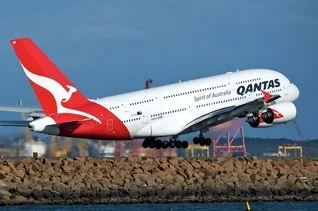
    What is happening at Qantas, Australia's once great national airline? While other airlines, including Air New Zealand, are performing well and generating solid returns, Qantas has fallen off its perch. Profits are down and jobs are being axed. Many commentators have published articles in the past few days about the impending demise of Qantas, including this one published in the Sydney Morning Herald. While claims of impending demise may be impetuous, a sorry pattern of neglect is apparent. The board of directors is nowhere to be seen.

    The board has the delegation to oversee the performance of the company, in accordance with the shareholder's wishes. Yet the board has not been mentioned. It has remained remarkably silent. We don't know what its been doing. Have the directors been actively working in the back room, or have they fallen asleep at the wheel? Clearly a series of mis-steps and mishaps have beset Qantas and placed it on a downward trajectory. The job of the board is to respond. It is the board's job to set strategy, appoint a CEO to implement it and make adjustments when needed. Will CEO Alan Joyce (just 42 years old when appointed) and others be sacked? Maybe. Should they be? If Alan Joyce has failed to implement the approved strategy then possibly. However, if the board has not crafted an appropriate strategy, or if it has not made adjustments in response to unexpected situations and changing market dynamics, then the board itself is culpable.

    Clearly, there are more moves to be played out yet, including the possibility of a bailout by the government (that happened to Air New Zealand—over a decade ago now). However, we need to hear from the board, to see some leadership in what is obviously a time of crisis. After all, the accountability buck stops there.